
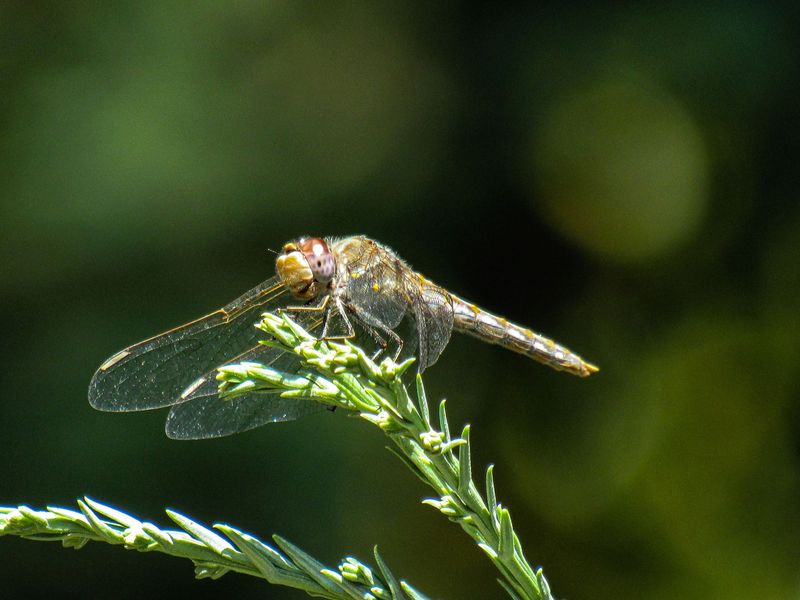
Spot a dragonfly making repeated passes over your backyard this summer, and you might wonder whether your yard has suddenly become something special. The short answer is yes, but probably not in the way you’d expect.
Dragonflies showing up in a California yard during mosquito season signals that the surrounding landscape offers the right mix of sunny airspace, flying prey, and freshwater habitat somewhere nearby. Understanding what that patrol actually means, and what it doesn’t, helps you make smarter choices for your yard and your family.
A dragonfly patrol points to habitat nearby, not necessarily in your yard
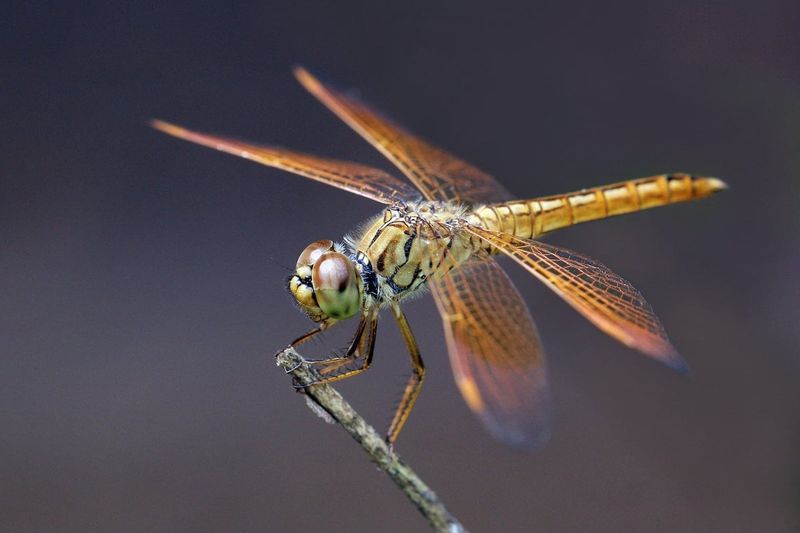
Seeing a dragonfly zigzag across your yard on a warm California afternoon is one of those moments that makes you stop and look twice. What most people don’t realize is that the insect making those passes likely emerged from water somewhere else entirely, flew into your neighborhood, and is now hunting over your lawn because the airspace suits it.
Dragonflies have a two-stage life. Their nymphs, or immature forms, develop entirely underwater, sometimes for months and sometimes for several years depending on the species.
Once mature, the nymph crawls out of the water onto a stem or rock, splits its exoskeleton, and the adult emerges. That adult can then disperse across a surprisingly wide area, hunting over gardens, parks, lawns, and other open spaces that may be a considerable distance from the pond, stream, or wetland where it grew up.
So a patrol over your yard is consistent with nearby freshwater habitat, but it is not proof that your property contains a breeding site. UC Cooperative Extension notes that dragonflies are regularly spotted around California urban and suburban gardens, even in neighborhoods without obvious ponds or streams.
The water that supported those insects could be a retention basin a few blocks away, a creek running through a nearby park, or an irrigation channel at the edge of a development.
Dragonfly biology confirms that adults routinely hunt in open areas away from their breeding water, following flying prey wherever the hunting is good. Sunny, open airspace with plenty of flying insects is what draws them over a yard, not the yard’s water situation specifically.
For California homeowners, this distinction matters. A patrol is an encouraging ecological signal worth paying attention to, but it doesn’t diagnose your property’s water conditions or tell you anything definitive about what’s breeding nearby.
Enjoy the sighting for what it is: evidence that your neighborhood supports an active food web and that suitable freshwater habitat exists somewhere in the surrounding landscape.
What repeated passes actually tell you
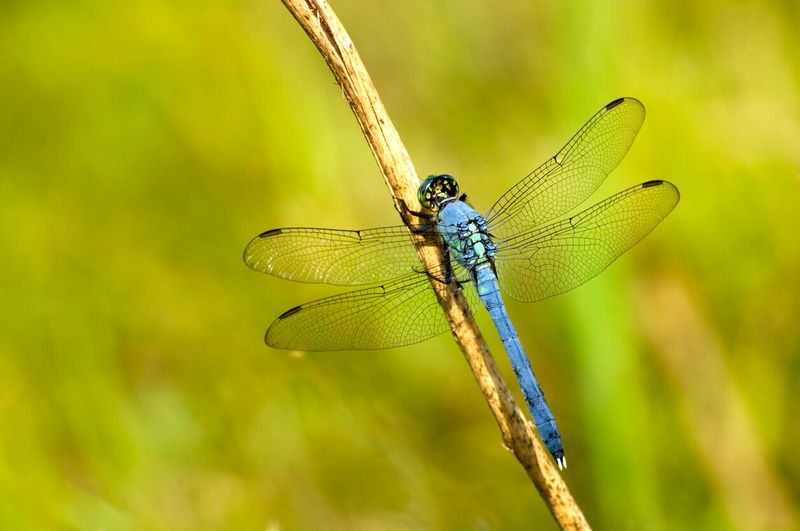
Watch a dragonfly work a section of your yard long enough and you’ll notice a pattern: back and forth along the same corridor, a sudden sharp turn, a hover, then another pass. That behavior looks purposeful because it is, though what it signals is more nuanced than a simple mosquito-hunting run.
Adult dragonflies are aerial predators that pursue whatever flying insects cross their path. Extension entomologists describe dragonfly adults as active hunters that capture prey mid-air, including flies, midges, gnats, moths, small beetles, mayflies, and yes, mosquitoes.
The key word is “including.” Mosquitoes are one item on a broad menu, not a specialty order.
The specific flight pattern you observe also carries information beyond feeding. Texas Parks and Wildlife dragonfly literature describes how males commonly patrol territories, flying repeated circuits over water or open ground to defend hunting and mating space from rival males.
A dragonfly making tight, repeated passes along the edge of your garden bed may be claiming that corridor as its own, not following a trail of mosquitoes to a container.
Basking is another reason for repeated returns to the same spot. Dragonflies are ectotherms that regulate body temperature by positioning themselves in sunlight.
A warm fence rail, a light-colored patio surface, or a sunny patch of bare soil can draw a dragonfly back repeatedly through the morning hours.
Putting it together: repeated passes over your yard tell you the airspace is active with flying insects, the sun exposure suits the dragonfly’s needs, and the area is worth defending or returning to. Penn State Extension notes that dragonflies are often misidentified or misread by observers who assume any aerial predator is targeting a specific pest.
The patrol is a sign of a healthy, insect-rich outdoor environment, not a precision mosquito-control operation running on your behalf.
The water-and-vegetation connection
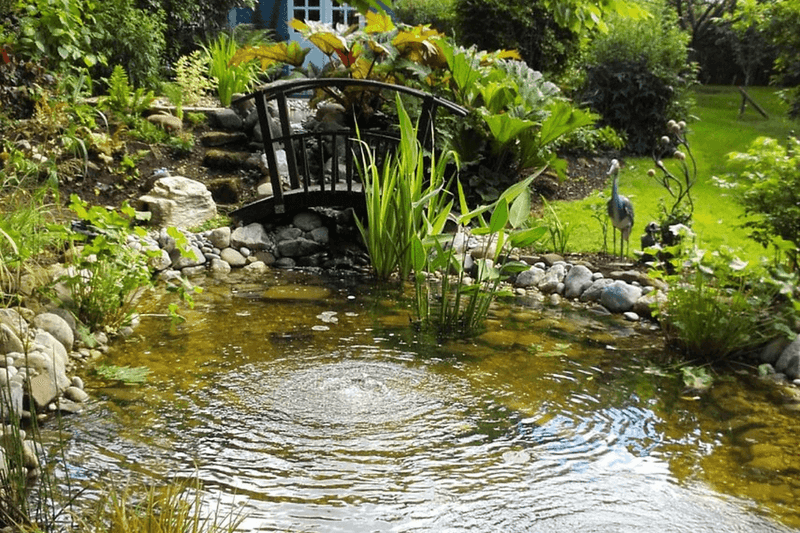
No amount of flowering plants will bring dragonflies to a yard that lacks suitable freshwater habitat somewhere nearby. That’s not a criticism of your garden; it’s just how dragonfly biology works.
The aquatic nymph stage is the foundation of everything, and without water, there are no nymphs, and eventually no adults hunting overhead.
Depending on the species, a dragonfly nymph can spend anywhere from a few months to several years submerged in freshwater, feeding on aquatic invertebrates and growing through a series of molts. The Xerces Society’s backyard-pond guidance explains that aquatic and emergent vegetation is central to what makes a water feature genuinely useful for dragonflies and damselflies, providing surfaces for egg-laying, shelter for growing nymphs, and structural supports that emerging adults climb before their wings harden.
Submerged plants oxygenate the water and create microhabitats for the small invertebrates that nymphs eat. Emergent plants, those that root underwater but send stems and leaves above the surface, serve as the actual launch pads for emergence.
Floating plants offer shade and cover. Each layer plays a different role, and a pond stocked only with ornamental fish and bare gravel offers little of this functional complexity.
Penn State Extension’s dragonfly habitat guidance emphasizes that sunny shallow margins are particularly valuable, giving nymphs a warmer zone to complete development and giving newly emerged adults a safe place to rest while their wings expand and harden. Open, sunny flight space above the water matters too, because adults need clear airspace for hunting and territorial patrols.
Xerces Society’s detailed pond habitat guidelines for odonates reinforce that plant diversity and structural variety outperform any single ornamental addition when it comes to supporting dragonfly communities. Logs, rocks, and upright stems give adults perching spots near the water’s edge.
A mix of depths, from ankle-deep margins to deeper central zones, supports a wider range of species.
Adding lavender, basil, or other aromatic plants to a garden bed that lacks water habitat won’t establish dragonflies. Those plants may support other pollinators and beneficial insects, which is worthwhile on its own, but dragonflies need the aquatic foundation first.
Vegetation in and around suitable water is what completes the picture.
Mosquitoes are part of the payoff—not a guarantee
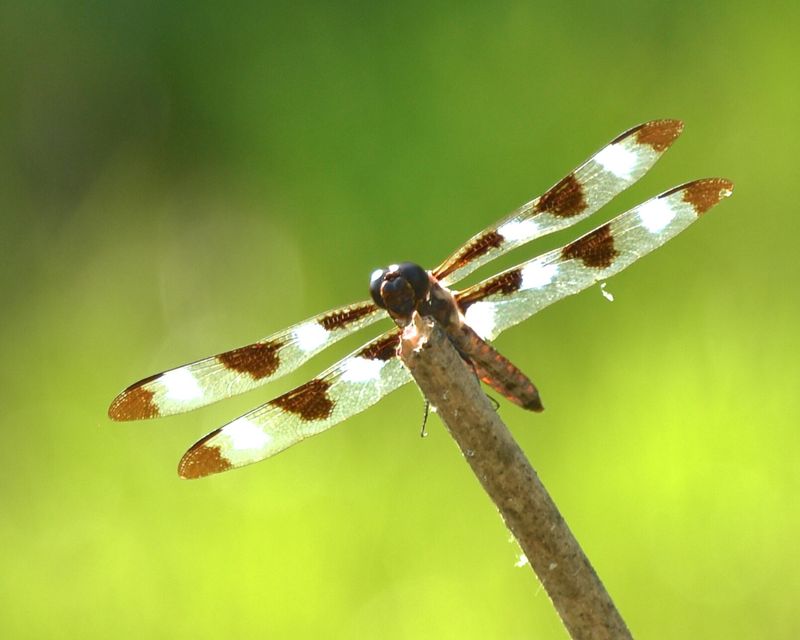
Dragonflies eating mosquitoes is real, and the research supports it, but the gap between laboratory findings and your backyard experience is wide enough to drive a truck through. Getting that distinction right helps you appreciate what dragonflies actually contribute without setting yourself up for disappointment.
Adult dragonflies can and do consume mosquitoes during aerial hunts. Their aquatic nymphs also prey on mosquito larvae sharing the same water.
A 2023 meta-analysis of 31 experimental studies found that individual dragonfly and damselfly nymphs averaged roughly 40 mosquito larvae consumed per day and produced approximately a 45% daily reduction in larval numbers under controlled experimental conditions. Those results are meaningful evidence of biological-control potential in contained settings.
The phrase “under controlled experimental conditions” carries a lot of weight. Experimental containers give nymphs no escape route for prey, eliminate the competing pressures of a full outdoor ecosystem, and often use stocked mosquito larvae at concentrations that don’t reflect a typical backyard pond.
Real water features host a much more complex community of predators, prey, and competitors, and adult dragonflies hunting over a residential yard face a landscape where mosquitoes are only one of dozens of available prey types.
Penn State Extension cautions against treating dragonflies as mosquito specialists, pointing out that they eat whatever flying insects are accessible. On any given afternoon, a dragonfly patrol might capture more midges or gnats than mosquitoes, depending on what’s in the air.
There’s another wrinkle specific to ponds: dragonflies and mosquitoes can share the same water. A neglected or poorly managed pond that supports dragonfly nymphs may also be producing mosquitoes in its shallower, less-oxygenated zones.
CDC mosquito-control guidance is clear that standing water of any kind requires active management, regardless of what else lives in it.
Dragonfly patrols are a genuine ecological benefit, and the mosquito-eating is a real part of that. The honest framing is that dragonflies add to a yard’s natural pest-control picture without replacing the practical steps that actually keep mosquito numbers in check.
The strongest mosquito step still starts with standing water
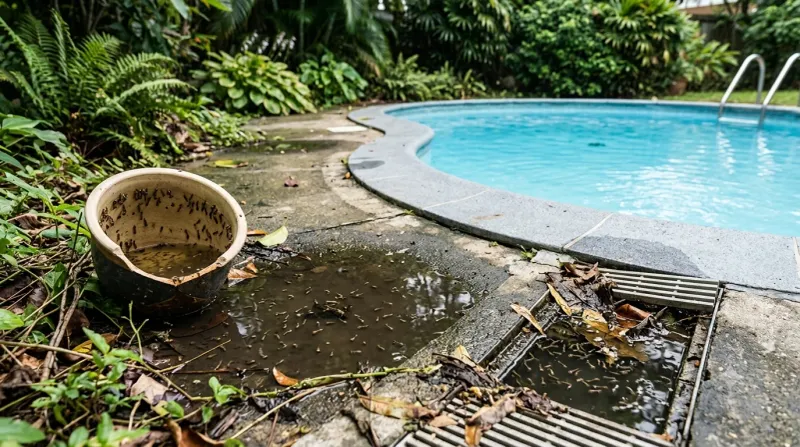
Dragonflies overhead are a good sign, but they don’t change the basic math of mosquito control. A female mosquito needs only a bottle cap’s worth of water and about a week to go from egg to biting adult.
That’s why the most effective thing a California homeowner can do has nothing to do with attracting predators and everything to do with removing the water those mosquitoes need.
CDC guidance on home mosquito control identifies source reduction as the foundation of any effective strategy: weekly emptying, scrubbing, covering, turning over, or removing containers that hold water. The list of culprits is longer than most people expect.
Plant saucers under pots, buckets left in a corner, toys scattered across a lawn, birdbath water that sits for more than a week, clogged gutters, tarps with pooled water, old tires, and rain barrels without tight-fitting lids are all potential breeding sites.
California Department of Public Health mosquito FAQs emphasize that even small neglected containers can support hundreds of mosquitoes, and that this breeding can happen right alongside dragonfly activity without the two populations canceling each other out. Doing a weekly lap of your yard with an eye for anything holding water is genuinely the highest-return action available to a homeowner.
For water that can’t be drained or covered, the next step is treating it appropriately. UC IPM identifies Bacillus thuringiensis israelensis, commonly called Bti, as a selective biological larvicide that targets mosquito larvae and certain related flies without harming most other aquatic life when applied correctly.
Bti is available in several product formulations, including dunks and granules.
Two important qualifications apply. California pesticide registration records confirm that Bti products must be used only in sites specifically listed on the product label, and the label must be followed in full.
CDPR’s mosquito IPM guidance for California homes reinforces that larvicide use supplements, but does not replace, routine water management. If the container can be emptied and turned over, that remains the preferred action.
Larvicide is for situations where drainage genuinely isn’t possible.
No dragonfly patrol changes this weekly responsibility. The two approaches, welcoming natural predators and removing breeding sites, work in parallel rather than as alternatives.
If you already keep a pond, make it work for wildlife without making mosquitoes worse
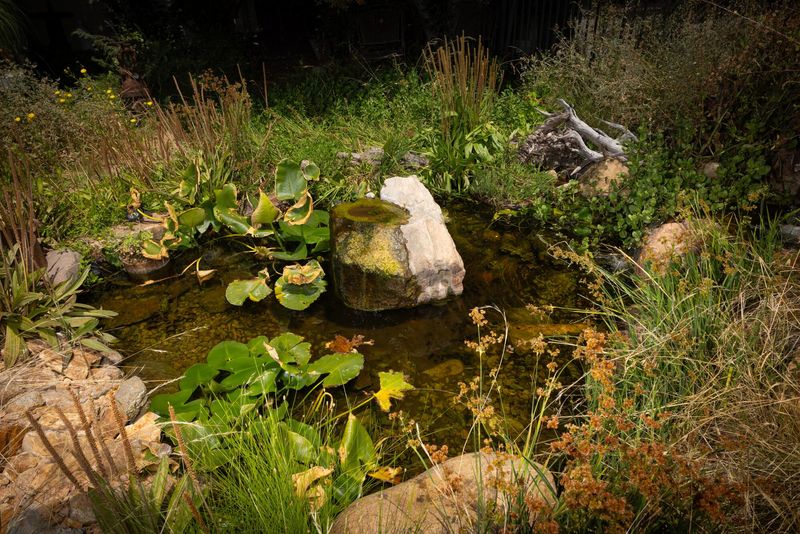
A backyard pond done well can support dragonflies, frogs, native bees, and birds while adding beauty to a water-wise California landscape. Done carelessly, the same feature becomes a mosquito incubator and a source of neighborhood complaints.
The difference comes down to how the pond is designed, planted, and maintained.
The Xerces Society’s backyard-pond habitat guidelines recommend a diverse mix of submerged, emergent, and floating native plants as the foundation of a wildlife-friendly water feature. Submerged plants oxygenate the water and feed nymph prey.
Emergent stems give nymphs something to climb during emergence and give adults a perch near the water. Floating plants shade the surface and moderate water temperature.
Logs, rocks, and upright woody stems along the margins add structural variety that supports multiple life stages.
Shallow, sunny margins deserve particular attention. They warm faster than deep zones, which accelerates nymph development, and they give newly emerged dragonflies a protected place to rest while their exoskeletons harden.
A gradual slope from the shallows to a deeper central zone, rather than steep vertical walls, makes the pond accessible to far more wildlife.
One of the more common mistakes is adding fish. Xerces Society’s detailed odonate pond guidelines state that fish can prey on dragonfly and damselfly nymphs, alter the odonate community, and contribute to algae growth through waste accumulation.
Fish stocking is not a general wildlife-pond recommendation, even when the motivation is mosquito control.
Pesticide use near the pond also requires caution. EPA guidance on reducing pesticide impacts on wildlife explains that runoff and direct contamination of water can harm non-target insects, aquatic invertebrates, and other wildlife.
EPA’s aquatic life research on insecticides documents how commonly used products can reach water through drift and runoff, with serious consequences for invertebrate communities. Apply pesticides only when necessary, choose labeled products, and keep applications well away from the water’s edge.
Before adding or significantly altering a pond, California homeowners should also verify local water-use rules, drainage requirements, mosquito-control ordinances, and fire-safety conditions. A pond appropriate for a coastal garden may not be suitable in a drought-stressed inland valley or a wildland-interface community where standing water and dense vegetation raise fire-risk concerns.
Regional context, not a single universal pond design, should guide the decision.
Let the dragonflies patrol while you manage the risks you can control
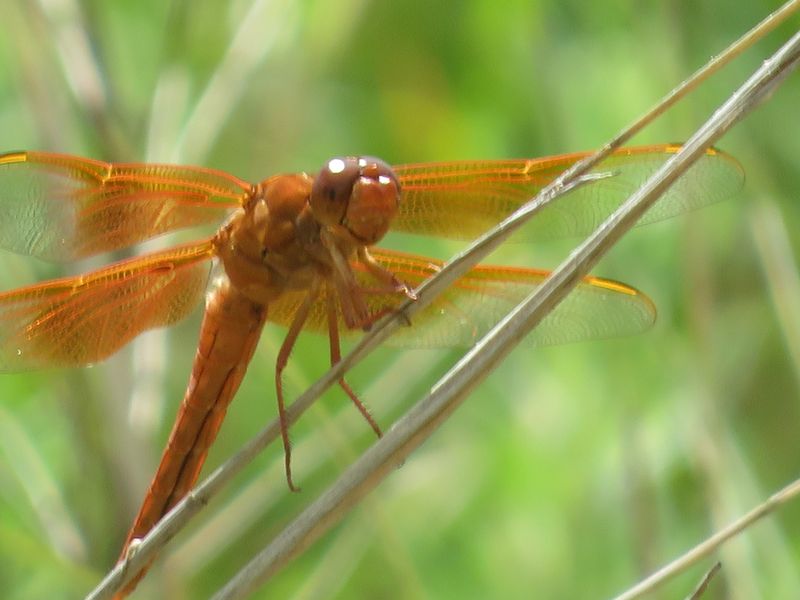
A dragonfly working your yard on a July afternoon is worth a moment of genuine appreciation. That patrol reflects an active food web, suitable freshwater habitat somewhere in the surrounding landscape, and an insect that has been refining its hunting technique for roughly 300 million years.
Receiving that visitor costs you nothing and asks very little in return.
Extension entomologists confirm that dragonflies are harmless to people, pets, landscape plants, and structures. They don’t sting.
Some larger species can bite if handled, which is a good reason to observe rather than catch them. Watching from a few feet away is genuinely the best approach, both for your comfort and for theirs.
The patrol does not prove that mosquito numbers are falling, that your yard contains breeding water, or that the nearby water source is ecologically healthy. Those conclusions require more evidence than a single sighting can provide.
What the patrol does tell you is that conditions in your neighborhood are favorable enough to support these insects, and that’s a reasonable thing to feel good about.
For the risks you can actually control, the action list stays consistent. Remove or treat standing water weekly.
Use EPA-registered repellents as directed by CDC guidance and wear protective clothing when mosquito activity or local disease risk is elevated. If West Nile virus or another mosquito-borne illness is active in your area, follow the guidance of your local vector-control district rather than relying on natural predators alone.
CDPR’s repellent fact sheet outlines registered active ingredients and correct application for California residents.
Dragonflies are allies in a yard that already practices good habitat stewardship, not a substitute for it. The ones patrolling your yard this summer didn’t choose it by accident.