
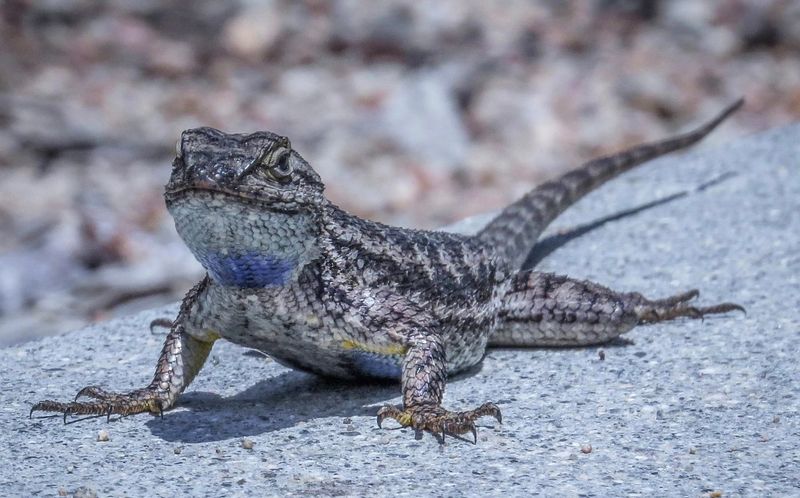
Spending a warm afternoon in the backyard and realizing you have not spotted a single lizard in weeks is the kind of thing that quietly nags at you. Western fence lizards are a familiar sight on California fences, rocks, and sunny walls, and their absence can feel like a sign that something has gone wrong.
Before drawing conclusions, though, it helps to understand what their disappearance might actually mean, what these animals eat, and what realistic steps you can take to support them without creating new hazards.
Check the season before you diagnose the yard
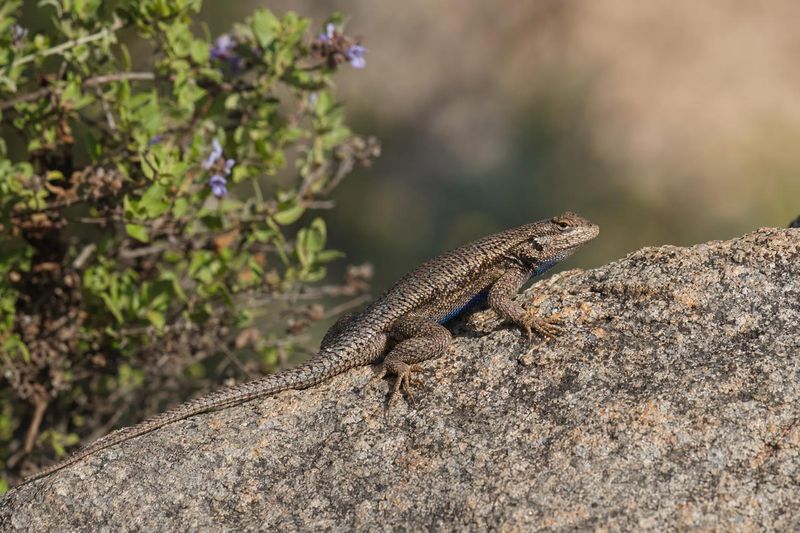
Late fall and winter absences deserve a calendar check before anything else. UC IPM’s guidance on California lizards describes western fence lizards as generally active from about April through October, with inactivity or hibernation during colder months.
A lizard you saw regularly in September may simply be sheltering somewhere out of sight by November, and that is entirely normal behavior.
Even within the warm season, a few missed sightings do not add up to a population count. Fence lizards bask when temperatures suit them, retreat when it gets too hot or windy, and adjust their daily routines in ways that make them easy to miss.
A single empty basking spot on one afternoon tells you almost nothing about whether the animals are still using the yard.
The pattern that deserves closer attention is a sustained absence across several warm weeks, particularly during the peak activity window from late spring through early fall. If you are checking the same sunny rocks, fence rails, and south-facing walls repeatedly over a month of warm weather and seeing nothing, that is a clue worth following up on rather than a one-time observation you can dismiss or, equally, a reason to assume the worst.
Treat the disappearance as a question to investigate rather than a verdict. Seasonal inactivity, reduced visibility due to yard changes, or a simple shift in where the animals are spending their time can all produce a stretch of days when you do not see them.
A cold snap, an unusually cool spring, or a recently trimmed area that removed a favorite perch can each play a role. Start by ruling out the simplest explanations before looking for larger causes.
Confirm which lizard disappeared
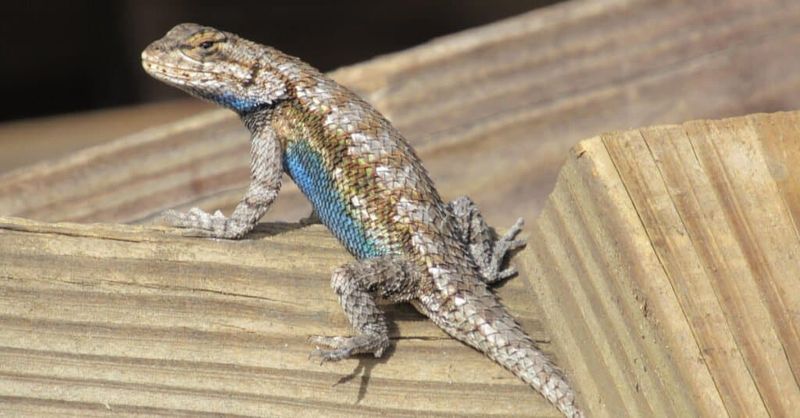
Before assigning meaning to a missing lizard, it pays to be sure which species you were actually watching. California yards can host several lizard species with very different appearances, habits, and activity patterns, and mistaking one for another can send your investigation in the wrong direction.
The western fence lizard, known scientifically as Sceloporus occidentalis, is a widespread, daytime-active species that typically reaches about 6 to 9 inches from snout to tail tip. Males are recognizable by patches of bright blue on the belly and throat, while females tend to be more muted in color.
UC IPM’s lizard resource notes that they are among the most commonly encountered lizards across California, often seen doing push-up displays on sunny surfaces. That push-up behavior is one of the clearest field markers for the species.
Other lizards that show up in California yards include alligator lizards, which are longer-bodied and move with a sinuous, almost snake-like motion; side-blotched lizards, which are smaller and more delicate-looking; and introduced house geckos, which are nocturnal and most often spotted near porch lights after dark. California Herps’ guidance on living with wild reptiles offers useful identification help for distinguishing these species.
If the lizard you remember seeing was nocturnal or had a very different body shape, you may be tracking a different species entirely.
Rather than relying on a single memory, compare observations across different spots on the property and across different times of day. A yard that seems empty from the back patio might still have active lizards near the front wall or along a side fence where sun hits earlier in the morning.
Widening your search area and observation schedule gives you a much more accurate picture than any single sighting or absence.
Look for changes in shelter, basking space and connectivity
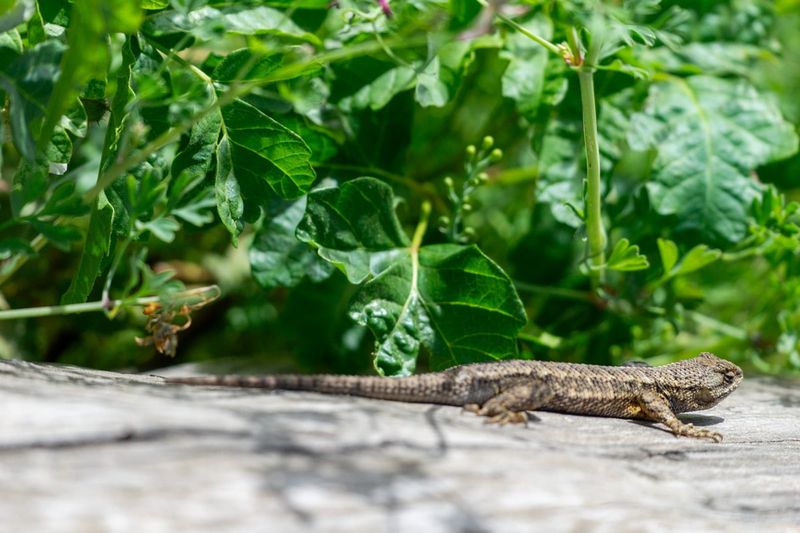
A sustained warm-season absence, confirmed across multiple weeks and multiple spots in the yard, points toward something in the local environment that may have shifted. Habitat structure is one of the most plausible places to look first.
California Department of Fish and Wildlife life-history guidance for the western fence lizard identifies rocks, fences, tree trunks, woodpiles, walls, crevices, and burrows as key cover and perch features that these animals rely on for basking, escaping predators, and regulating body temperature.
Removing or altering those features can reduce how usable a yard is. A freshly cleared slope, a removed rock border, a trimmed-back woodpile, or a newly paved surface can all eliminate the specific micro-habitats that fence lizards depend on.
Research on urban western fence lizard occupancy found that rock refuges were strongly associated with whether lizards were present in developed landscapes, making rock cover one of the most directly supported structural features in urban settings.
Urban environments are not automatically hostile to fence lizards. A study on western fence lizards in developed areas found that the species can persist across a range of urbanization levels and may use human-made substrates such as concrete walls and wooden fences as substitutes for natural rock.
Populations vary considerably among sites, though, and local factors including thermal conditions, connectivity to nearby habitat, and surrounding land use all influence whether lizards are present.
Connectivity matters too. A yard that sits in an isolated patch of pavement with no nearby open space, vegetated corridors, or adjacent properties with suitable habitat may simply be harder for lizards to reach or recolonize after a local disturbance.
California wildlife life-history data on the western fence lizard reflects that the species occupies a broad range of habitats but depends on the structural features that allow thermoregulation and shelter. Treat habitat changes as a plausible influence worth examining, not a confirmed cause of whatever you observed in your yard.
The lizards may have eaten pests, but they did not guarantee pest control
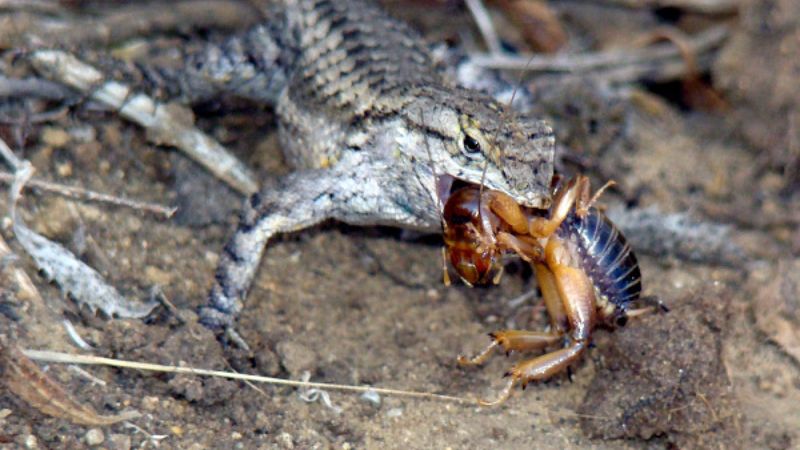
One reason homeowners worry when fence lizards go missing is the assumption that the lizards were actively keeping pests in check. That assumption has a real biological basis, but it needs some careful unpacking before it turns into something the evidence cannot support.
Western fence lizards are generalist insectivores with a broad diet. UC IPM’s pest notes on lizards list beetles, ants, wasps, aphids, grasshoppers, and spiders among the prey that California lizards consume, along with occasional scorpions, centipedes, and isopods.
The California Department of Fish and Wildlife life-history account for the western fence lizard similarly describes the diet as primarily terrestrial invertebrates. Neither source puts a number on how many pests a lizard removes from a typical yard in a season, and neither claims that lizard predation produces a measurable reduction in pest populations.
That distinction matters. A lizard eating ants and beetles on a warm afternoon is contributing something real to the yard’s ecology, but that contribution is background predation across a wide range of prey.
Fence lizards are not targeting the aphid colony on your roses or patrolling for the specific beetles damaging your vegetable bed. Their hunting is opportunistic, shaped by what is available and accessible near their basking and shelter spots.
Pest abundance in a residential yard is shaped by many factors: neighboring properties, seasonal insect cycles, irrigation patterns, plant choices, and the presence or absence of other predators including birds, spiders, and predatory insects. Removing one generalist predator from that system does not reliably push pest populations in one direction.
If your yard has developed a pest problem, the absence of fence lizards is worth noting as a possible contributing factor, but it is not a sufficient explanation on its own, and adding lizards back would not be a substitute for addressing the actual conditions driving the pest issue.
The tick relationship is more complicated than a Lyme-control story
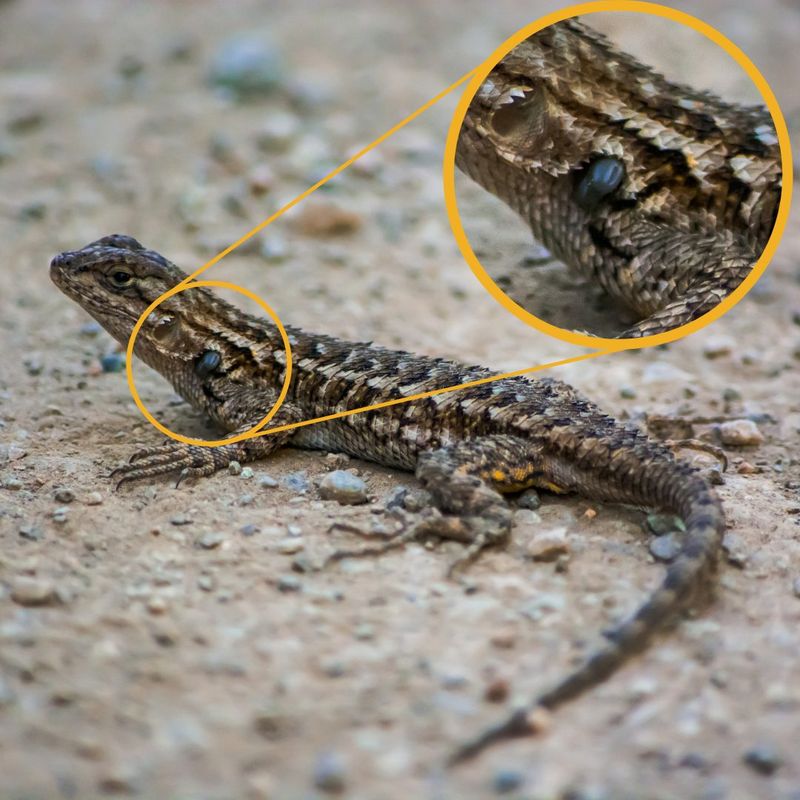
The idea that fence lizards protect California yards from Lyme disease has circulated widely, and the underlying biology is genuinely interesting. But the actual research tells a more complicated story, and understanding it matters for anyone making decisions about tick safety.
Western fence lizards do commonly host immature western black-legged ticks, and something in the lizards’ blood can affect Borrelia burgdorferi, the bacterium that causes Lyme disease, in ticks that feed on them. That biological detail has led many people to assume that more lizards in the yard means fewer infected ticks and lower Lyme risk.
The problem is that ecological field evidence does not straightforwardly confirm that chain of reasoning.
An experimental lizard-removal study in California found that removing lizards from a field site actually produced lower nymphal tick density at that site afterward, rather than higher density as a simple dilution-effect model would predict. The researchers concluded that host switching by ticks and the broader complexity of local tick ecology were responsible for the unexpected result.
In other words, when lizards were gone, ticks did not simply pile up on other hosts in greater numbers. The system adjusted in ways that the straightforward “lizards reduce tick risk” narrative does not capture.
Research on wildlife hosts and tick ecology reinforces that tick populations depend on a web of hosts and conditions rather than a single species. California public health guidance on tick-borne disease similarly does not position lizard presence as a protective factor for residents.
Geography adds another layer of qualification. CDC western black-legged tick surveillance data shows that this species is most prevalent in northern California and along the Pacific Coast.
A Southern California yard is not automatically a high-risk Lyme setting, and standard precautions, including checking yourself and pets after time outdoors and removing attached ticks promptly, remain necessary regardless of how many lizards are present. CDC guidance on how Lyme disease spreads makes clear that personal protection is the reliable layer of defense, not the composition of local wildlife.
Improve habitat without creating a fire or pesticide hazard

If you have ruled out seasonal inactivity, confirmed the species, and noticed genuine habitat changes over the warm season, there are practical steps you can take to make your yard more welcoming to fence lizards. The key is making those changes within the real constraints of California fire safety and property management.
Retaining or adding sunny rocks, low stone walls, wooden fences, rough-barked perches, and ground-level crevices gives lizards the basking and refuge features they use most. Urban occupancy research points to rock refuges as one of the most directly supported features in developed landscapes.
California wildlife guidance for the western fence lizard lists woodpiles, brush, crevices, and structural features as important habitat components. A small stacked rock border along a sunny fence line, placed away from the house and clear of flammable material, can add usable microhabitat without creating a fire risk.
Placement matters enormously in California. CAL FIRE’s defensible space guidelines set out specific rules for how vegetation, debris, and structures should be managed near buildings, particularly in high fire-risk zones.
A woodpile stacked against the house or a dense brush pile in Zone 1 can create serious hazards. Any habitat feature you add should comply with local defensible-space requirements and be kept clear of drainage paths and structural foundations.
Plants can support lizard habitat indirectly by providing cover, shade, and a supply of the insects lizards eat, but no specific plant list has been shown to reliably attract or restore fence lizards. Frame plant choices as habitat support rather than a guaranteed fix.
Pesticide reduction is worth considering as a separate step. Laboratory studies found that western fence lizards can absorb contaminants through both skin and oral routes, and repeated malathion exposure produced symptoms, some mortality, and reduced locomotor performance in controlled experiments.
Those were laboratory conditions, not proof that a specific home application caused a yard population to decline, but reducing unnecessary pesticide use is a reasonable precaution for a yard you want to support wildlife.
Finally, do not attempt to capture or relocate wild lizards. UC IPM’s lizard guidance notes that California regulates the taking and possession of reptiles, and CDFW’s wildlife permitting information outlines the requirements that apply.
Handling lizards can injure them, and moving individuals between sites is not an effective conservation strategy for homeowners. Improving habitat conditions and reducing hazards is the approach with a genuine payoff.
Use a measured response to a missing lizard
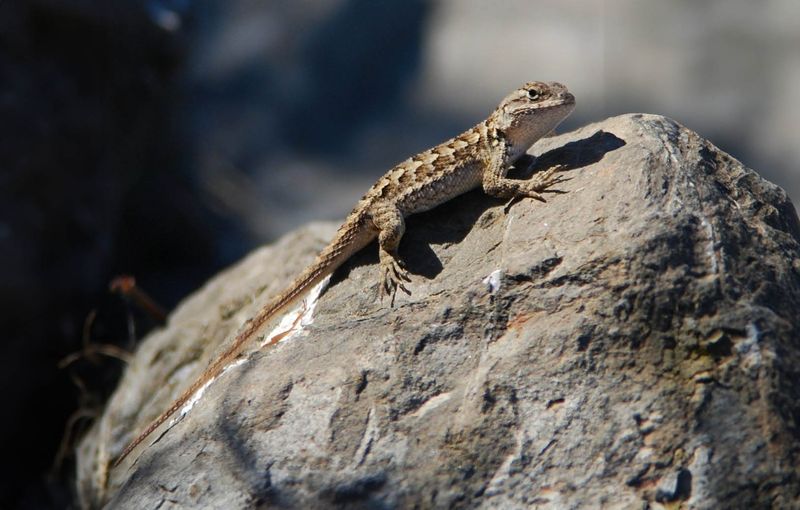
Putting all of this together comes down to a practical sequence rather than a single dramatic action. Start with the season: if the absence falls in late fall or winter, UC IPM’s California lizard guidance suggests waiting until the warm-season window reopens before drawing any conclusions.
If you are in the middle of a warm stretch and have been watching consistently across multiple spots for several weeks, that is when the investigation becomes more meaningful.
Check the species next. Confirm that what you were seeing before was actually a western fence lizard and not an alligator lizard, side-blotched lizard, or introduced gecko.
Each has a different activity pattern and different habitat needs, and mixing them up changes what you should look for.
Review recent changes to the yard. Removed rocks, cleared brush, new paving, reduced fence structure, or a recent pesticide application are all worth noting.
None of these automatically explains the absence, but they narrow the field. California wildlife life-history data for the western fence lizard points to structural features, sunny exposure, and refuges as the most important habitat elements, so changes to those are the highest-priority things to assess.
Where it makes sense and fits within CAL FIRE’s defensible-space rules, make modest adjustments: a sunny rock cluster, a rough wooden perch, a brush pile kept at a safe distance from structures. Reduce pesticide use where you can do so without creating other problems.
Then observe again over the following weeks.
Keep tick precautions in place for your household regardless of what the lizard population does. CDC guidance on Lyme disease is clear that personal protection measures are the reliable safeguard, not the presence of any particular backyard animal.
Fence lizards are a genuinely useful part of a California yard’s ecology, but the yard that supports them well is one designed for their actual needs, not one built around an overestimate of what they can do.