
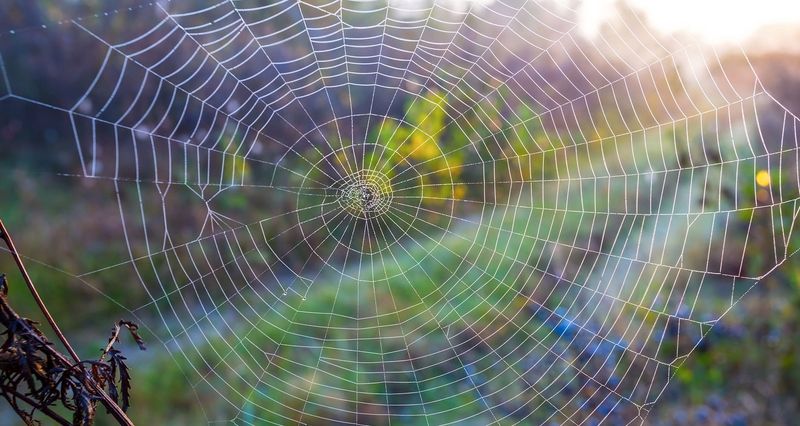
One October morning you step outside and find silky wheels strung between the rosemary, the porch rail, and the fence. It can feel like the spiders moved in overnight.
Those webs say something about the season, but they do not say everything about your yard. Here is what they can tell you, what they cannot, and how to share your space with these quiet hunters.
Fall can make orb-weaver webs hard to miss
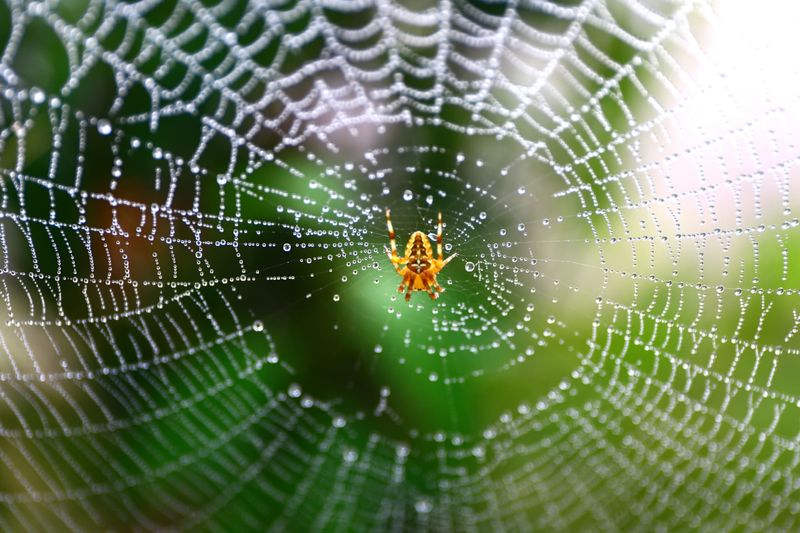
Walk a California yard in autumn and the webs seem to appear out of nowhere. UC Cooperative Extension in Ventura County calls fall spider season on the Central Coast and in many other parts of California.
Garden spiders build large circular webs to catch insects, and the webs get hard to ignore as the spiders grow larger.
The same extension account explains the timing this way. Female garden spiders spend the season catching insects so they can produce egg sacs, and then they die in early winter.
By fall they are bigger, their webs are bigger, and the silk shows up well in low autumn light and morning dew.
That is regional guidance, not a calendar for the whole state. California covers foggy coast, hot inland valleys, mountains, and desert, and species and climate zones do not all follow the same schedule.
Your neighbor two counties over may see webs at a different time than you do.
So the plain reading is that more visible webs fit a normal seasonal pattern for many California areas. It is a sensible explanation for what you are seeing.
It is not proof that bugs are suddenly swarming your property, and the next sections explain why.
A circular web is a clue, not a complete ID
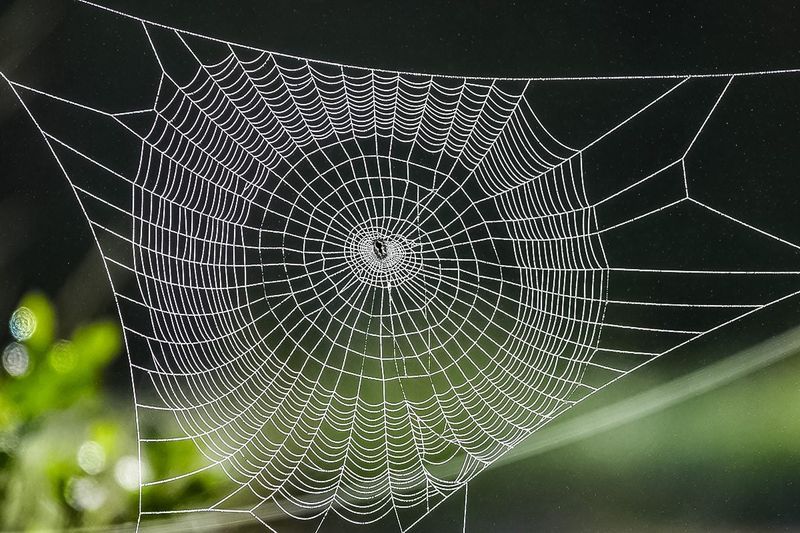
A typical orb-weaver web looks like a wheel, with spokes and concentric rings of silk. According to UC IPM, orb-weavers feed on insects that fly, fall, or are blown into the web.
The round shape is a handy first clue when you spot one.
Still, a clue is not a name tag. Funnel weavers, cobweb spiders, and sheet-web spiders all make different webs, and UC IPM sorts them into separate groups.
Not every web in your garden belongs to an orb-weaver, and a web alone cannot tell you the exact species.
Shape also helps you avoid a common mix-up. Black widow webs are irregular, a messy tangle rather than a neat wheel.
Black widows usually settle in dark, dry, sheltered spots, and they are the most common harmful spider in California.
That is why caution matters around clutter. Skip reaching into woodpiles, stacked pots, meter boxes, or crevices when you have not seen what lives there.
Wear gloves and use a stick or tool when you tidy, and let an open, wheel-shaped web in the sun be what it looks like.
Webs are not a yard-wide insect census
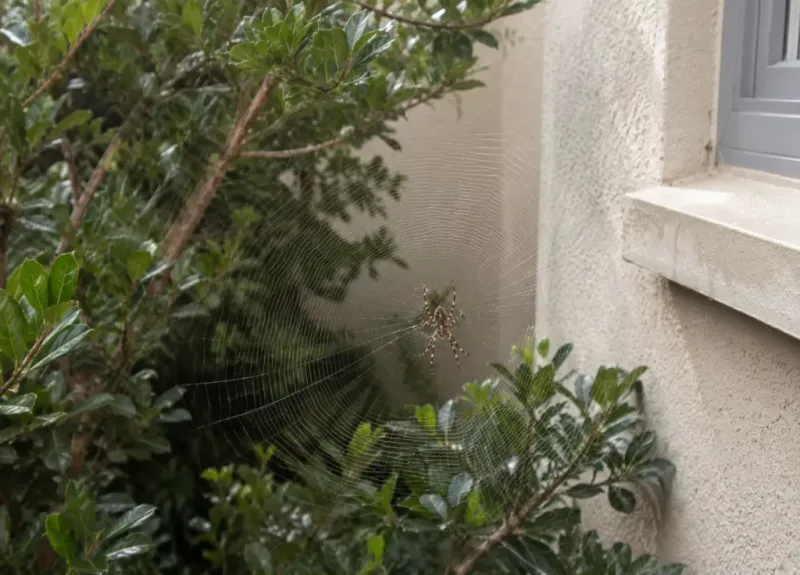
Count ten webs and it is tempting to decide the yard must be buzzing with bugs. That leap goes further than the webs allow.
A web shows that insects can reach that one spot, not how many insects live across your whole property.
Spiders need two things: food and a place to hang a web. A field-enclosure study of web-spider densities tested both food and space as limits on how many web spiders can live in an area.
In other words, a cluster of webs can mean plenty of prey, plenty of good anchor points, or both.
Think about where your webs sit. A hedge, a porch light corner, a trellis, and a row of tall perennials all give spiders sturdy anchors and open flight paths.
A yard with lots of those features may simply host more webs than a bare lawn, no matter how many insects are around.
The practical takeaway is to treat webs as a sign of seasonal spider activity, nothing more precise. If you worry about a real pest problem, look at the plants themselves for chewed leaves, sticky residue, or insects on stems.
Those signs tell you far more than a web count ever will.
The pest-control benefit is real, but limited
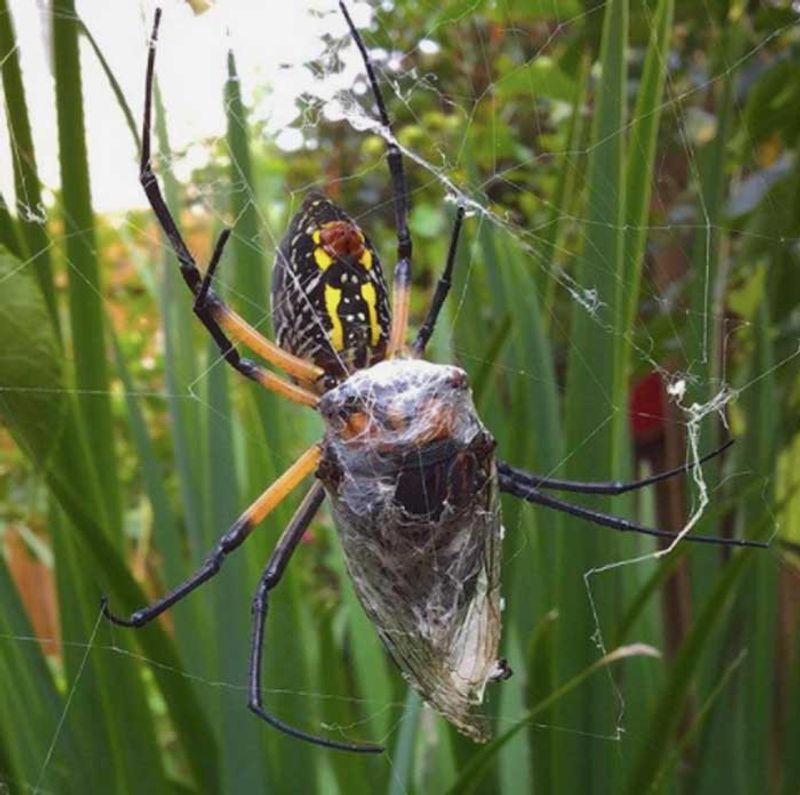
Orb-weavers are predators, and spiders eat many nuisance and pest insects, as UC IPM notes. Whatever flies, drops, or blows into the silk can become a meal.
Calling them a free pest-control crew works as a light way to say they eat insects.
The research gives that picture some weight. In an unsprayed east Texas cotton field, researchers studying orb-weavers found the spiders ate insects including aphids and other crop pests.
A broader meta-analysis of 58 agricultural studies found spider presence suppressed crop pests in 79 percent of cases, with results varying by crop and setting.
Notice where those numbers come from: farm fields, not California home gardens. They support the idea that spiders are useful predators.
They do not promise that the spider by your tomato bed will measurably cut pests, and they say nothing about a named pest such as mosquitoes or a particular fly.
A fair way to think about it is that a web in a low-conflict spot adds some natural predation to your yard. Expect a helping hand, not a guarantee.
Keep watching your plants and use your usual garden practices for any specific problem.
Leave a quiet web or move an inconvenient one
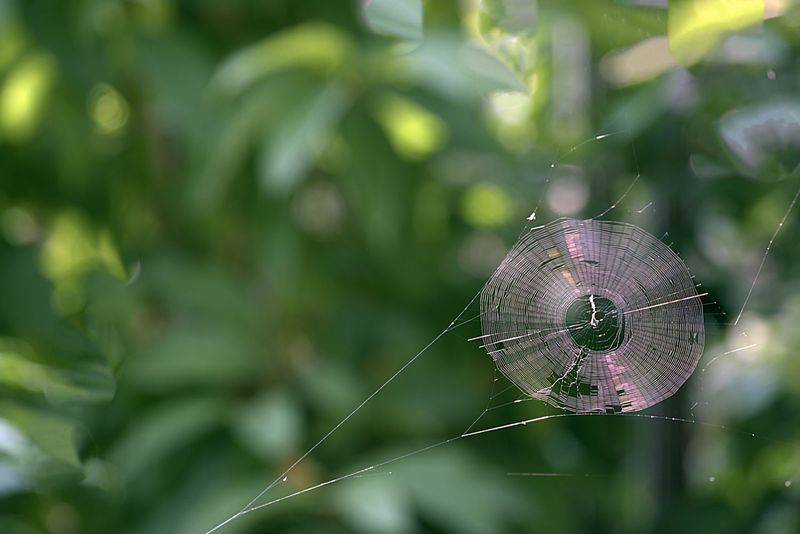
Most webs never need any action. UC Cooperative Extension advises no control for garden spiders where they are not a problem.
A web across the back corner of a bed or between two shrubs can simply stay through the season.
Some webs land in bad spots, like a face-high strand across the front walk or a wheel in the doorway. The same extension guidance says an inconvenient web can be moved, with the spider relocated to an out-of-the-way place.
Pick a shrub or fence corner away from doors and walkways, ideally close to where it was.
Go carefully. Skip bare hands and use a stick, a jar and card, or thick gloves, and move slowly in the cool of the morning.
UC IPM says open, visible spiders are unlikely to bite, but bites can happen when a spider is trapped or disturbed.
Do not assume every spider you find is an orb-weaver. If it sits in a tangle, hides in clutter, or you cannot tell what it is, leave it alone or ask your local extension office.
A quiet web in a sunny corner is an easy one to live with.
Skip spider sprays and keep webs where they fit
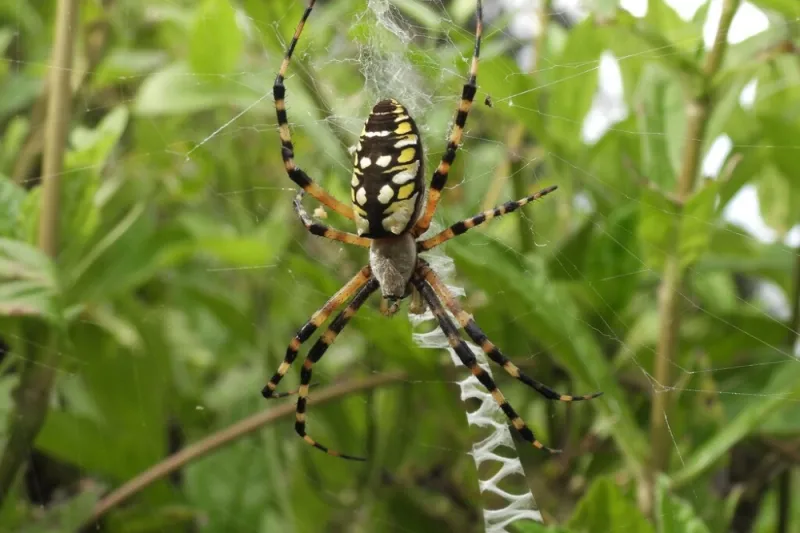
Reaching for a sprayer feels like action, but it rarely solves anything. UC IPM says outdoor insecticides generally should not be used against spiders, because spiders are difficult to control with sprays and the control is temporary.
New spiders drift in, and you lose the quiet insect hunters already there.
That advice is about spiders. It does not mean pesticides are never right for other yard problems, only that spider sprays do not pay off.
So here is the whole picture. Fall webs in many California areas fit the seasonal spider activity UC Cooperative Extension describes.
They do not prove a yard-wide insect glut, and they do not promise pest control. They can stay wherever they cause no trouble.
When one is in your way, move it carefully rather than spraying. Keep sheltered clutter tidy and handle it with gloves, and leave the rest of the webs for the season.
By early winter the spiders will be gone, and the silk with them.