
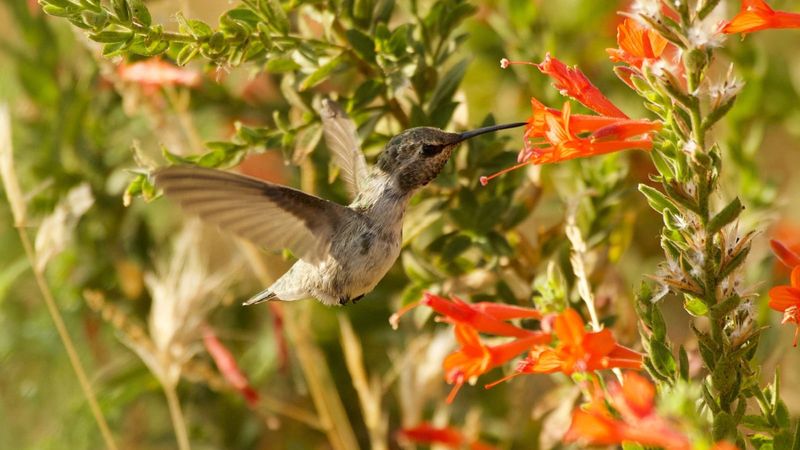
August in California can bring a surprise: your yard suddenly buzzing with more hummingbirds than you have seen all season. Before you assume they are all passing through on their way south, the real picture is more layered and more interesting.
Understanding what is actually happening, and which plant might be drawing them in, can help you make smarter choices for your yard right now.
A late-summer gathering may reflect movement and local food concentration
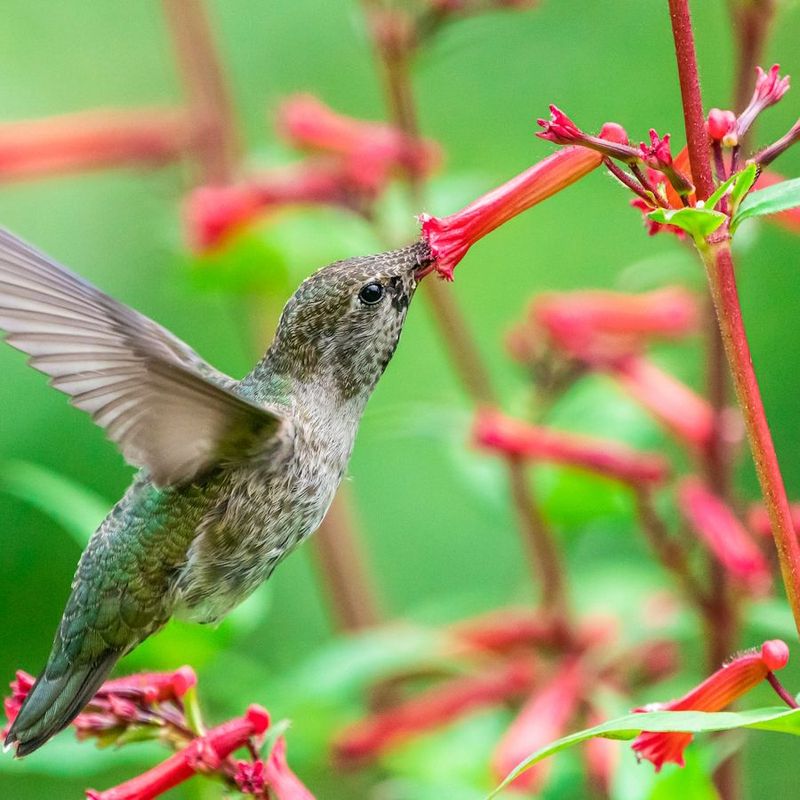
August hummingbird activity in a California yard rarely has a single explanation. Some of what you are seeing may be southbound migrants, some may be birds that never left, and some may be newly independent fledglings working out their territories.
Separating those threads matters because the right response for your yard depends on which combination is actually showing up.
On the migration side, Audubon’s guide to western hummingbird timing notes that Rufous Hummingbird females and juveniles begin moving south in July, with Allen’s Hummingbirds also on the move during that window. Black-chinned Hummingbirds typically push south in August.
These birds can pass through California yards, stop briefly at productive flowers, and then continue, making the gathering feel sudden and temporary.
At the same time, Anna’s Hummingbirds are largely year-round residents through much of coastal and inland California. Some Allen’s populations, particularly around Los Angeles and the Channel Islands, are also primarily resident rather than migratory, as shown in the Allen’s Hummingbird range data from Cornell Lab of Ornithology.
That means a yard that appears to be hosting a wave of new arrivals might actually be seeing familiar birds becoming more visible as local vegetation dries out and food concentrates in fewer productive spots.
Geography complicates the picture further. A coastal San Diego yard, a Sacramento Valley garden, a Sierra Nevada foothill property, and a high-desert lot can have entirely different species mixes, bloom schedules, and seasonal patterns.
Calling the increase a “flood” describes what you observed, not a verified count or a scientific diagnosis. A more accurate frame is that something in your yard, or the landscape around it, is drawing birds that were already in the area or passing through it.
Why California fuchsia fits some late-summer gardens
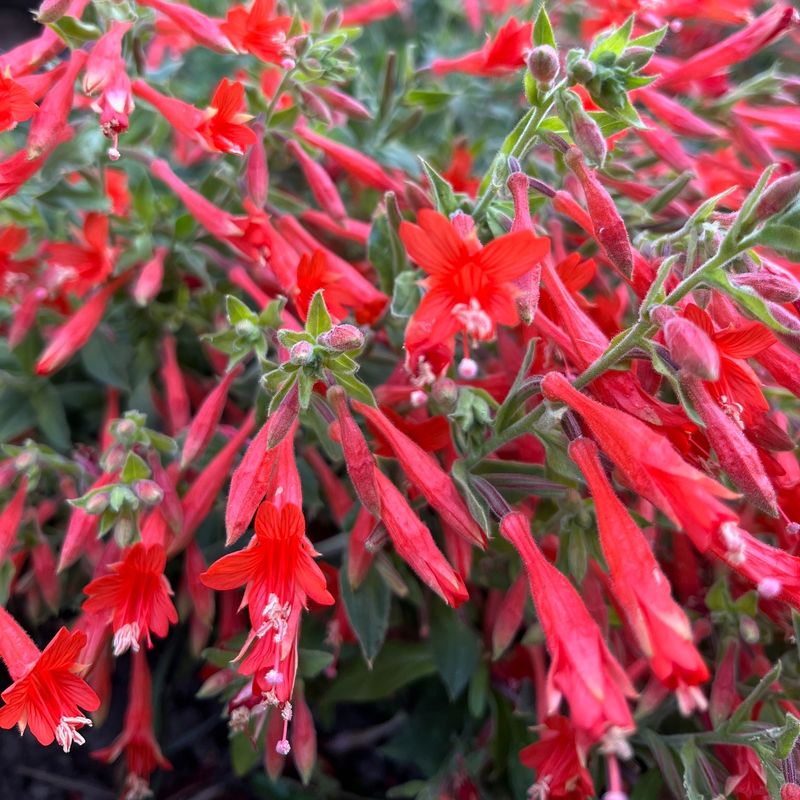
When other plants across a California yard have gone dry and dormant by August, California fuchsia, known botanically as Epilobium canum and related forms, steps in with exactly the kind of flower hummingbirds prefer. The timing is the key advantage: most of the competition for hummingbird attention has already faded, which means a productive California fuchsia patch can become a reliable stop in a landscape that has otherwise gone quiet.
The flowers are tubular and typically red to orange, though some cultivars produce pink or occasionally white blooms. That shape and color combination is a strong match for hummingbird foraging, and UC Master Gardener guidance on native plants for summer bloom identifies California fuchsia as a valuable late-season nectar source precisely because it fills a gap when other plants cannot.
The California Native Plant Society similarly highlights it as a standout for August color and hummingbird value.
Once established, the plant handles California’s summer heat and reduced rainfall reasonably well. UC Marin Master Gardeners’ profile of Epilobium describes it as tolerating heat and drought after roots are in, making it a practical fit for water-conscious California homeowners.
That said, heat and drought tolerance after establishment does not mean the plant requires no thought or care, and it does not mean California fuchsia alone explains every late-summer gathering in every yard.
Color, tubular shape, and bloom timing together make it a strong candidate, but hummingbirds also respond to flower quantity, proximity to water and cover, insect availability, and the broader habitat around the plant. A single specimen in an otherwise sparse yard is a different resource than a mass planting surrounded by other native layers.
Match the plant to your California microclimate
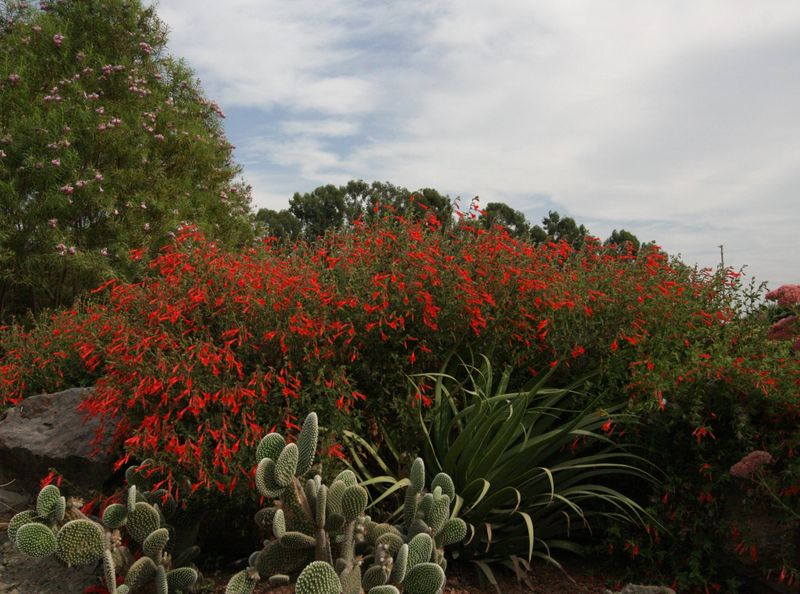
California fuchsia is not one plant with one set of habits. The group includes named cultivars that differ meaningfully in height, spread, foliage color, bloom timing, water needs, and growth behavior.
Treating them as interchangeable is one of the more common mistakes homeowners make when planting for hummingbirds, because a cultivar that thrives in a cool coastal garden may sprawl aggressively or need more water in a hot inland setting.
UC’s California fuchsia cultivation guide notes that most forms perform best in full sun, though very hot sites can benefit from some afternoon shade to prevent stress during peak summer heat. Well-drained soil is a consistent requirement across cultivars, because standing moisture around the roots invites problems regardless of the climate zone.
Hot inland gardens may need occasional supplemental irrigation for reliable late-summer flowering even in mature plants.
Some California fuchsia forms spread by underground rhizomes and can move well beyond their original planting area over a few seasons. Others may reseed.
UC Master Gardener guidance on planting California fuchsias recommends checking a cultivar’s spread habit before placing it near other plants or hardscape that you want to keep clear. Compact forms exist and tend to be easier to manage in smaller beds.
Coastal gardeners generally have a wider range of cultivars that will perform well without extra irrigation. Foothill and inland valley gardeners should prioritize cultivars rated for higher heat tolerance and plan for more hands-on management.
No single cultivar recommendation applies statewide, so checking with a local nursery that carries regionally tested stock is a practical first step before buying.
Water new plants while their roots establish
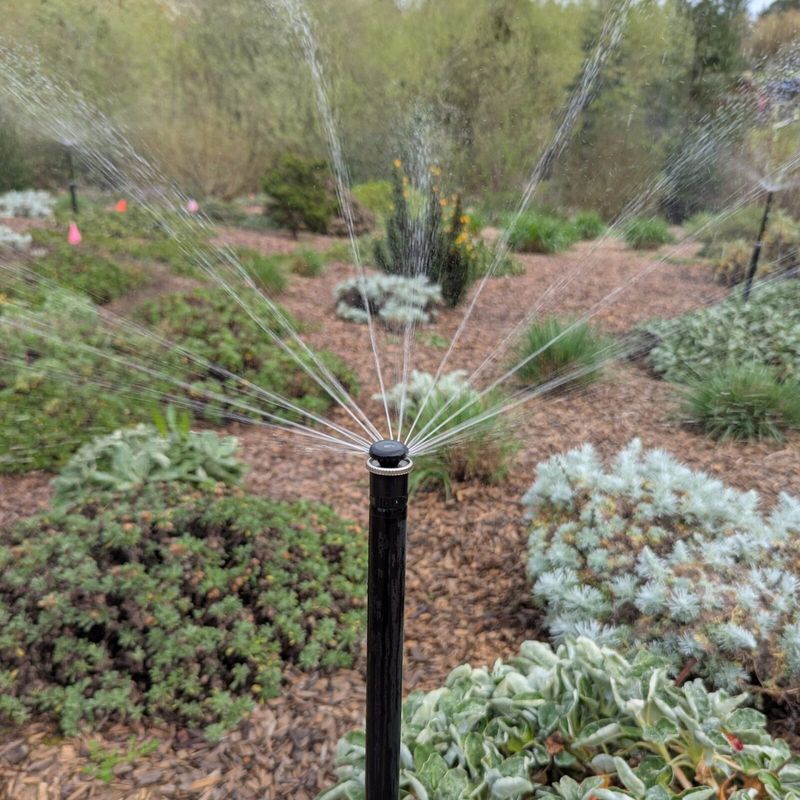
“Drought tolerant” is a description of a mature plant’s long-term behavior, not a license to skip watering after you put it in the ground. Newly planted California fuchsia needs regular supplemental irrigation while its root system grows deep enough to access soil moisture on its own.
Skipping that establishment phase is one of the most common reasons a native plant fails in its first summer.
California Native Plant Society guidance for beginning native gardeners is direct on this point: plan to water newly planted natives consistently through the first dry season, and adjust from there based on how the plant responds. The length of the establishment period depends on your soil, the size of the plant at installation, and how hot and dry your site runs.
Once a California fuchsia is established, mature watering should track local conditions rather than a fixed schedule. The UC Marin Master Gardeners’ Epilobium profile notes that coastal plants may need little to no summer water once settled, while hot inland sites benefit from occasional deep irrigation to maintain good flowering.
Overwatering in heavy or poorly drained soil causes more failures than underwatering in most established plantings.
After bloom season winds down, many California fuchsias die back or go partially dormant in winter. Cutting plants back during dormancy, or just after flowering depending on the cultivar and your local climate, keeps them tidy and encourages fresh growth the following season.
Left unmanaged, some forms can become woody and sprawling, which reduces flower production and makes the plant look worse than it performs. A native label does not mean the plant maintains itself.
Build habitat around the bloom
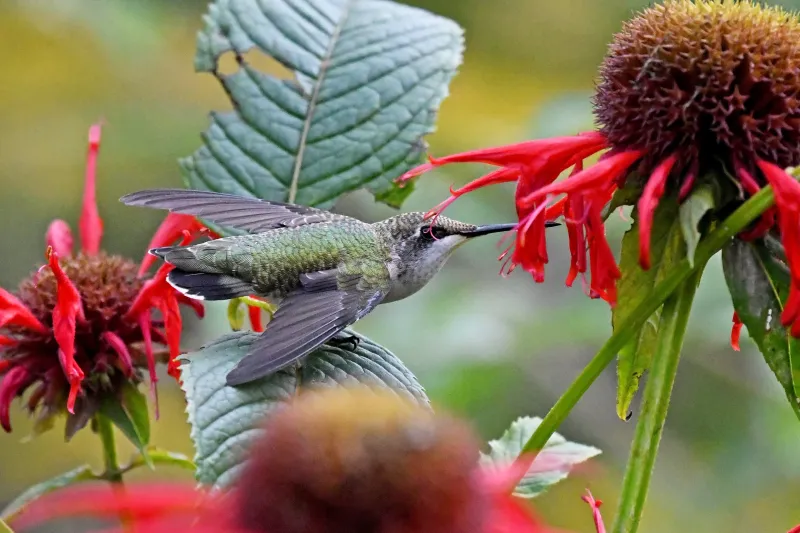
A single plant in an otherwise bare yard is a snack stop, not a habitat. Hummingbirds need more than nectar to use a yard reliably, and understanding that changes how you think about what to plant and what to leave alone.
Nectar fuels their movement, but protein comes from somewhere else entirely.
Cornell Lab of Ornithology research on the real hummingbird diet confirms that small insects and spiders make up a significant part of what hummingbirds actually eat. They catch prey mid-air, glean it from leaves, and even steal it from spider webs, which they also use as nesting material.
A yard treated with broad-spectrum pesticides can look full of flowers and still be a poor environment for nesting or raising young.
Vegetation structure matters too. Perches for resting and watching territory, dense shrubs for shelter, and layered plantings that provide cover at different heights all make a yard more functional.
UC Master Gardeners’ guidance on creating hummingbird gardens recommends planning for successive bloom periods rather than concentrating resources on one plant or one season. Native penstemons, monkeyflowers, sages, manzanitas, currants, and honeysuckle can each carry hummingbird interest through different parts of the year, reducing the gap when California fuchsia is not yet in bloom or has finished.
The practical takeaway is that California fuchsia works best as part of a layered planting rather than as a standalone fix. Add the bloom, but also protect the insects around it, keep some woody structure nearby for perching, and resist the urge to tidy everything into bare mulch.
Treat feeders as an optional, carefully managed choice
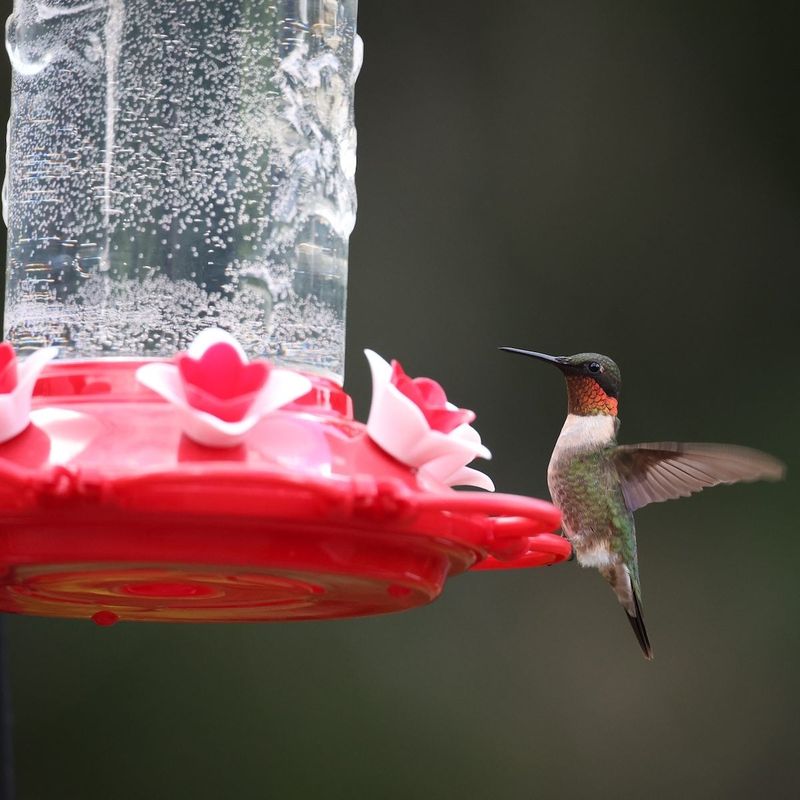
Flowers are the stronger long-term investment for hummingbird habitat, but many California homeowners also use feeders, and there is nothing wrong with that choice as long as the feeder is managed carefully. The risks come not from the concept but from neglect, wrong ingredients, and misunderstanding what a feeder can and cannot do.
The UC Davis Hummingbird Health and Conservation Program’s feeder guidance recommends one part plain white cane sugar dissolved in four parts water. That is the complete recipe.
Honey ferments quickly and can cause a fatal fungal infection. Artificial sweeteners provide no calories.
Raw or unrefined sugar contains compounds that can harm birds. Red dye is unnecessary and potentially harmful.
The feeder itself does not need to be red for birds to find it.
Hot weather is the biggest management challenge. Sugar water ferments and grows bacteria and fungi quickly when temperatures climb, and a cloudy or sour solution can sicken birds.
Audubon’s hummingbird feeding FAQ recommends replacing solution every day or every other day in hot weather and cleaning the feeder thoroughly each time. Choose a feeder that disassembles easily, because crevices that cannot be reached and scrubbed become problem spots.
Leaving a feeder out does not trap normally migrating hummingbirds. Migration is driven by day length and internal cues, not food availability, and Audubon is clear that a well-maintained feeder will not delay a bird that is ready to move.
California’s resident Anna’s and some Allen’s populations may visit year-round regardless.
One genuine caution deserves mention: the California Department of Fish and Wildlife’s Wildlife Health Lab takes a more precautionary position and recommends against artificial feeding or watering stations because they can increase close contact between birds, raise disease transmission risk, and attract pest species. That position does not mean feeders are universally harmful, but it is a real conservation consideration worth weighing alongside the enjoyment they provide.
Check applicable fire rules before planting near structures
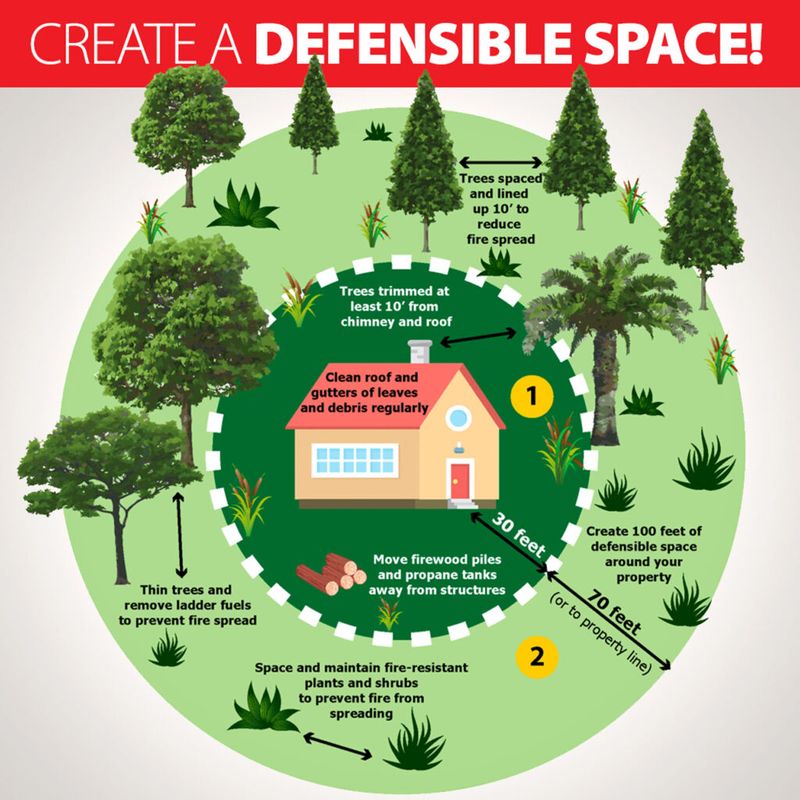
Drought tolerance and fire safety are separate properties, and confusing them can create real problems in California’s fire-prone communities. A plant that survives on little water is not automatically a safe choice near a structure.
Under severe fire conditions, nearly any plant can burn, and placement, spacing, hydration, and maintenance matter far more than any label a plant carries.
UC Marin Master Gardeners’ fire-smart plant selection guide emphasizes that no plant is fireproof and that a fire-resistant landscape depends on how plants are arranged and maintained, not just which species are chosen. Dead stems, dry leaves, and accumulated debris around a California fuchsia patch can become fuel even if the living plant is relatively low-risk.
Cutting plants back after bloom and removing dead material during dormancy is part of responsible fire-season maintenance.
UC Marin’s fire-smart landscape planning resource also stresses that spacing between plants matters as much as species selection, because tightly packed vegetation can allow fire to move more easily through a yard.
California’s defensible-space requirements are not uniform. The zone closest to a structure, sometimes called Zone 0 or the ember-resistant zone, has the most restrictive rules about combustible vegetation and materials, but the specific requirements depend on your property location, whether state law or local ordinances apply, and what your local fire authority or building jurisdiction has adopted.
Some jurisdictions impose stricter standards than the state baseline. Before planting California fuchsia or any other plant near a home, especially on a hillside or wildland-interface property, check directly with your local fire authority for the controlling requirements that apply to your specific address.
Use the visitors as a clue, not a diagnosis
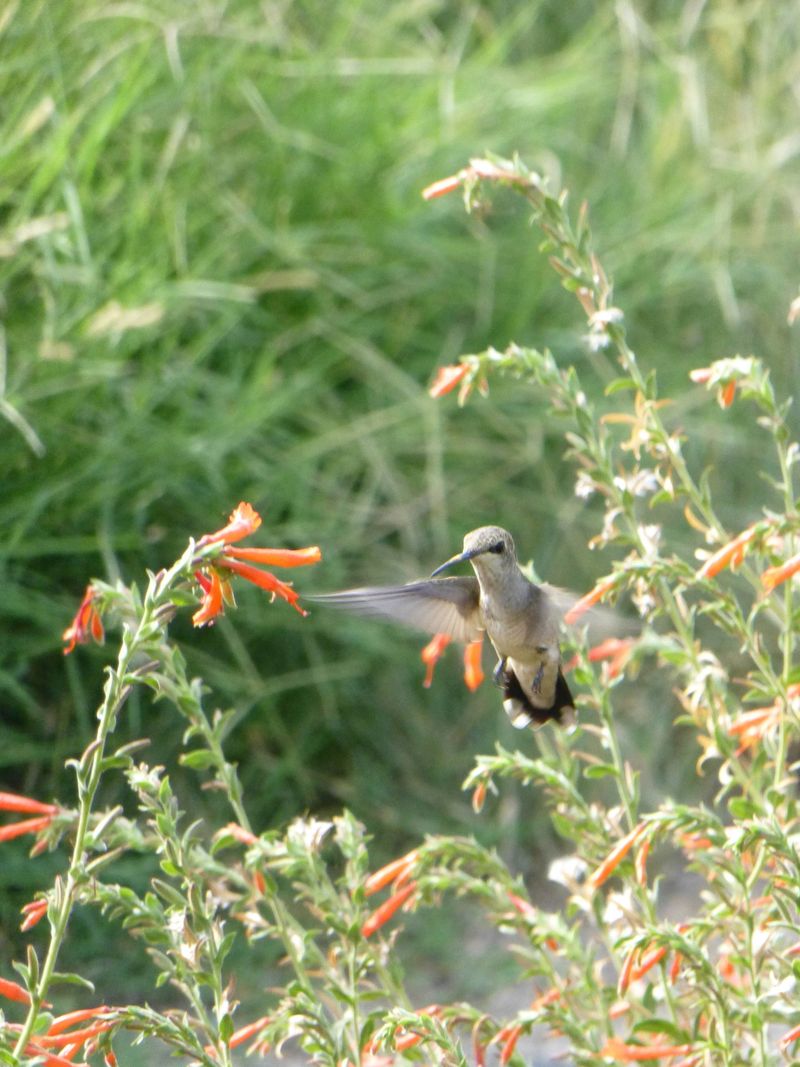
A surge of hummingbird activity in late summer is worth paying attention to, but the most useful question is not “why are they all here?” but rather “what does my yard currently offer, and what is missing?” That shift in framing turns an exciting observation into a practical garden audit.
Start by checking what is actually blooming. If late-season native nectar sources are scarce in your yard, adding a California fuchsia suited to your site and microclimate is a reasonable next step.
Pick a cultivar matched to your sun exposure, soil drainage, and space, water it consistently through its first dry season, and build insect-friendly habitat around it rather than treating the flower as a standalone solution.
If you choose to add a feeder, follow the correct recipe and commit to the cleaning schedule. Review applicable fire rules before placing any new plant near a structure, and confirm requirements with your local fire authority rather than assuming a statewide standard applies.
UC Master Gardener hummingbird garden guidance reinforces that the goal is a yard that supports birds across multiple seasons, not just during one dramatic week in August.
California fuchsia can extend nectar availability into fall and give your yard a real advantage during a competitive late-summer window. A yard built around layered, sequential bloom, clean water, insect habitat, and thoughtful placement is the kind of place hummingbirds return to long after the August movement has passed.