
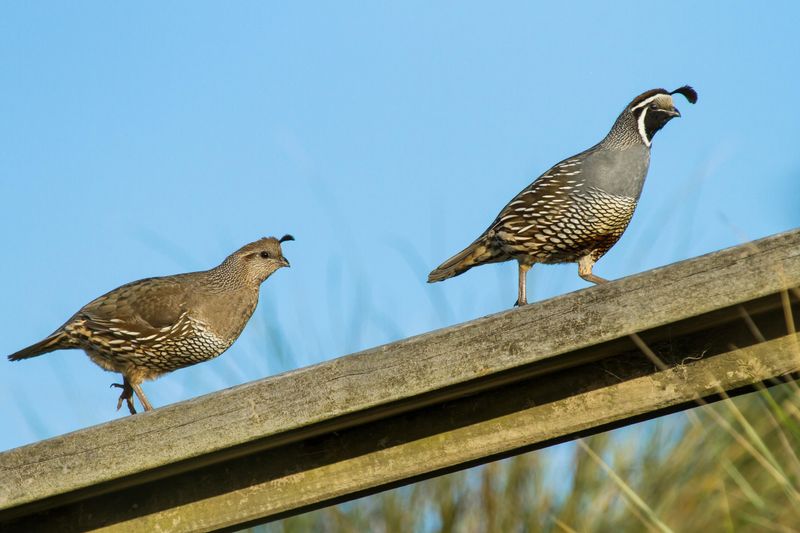
Few California birds are as easy to love as the quail, with its bobbing head plume and its busy, trotting walk. When two of them show up in your yard at the same time every morning, it is natural to wonder what it means.
The answer is more ordinary than a secret message, but it still tells you something useful about your yard. Here is what the habit can and cannot tell you, and the one thing worth leaving alone.
Morning visits can put your yard on a regular route
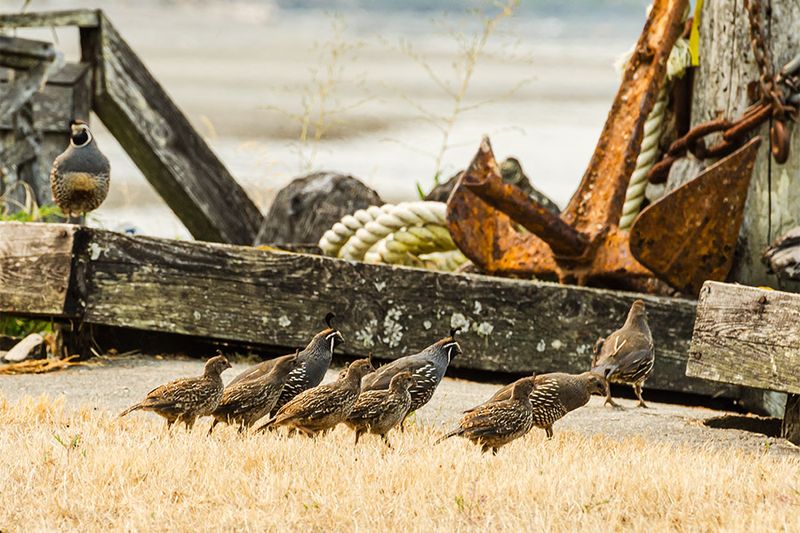
Morning is prime feeding time for California Quail. Cornell Lab of Ornithology describes them feeding in the morning and evening, scratching on the ground under shrubs or out in open areas close to cover.
So a daily appearance at sunrise fits normal quail behavior.
The simplest reading is that your yard, or the habitat right around it, is part of a regular foraging route. Birds that find something useful along a path tend to keep walking that path.
That something could be seeds, insects, green plants, or a safe way to move between patches of brush.
Which of those is pulling these particular birds in is something you cannot know from the visits alone. You might guess based on what grows in your yard, but a guess is still a guess.
Two quail trotting through at 7 a.m. could be feeding on your lawn edge, or simply cutting across to the vacant lot next door.
It also helps to be clear about what the habit does not prove. It does not show that your yard is uniquely safe, since a bird passing through is not telling you how it rates the neighborhood.
It does not mean the birds have picked you out, and it does not mean they have nested nearby. Ground-feeding birds follow food and cover, and they do it every day without any special reason tied to the person watching from the window.
Think of the visits as a small, pleasant clue. They suggest your property is connected to the wider habitat these birds use, and that is worth protecting.
Seeing two quail does not establish a pair
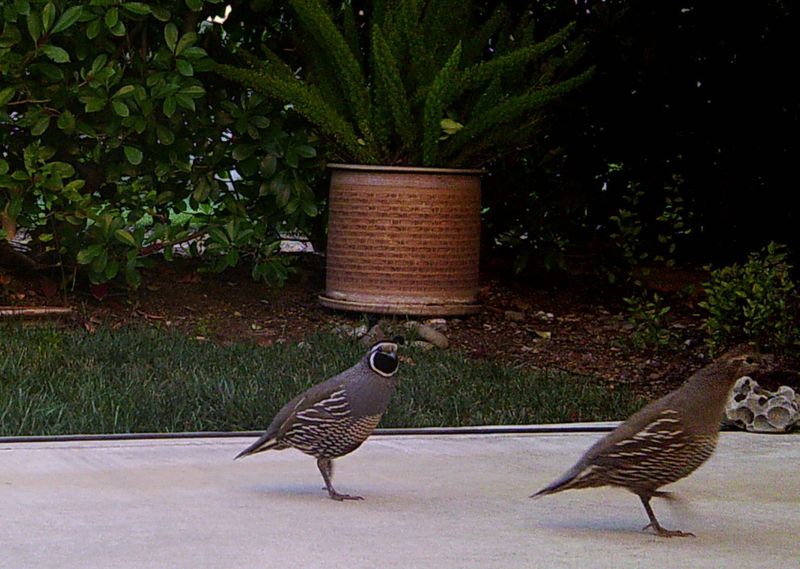
The headline version of this story says a pair is visiting, but two birds are just two birds. Unless someone has watched them closely over time, their relationship is unknown.
They could be a male and female, two males, two females, or part of a bigger group where the rest are out of sight.
California Quail are social, and Cornell Lab of Ornithology notes they commonly travel in groups called coveys. A pair of birds at your feeder-free lawn might be the two that happened to wander into view.
Family life is also more tangled than the one-male, one-female picture. A molecular study of quail family behavior in The Condor examined these arrangements and showed that breeding and family groups can be more complex than they look from a distance.
So what can you safely say? You can say two California Quail are using your yard or passing through it.
You can say they are comfortable enough to move through the area in daylight.
What you cannot say is that they are bonded, breeding, or raising chicks. The number of birds and the regularity of their visits do not settle any of that.
If you want to learn more, watch over several weeks. Note how many birds appear, whether the group changes, and whether any small chicks ever show up.
That kind of patient observation tells you far more than a single glance at two birds.
Cover works best beside open ground
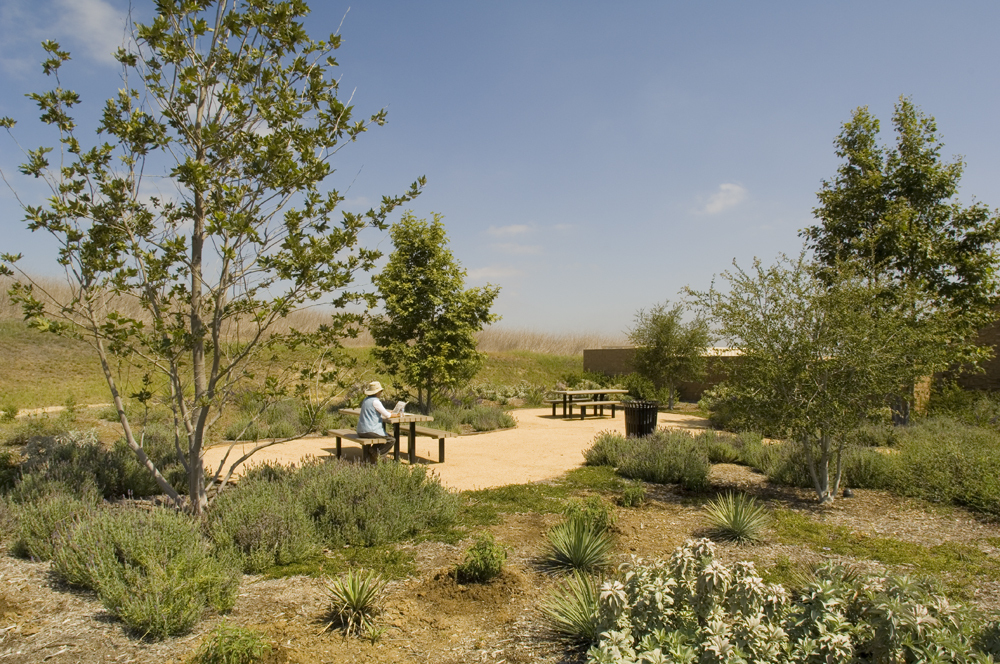
Quail like a particular kind of layout: brushy cover close to open areas where they can scratch for food. The California Department of Fish and Wildlife’s life-history account says quail seldom venture far from cover to feed.
It also notes that hot weather increases their need for free water, so water availability in the surrounding landscape is part of the picture too.
That helps explain why a yard with shrubs along one edge and open ground in front can draw regular visitors. The brush offers a quick place to duck out of sight, and the open ground gives room to forage.
More shrubs are not automatically better, though. A California-wide study of urban parks found that shrub cover can help quail colonize a park.
But very high shrub cover in smaller parks was linked to lower persistence, meaning quail were less likely to stay over time. That fits the idea that they need both cover and open space for foraging and nesting.
Keep in mind that this research looked at parks, not backyards. It does not hand you a formula, such as a percentage of shrubs to plant.
A single yard sits inside its own neighborhood, with its own slopes, neighbors, and nearby open land.
The practical takeaway is simple. If your yard already offers a varied structure, with established shrubs next to open ground, that mix is worth keeping.
Skip the urge to pack in more brush just because quail are around.
Natural foods may help, but feeders are not the whole story
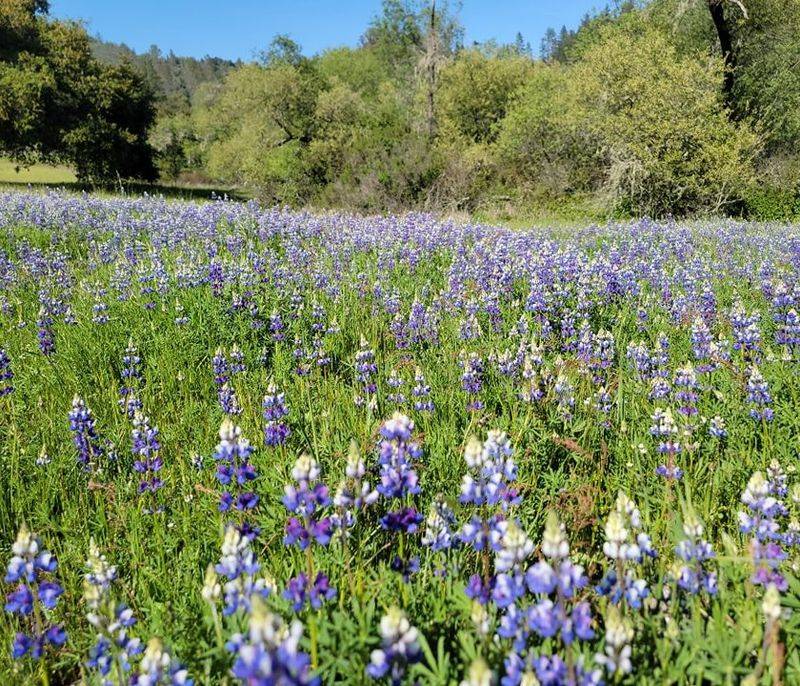
Seeds are a big part of a quail’s diet, so it is tempting to assume yours are coming for birdseed. Nobody can say that, and many quail visit yards that have no feeder at all.
Natural foods growing in and around your yard, along with cover and surrounding habitat, may all play a role.
For a California example, the Department of Fish and Wildlife’s quail plant recommendations suggest brushy plants for cover and forbs for food. Plants named there include brittlebush, deerweed, redberry, Pacific blackberry, lupine, and clover.
Treat these as examples, not a shopping list. What suits your yard depends on your local climate zone and what already grows well.
Water deserves a careful look too. Natural water in the landscape is one thing, and adding a birdbath is another.
Some gardening advice suggests a shallow dish at ground level. The state’s Wildlife Health Lab takes a more cautious view.
CDFW guidance on avian disease advises against providing artificial food or water, because birds crowding at feeders and birdbaths can spread disease to each other.
Birdseed can also draw rodents, which adds another reason to skip it. So there is no need to buy anything to keep quail coming.
If you want to help, the better path is leaving established plants in place and letting natural foods do their job.
Do not clear cover just because quail visit
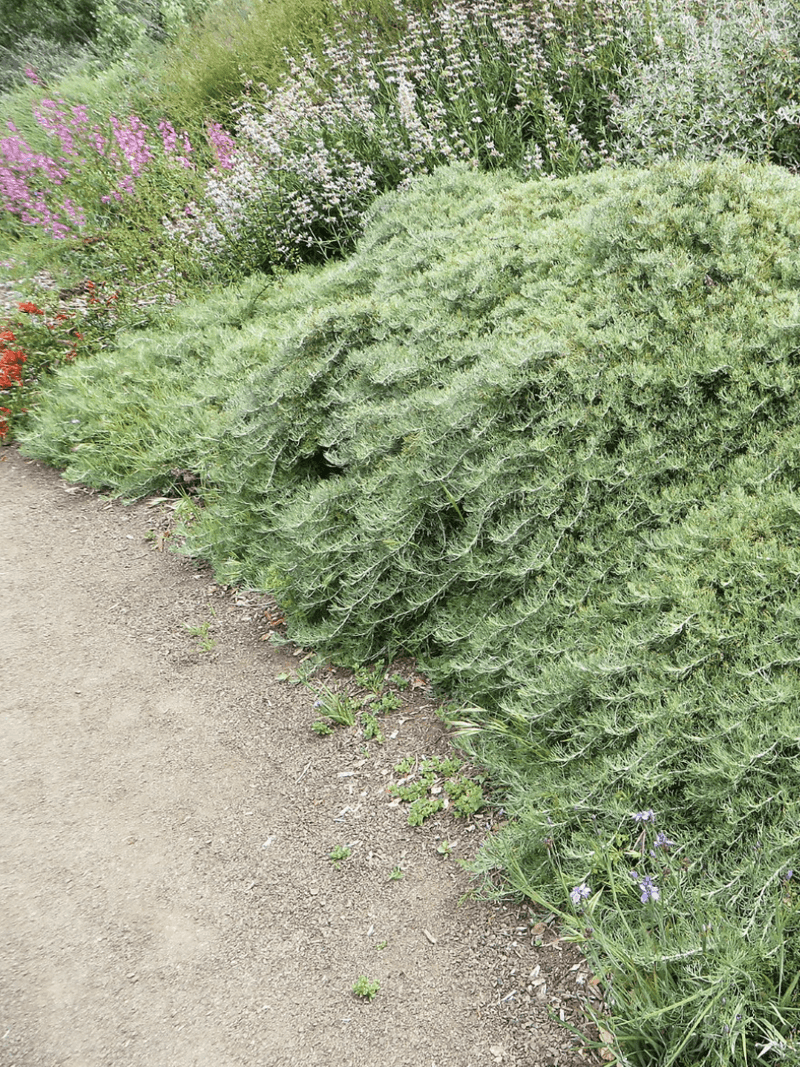
If there is one thing to leave alone, it is the cover. Established shrubs, brushy corners, and thick low plants may be part of why quail feel able to move through your yard.
Clearing them or heavily disturbing them, especially in spring and summer, can remove more than you realize.
California Quail nest on the ground, often hidden in vegetation. The CDFW life-history account covers this ground-nesting habit, and the department advises against removing or disturbing ground nests.
A hidden nest can sit in a spot that looks like nothing more than a tangle of grass.
Seeing quail does not mean a nest is there. Visits alone do not show that, so there is no need to go searching.
Searching is actually the thing to avoid, since walking through cover can do harm.
If you do come across a nest, stay calm and back away. Keep people and pets away from it, and do not touch, move, or relocate the eggs, chicks, or the nest itself.
If you are unsure what to do, CDFW’s guidance on found birds points you to a permitted wildlife rehabilitator or your CDFW regional office.
Routine yard work can usually wait if it means sparing the cover. Trimming and clearing are easier to plan around quail than to undo once a nest has been disturbed.
Treat the visits as a clue, not a diagnosis
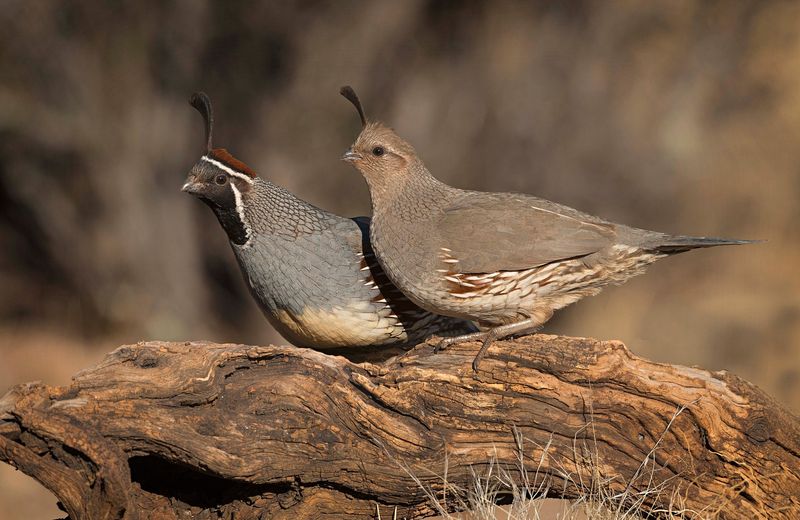
Regular morning visits fit ordinary foraging, as Cornell Lab of Ornithology describes it, along a route that includes your yard or the habitat nearby. They do not reveal the exact attraction, prove the two birds are a pair, or show that anyone is nesting.
What you can do is simple. Keep a varied mix of cover and open ground, and avoid unnecessary disturbance, as the CDFW life-history account suggests for birds that stay close to cover.
The quail are doing their daily rounds, and your best contribution is leaving the route intact.