
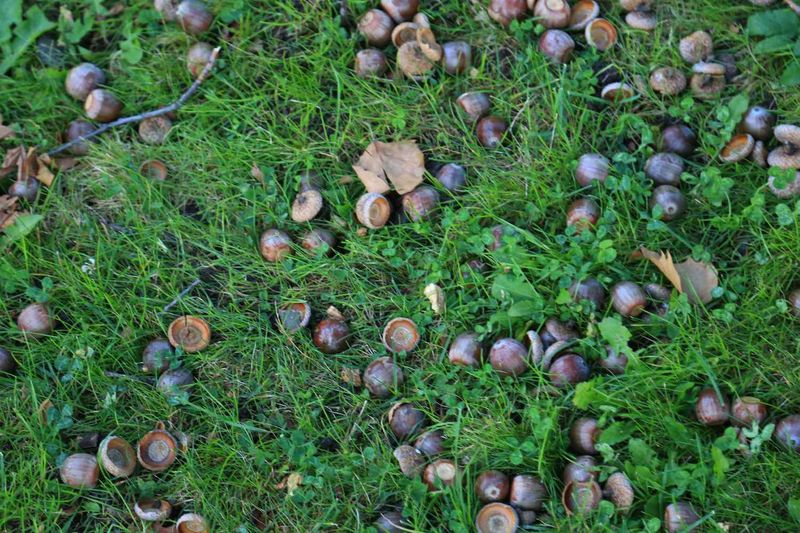
Step outside after a fall breeze and you might hear acorns pinging off the driveway and crunching under your shoes. A heavy drop can make walkways tricky and leave you wondering if the whole mess has to go.
The good news is that you have choices, and none of them involve a perfect lawn. Here is how to decide what to clear, what to compost, and what to leave alone.
Why acorn crops vary from year to year
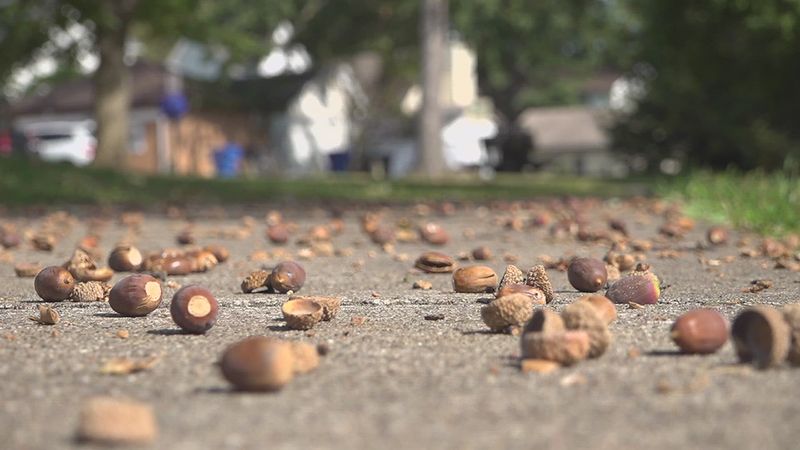
Some falls your oak barely drops a handful, and other years the driveway looks like it has been sprinkled with marbles. That swing is normal.
University of Missouri Extension explains that acorn production varies among oak species, between individual trees, and from one year to the next.
Many things can shape a crop, including weather, pollination, frost, drought, and insects. Because several factors can be at work, the number of acorns in your yard cannot tell you which one mattered.
Two neighbors with different oaks can see very different drops in the same season.
Timing varies too. A September 2025 Texas Public Radio report described live-oak acorns falling early in San Antonio.
That is one local example from one year, so treat it as a snapshot rather than a calendar for Central Texas.
You may hear that a big acorn year means a rough winter ahead. UC Davis says that is folklore, and heavy crops reflect past and current conditions rather than future weather.
A good habit is to simply notice what your own trees are doing this fall and plan your cleanup around how you use your yard.
Do acorns need to come off the lawn?
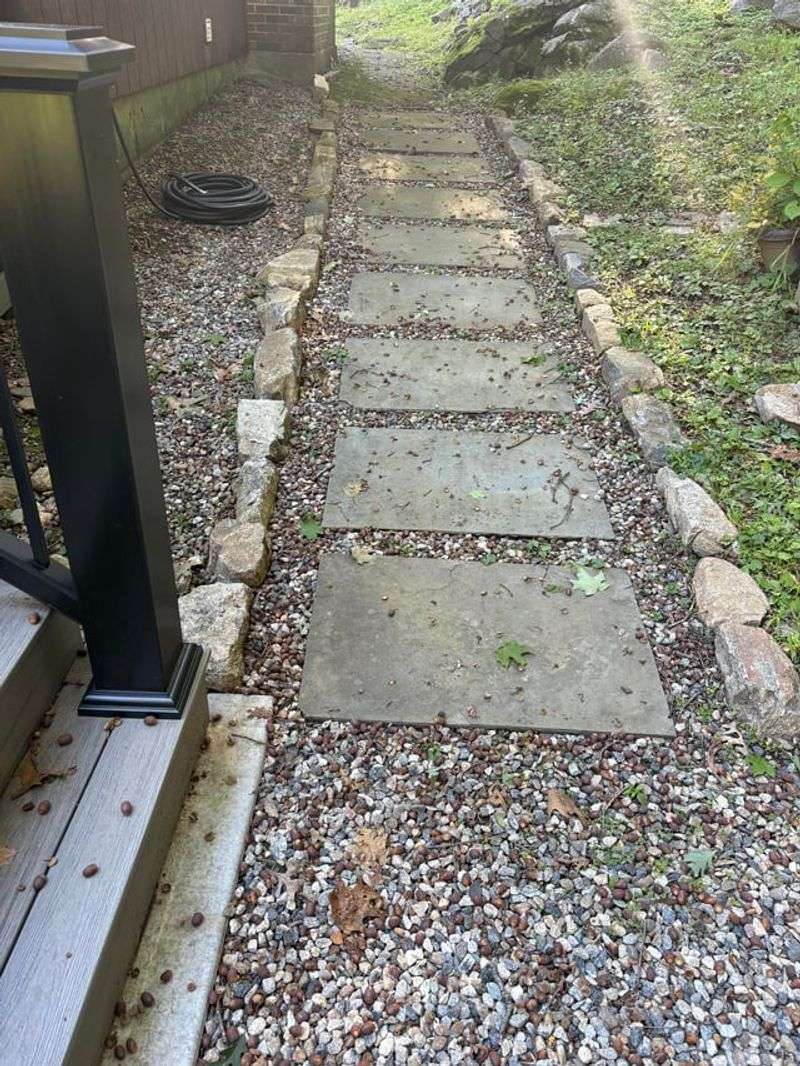
Cleanup is optional. Kansas State University Extension treats removal as a choice and suggests tools only for people who want the acorns gone.
You do not have to pick up every one.
The best reason to clear them is how you use the space. Acorns rolling underfoot on steps, walkways, and driveways are annoying and can make footing unsteady.
The same goes for the patch of lawn where kids play, dogs run, or you set up chairs.
Grass is a different story from what you might expect. Extension guidance, such as Penn State’s fall garden tasks, warns that heavy, compacted leaves can shade or smother turf.
The sources reviewed do not set a similar limit for acorns, so a scattering on the lawn is not the same as a thick mat of leaves. If acorns pile up deep in one spot, clearing them is reasonable, but it is not an emergency.
Wildlife eats acorns, and Missouri Extension lists deer, squirrels, and turkeys among the animals that use them. That tells you acorns have food value.
It does not show that a normal acorn drop causes a rodent problem or reliably brings deer into a yard.
So the rule is simple. Clear the places you walk, park, and play, and let the rest wait.
Choose a cleanup method that fits the yard
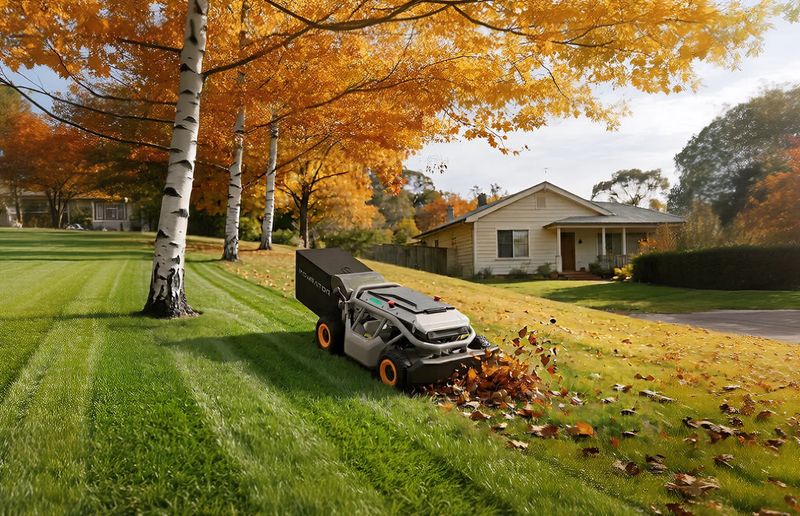
Once you know which spots need attention, match the tool to the job. Kansas State University Extension points to three options: raking, a lawn vacuum, or a sweeper attachment on a riding mower.
The source does not give a schedule or a required amount to remove.
A rake suits small jobs. Think front steps, a patio, or the strip of lawn by the mailbox.
It costs nothing, and you can clear exactly the area you care about without touching the rest.
A lawn vacuum fits a yard where acorns gather across a wider area and you would rather not bend over for long. It can also pick up fallen leaves in the same pass, which helps when both are scattered together.
If you already own a riding mower and have a larger lot, a sweeper attachment lets you cover open lawn while you work. It makes more sense for big, open areas than for tight corners or planted beds.
Many yards end up using a mix. You might rake the walkway, run a sweeper across the play area, and leave the area under the back fence alone.
Matching effort to use keeps the job manageable, and you are free to skip any part of the yard that does not bother you.
Compost the acorns you collect
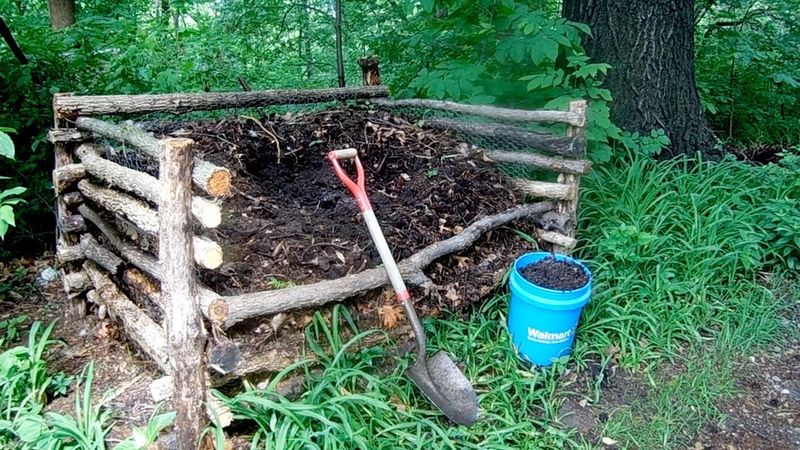
Raked-up acorns do not have to go to the curb. Composting is a good option if you have a bin or pile and can look after it.
Utah State University Extension lists nut shells among compostable materials.
The catch is speed. Woody material breaks down more slowly unless it is chipped or shredded.
Applying that general advice to acorns, cracking or crushing them before they go in should help them break down faster. No acorn-specific composting trial backs this up, so think of it as a sensible guess rather than a proven result.
Do not expect acorns alone to make compost. Mix them with other yard material, such as leaves and grass clippings, so the pile has a range of ingredients.
Every pile needs three things: moisture, oxygen, and time. USU’s backyard composting guide advises turning or adjusting a pile when conditions are poor.
In a Texas fall, a dry pile may need a light watering, and a packed one may need turning so air can get in.
If that sounds like more work than you want, skip it. Composting is a bonus for people who already enjoy it, not a requirement for handling acorns.
Leave some where wildlife can use them
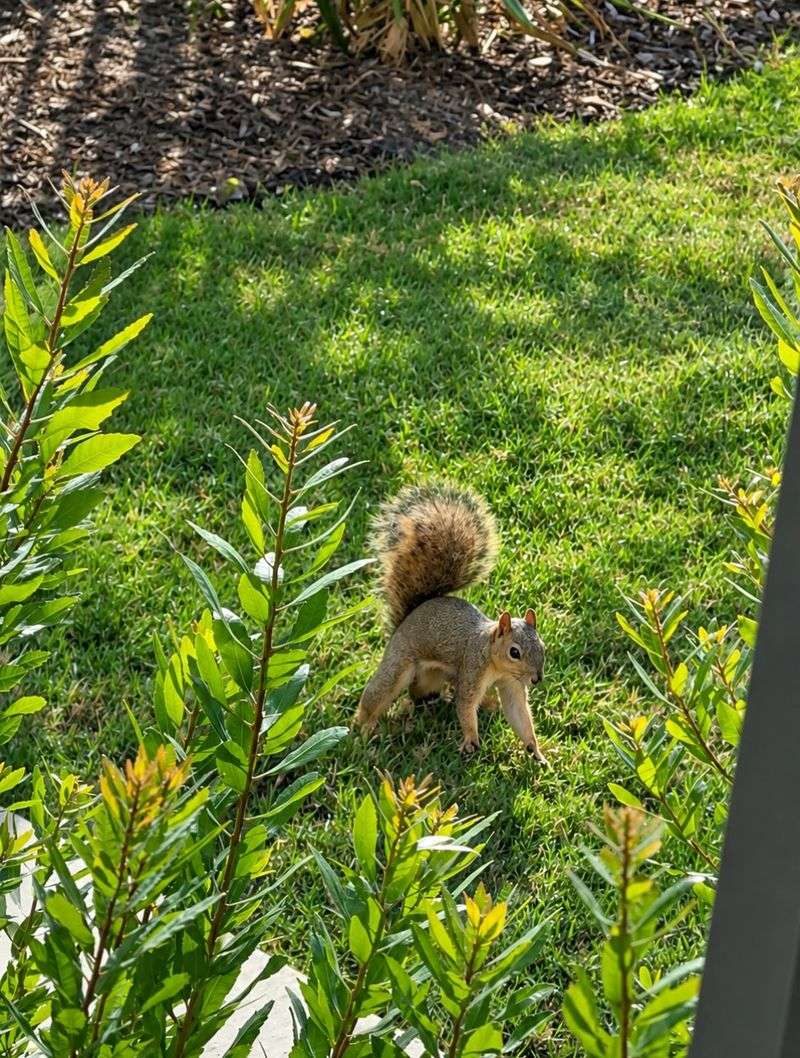
Squirrels burying acorns across the lawn are a familiar fall scene. Missouri Extension describes acorns as a fall and winter food for white-tailed deer, squirrels, turkeys, and other wildlife.
If you like having animals around, leaving some acorns is a fair choice.
You do not have to leave them everywhere. A practical approach is to clear the walkways and play areas, then let acorns lie in a back corner, under a hedge, or along a fence line.
That way the useful parts of the yard stay usable.
It helps to keep two ideas apart. Acorns are food for wildlife, but that does not tell you which animals will visit your property, or how many.
Whether you see squirrels, birds, or deer depends on many things beyond your oak tree, such as nearby habitat and what neighbors have planted.
It also does not mean a pile of acorns will cause a pest problem. A normal residential drop is not shown to bring rodent infestations.
Leaving some is simply an option. If you would rather have a tidy yard, that is fine too, and you can still collect acorns and compost them.
Keep animal-safety advice specific
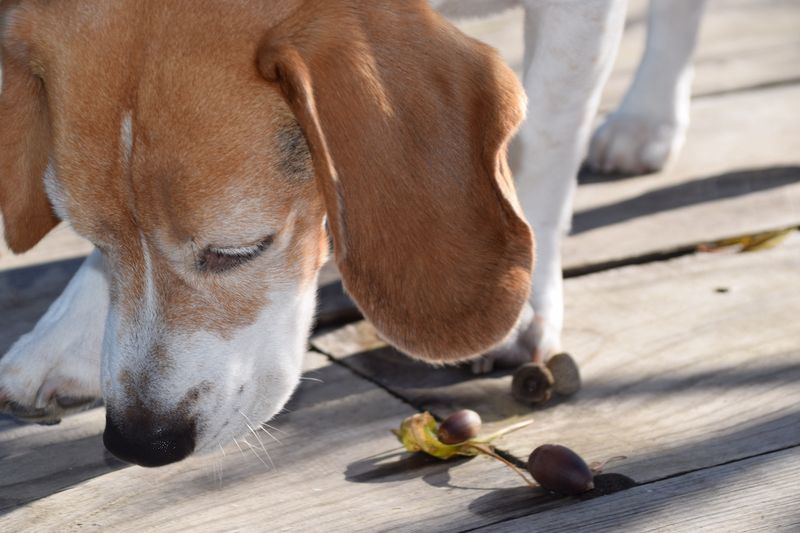
Because wildlife eats acorns, it can seem natural to let pets or livestock do the same. That is not a good idea.
Acorns are food for wild animals, and nobody should feed them to a dog, horse, or goat.
For dogs, Texas A&M’s veterinary school says acorns are generally not toxic. It still advises watching your dog after ingestion for choking, vomiting, or a drop in appetite.
If your dog likes to scoop up acorns, a quick sweep of its favorite spots makes sense.
Livestock are a separate matter. The Merck Veterinary Manual describes poisoning after large amounts of young oak leaves or green acorns, with serious stomach and kidney effects in susceptible animals.
Texas A&M’s range plants resource points to livestock risk, especially when animals eat a lot of acorns in fall and early winter.
If you keep animals near oaks, check pens and pastures after a heavy drop and remove what you can. Call a veterinarian if an animal eats a large amount or shows symptoms.
Do not assume what is fine for one species is fine for another.
Make a simple plan for your yard
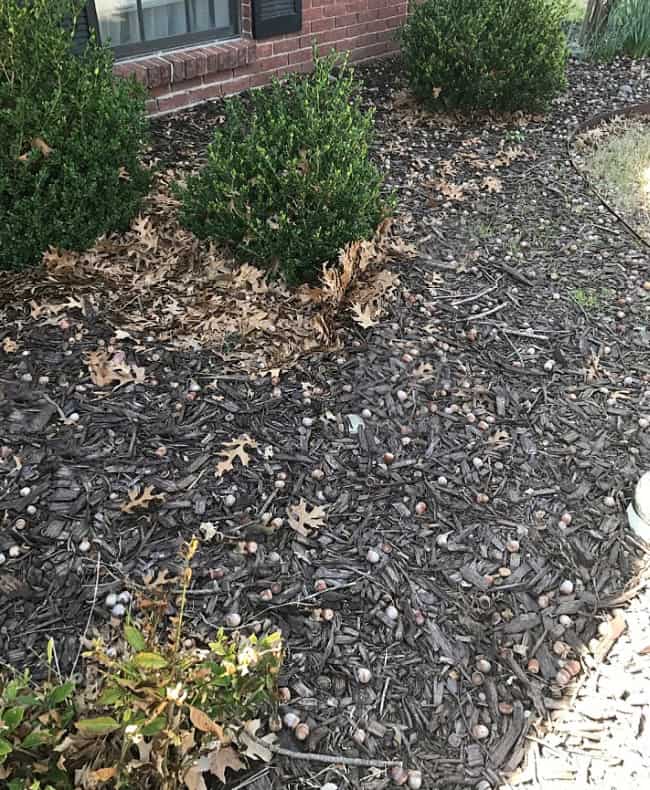
Start with the places you use most and clear acorns there with a rake, lawn vacuum, or mower sweeper. Compost what you collect if you can keep a pile moist, aerated, and patient.
Leave a corner alone if you want to keep a food source for wildlife.
An oak is going to keep dropping acorns, so the goal is a yard that works for you, not one that is spotless.