
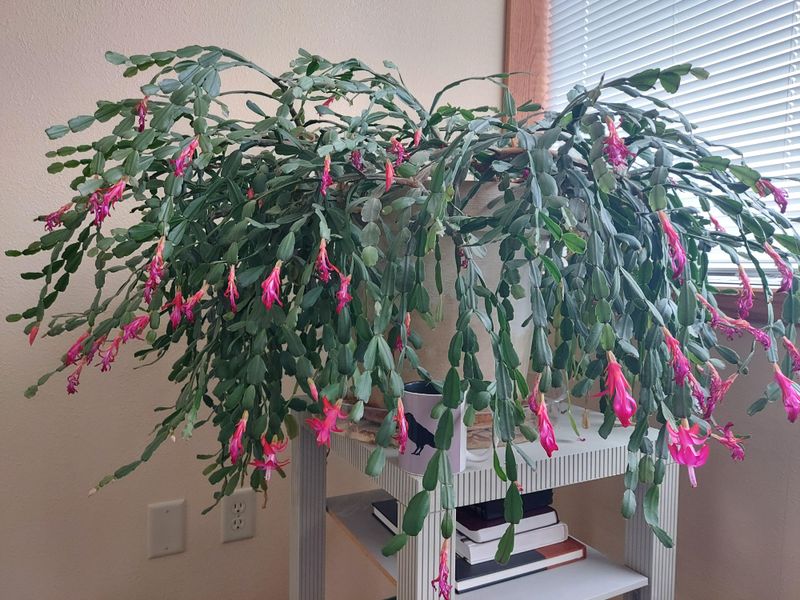
It is November, and you are peering at your holiday cactus, hoping to spot little buds. Whether you see a few or none at all, what you do now matters.
November care can protect buds that are already forming, and it can give a budless plant a fair shot at flowering. Here is how to figure out which situation you are in and what to do next.
November care can protect buds better than it can create them
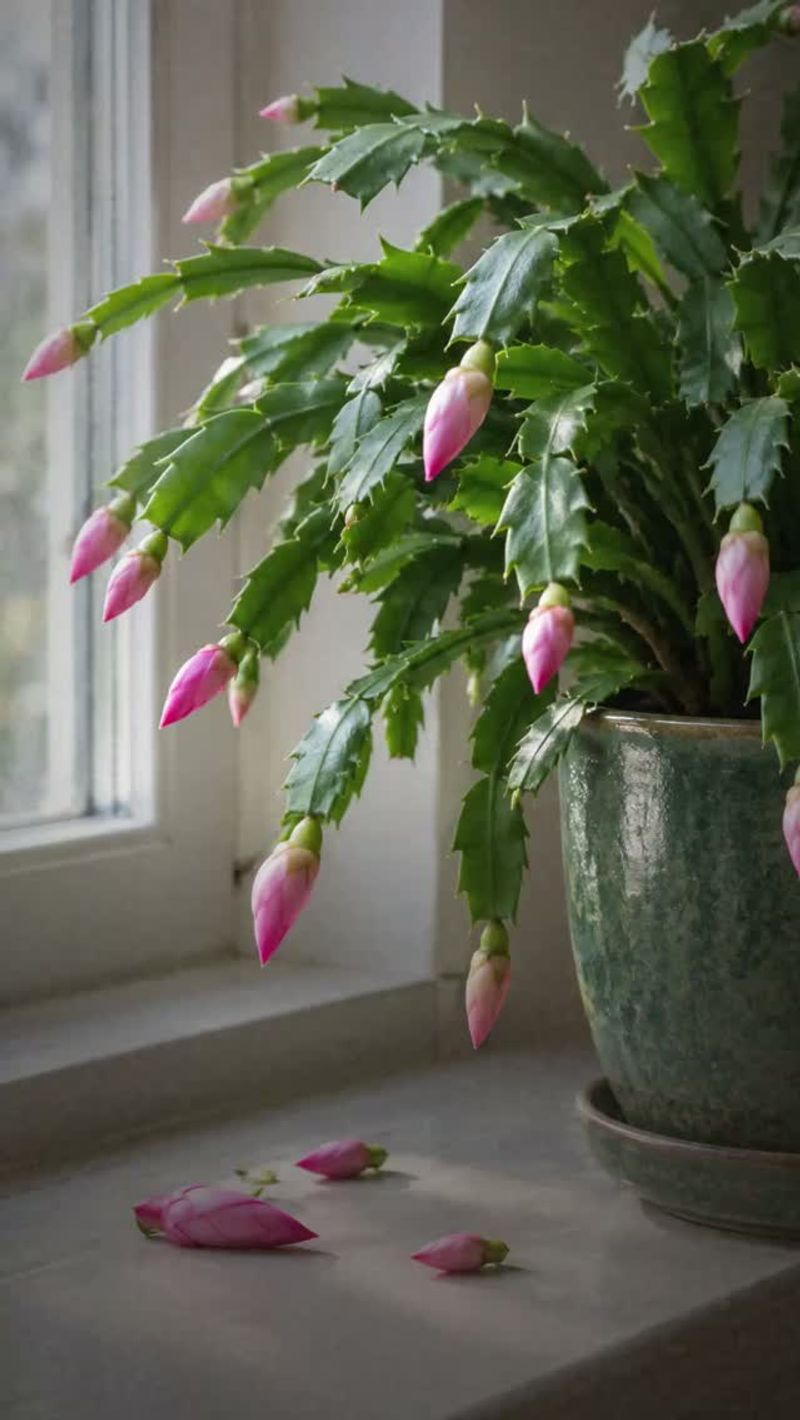
Seeing a bare plant in November can feel like a small emergency. Here is the honest picture: flowering starts with long, uninterrupted nights and cool conditions, and that process takes several weeks before buds even appear.
Buds then need more time to grow and open.
For a sense of the timeline, UF/IFAS gives an example where treatment started around October 14 leads to full bloom near December 23. Starting in November leaves less room for that schedule.
So the goal this month is simple. If buds are already forming, protect them.
If you see none, you can still offer the right nights and temperatures, but Wisconsin Extension notes that cultivar and earlier growing conditions affect timing. A Christmas bloom is possible for some plants, never promised, and a plant packed with flowers is not something November care can guarantee.
Identify the plant and check whether buds have formed
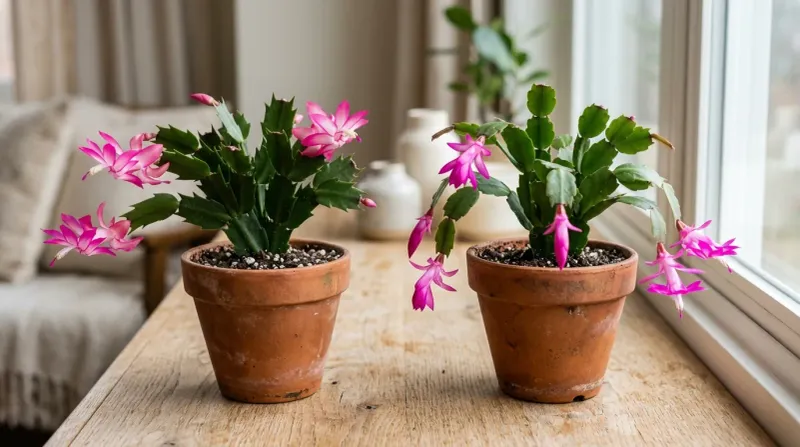
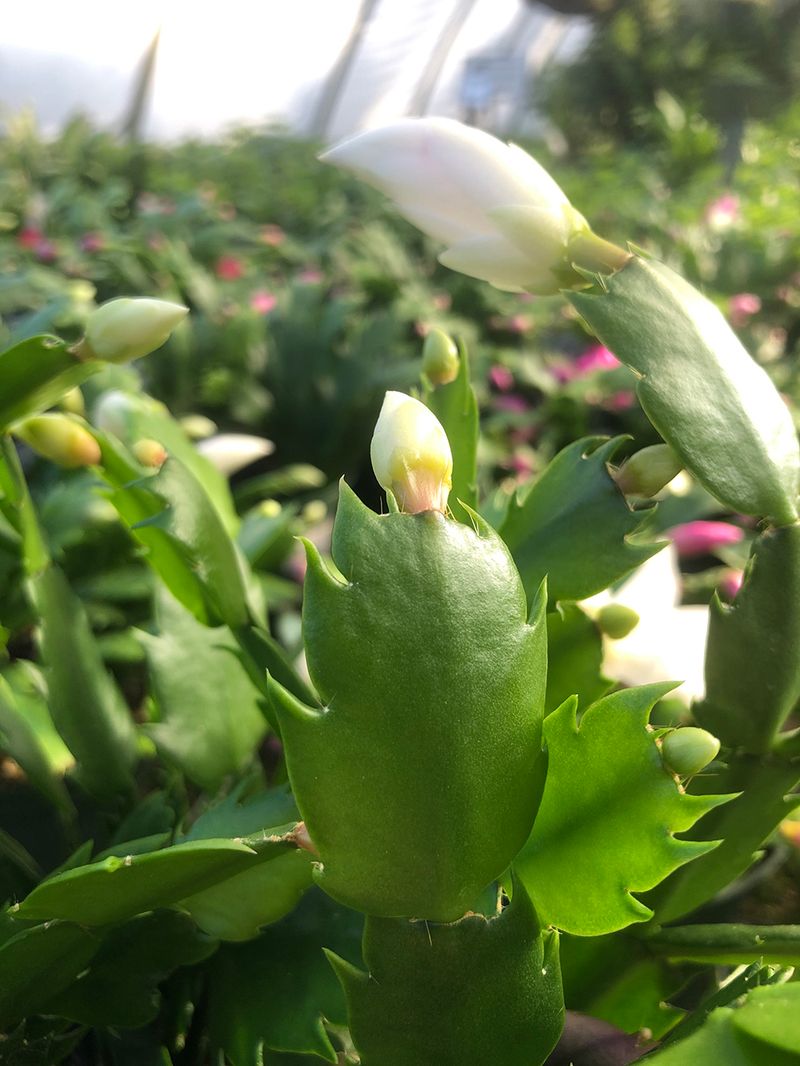
Start with a close look at the tips of the stems. Buds show up as tiny bumps or small pinkish nubs at the ends of the segments.
Gently turn the plant and check all sides, since buds can hide.
Next, check which plant you really have. Many plants sold as Christmas cactus are actually Thanksgiving cactus, which usually blooms earlier.
Illinois Extension explains that Thanksgiving cactus segments have pointed, claw-like teeth, while true Christmas cactus segments have smoother, rounded edges.
This matters for your expectations. A pointy-edged plant with no buds in late November may simply be on a different schedule than a rounded-edge one.
Knowing the type keeps you from worrying over a plant that is not actually behind.
Give a budless plant consistent, uninterrupted nights
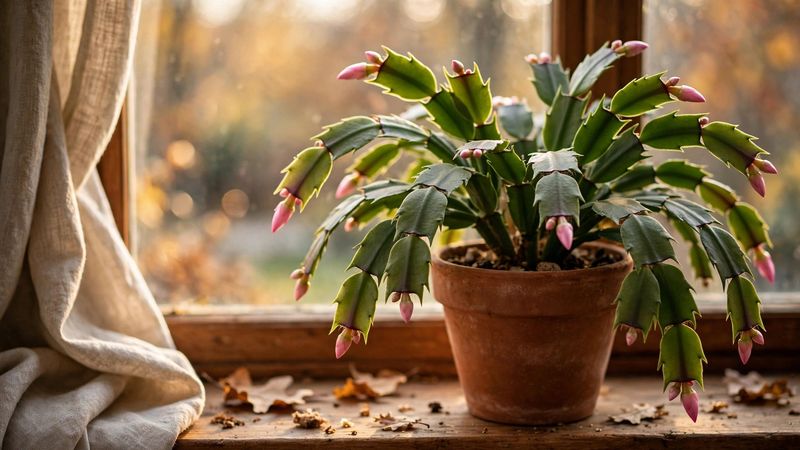
If your plant has no buds, give it bright light during the day and a naturally dark room at night. Keep it away from lamps, hallway lights, and televisions, because even modest light at night can interrupt the process.
Advice on the exact schedule differs. Clemson suggests at least 14 hours of darkness for six weeks.
Illinois Extension recommends at least 12 hours for 5 to 6 weeks, and Wisconsin describes about four weeks. Treat these as a range, and pick a steady routine instead of chasing one perfect formula.
UF/IFAS describes a dark period from 5 p.m. to 8 a.m. for six weeks. If you use a closet or a covering, keep the timing the same every day, and make sure the plant does not overheat or get squashed.
Uncover it each morning so it gets daylight.
Use cool indoor conditions without exposing the plant to cold
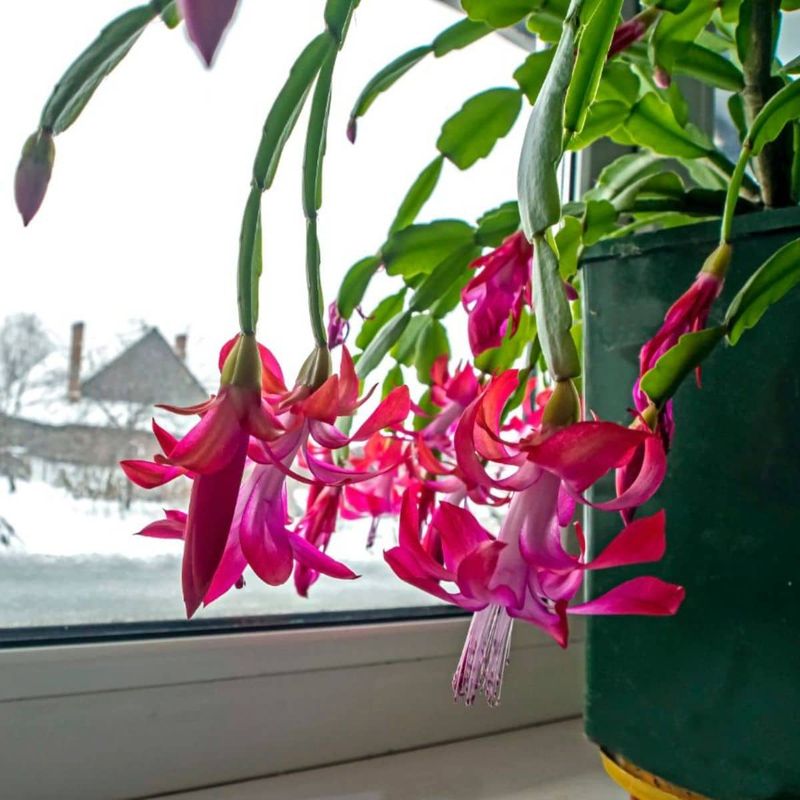
Temperature plays a part in bud initiation too. A cool room can help, but cool does not mean cold.
As a practical reference, Illinois Extension suggests daytime temperatures of 65 to 70°F and nights of 55 to 65°F. Think of those as a guide, not a guarantee.
Choose a spot indoors that stays steadily cool, like a spare bedroom or a bright but unheated room. Keep the plant away from frost, cold drafts, and glass that gets icy at night.
Temperatures below 50°F risk damage or bud drop, so do not chill the plant to chase a bloom date.
A cheap thermometer near the plant takes the guesswork out. Check it at night, since that is when rooms near windows dip the most.
Protect formed buds with steady conditions and careful watering
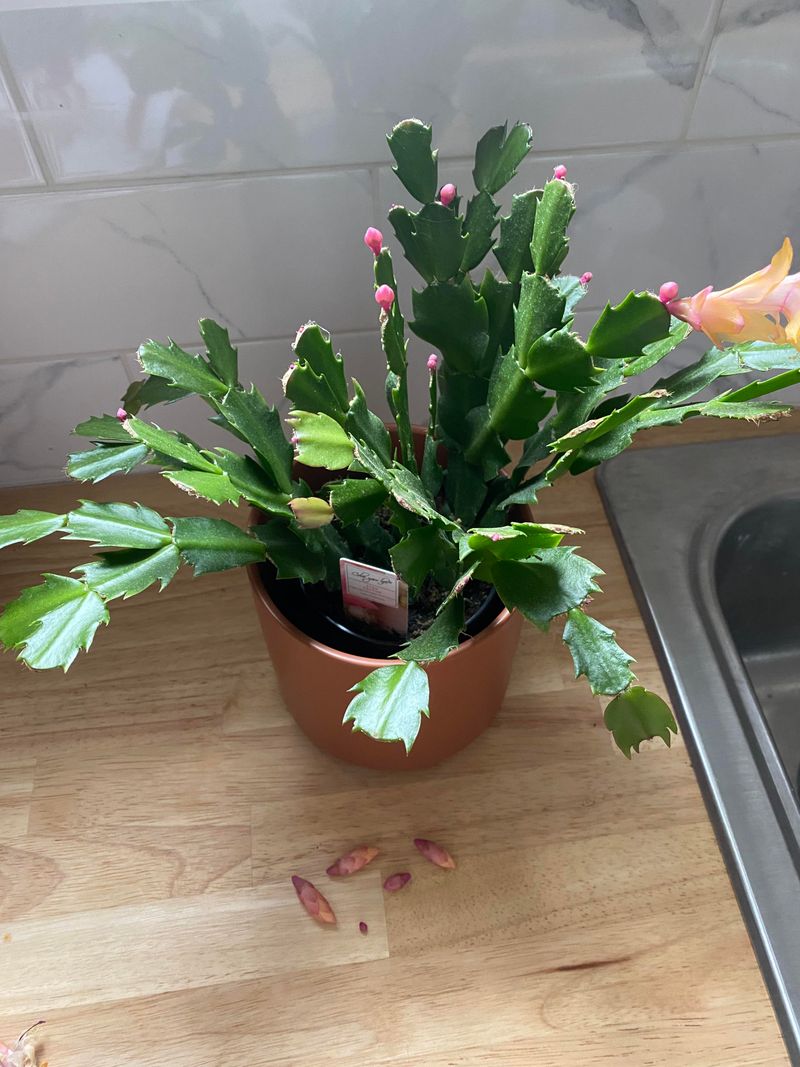
Once buds appear, the job changes from inducing flowers to keeping what you have. Consistency is the main rule.
Avoid sudden changes in light, temperature, or location, and keep the plant away from heating vents and cold drafts.
Water when the top of the mix begins to dry, then let the extra drain out. Do not leave the pot standing in water.
Both overwatering and drying out too much can contribute to bud or flower loss, and Illinois Extension says plants that get too dry while blooming may drop flowers.
You may hear advice to hold back water to force buds. UMass Extension reports that research does not support that practice, and water stress can reduce bud set.
Skip it.
If buds start dropping, think about what changed recently: a moved pot, a new draft, or a missed watering.
Keep expectations realistic and avoid last-minute changes
November really comes down to two situations. If your plant has buds, keep its conditions stable and water sensibly.
If it has none, start the dark-night and cool-condition routine, but do not count on a full Christmas display.
Timing and bloom abundance vary. Minnesota Extension notes that some bud loss can happen, and the final flower count depends on the plant’s condition and branching.
Resist the urge to move the pot, crank the heat, or change the routine every few days. Steady care is what gives buds their best chance.
A holiday cactus tends to reward patience more than panic.