
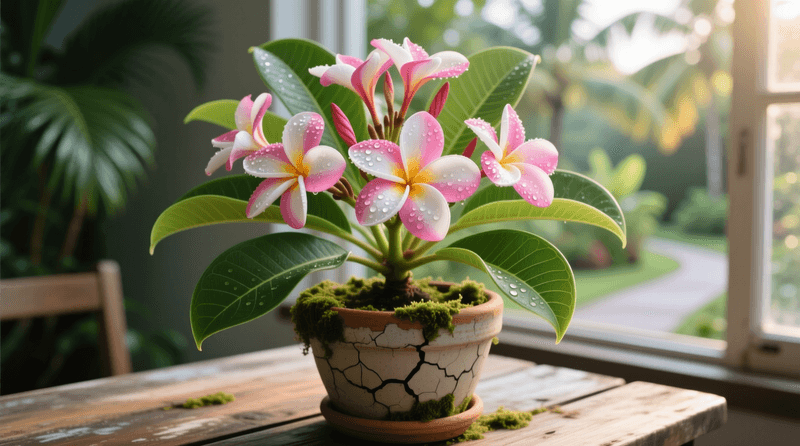
July is when Florida’s heat and daily thunderstorms test every plant in the yard, and plumeria is no exception. Getting your plumeria through the wet season in good shape means checking the right things at the right time, not reaching for a bloom booster and hoping for the best. A simple condition check covering sunlight, drainage, disease, and a few physical risks can keep your plant flowering strong instead of quietly struggling through summer.
Start with sunlight, not a bloom booster
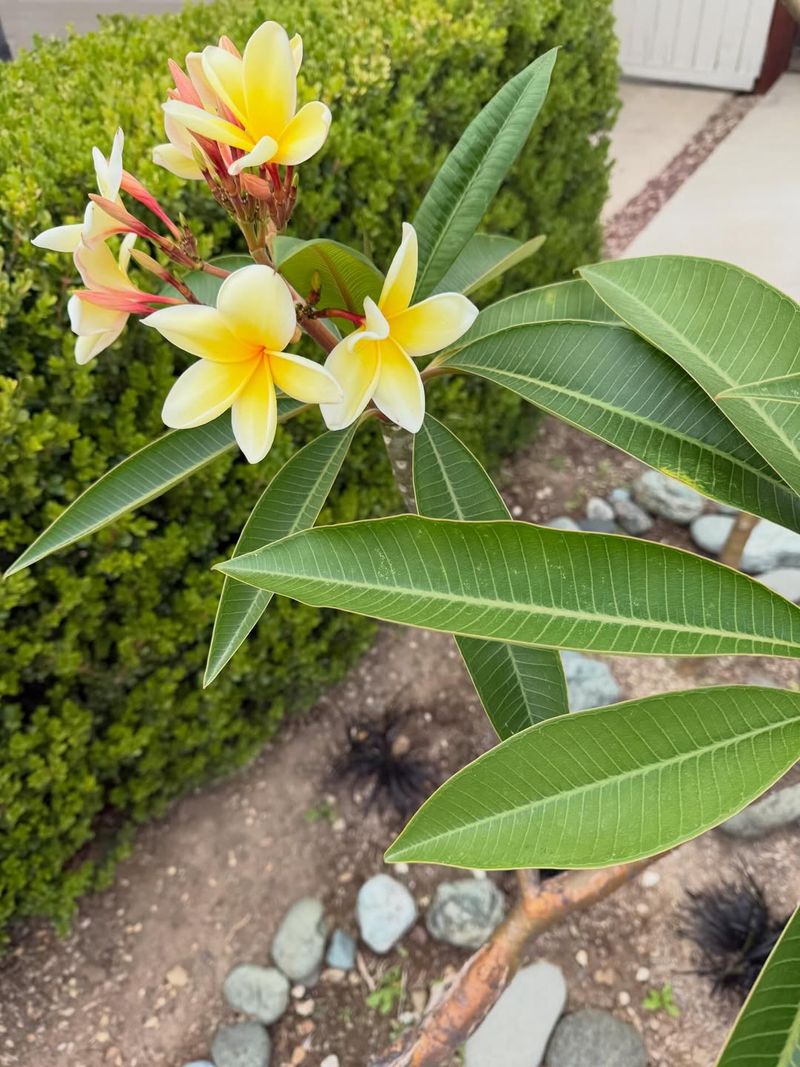
Before anything else in July, walk around your plumeria and look at how much direct sun it actually receives. UF/IFAS Gardening Solutions identifies full sun as the preferred exposure for plumeria, and the plant generally blooms from May through November once its leaves have reestablished after winter dormancy. Shade from a nearby tree, fence, or structure that has grown or shifted since spring can quietly limit how well your plant performs through summer.
Check the spot at several points during the day, not just in the morning when the sun angle is lower. If the plumeria is getting fewer than six hours of direct sun, that reduced light may explain disappointing flower production better than any fertilizer or pruning decision ever could. Moving a container plant to a sunnier location is worth trying; relocating a landscape specimen is not practical, but you can note whether surrounding plants are crowding it out.
July care supports ongoing performance rather than restarting or guaranteeing the bloom cycle. A plumeria that has been growing and flowering since late spring simply needs conditions that allow it to keep doing that through the wet season. Brighter exposure helps, but it will not instantly trigger a flush of blooms on a plant that has other limiting factors such as root damage, prior cold injury, or a cultivar that naturally flowers later in the season.
Let rainfall and drainage determine watering
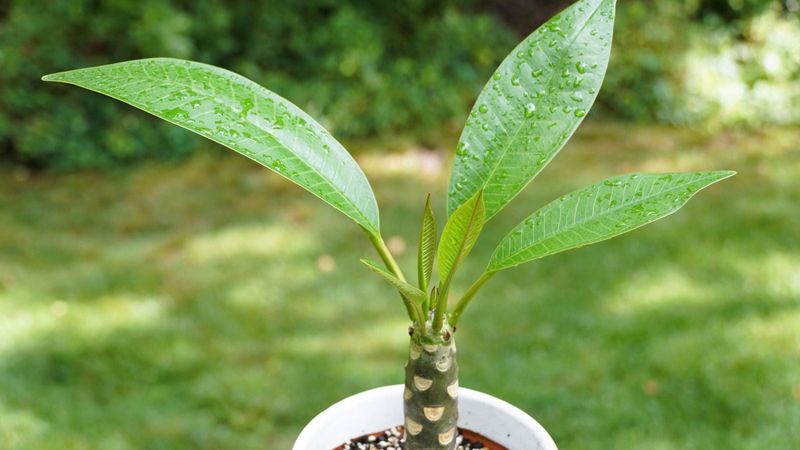
Florida’s summer wet season makes calendar-based watering one of the easiest ways to overwater a plumeria. UF/IFAS irrigation guidance emphasizes checking soil moisture and allowing plants to dry between waterings, because wet-season rainfall can fully meet a plant’s water needs on many days without any help from a hose or drip system.
The practical check is straightforward: push a finger or a wooden dowel two to three inches into the root zone. If it comes out damp, skip irrigation that day. Water only when the soil is beginning to dry out at root depth, and stop before the water starts pooling at the surface. UF/IFAS notes that plumeria is drought-tolerant once established, but the plant still needs appropriate moisture during active growth, so withholding all water simply because rain is in the forecast is not the right approach either.
Drainage is where container growers need to pay the closest attention. A pot without enough drainage holes or one sitting in a saucer full of standing water can keep roots wet long after a storm passes, and that prolonged saturation is the condition most likely to cause root rot. Check that every container has adequate drainage and lift or tilt it to confirm water flows freely after a heavy rain. Landscape beds in low spots or compacted soil face a similar risk: if water stands in the planting area for more than an hour after a storm, the drainage situation needs correction before the plant can perform well regardless of how much sun or fertilizer it receives.
Well-drained soil is not the same as bone-dry soil. The goal is free drainage after watering or rain, not a perpetually dry root zone that stresses the plant during an already hot Florida summer.
A July rust inspection helps identify wet-season symptoms
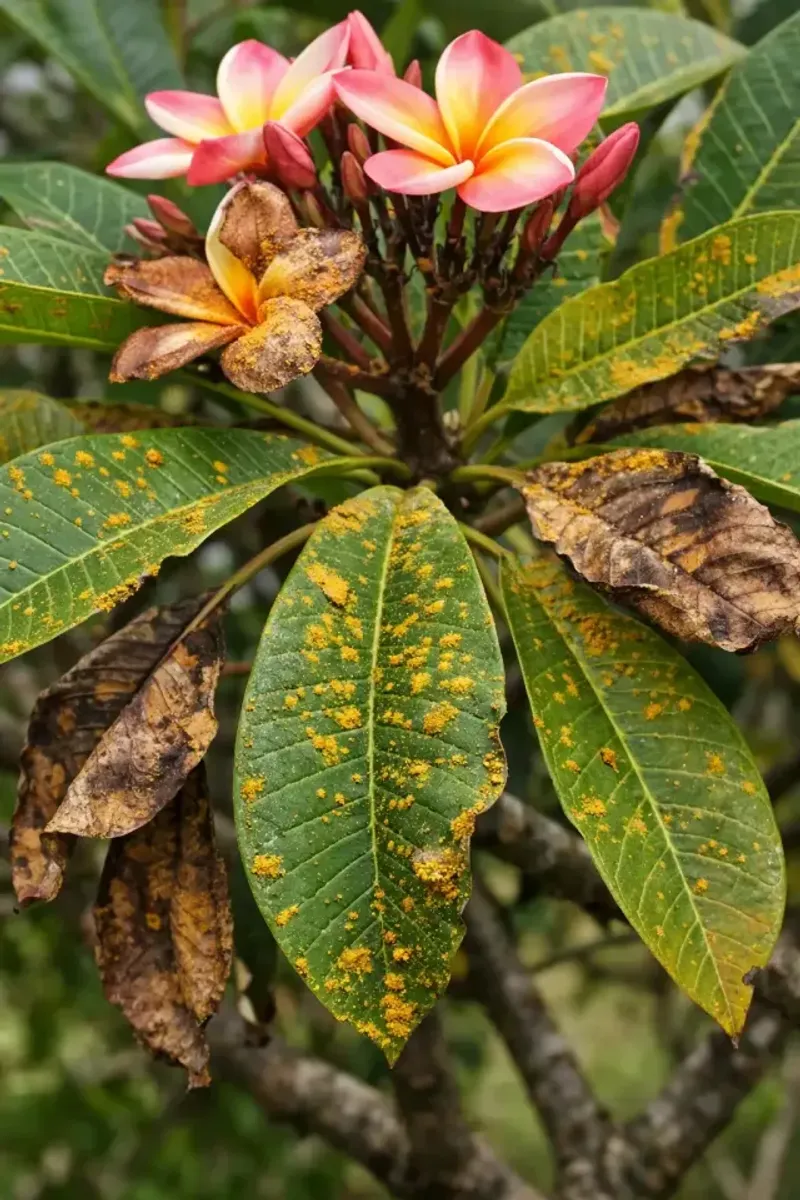
Frangipani rust is one of the most common problems Florida plumeria growers encounter during the summer growing season, and July’s warm, humid conditions can favor its spread. UF/IFAS research on rusts in Florida ornamentals identifies the disease as caused by a fungal pathogen spread by windborne spores and plant movement, not simply by overwatering. Rainy weather creates favorable conditions, but the disease can appear even when irrigation is well managed.
When inspecting your plant, turn the leaves over and look at the undersides carefully. Orange-yellow powdery pustules are the clearest sign of rust. On the upper surface, you may notice irregular pale or yellowish spots that correspond to the pustule locations below. Heavily infected leaves often drop early, which weakens the plant by reducing its ability to photosynthesize during the active growing season.
Removing infected leaves and fallen foliage from the planting area is a reasonable sanitation step. Dispose of collected material in the trash rather than composting it, since composting may not destroy the spores. Keeping the area around the plant clear of fallen leaves reduces the amount of fungal material available to reinfect the plant, though sanitation alone will not cure an active infection or prevent new spores from arriving on the wind.
Fungicide use is an option when the infection is moderate to severe, but only products specifically labeled for use on plumeria and for rust disease should be applied. Read the entire label before purchasing or spraying, follow all rate and timing instructions, and plan applications for periods between rain events so the product has time to work. A July inspection gives you information you can act on, even if it cannot guarantee catching every early symptom before it spreads.
Treat fertilizer as a diagnosis, not a July ritual
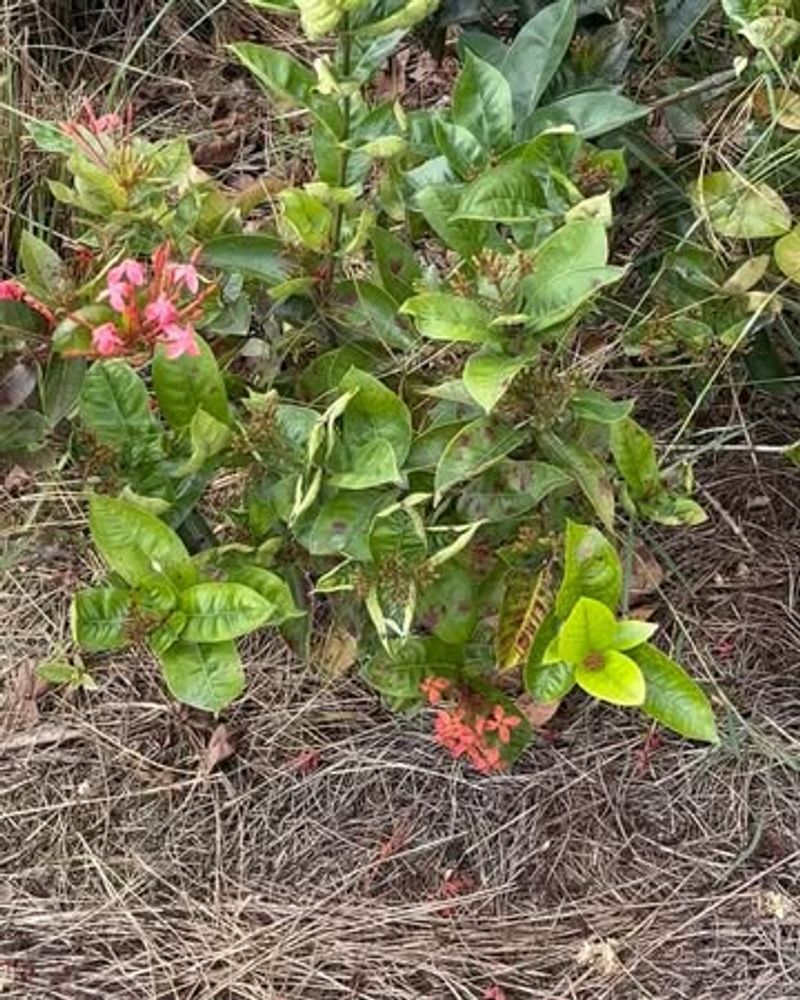
Reaching for a bloom booster every July is a habit worth questioning. An established plumeria that is actively growing, leafing out normally, and producing flowers may not need supplemental fertilizer at all. UF/IFAS Florida-Friendly Landscaping guidance states that established landscape plants may not need supplemental fertilizer when they are healthy and growing normally, and that adding nutrients to a plant that does not need them creates waste and environmental risk rather than better blooms.
Symptoms that look like nutrient deficiency, such as pale leaves, slow growth, or poor flowering, can also result from drainage problems, root damage, high soil salinity, incorrect pH, or insufficient light. Applying fertilizer to fix a problem caused by waterlogged roots or too much shade will not help and may make things worse. Diagnose before you treat: check sun, drainage, and root health before concluding that the plant needs more nutrients.
If fertilization is genuinely justified by plant condition or a soil test, follow the product label exactly. The UF/IFAS Florida-Friendly Landscaping Principle 3 guidance and EPA nutrient-pollution guidance both advise against applying fertilizer when heavy rain is forecast. Florida’s sandy soils and summer rainfall create high leaching and runoff risk, meaning nutrients applied before a storm can wash away before the plant absorbs them and can end up in nearby waterways.
Slow-release fertilizers may reduce the amount of soluble nutrient immediately exposed to leaching compared with water-soluble products, but they are not permission to exceed label rates or to fertilize more frequently than the label recommends. High-phosphorus bloom boosters deserve particular skepticism: research published in the Journal of NACAA found no flowering benefit from additional phosphorus where soil phosphorus was already adequate, and excess phosphorus contributes to water-quality problems.
Before applying anything, check whether your city or county has a summer fertilizer ordinance. UF/IFAS maintains a fertilizer ordinance lookup tool that covers Florida municipalities; some prohibit or restrict fertilizer applications during wet-season months, and violating those rules carries real consequences.
Reduce wind risk for exposed containers
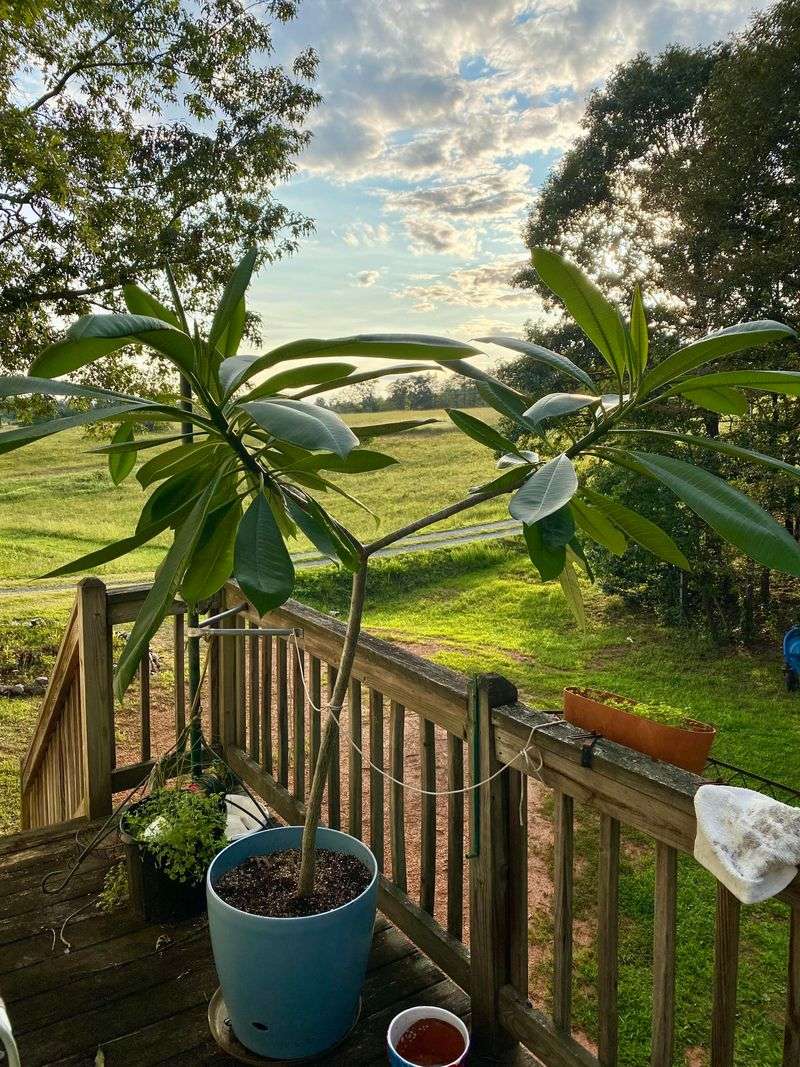
Container-grown plumeria faces a physical risk that landscape plants mostly avoid: a top-heavy pot on an exposed patio edge or deck railing can tip over during a summer thunderstorm gust, snapping branches or damaging the root ball. Container care guidance for plumeria suggests positioning pots securely and considering a sheltered location for plants that sit in particularly exposed spots.
The practical July habit is to assess where your potted plumeria sits relative to afternoon storm exposure. A container that is balanced and stable on a flat, sheltered surface needs less attention than one perched at the edge of an elevated deck or in an area that regularly catches strong gusts off the water. When a named storm or severe thunderstorm watch is issued for your area, moving an exposed container to a more protected spot is a reasonable precaution. A garage, a covered porch on the lee side of the house, or even a spot close to an interior wall reduces tipping risk without requiring you to do anything drastic.
This advice applies to general wind-risk reduction for exposed or top-heavy containers, not to comprehensive hurricane preparation. Florida storms can be unpredictable in intensity, track, and timing, and the steps needed to protect property during a major hurricane go well beyond repositioning a plumeria pot. For guidance on protecting your home and garden during a named storm or hurricane, contact your local emergency management office or your county’s UF/IFAS Extension service, both of which maintain Florida-specific storm preparation resources. Landscape-grown plumeria generally does not need relocation, but staking a leaning or top-heavy specimen before storm season peaks is worth considering.
Prune only damaged, diseased, or dead material
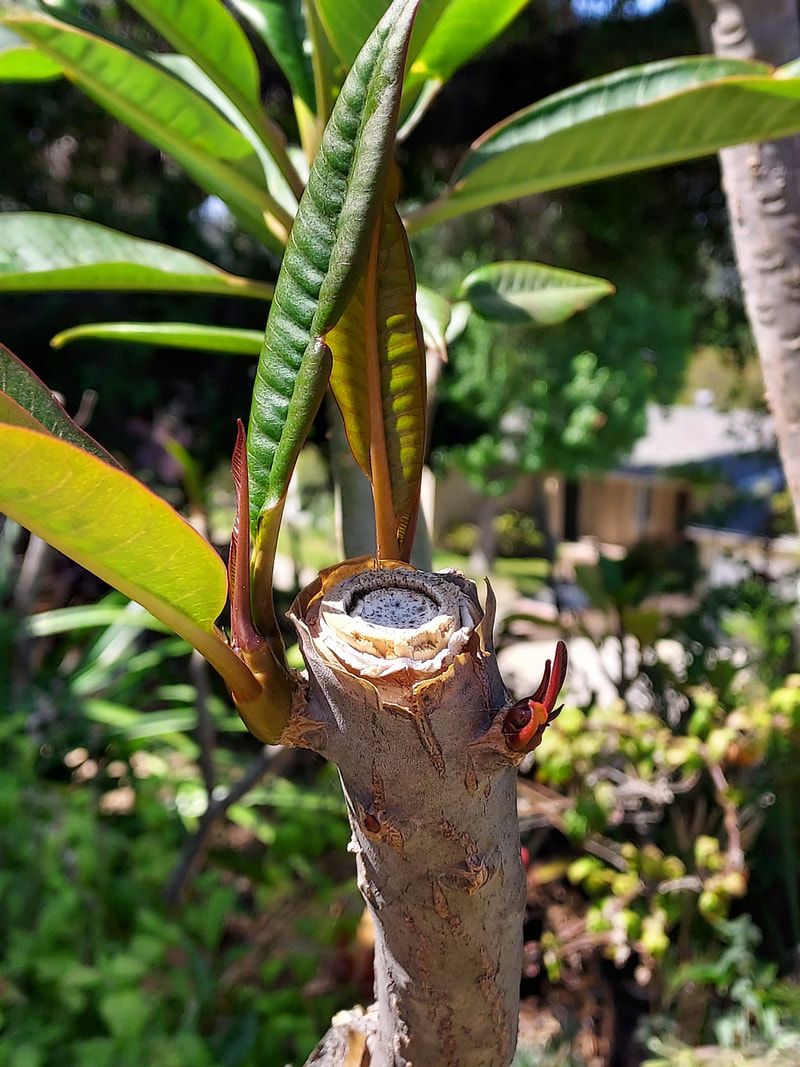
Hard pruning is not a July bloom-forcing strategy for plumeria, and removing healthy growth or branch tips in midsummer can work against you. Flower clusters on plumeria form at the tips of branches, so any cut that removes an actively growing tip also removes a potential flowering point for that branch. UF/IFAS plumeria guidance does not recommend a July pruning schedule, and the authoritative sources located for this article do not support aggressive summer cutting as a way to produce more flowers.
What July pruning does make sense for is limited and specific: remove branches that are clearly dead, visibly diseased, or physically damaged by wind or storm. A clean cut just above a node or back to healthy tissue is enough. Cutting into wood that is still alive and functioning in the plant’s growth cycle is unnecessary and potentially counterproductive during the peak growing season.
Spent flower clusters can be removed for appearance, but approach that step with realistic expectations. Clemson Extension’s deadheading guidance and Penn State Extension’s pruning guidance support deadheading for many annuals and perennials, but no plumeria-specific evidence establishes that removing spent blooms reliably increases subsequent flowering on this plant. Treat it as tidying up rather than a technique that promises more flowers.
Whenever you cut into plumeria, wear gloves and take care to avoid getting sap on your skin or in your eyes. The sap contains irritating compounds, and UF/IFAS advises caution around children and pets. Clean your tools before and after cutting diseased material to avoid spreading pathogens to healthy parts of the plant.
Regional conditions set limits July care cannot remove
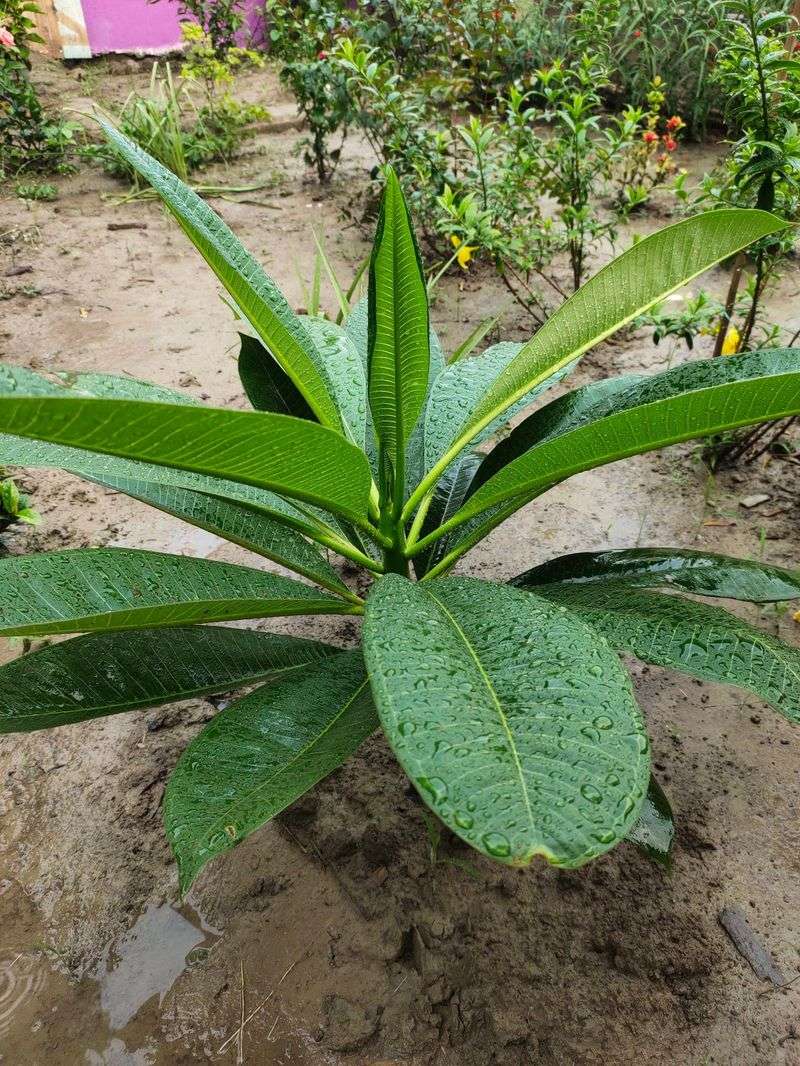
Florida is not one uniform growing environment, and plumeria performance reflects that variation significantly. UF/IFAS places plumeria most reliably in USDA Hardiness Zones 10B through 11, which covers South Florida and the warmer coastal areas. In much of Central Florida, the plant is more marginal because of frost and freeze risk, and plants that suffered cold damage over the winter may be spending July recovering rather than flowering productively.
The wet season itself varies across the state. The National Weather Service identifies July through early September as the peak rainy period for West Central and Southwest Florida, while South Florida follows its own regional rainfall pattern with a rainy season that often begins earlier and has a different distribution of storm activity. Gardeners in different parts of the state will experience July very differently, and care decisions should be based on local conditions rather than a single statewide rule.
A plumeria that is not flowering well in July may be dealing with factors that no amount of July maintenance can fix: prior frost damage that reduced the number of healthy growing tips, a cultivar that naturally blooms later or less prolifically, insufficient plant maturity, inadequate light, or root conditions that limit the plant’s ability to take up water and nutrients. Before adding fertilizer or making cuts out of frustration, step back and consider the plant’s full history. July care can support a surviving, actively growing plant, but it cannot override the plant’s biology, its past season’s damage, or the climate limits of the region where it grows.
Use a condition check instead of a bloom-forcing treatment
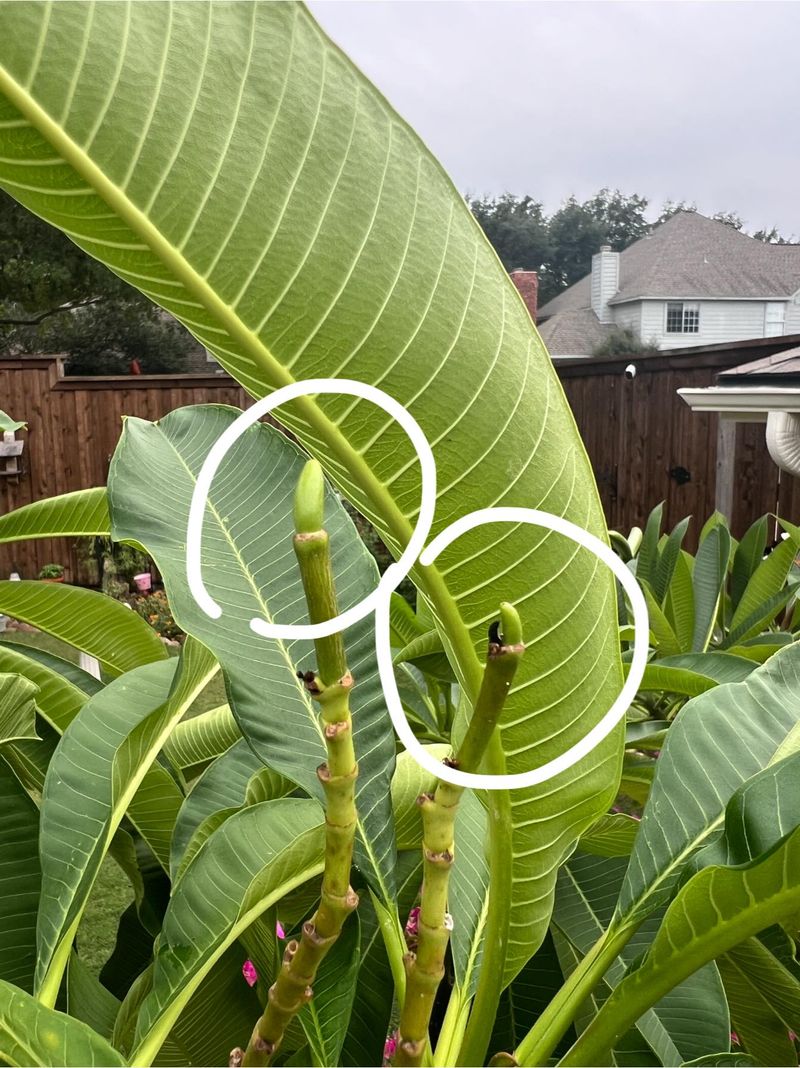
A useful July plumeria checkup follows a short, repeatable sequence rather than a single dramatic treatment. Confirm the plant receives full sun for most of the day, test the root-zone moisture before reaching for the hose, and verify that containers drain freely and do not sit in standing water after rain. Flip a few leaves and look for the orange-yellow pustules that signal rust, then clear any infected or fallen foliage from the planting area and dispose of it in the trash.
Skip fertilizer unless the plant shows genuine signs of deficiency that drainage, light, and root health cannot explain, and check local ordinances before applying anything during wet-season months. Move exposed, top-heavy containers to a more sheltered spot when severe weather threatens, and limit any pruning to dead, damaged, or diseased material. Avoid hard cuts intended to force blooms and treat spent-flower removal as cosmetic cleanup rather than a flowering strategy. UF/IFAS plumeria guidance, the Florida rust management publication, and UF/IFAS irrigation guidance all point toward the same core idea: the goal is preserving the conditions that allow continued flowering through Florida’s variable summer wet season, not forcing the plant with one product or one dramatic cut.
A plumeria that is well-lit, properly drained, and free of active disease is already positioned to do its best work on its own schedule.