
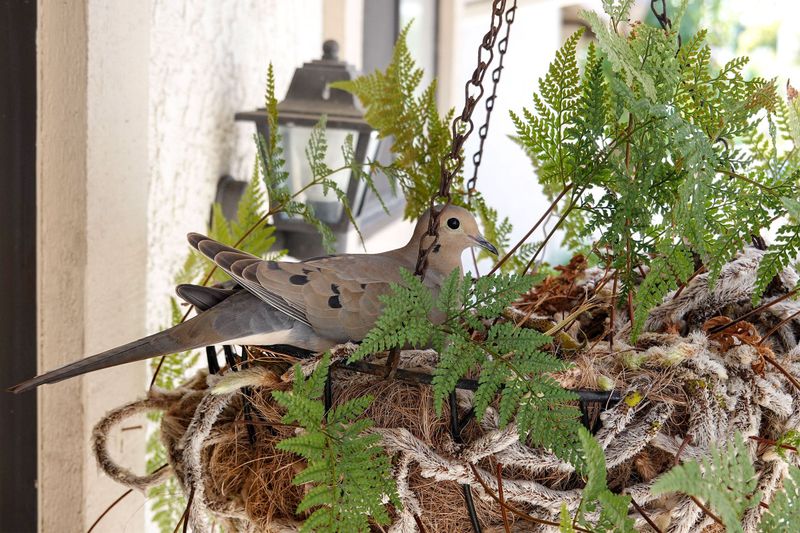
A pair of soft gray doves has picked your porch basket as a nursery, and now you are tiptoeing past your own fern. That tiny pile of twigs says something real about your yard, but less than you might guess.
Knowing what it does and does not mean helps you protect the babies and still keep your plants alive.
A basket nest confirms one usable spot, not a perfect yard
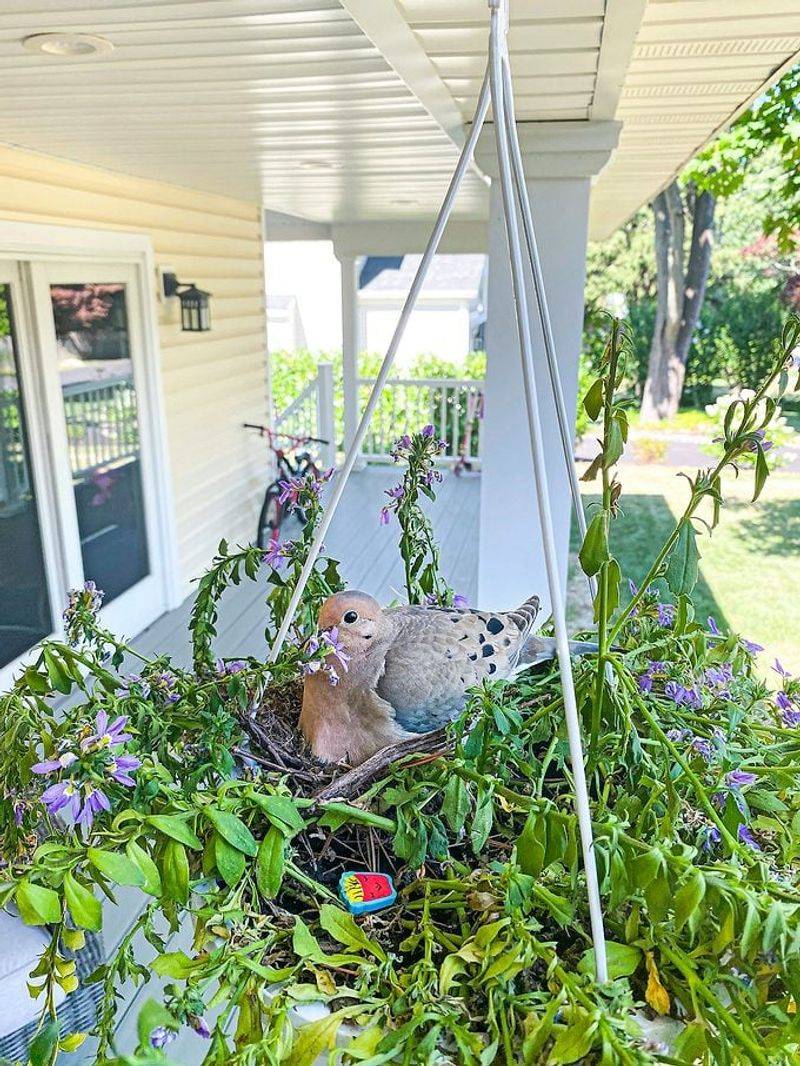
When a dove settles into your basket, the clearest message is simple: this particular spot passed inspection. The bird accepted that basket, or a shrub nearby, as a place to lay eggs.
That is a fact about one location, not a grade for your whole property.
Mourning doves live in many kinds of places, from farmland to city streets and suburbs. According to Florida Fish and Wildlife Conservation Commission information, they commonly nest in trees or shrubs, and they may also use structures near people.
So a porch basket is a possible choice, but it is not the standard one. Plenty of doves in your neighborhood are probably nesting in a hedge or a pine.
Food is where readers often jump to conclusions. Doves feed mainly on seeds, and Cornell Lab of Ornithology notes that they gather most of them from the ground.
Your hanging basket is not a pantry for them. The parents will head to bare soil, lawn edges, and open ground for meals.
That means one nest cannot prove your yard has ideal cover, plentiful seed, or total safety. It also does not show that your plants or landscaping drew the birds in.
Think of it as a small compliment about a sheltered, quiet corner, and nothing more.
The flimsy nest is normal dove construction
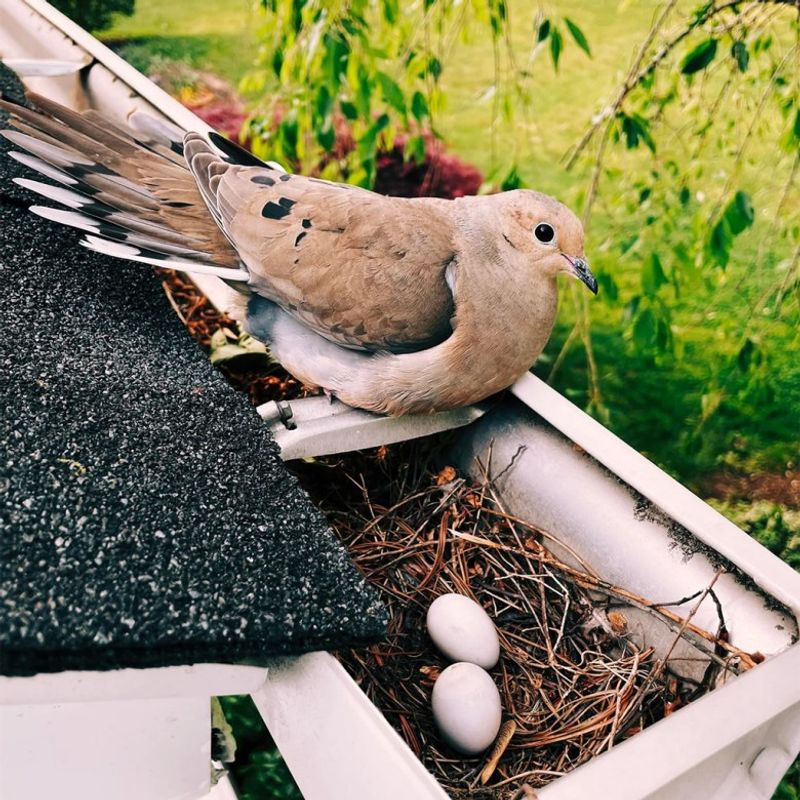
Look closely and the nest may seem alarming. A few twigs, some grass stems, maybe pine needles, loosely crossed in a platform you can sometimes see through.
Mourning doves build this way every time, so the sparse look is not a sign of trouble.
According to Cornell Lab of Ornithology, a typical clutch is two eggs. Incubation takes about two weeks, and the chicks usually leave the nest roughly 12 to 15 days after hatching.
Those are quick turnarounds, which is part of why doves can raise several broods in a season.
The temptation is to help. Resist adding moss, stuffing in extra twigs, or sliding a piece of cardboard underneath.
FWC wildlife information describes the flimsy platform as characteristic of the species, and the birds have succeeded with it for a very long time.
Handling the nest to straighten it or lift it also risks tipping eggs or startling the parents. If the nest looks rough, that is simply how a dove builds.
Leave it exactly as you found it.
Florida nesting can extend beyond the main season
You may have heard that Florida doves nest through the winter. The truth is more measured.
A Florida-focused UF/IFAS-hosted publication describes nesting as mostly February through October, while noting that nests can turn up at any time of year.
A north-central Florida study, Seasonality of Mourning Dove Nesting in Florida, found the main period ran from late February through August. So the window shifts a bit depending on the place and the year.
Fall nests are plausible, and a December nest is possible, but neither is the norm.
Doves are around all year here, which can make the calendar feel blurry. FWC information notes that Florida has both resident birds and seasonal visitors.
Seeing doves in January tells you they are present, not that they are raising chicks.
A practical habit follows from this: check your baskets before pruning or repotting at any time of year. A quick, quiet look from a few feet away is enough to spot a bird sitting low on a few sticks.
That small step matters more than any date on the calendar.
An active nest calls for a hands-off approach
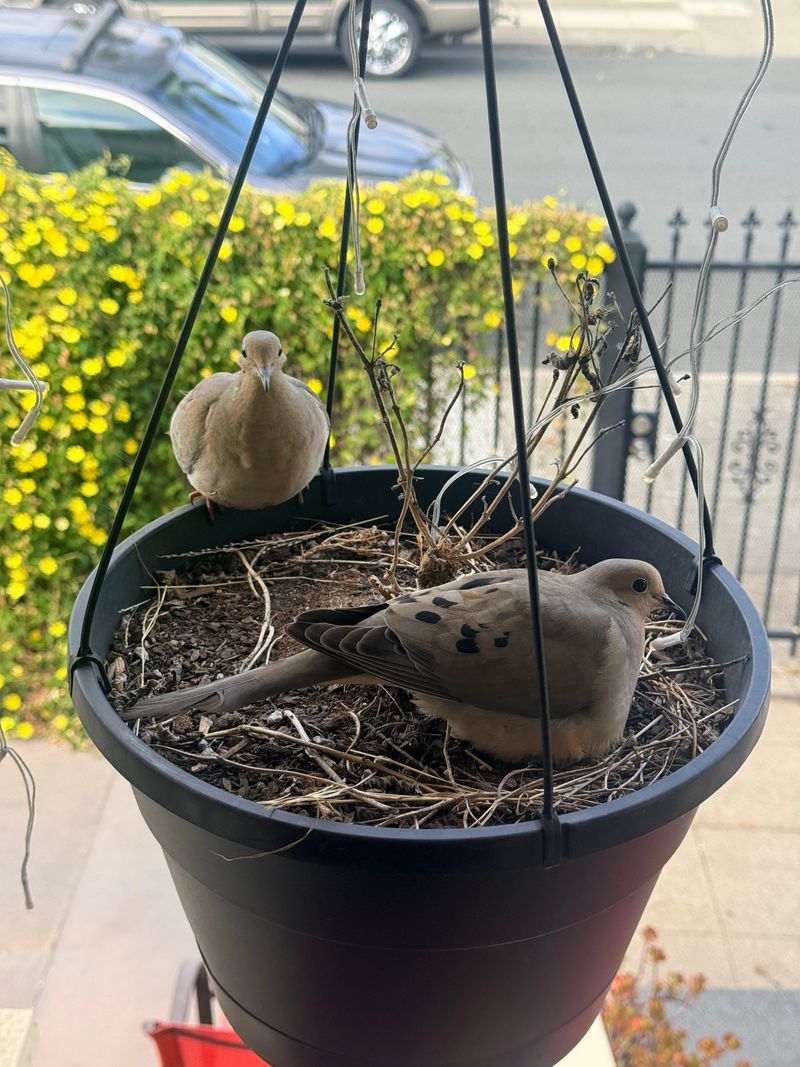
Once eggs or chicks are in the basket, your job is mostly to stay out of the way. Leave the basket hanging where it is.
Skip moving it, trimming it, or pulling it down for a quick tidy.
Nearby cover counts too. The leafy shrub beside the porch helps hide the nest, so hold off on heavy pruning around it.
Audubon’s nest photography guidance stresses protecting the cover around a nest and keeping disturbance low.
Foot traffic is the next thing to trim. Cornell Lab advice recommends minimizing activity near a nest and advises against moving it.
Try using a different door for a few weeks, and keep the porch quiet and free of loud tools.
An empty-looking nest can cause panic. Adults leave for short stretches, so a missing parent does not mean abandonment.
Watch from a window or across the yard, and avoid walking up to peek again and again. Occasional disturbance is often tolerated, but fewer checks are better.
Care for the plant without swinging the basket
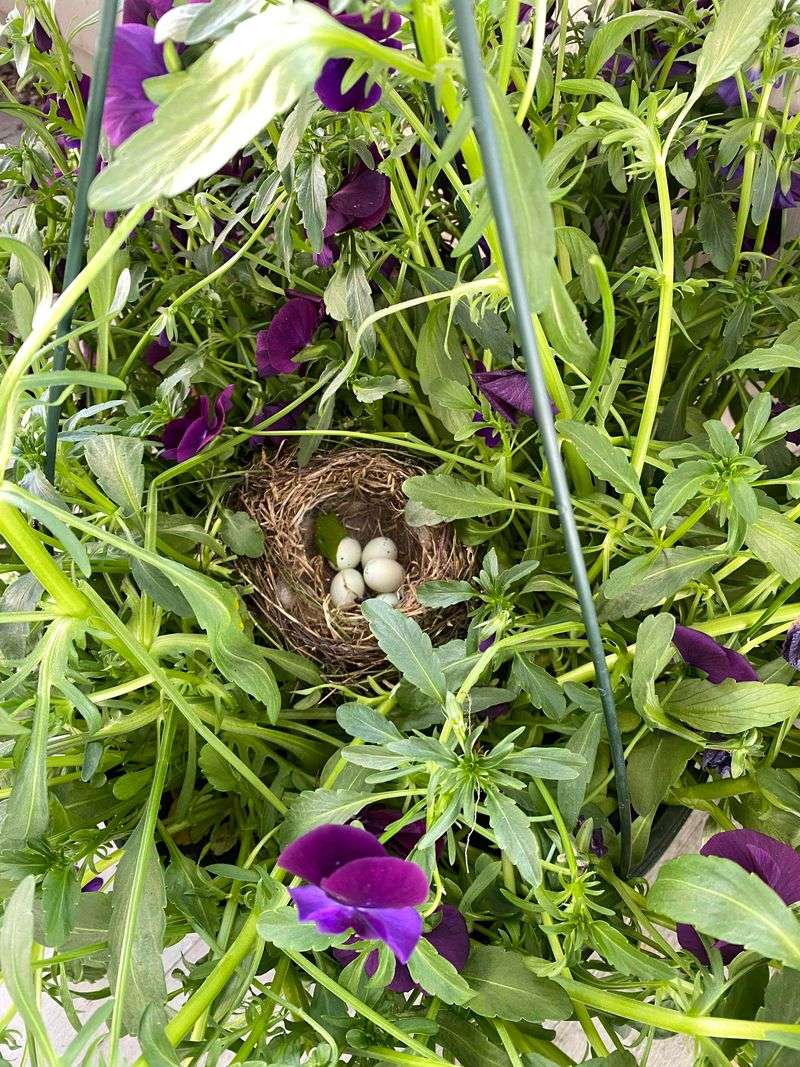
Your fern or petunias still need attention, and that is a fair worry. The cautious approach is to water only if you can do it without swinging or shifting the basket and without soaking the nest.
If you cannot, wait.
No source offers a special dove-friendly watering method, so this is common-sense guidance built around limiting disturbance. A slow trickle at the far edge of the pot, delivered from a steady stance, may work in some baskets.
In others, the nest sits too close to the soil surface to water safely.
If caring for the plant would mean handling the nest, or disturbing eggs or chicks, let the plant go a little thirsty. Most basket plants can bounce back after a rough few weeks, while a toppled nest cannot be undone.
Save deadheading, fertilizing, and repotting for later.
Skip the bird feeder idea as well. Cornell Lab says supplemental food is not necessary for a nearby nest to succeed.
Since doves mostly eat seeds from the ground, they will find what they need on their own.
Fledglings may need their parents after leaving the nest
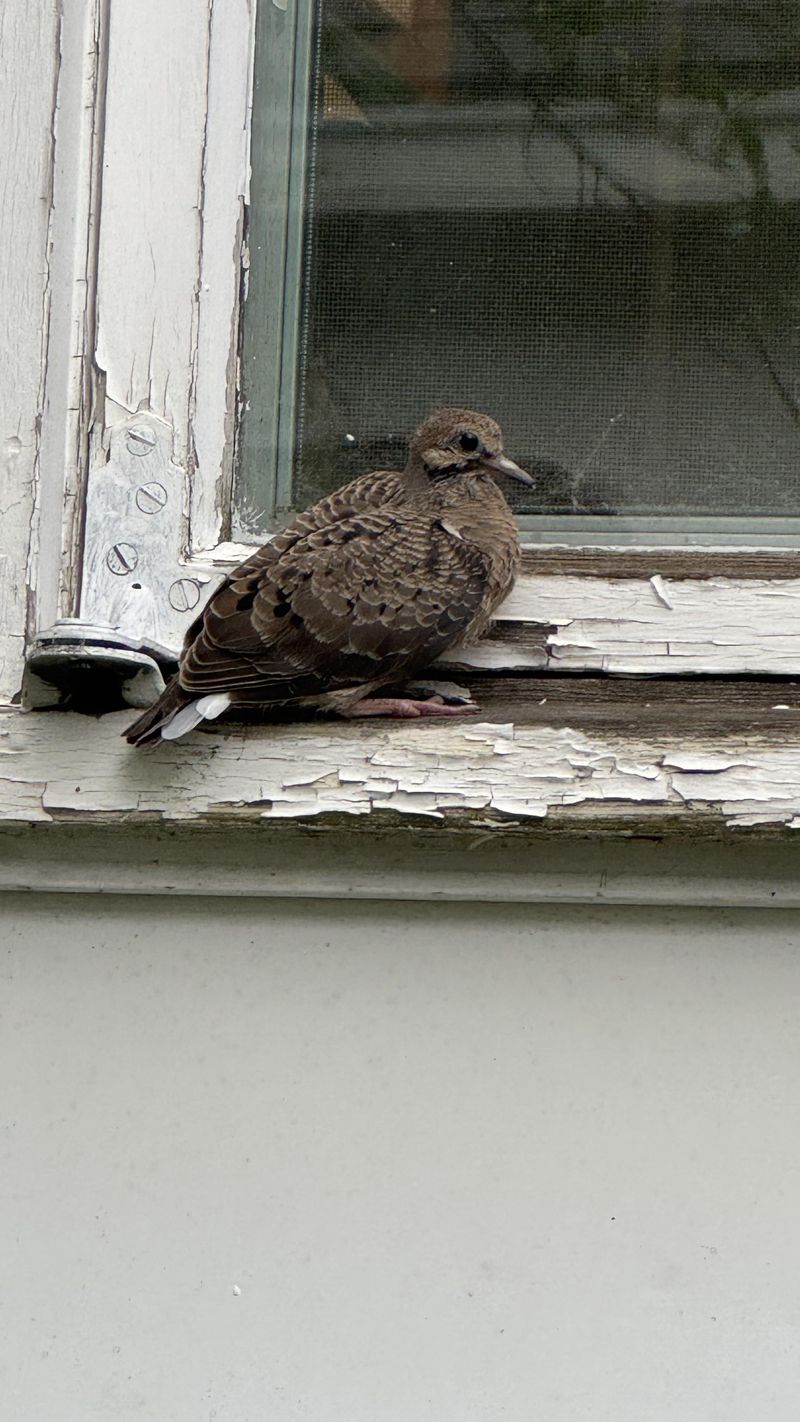
One morning the basket is empty, and it is easy to assume the story is over. Young doves typically leave the nest about 12 to 15 days after hatching, according to Cornell Lab of Ornithology.
Leaving the nest is not the same as being on their own.
Florida guidance in the UF/IFAS-hosted publication says adults keep caring for the young for roughly another 10 to 12 days. During that stretch you may see a plump, short-tailed dove hunkered on the ground or a low branch, with a parent close by.
That is normal behavior, not a rescue situation. Keep pets indoors or leashed, steer mowers and leaf blowers away from shrubs and bare ground near the porch, and keep people traffic light.
A quiet yard gives the family a better shot at the transition.
Expect the youngsters to look clumsy for a few days. Their wings work before their judgment does.
Give them space and let the parents do what they have been doing all along.
Consult wildlife officials before acting on a serious problem
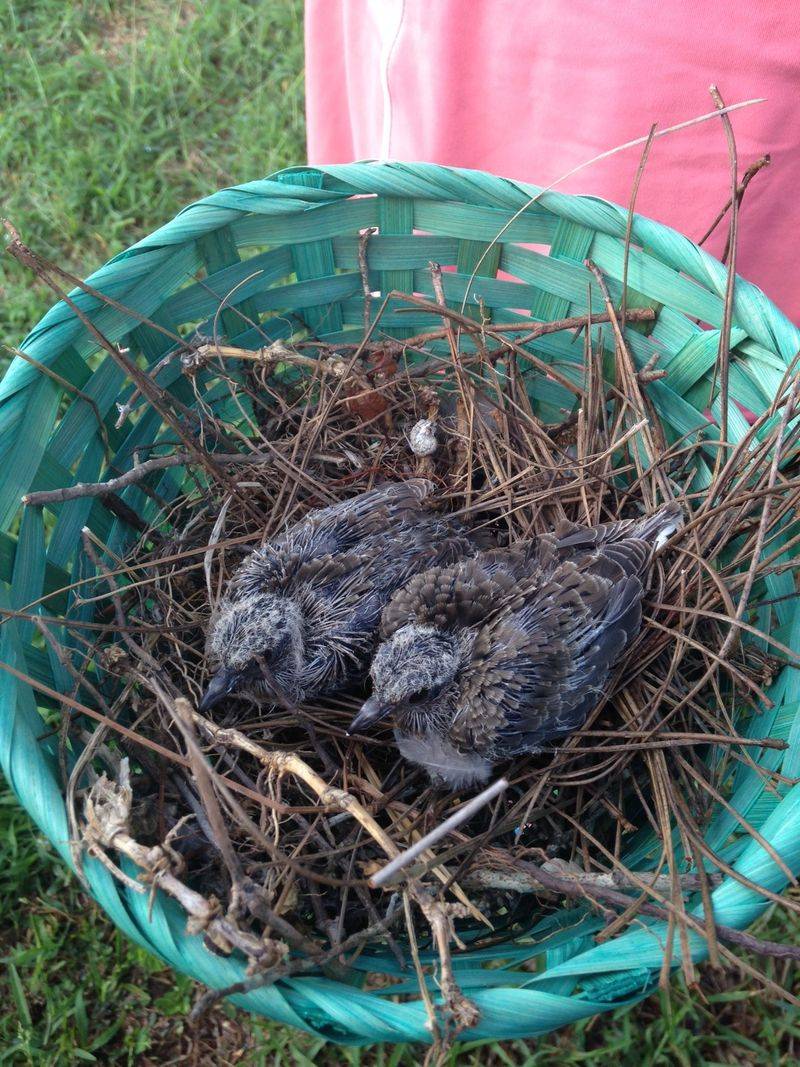
Most basket nests cause no real trouble. A bit of mess, a thirsty plant, and a blocked hook are inconvenient, not serious.
Still, you should not destroy an active nest with eggs or dependent young.
Mourning doves are protected migratory birds, and U.S. Fish and Wildlife Service guidance says active nests should not be destroyed.
Rules and authorizations depend on the circumstances, so there is no single answer that fits every nest or every property.
If a nest creates a real safety or property problem, such as a basket hanging over a walkway or blocking an entry people must use, contact the relevant wildlife agency before doing anything. For Florida guidance, start with the FWC protected wildlife permits page.
Staff can explain what applies to your situation.
Resist the urge to relocate the nest yourself. It might look kind, but it can break the link between the parents and their eggs or chicks.
A short call or email is a safer first step than a quick fix.
Let the brood finish before resetting the basket
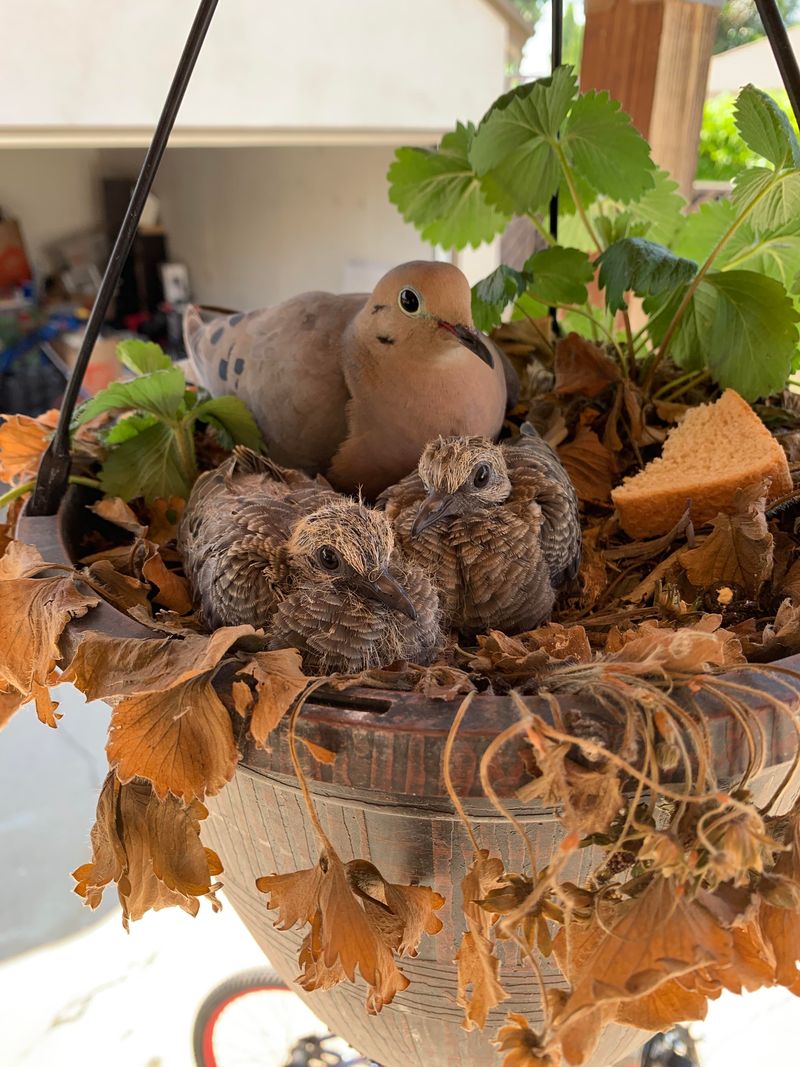
Treat the nest as proof that one corner of your porch worked for the doves, and leave it alone while it is active. Wait through the weeks of parental care described by Florida guidance, and keep the disturbance low.
Then trim, feed, and refresh the basket. Your ferns can wait a little, and the doves cannot.