
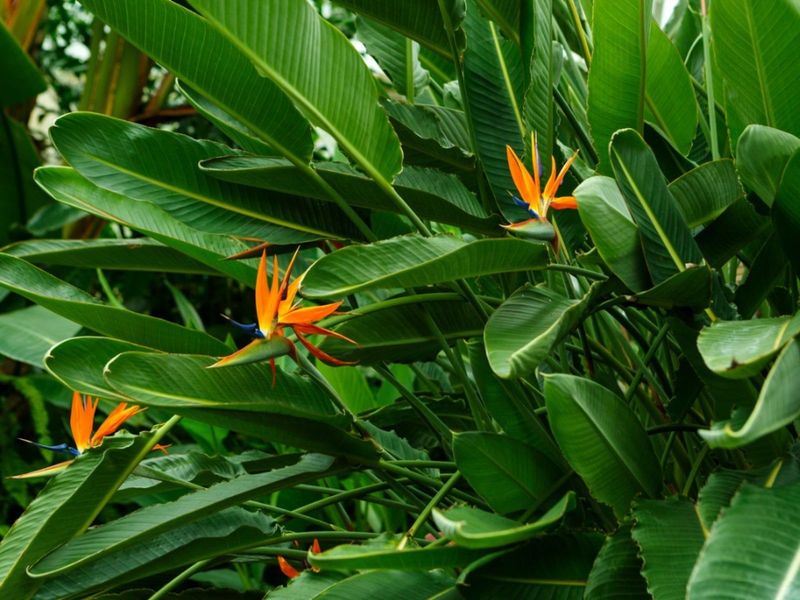
Bird of paradise is one of those plants that can stop traffic in a Florida yard, but the species you pick matters just as much as where you put it. Orange bird of paradise stays a manageable 3 to 5 feet tall, while giant bird of paradise can tower 15 to 30 feet and reshape an entire landscape. Get the placement right and you have a showstopper; get it wrong and you have a struggling clump that never quite delivers. This guide walks through exactly where and how to plant each species so you get the tropical impact you are after.
First, identify which bird of paradise you have
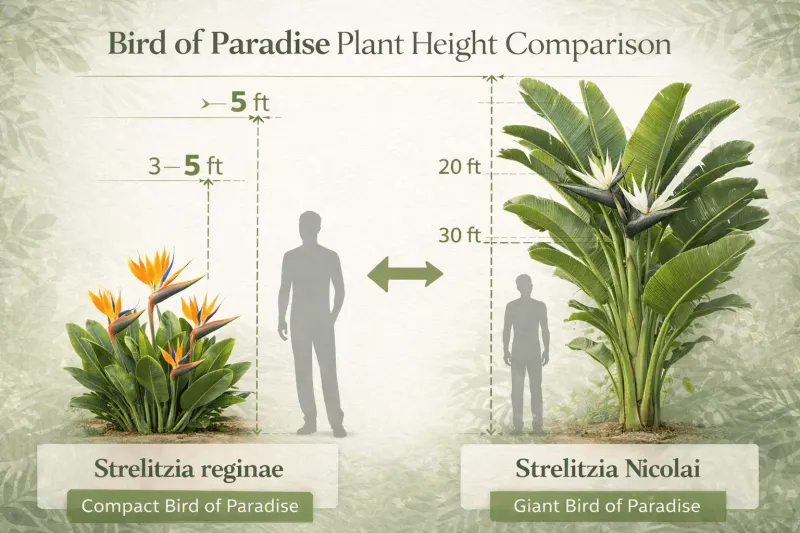
Before picking a spot in your yard, sort out which plant you actually have. The common name “bird of paradise” gets shared between two very different species, and mixing them up leads to placement mistakes that take years to undo.
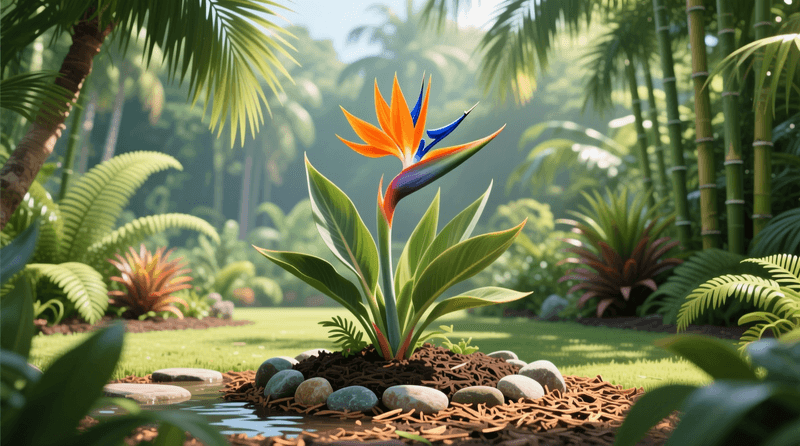
Orange bird of paradise (Strelitzia reginae) is the compact one. UF/IFAS extension guidance on bird of paradise describes it as a slow-growing, 3 to 5-foot clumping landscape accent that produces the iconic orange and blue flowers most people picture when they hear the name. It spreads gradually as the clump fills out, but it is not going to become a tree or a tall screen, regardless of how perfect the site is.
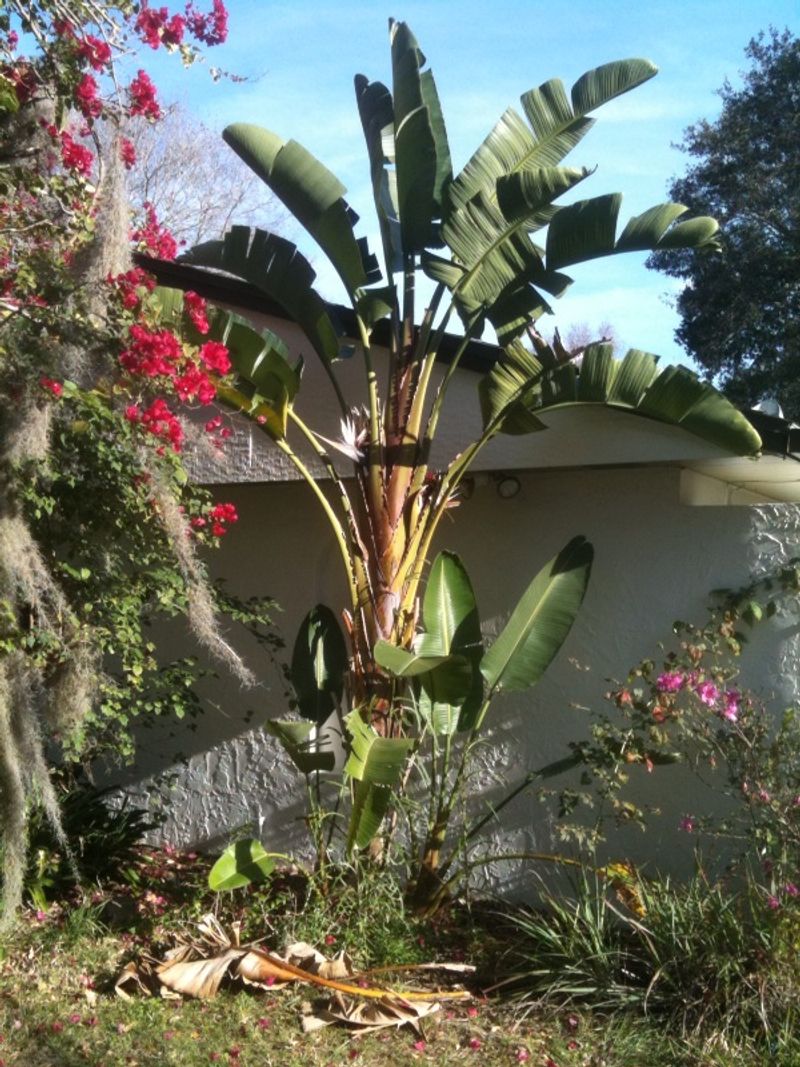
White or giant bird of paradise (Strelitzia nicolai) is a completely different scale. NC State Extension’s profile on Strelitzia nicolai notes that this species can reach 20 feet or more, with large banana-like leaves that fan out dramatically from multiple trunks. In Florida landscapes, mature specimens routinely hit 15 to 30 feet, which is a genuine tropical icon by any measure.
The key takeaway is that the tropical scale most people dream about belongs to Strelitzia nicolai, not Strelitzia reginae. If your nursery tag says “bird of paradise” without a botanical name, check the flower color and leaf size before you commit to a planting site. Orange flowers with paddle-shaped leaves point to reginae; white and blue flowers with enormous, paddle-to-canoe-shaped leaves point to nicolai.
Confirming the species also changes your spacing, water, and freeze decisions. The UF/IFAS Strelitzia reginae plant profile identifies it as native to South Africa and cultivated in Florida, not a Florida-native species, so do not count on it to function as a native wildlife plant. Get the botanical name pinned down first, and the rest of the placement decisions follow naturally.
Match the light to the effect you want
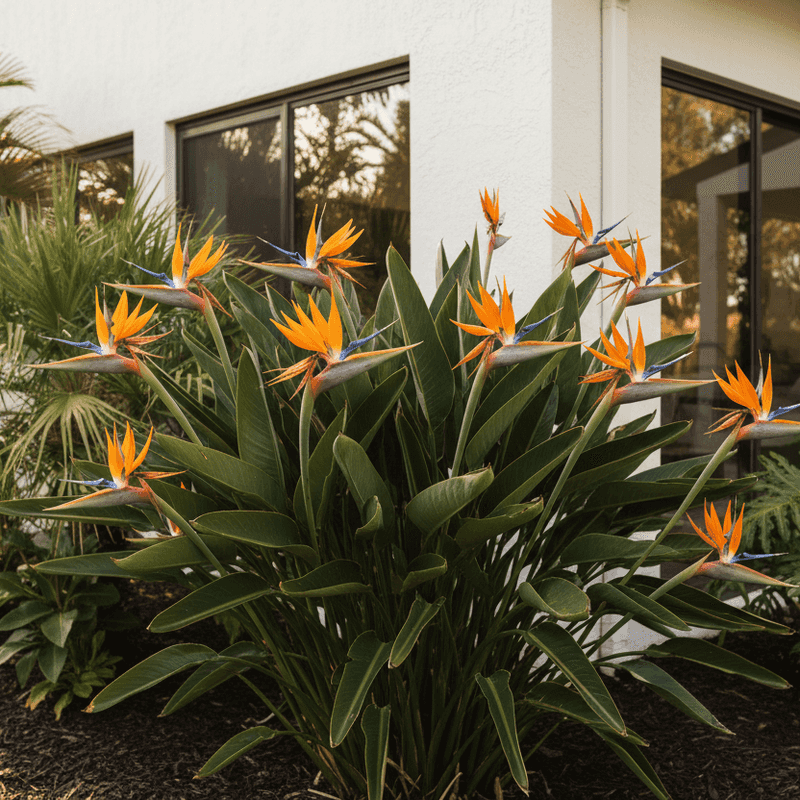
Light is where a lot of Florida gardeners get tripped up, because the instinct is to push bird of paradise into the sunniest corner of the yard and expect maximum blooms. The reality is more nuanced, and knowing how light changes growth habit lets you choose a spot that matches the look you are after.
UF/IFAS extension guidance explains that orange bird of paradise performs well in full sun, part sun, or high, shifting shade. What changes between those exposures is the plant’s shape and flower presentation. Plants grown in partial shade tend to grow taller and produce somewhat larger flowers. Plants grown in full sun tend to stay more compact with shorter flower stems.
Neither outcome is wrong. A compact, sun-drenched clump near a pool or entry walk has its own appeal, and a taller specimen tucked under the high canopy of a live oak or queen palm can look genuinely lush. The deciding factor should be the effect you want, not an assumption that more sun always means more flowers.
Heavy shade is the one exposure to avoid when consistent flowering matters. Dense, all-day shade under a tight canopy or against a north-facing wall that receives almost no direct light will suppress blooming significantly. The plant may survive, but it will put its energy into stretching for light rather than producing flowers.
High, shifting shade, where sunlight moves across the plant through the day or filters through an open canopy, is different from heavy shade and works well for orange bird of paradise. If your yard has mature trees with a high, open canopy rather than a dense, low one, that exposure can actually give you a taller, more dramatic clump than a blazing full-sun location would.
Give the roots moisture without trapping water
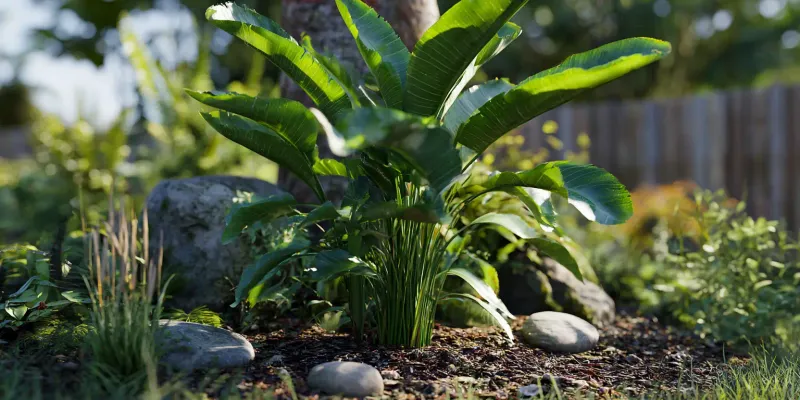
Sandy soil is the default in most Florida yards, and it creates a specific challenge for bird of paradise. Water drains through it so quickly that roots can dry out between rains, yet low spots and compacted areas can flip to waterlogged conditions after a summer downpour. Both extremes cause problems.
Orange bird of paradise tolerates sand and a range of soil types, but it performs best in fertile, organic soil that holds some moisture while still draining freely. UF/IFAS guidance is direct on this point: dry or soggy conditions can yellow and kill leaves, and poorly drained sites should be avoided or corrected before planting. If your yard has a low spot that stays wet for days after rain, that is not the right home for bird of paradise, no matter how sunny and sheltered it is.
Improving a sandy site before planting is straightforward. Work aged compost or other organic matter into the planting area to increase moisture retention without blocking drainage. If a spot drains poorly, build a low mound or raised bed rather than planting into the depression and hoping for the best.
Planting depth is also worth getting right. Dig the hole two to three times wider than the root ball, but no deeper than the root ball’s height. Set the plant so the top of the root ball sits at or slightly above the surrounding soil surface. Planting too deeply is one of the most common reasons bird of paradise is slow to flower, so resist the urge to bury it.
Once the plant is in the ground, consistent moisture during the first six months is essential. The UF/IFAS Strelitzia reginae profile rates established plants as having high drought tolerance, but that tolerance develops over time. During establishment and through warm-season growth, water regularly. In winter, you can ease off when the soil is fairly dry, but do not treat drought tolerance as permission to ignore the plant from day one.
Plan for the clump’s mature footprint
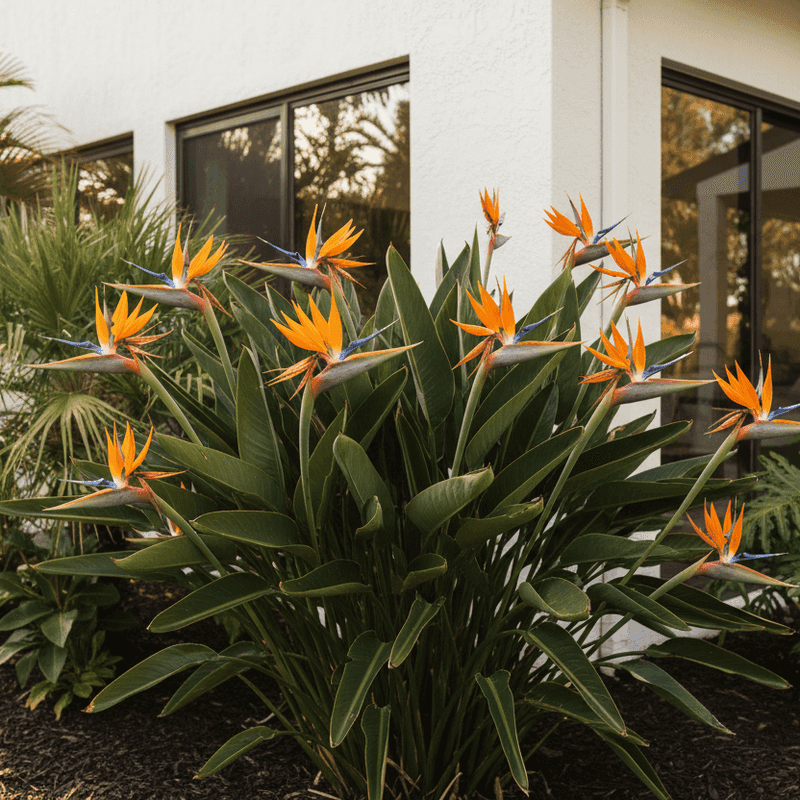
One of the most common planting mistakes with bird of paradise is underestimating how wide the clump eventually grows. A young plant from a nursery container looks modest, but orange bird of paradise spreads steadily as it produces new offsets, and crowding it against a wall, fence, or neighboring plant cuts off the flowering that happens around the outside of the clump.
UF/IFAS extension guidance recommends at least 6 feet between plants when the goal is a specimen that flowers freely around its perimeter. A separate UF/IFAS plant profile for Strelitzia reginae lists 3 to 5-foot centers for mass plantings, which creates a denser, more solid look but reduces the visibility of individual flower stalks. Decide which effect you want before you dig.
Orange bird of paradise is versatile enough to work in several design roles. As a specimen, it reads as a bold accent when given room to develop its full, rounded clump. Along a pool deck or patio edge, its evergreen leaves hold their shape year-round without the seasonal leaf drop that clogs filters and drains. In a mass planting, closely spaced clumps create a tropical ground-level texture.
In a large container, it can anchor an entry or lanai and move indoors or under cover during a freeze event in north Florida.
Giant bird of paradise (Strelitzia nicolai) demands a completely different scale of planning. NC State Extension’s Strelitzia nicolai profile describes a multi-stemmed tree that can reach 20 feet or more, with leaves spanning several feet across. Placing it near a single-story roofline, under power lines, or in a narrow side yard creates problems that no amount of pruning will fully fix. Give it open sky, a generous buffer from structures, and enough ground space for its root system to spread without competing with foundations or hardscape.
Maintenance access is part of the footprint calculation too. Old leaves and spent flower stalks need to be removed periodically, and you need room to work around the plant without trampling neighboring plants or damaging the clump itself.
Adjust the site for Florida’s region and coast
Florida is not one climate. A planting decision that works perfectly in Miami can fail completely in Gainesville, and treating the state as a single zone leads to disappointment, especially for a plant as sensitive to freezes as orange bird of paradise.
Strelitzia reginae is rated primarily for USDA Zones 10 and 11. UF/IFAS guidance notes that it can tolerate brief dips to about 24 degrees Fahrenheit, but even a mild freeze can damage developing flower buds and open flowers. In north Florida, where hard freezes occur most winters, in-ground plantings can survive but may lose their flowers and buds repeatedly, which undercuts the whole point of growing the plant as a showpiece.
For north Florida gardeners who want reliable flowering, large containers offer a practical workaround. A well-established plant in a sizeable pot can be rolled under a carport, into a garage, or beneath a covered porch before a freeze event, then moved back into full light once the cold passes. The UF/IFAS Strelitzia reginae profile supports container culture as an appropriate option for colder parts of the state. Central and South Florida, where hard freezes are infrequent or rare, are much more forgiving for permanent in-ground planting and year-round flowering.
Coastal placement adds another layer to the decision. Orange bird of paradise can handle light salt spray, which makes it a candidate for yards a block or two from the water. What it cannot handle well is an exposed oceanfront position where salt-laden wind hits it continuously and storm surge or wave splash can reach the roots. A building, dense hedge, or masonry wall between the plant and the open water provides the buffer it needs to thrive near the coast rather than just survive.
Coastal gardeners in Central and South Florida often have the best of both worlds: warm temperatures year-round and enough natural windbreaks from neighboring structures to make a sheltered coastal site quite hospitable. Site the plant on the landward side of whatever windbreak is available, not the seaward side, and the coastal yard becomes one of the better locations in the state for a long-lived specimen.
Account for wind, storms, and pets before planting
A site that checks every other box can still be the wrong choice if it puts the plant, your home, or your pets at risk. Wind, storm damage, and plant toxicity are worth thinking through before the shovel hits the ground, not after.
Giant bird of paradise is the bigger concern when it comes to storms. Its large, paddle-shaped leaves catch wind the way a sail catches it, and strong gusts shred the foliage badly. UF/IFAS Gardening Solutions is clear that no landscape plant is hurricane-proof, and UF/IFAS guidance on minimizing wind damage reinforces that large-leaved plants near structures or utilities create real hazards when storms hit. Shredded leaves and broken stems from a 15 to 30-foot specimen can damage rooflines, block gutters, or fall across walkways and driveways.
Keep giant bird of paradise away from the sides of structures where wind channels and accelerates, away from overhead utility lines it will eventually grow into, and away from narrow side yards or passageways where a storm-damaged frond becomes a genuine obstacle. Open, sheltered positions with clear overhead space are the right fit for this species. Orange bird of paradise, at 3 to 5 feet, poses far less storm risk, though its leaves can still look ragged after a direct hit from a strong storm.
Pet safety deserves the same pre-planting attention. The ASPCA’s toxic plant listing for Strelitzia reginae identifies it as toxic to dogs, cats, and horses, with gastrointestinal effects including nausea, vomiting, and drowsiness linked primarily to the fruits and seeds. If your pets roam the yard and tend to chew or investigate plants, place bird of paradise where the fruits and seeds are not easily reached, or choose a container planting at a height that limits access.
One more reason botanical identification matters: the common name “bird of paradise” is also applied to unrelated plants, some of which carry more serious toxicity profiles. Confirming you have Strelitzia reginae or Strelitzia nicolai, not a Caesalpinia species or another plant sharing the same common name, is a basic safety step before any pet-accessible planting.
Maintain the conditions that create the showpiece
Good placement sets the stage, but the plant’s long-term appearance depends on what happens after it goes in the ground. Bird of paradise is often described as low-maintenance once established, and that is fair, but low-maintenance is not the same as no-maintenance.
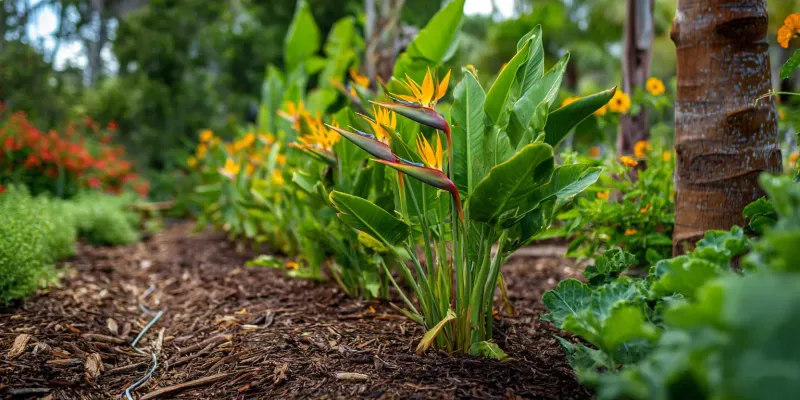
Mulch is one of the simplest tools for keeping the site conditions stable. A 2 to 3-inch layer of organic mulch around the plant conserves soil moisture between rains, moderates root-zone temperature during Florida’s brutal summer heat, and suppresses weeds that compete for water and nutrients. UF/IFAS guidance recommends keeping mulch several inches away from the stems to reduce the risk of stem rot, which becomes a real issue when organic material stays pressed against the base of the plant in Florida’s humid conditions.
Fertilization during the growing season supports the steady flowering and healthy foliage that make bird of paradise worth growing. UF/IFAS suggests fertilizing on a schedule consistent with the product label, with a three-month interval as one reasonable option during active growth. A Florida soil test can help you dial in what your specific site actually needs rather than guessing. Skipping fertilizer on a plant growing in stripped, sandy Florida soil is one of the fastest ways to get pale leaves and sporadic blooms.
Old leaves and spent flower stalks should be removed as they age. Leaving dead or browning leaves on the plant does not hurt it structurally, but it undermines the showpiece appearance that is the whole point of the planting. A quick cleanup every few weeks during the growing season keeps the clump looking sharp.
Pest and disease pressure on bird of paradise is generally mild, but it is not zero. UF/IFAS guidance on ornamental plant diseases identifies fungal leaf spot as a possibility, and the Strelitzia reginae profile notes that scale, aphids, caterpillars, grasshoppers, snails, and leaf borers can all show up. None of these typically threaten the plant’s survival, but chewed or spotted foliage on a specimen planting is visually distracting. A quick scan of the leaves every few weeks lets you catch problems early, before they spread across the whole clump.
Choose the species before you choose the spotlight
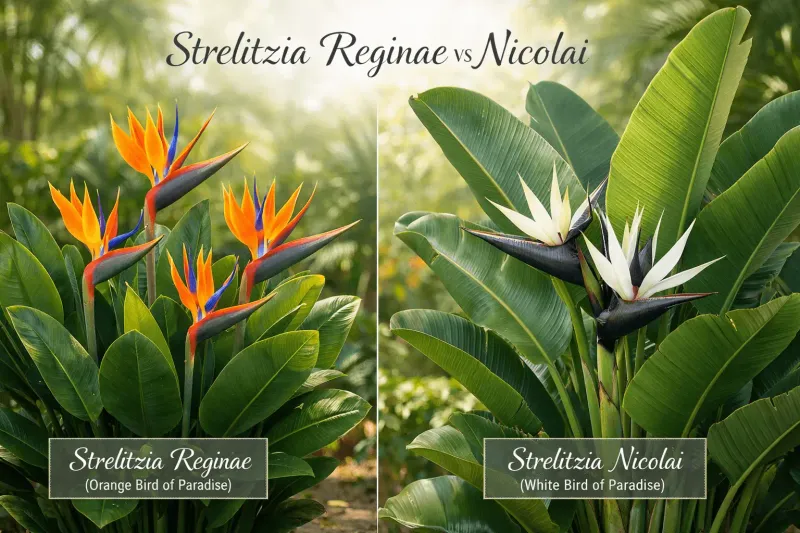
Every placement decision in this guide flows from one starting point: confirm the species before anything else. UF/IFAS and NC State Extension both make the size difference between Strelitzia reginae and Strelitzia nicolai clear, and that difference shapes every other choice you make.
Once you know the species, match its mature size to the space you have, select a site with bright light or high shifting shade, and reject any location where water pools after rain. Provide consistent moisture through the first six months and continue regular irrigation through warm-season growth. In north Florida, plan for freeze protection. Near the coast, position the plant behind a windbreak rather than in front of it.
Where pets have access, keep fruits and seeds out of reach.
The right placement genuinely supports a dramatic tropical focal point, but it cannot turn orange bird of paradise into giant bird of paradise, and it cannot override the wrong climate or neglected care. Choose the right species for the scale you want, put it in a site that matches its actual needs, and maintain it through the growing season. That sequence is what makes the neighbor-envy result possible.