
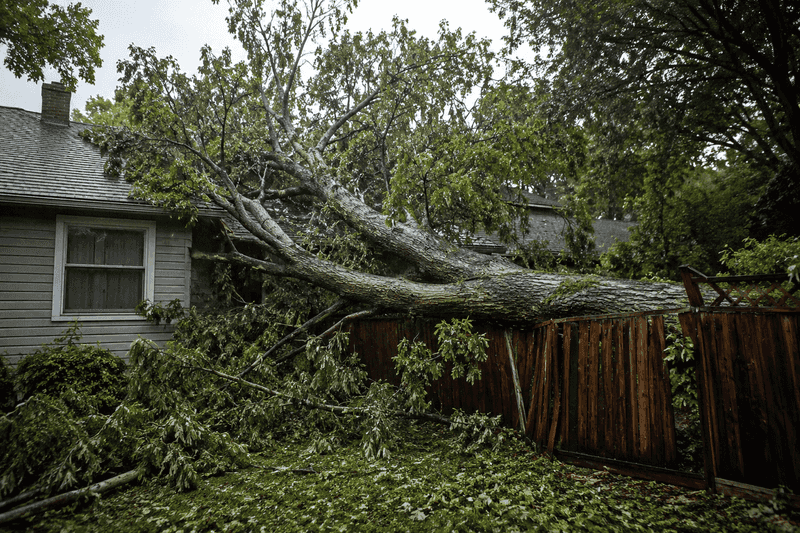
A winter ice storm rolls through, and the next morning a huge limb from next door is lying across your fence and flower beds. Now you have a mess, a repair bill, and a big question about who has to pay.
In Texas, the answer is not as simple as whose tree it was. Here is how liability, insurance, and cleanup work as three separate problems, plus what to do first.
The tree’s ownership does not decide who pays
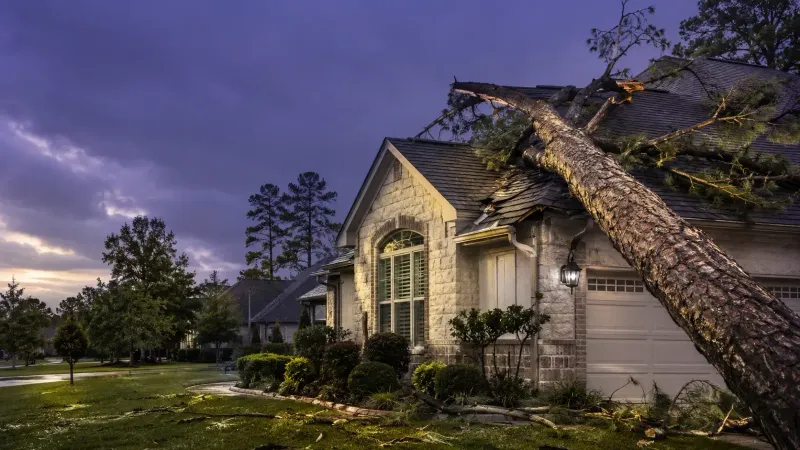
Many people assume that if a tree grew on your neighbor’s land, your neighbor must pay when it lands in your yard. Texas law does not work that way.
Owning the tree does not, by itself, make someone responsible for what a storm does to it.
According to the State Bar of Texas disaster manual on Texas Law Help, a healthy tree brought down by a storm generally does not create liability for its owner. In that situation, the storm is treated as the cause, and the damage is usually the property owner’s own problem to sort out, often with their own insurance.
The picture can change when the tree was not healthy. Liability may arise if the owner negligently failed to deal with a tree that was dead, diseased, decayed, or otherwise an unreasonable danger, and that failure contributed to the damage.
Two things have to line up: a danger the owner should have addressed, and a real link between that danger and what happened to your property.
That makes this a question about specific facts, not a rule that applies the same way every time. A dead tree does not automatically make its owner liable, and a storm does not automatically excuse the owner either.
Ice, wind, and a tree’s age and condition can all play a part.
Winter freezes make the question harder. Ice can snap even sound limbs, so a break after a freeze does not tell you much on its own.
What matters is what the tree looked like before it fell and what the owner knew about it.
No article can promise how your situation would turn out. It can help you ask the right questions, which the next sections walk through.
What evidence may affect a liability claim?
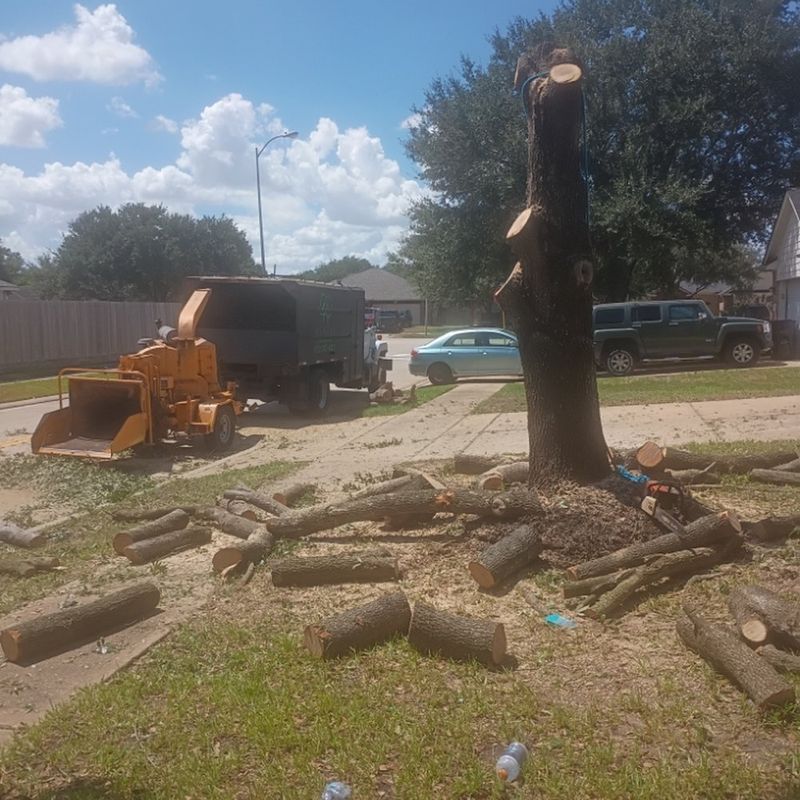
Evidence is where these disputes are usually decided. Four things tend to matter: the tree’s condition before it fell, what the owner knew or reasonably should have known, whether anyone gave notice of a concern, and what actually caused the fall.
Old photos showing dead leaves, fungus, or a leaning trunk can matter far more than a photo of the wreckage.
Evidence of danger is not the same as proof of liability. A tree can look rough and still fall only because of extreme weather.
Likewise, a neighbor may have had no reason to think anything was wrong.
If a tree worries you before a storm, the Texas Law Help manual suggests telling the owner in writing, describing the concern, and keeping a copy. That can document the issue, but it does not guarantee a claim will succeed if the tree later falls.
Courts have looked at how particular facts play out. In Avery v.
Alexander, a Texas appeals court discussed a hurricane-related neighbor tree dispute where the owner had taken steps to address a known danger and acknowledged the tree should have been removed. That case shows how specific facts can matter.
It is not a rule that decides every storm tree dispute.
You may also hear about the act-of-God doctrine. The manual describes it as applying when natural causes are the sole or exclusive cause of the damage.
If negligence also contributed, the analysis can change, so a big storm is not automatically a complete defense.
If real money is at stake, a Texas attorney can review your facts. Until then, preserve what you have.
Separate insurance coverage from your neighbor’s fault
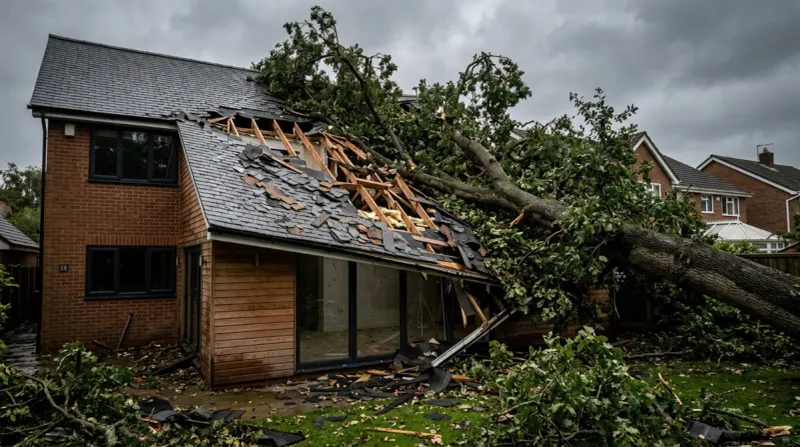
Insurance is a different question from fault, and the practical starting point is your own insurer. Call and ask what your policy covers before you argue with anyone.
Your claim does not have to wait for a decision about who was at fault.
The Texas Department of Insurance says many policies cover damage to a home from a falling tree. Some also pay for tree removal when the tree damages the home or blocks a driveway.
Removal of a tree that lands elsewhere in the yard usually is not covered.
A neighbor’s homeowners policy may pay if the neighbor was at fault. TDI notes it probably will not pay when the neighbor was not at fault.
That is why the two questions stay separate.
Neither a payment nor a denial settles liability. Your insurer paying for repairs does not prove your neighbor did anything wrong, and a denial from a neighbor’s insurer does not prove the neighbor was blameless.
Coverage depends on policy terms and the details of the loss.
Ask about fences and other structures, since they are often where yard damage happens. Winter adds a wrinkle.
TDI warns that some policies exclude fence damage when a tree or branch is weighed down by ice or snow, except in specified circumstances involving a house collapse. Terms and circumstances can differ, so read your own policy and ask your agent to explain the wording.
Do not assume a fence, a shed, or yard cleanup is covered. Ask, then get the answer in writing if you can.
Document the loss and ask focused questions
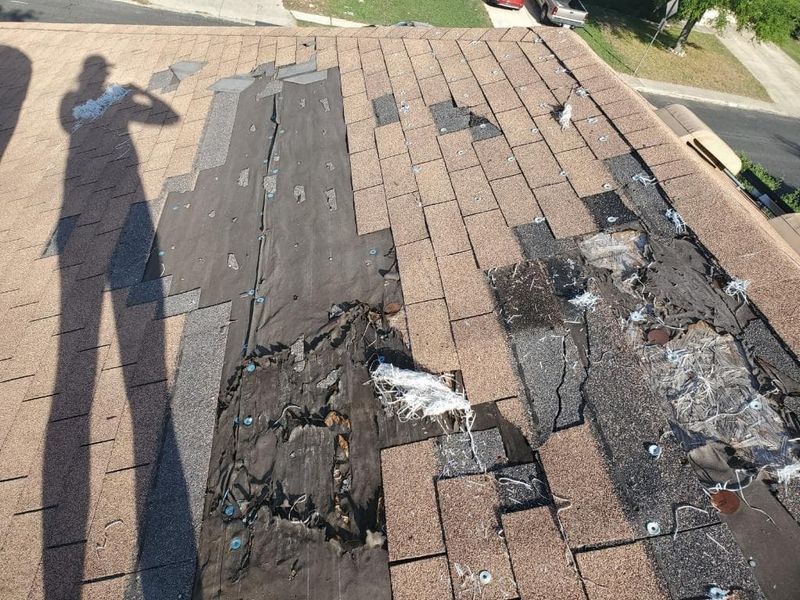
Once the scene is safe, start recording. Walk the yard and take wide photos and video of the fallen tree, where it came from, and everything it touched.
Then take close-ups of each damaged item, such as the fence panels, roof edge, patio furniture, or garden beds.
The Texas Office of Public Insurance Counsel recommends this kind of documentation for insurance claims. Add the date and time, and keep the files in one folder.
Store copies somewhere other than your phone in case the power stays out.
Next, report the loss to your insurer. Keep the conversation focused on facts: what fell, what it hit, and what it blocks.
You do not need to explain who was to blame.
Come with a short list of questions. Ask about:
Structural repairs to the house or other buildings, debris removal, your deductible, and coverage for fences or other structures. TDI notes that policies differ, and trees or limbs that fall in the yard without damaging covered property may not qualify for removal coverage.
Write down the date, the name of the person you spoke with, and the claim number. Save receipts for any emergency repairs, such as a tarp over a damaged roof.
Clear records make every later conversation easier.
Check local instructions for private-yard debris
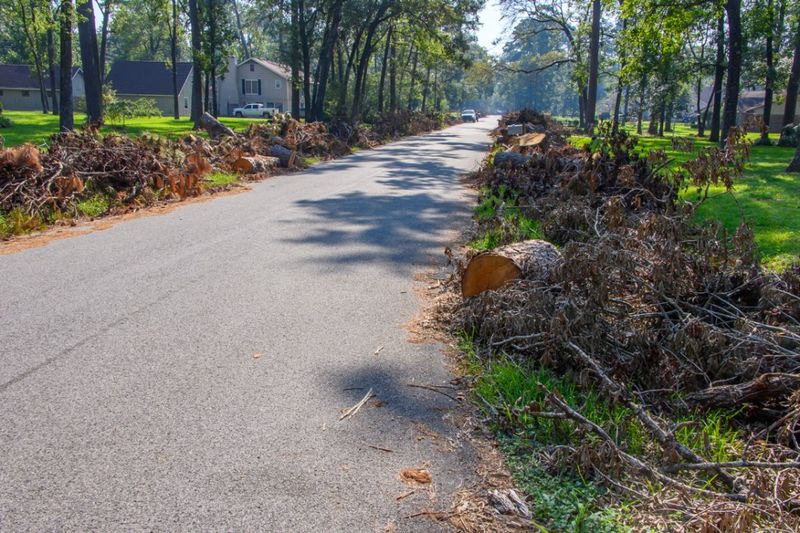
After a storm, the pile of branches in your yard can feel like someone else’s job. Usually it is not.
The Texas Law Help manual says private property owners generally use their own resources to clear debris on their property.
Some local governments do help. Depending on where you live, that might mean curbside collection, drop-off sites, or another temporary program after a major storm.
These programs vary by city and county, and they often start and end on short schedules.
Do not assume the city will haul away a whole tree from your private yard. Instead, check your city or county website, social media pages, or a nonemergency phone line for current instructions.
Look for rules on how to bundle limbs, how long pieces can be, and where to place them.
Local ordinances matter too. Some places limit what can go to the curb or require certain disposal methods.
If you live in a neighborhood with a homeowners association, read its rules before removing or replacing trees or putting piles out front.
What works in Houston may not apply in Lubbock or a small town in the Hill Country. Treat each program as local until you confirm otherwise.
If your insurer might cover removal, check with them before hiring a crew or hauling anything away, so you do not undercut a claim.
Leave hazardous tree work to qualified professionals
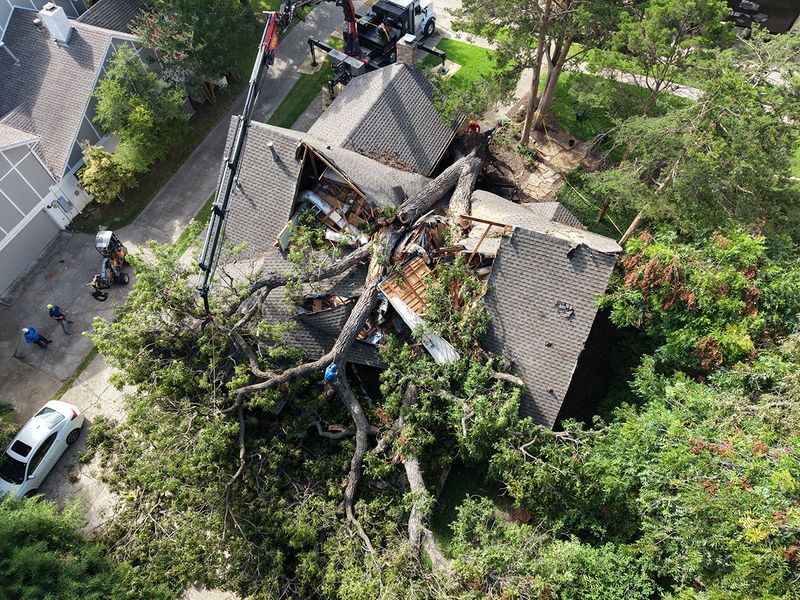
Some fallen trees are dangerous to touch. If a tree or branch is touching a power line, stay away.
TDI safety guidance says to treat all lines as energized and keep people, tools, and branches at least 10 feet away. Then contact the utility.
Ice-covered trees add more risk. A limb can be bent under tension and may spring or drop without warning.
A tree that looks settled can shift again as ice melts or wind picks up.
For storm-damaged, unstable, complex, or power-line-adjacent trees, TDI recommends a qualified arborist or a line-clearance tree professional. Ask for proof of insurance and get a written estimate before work starts.
Be wary of anyone who goes door to door right after a storm asking for payment up front.
Chain saws bring their own dangers. CDC chain saw safety guidance warns about the hazards of cutting storm-damaged trees, which is a good reason to hand the job to trained crews.
Keep children and pets away from the area, and mark off the hazard if you can do so from a safe distance. A fence can be rebuilt.
A person cannot.
Take the next steps without assuming who will pay

Work in order. Make the scene safe, document the loss, call your insurer, and check local cleanup guidance.
Only then look at the neighbor question, which turns on evidence of negligence and whether it caused the damage, as the Texas Law Help manual explains.
Winter weather alone settles nothing about fault, and it does not settle what your policy covers, so confirm the details with TDI’s guidance and your own insurer. A fallen tree is a cleanup problem first and a blame question later, if at all.