
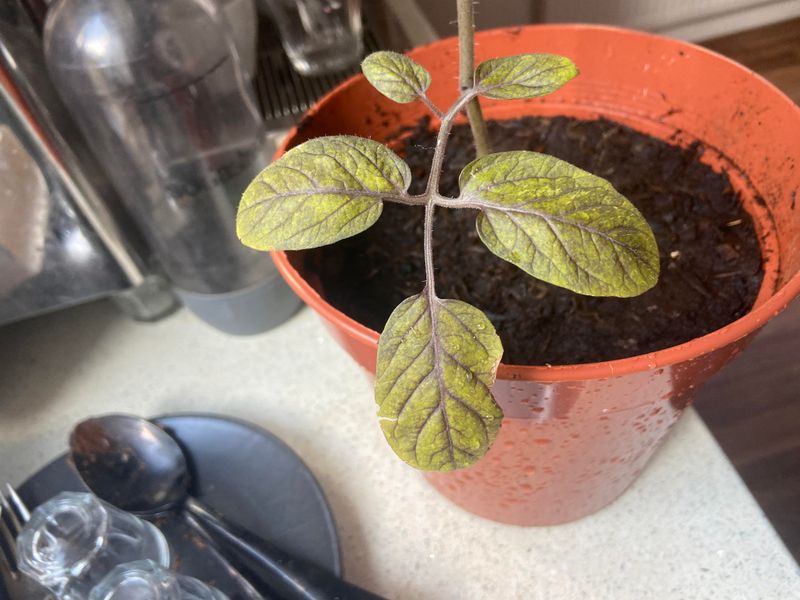
You walk out to water your container tomato and flip over a leaf, and the underside is a deep purple. It looks alarming, especially when the fruit is still ripening and fall weather is shifting.
That color is a clue, not a verdict, and a few simple checks can tell you a lot. Here is how to investigate the plant and pot, then decide whether to keep it going or pick the fruit.
Purple undersides are a clue, not a diagnosis
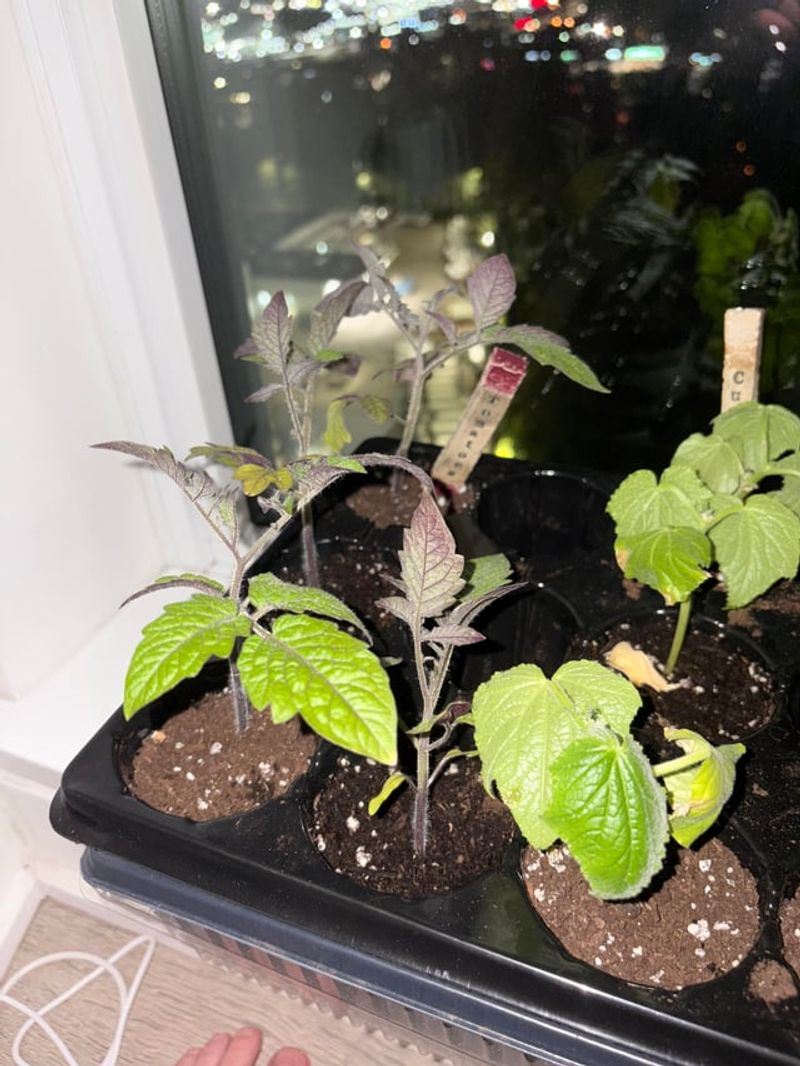
Start by looking at where the color shows up. Texas A&M AgriLife describes phosphorus-related purpling on tomatoes, often most obvious along the leaf veins.
It tends to appear on older, lower leaves first, and sometimes the stems pick up a purple tint too.
That pattern fits phosphorus stress, but it does not prove it. A nutrient shortage, a chilly root zone, or something else entirely could be behind it, and the color alone cannot tell you which.
It also does not mean the plant needs treatment today.
A better approach is to look at the whole plant. Is new growth still coming in a healthy green?
Are the flowers setting and the fruit sizing up? University of Georgia Extension covers cultural tomato problems like this one.
Purpling that sticks around alongside weak, slow growth is more worrying than a few tinted leaves on an otherwise steady plant.
Take a photo today and compare it in a week. Change over time tells you more than a single glance.
Cold root zones can limit phosphorus uptake
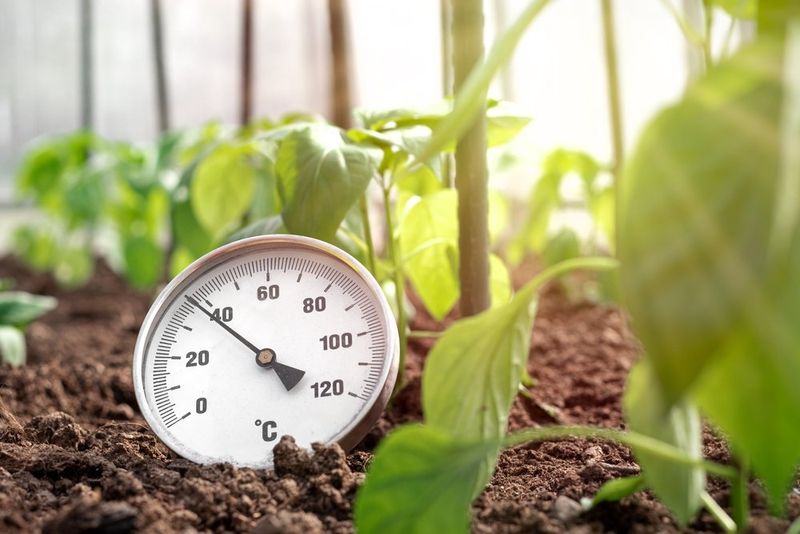
Phosphorus can be sitting right there in the potting mix and still not reach the plant. Cold soil slows root activity, and Texas A&M notes that tomato roots take up phosphorus poorly when the soil is cold.
Georgia Extension says phosphorus becomes less available when soil temperature drops below about 60°F.
Notice that the concern is soil temperature, not air temperature. A cool October night does not automatically chill a pot enough to cause trouble, and a pot in a sunny spot may stay warmer than the air suggests.
Metal, thin plastic, or a pot sitting on cold concrete can cool faster.
So a cold snap on the calendar cannot diagnose your plant. If you have a soil thermometer, push it a few inches into the mix in the morning and see what the roots are actually feeling.
That reading is far more useful than a guess based on the weather app.
Other factors can produce purple leaves
Cold roots are only one suspect. UMass Extension points out that low phosphorus in the mix, unsuitable pH, and damaged roots can all limit how much phosphorus a plant gets.
Root disease belongs on that list too.
Genetics can play a part as well. Illinois Extension describes tomato varieties with purple pigmentation, so check whether your variety normally has a purple cast and whether other plants of the same type look similar.
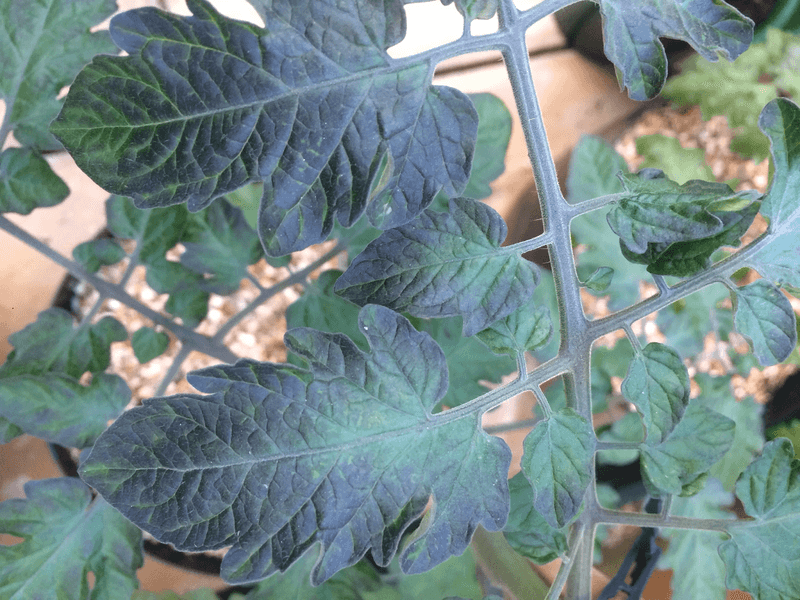
Then there is curly top disease, which can also cause purple veins underneath. Oklahoma State Extension and Colorado State Extension describe other signs such as dwarfed, crinkled leaves and leaves that roll or cup upward.
Purple veins alone do not point to curly top. Distorted or declining growth deserves a closer look, such as a call to your county Extension office, more than color by itself.
Check the pot before changing fertilizer
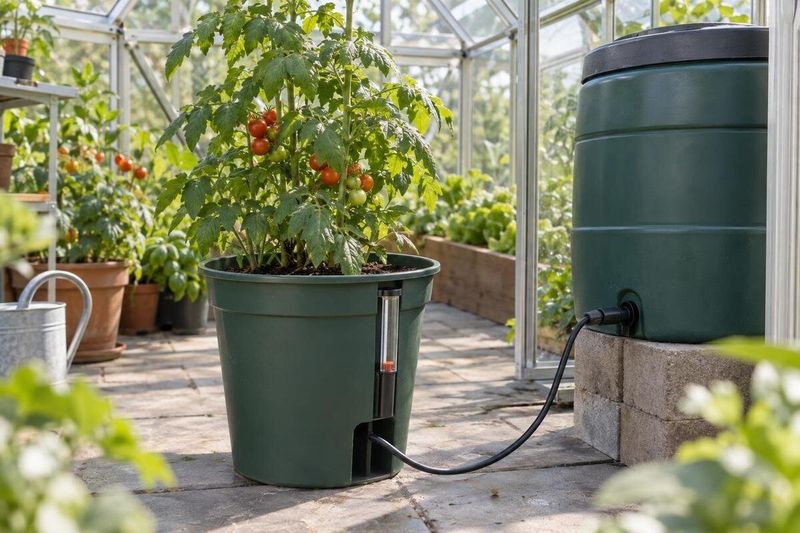
Before reaching for a bottle, work through the pot in order. First, recall your fertilizer history: when did you last feed, with what, and how much?
Second, check watering and drainage. Soggy mix, clogged holes, or a saucer holding water can stress roots.
Third, if practical, slide the root ball out and look for firm, pale roots rather than brown, mushy ones.
Leaf color alone does not justify a big phosphorus dose. Container mix is not garden soil, and University of Maryland Extension guidance on container vegetables stresses careful feeding because pots hold limited volume.
Too much fertilizer can build up salts or burn plants.
If growth stays poor after those checks, a balanced fertilizer used strictly by the label is a reasonable step. Texas A&M lists balanced liquid feed as one option for phosphorus problems in pots, and it may help, though it is not a guaranteed fix.
Flushing the pot with plain water now and then can also help with salt buildup.
Fall tomato timing varies across the South
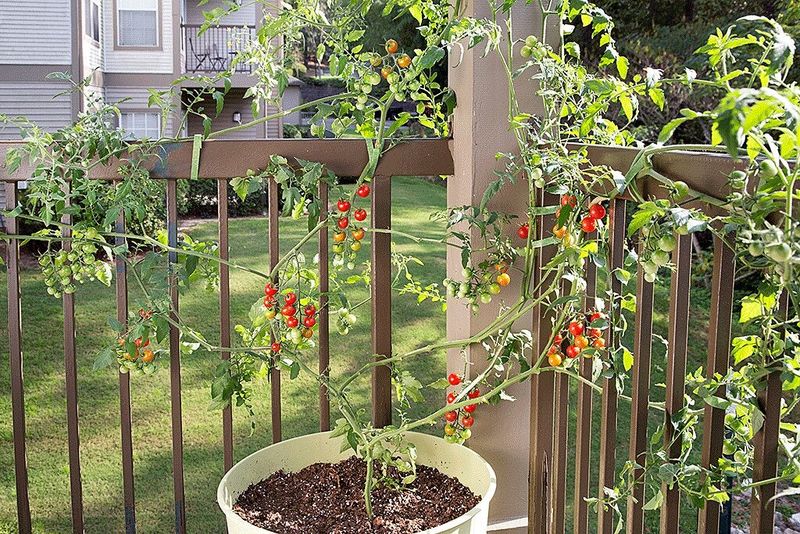
October means very different things from Miami to the Texas Panhandle. UF/IFAS lists fall tomato planting windows that change by Florida region, with the southern part of the state planting later than the north.
Texas A&M also gives timing that depends on where you live.
Those calendars show that season length is local. They do not promise that a tomato planted in spring will keep producing through October, and they do not mean a freeze is coming everywhere either.
Instead of following one Southern rule, look at your own situation. Where do you garden?
How old is the plant, and is it still setting fruit? What have recent nights and mornings been like?
A plant in Homestead and one near Amarillo are on very different clocks, so judge yours by what it is doing and what your local forecast says.
Use frost risk and fruit maturity to decide when to harvest
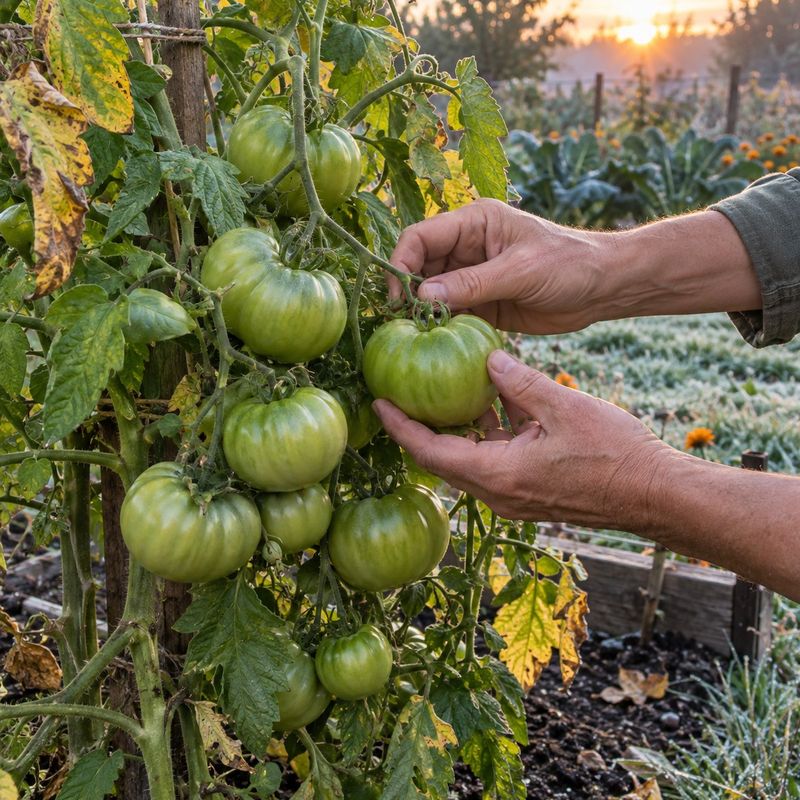
Purple leaves are not the signal to pull the plant or strip the fruit. The decision rests on your local forecast and how mature the tomatoes are.
If frost or a hard freeze threatens, Texas A&M AgriLife Extension suggests moving valuable container plants to a protected place. A manageable pot can go onto a porch, into a garage, or against a warm wall.
A light frost is not the same as a killing freeze, and protection can help but cannot guarantee survival.
For fruit you want to save, pick mature green or slightly colored tomatoes, which may ripen indoors. University of Minnesota Extension cautions that very green, immature fruit may not ripen to good flavor.
Small, hard, dark green tomatoes are usually poor bets.
If no cold is in the forecast, leave the fruit on and keep watching. The leaves are only the messenger.