
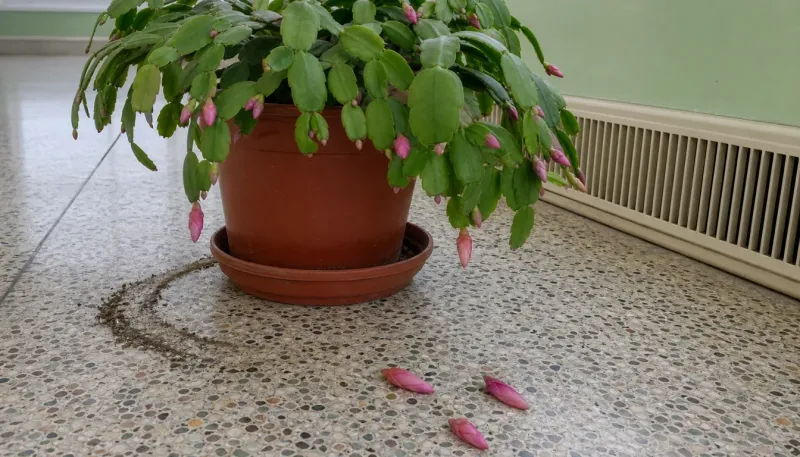
Few things sting like watching a Christmas cactus loaded with buds start shedding them just before the show. Many gardeners blame overwatering right away, but a chilly window or a sudden temperature change can also play a part.
Other stresses can cause the same mess. Here is how to tell what you are seeing and make one careful adjustment.
Is it a spent flower or a dropped bud?
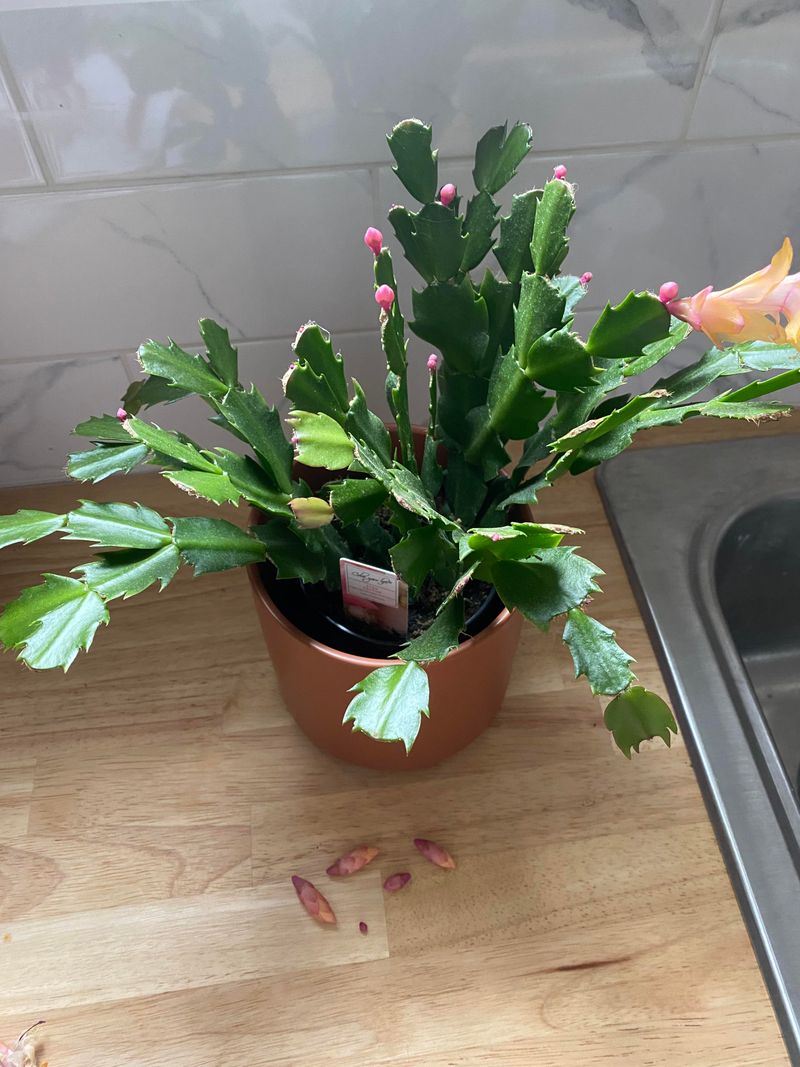
Start by looking closely at what actually fell. An open flower that wilted and dropped is often just finished.
UConn’s holiday cactus guide notes that each bloom lasts roughly a week, though the whole display can run for several weeks.
A small, unopened bud that drops is a different story. Buds that shrivel, turn brown, or fall before they open point to a stress worth investigating.
Several buds dropping at once is a stronger clue than one old flower letting go.
Mushy petals on the floor or in the saucer do not tell you the cause. Spent flowers turn soft on their own, and soft petals alone do not point to cold damage or overwatering.
Timing also varies. Many plants sold as Christmas cactus are really Thanksgiving cactus or hybrids, as Iowa State Extension explains, so blooms in November may be perfectly normal for yours.
A draft can disrupt buds, but coolness alone is not the culprit
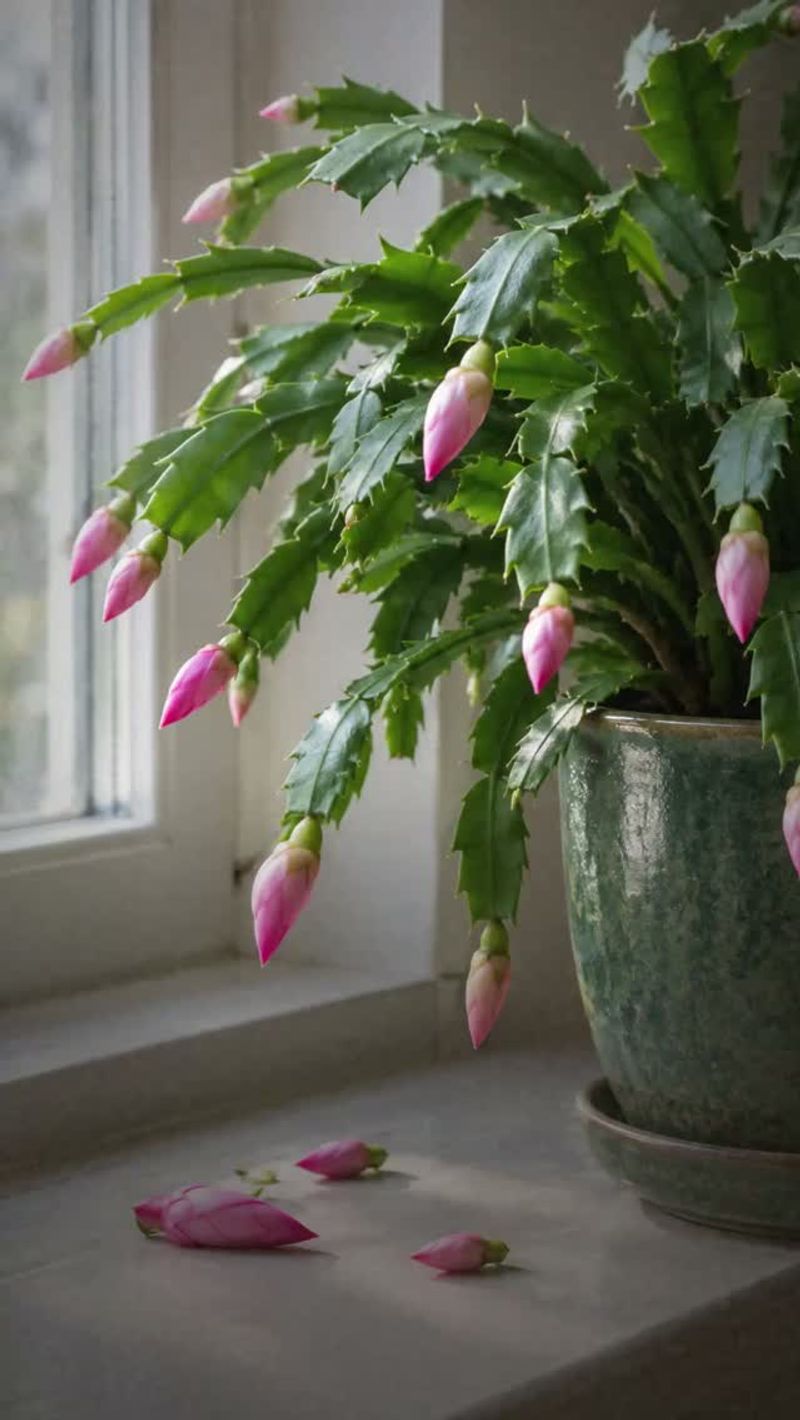
A cold window, a draft, or a sudden swing in temperature can contribute to unopened buds dropping. It is a plausible cause worth checking, but it is only one of several, and it is not a safe guess for every plant.
Cool air is not the enemy by itself. Holiday cacti need cooler nights to set buds in the first place.
Clemson Extension reports that nights of about 50 to 59 degrees F can set buds, while bud drop may occur around 50 degrees F.
The trouble comes from damaging lows or abrupt changes after buds have formed. Think of a pot pressed against cold glass overnight, or one sitting in the path of a vent that kicks on and off.
Treat those numbers as general context, not a test for your own plant. University of Minnesota Extension also lists sudden changes as a trigger, so a quick feel of the air near the pot at night can be telling.
Other stresses can cause the same symptom
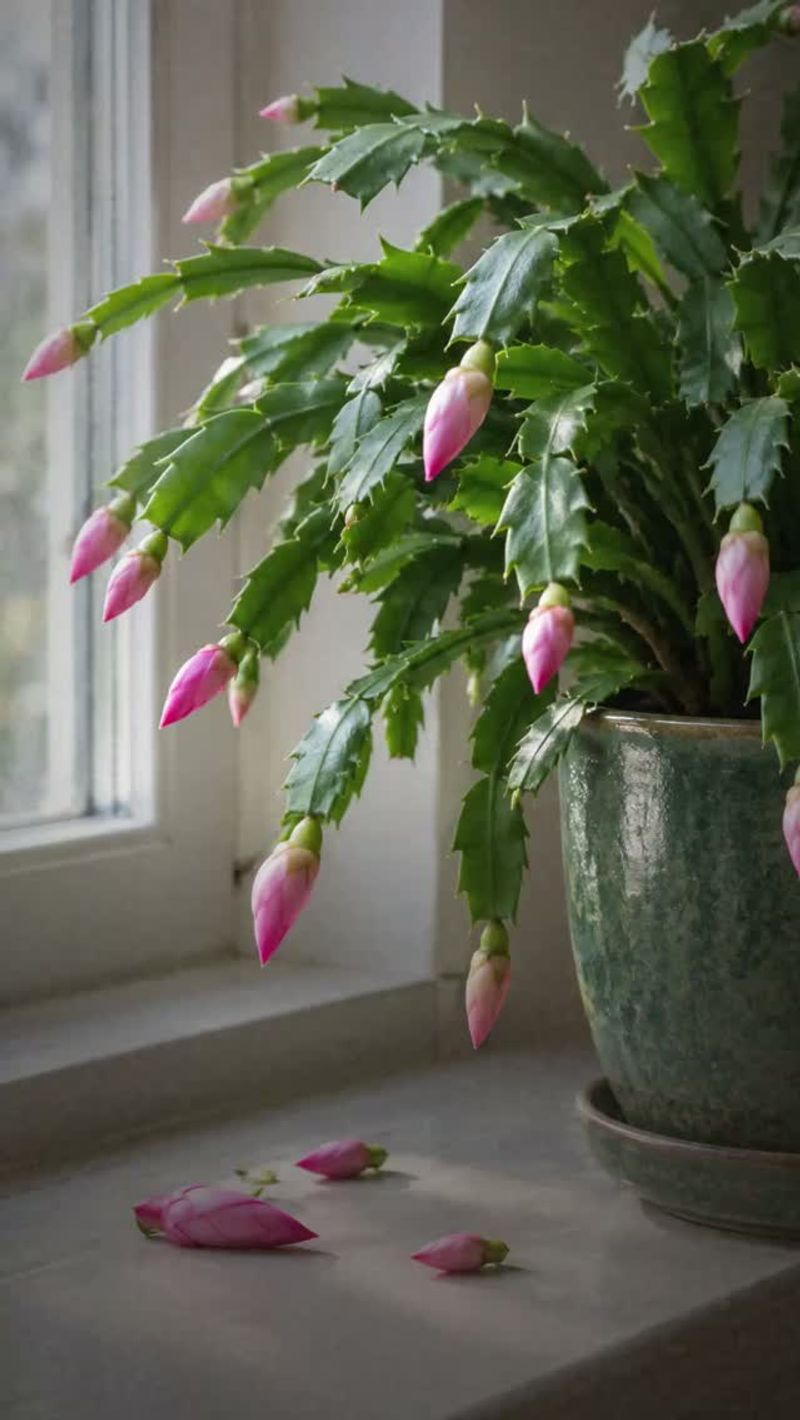
Bud drop looks the same no matter what set it off. Extension sources list changes in light, changes in humidity, improper watering, and too much warmth alongside drafts.
A cactus that was recently turned, moved to a darker room, or placed near a heat source may be reacting to that instead.
Both University of Minnesota Extension and Iowa State Extension describe these stresses, and dryness can cause drop just as soggy soil can.
Try a quick look back over the past two weeks. Did you repot, move the plant, start the heat, switch rooms, or change how often you water?
Clemson’s factsheet also points to excessive warmth.
Resist the urge to fix everything at once. Changing light, water, and location in the same week makes it hard to know what helped, and it adds new stress.
Fallen mushy petals will not narrow the list, so rely on the recent changes you can name.
Move the pot out of the temperature swing
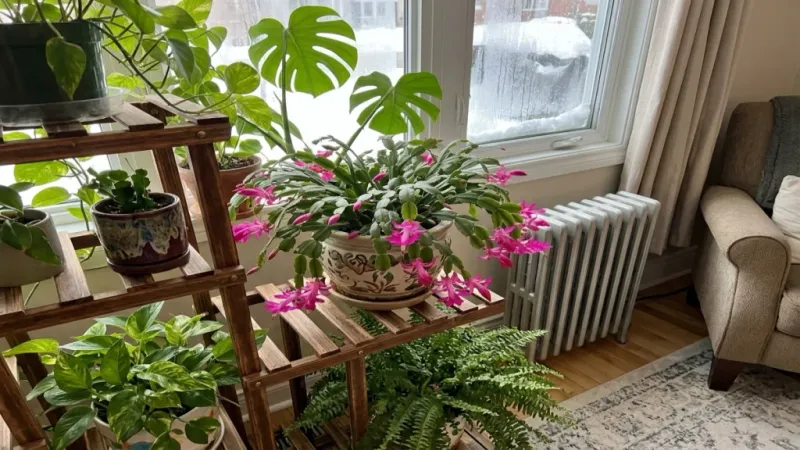
If your plant sits in an obvious draft, make one deliberate move. Look for a spot away from leaky windows, heaters, and vents that still gets bright light.
That might be a nearby table or shelf in the same room.
The goal is not a magic distance. You may have heard to move it a foot back, but no source sets that number.
A better test is whether the new place feels steady at night, with no cold air hitting the plant and no sharp swings from heating.
UF/IFAS advises keeping the plant away from drafts and heat sources. Dim light is its own problem, so do not trade a draft for a dark corner.
Once buds have formed, a move can itself be a stress, as Iowa State Extension cautions. Pick the spot once, then leave it.
University of Minnesota Extension offers similar advice, and a move may help but is no guarantee.
Check the mix and stems for signs of a watering problem
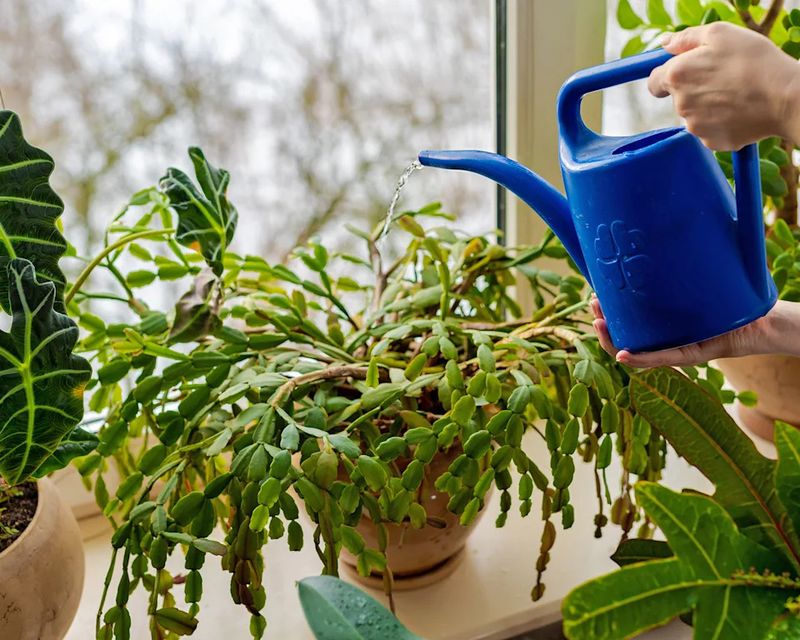
Skip the rigid schedule and check the soil. UF/IFAS suggests watering when the top inch feels dry.
Press a finger in, and water if it is dry at that depth.
Aim to avoid both extremes. Soggy mix can harm roots, and bone-dry mix can also make buds drop.
Empty any water left standing in the saucer after watering.
Now look beyond the fallen petals. Limp or wrinkled stems despite wet soil, or dark and mushy roots, are reasons to suspect excess moisture, poor drainage, or rot.
University of Minnesota Extension ties rot to these plant symptoms.
University of Illinois Extension offers care details too. If stems and roots look healthy, soft fallen petals are not a sign of rot, and you can look at the other causes instead.
Keep conditions steady while the remaining buds develop
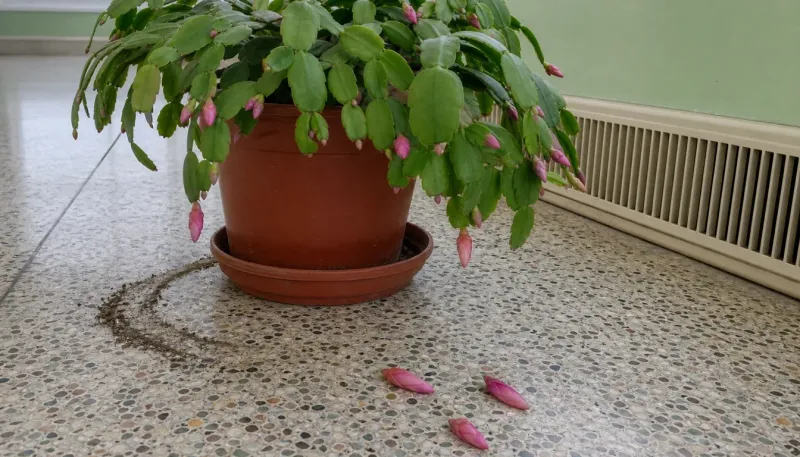
Fix an evident draft with one careful move, keep the light bright, and water by feel rather than by habit. Skip drastic changes.
Iowa State Extension and UF/IFAS both stress even care.
These steps may help, but they cannot promise recovery. A plant that has dropped some buds can still open the rest.
Steadiness beats fussing: a cactus left alone in a good spot often does better than one carried around the house.