
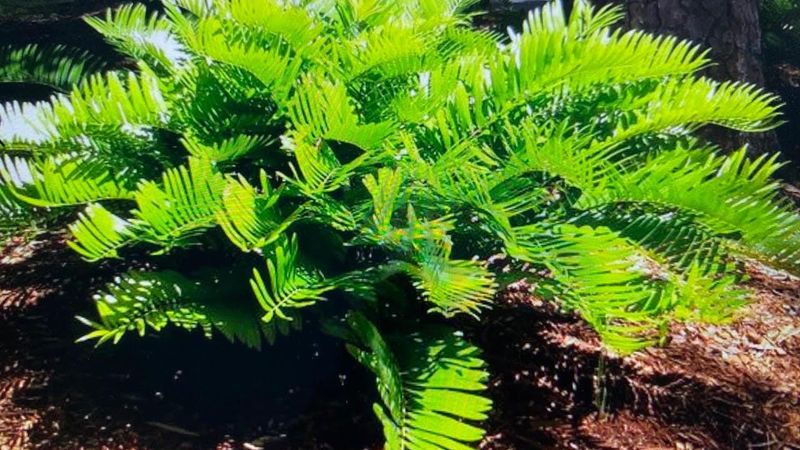
Coontie is one of Florida’s most underrated native plants, a low-growing evergreen that handles sandy soil, coastal salt, and summer heat without demanding much from the gardener after it settles in. It also plays a specific and fascinating role for the Atala butterfly, one of Florida’s most striking insects. More Florida gardeners are discovering what UF/IFAS has recommended for years: coontie earns its place in a landscape through genuine toughness, not trend.
Why coontie deserves attention in Florida landscapes
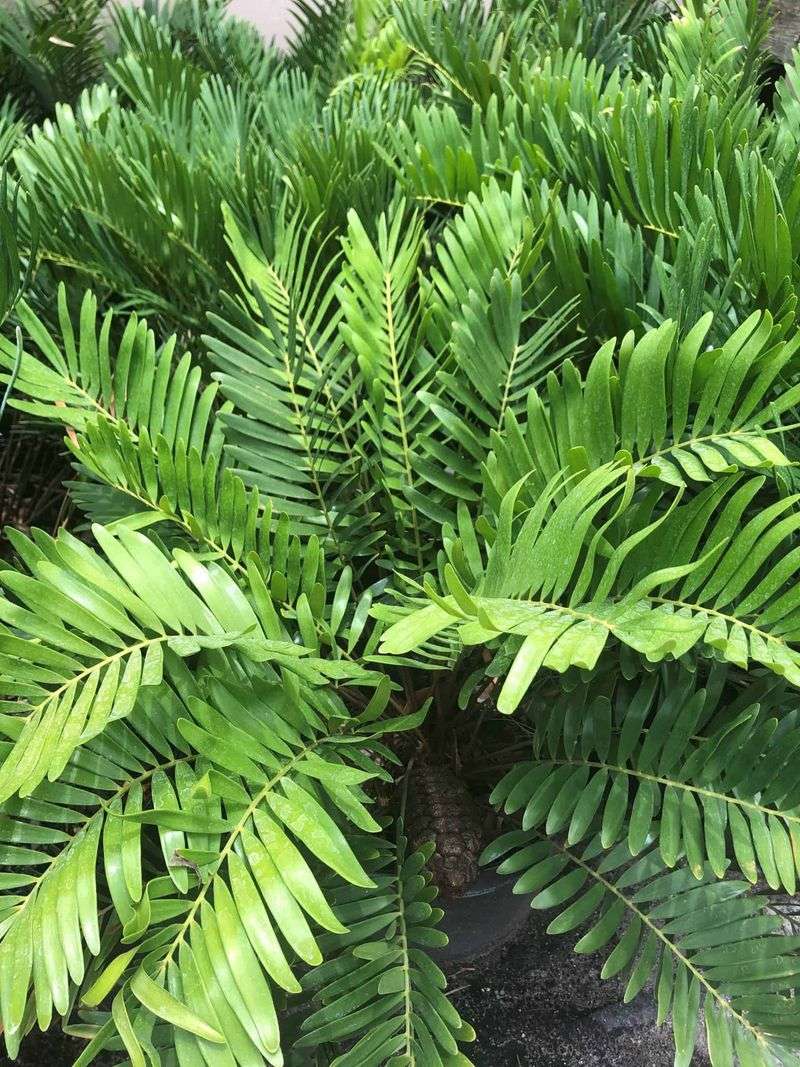
Headlines sometimes outrun the facts, and that is worth clearing up before anything else. No reliable statewide sales or planting data confirms that Florida gardeners are putting coontie in every yard this year, and no formal state government program has mandated or sponsored mass planting. What the evidence does confirm is more useful: coontie is a genuinely strong Florida landscape plant that UF/IFAS describes as a Florida-native, evergreen, drought-tolerant, and salt-tolerant cycad suited to a wide range of Florida yards.
The plant’s botanical name appears differently across publications. Zamia floridana and Zamia pumila show up in older horticultural sources, but the Florida Plant Atlas currently lists Zamia integrifolia as the accepted name, and Kew’s Plants of the World Online treats Zamia floridana as a synonym. This article uses Zamia integrifolia throughout.
Coontie is a cycad, not a palm or a fern, and that distinction matters for setting realistic expectations. Its stiff, glossy, feather-like leaves emerge from a thick underground storage root, giving it year-round structure even during dry stretches when other plants look ragged. It grows in full sun through full shade, performs well in the sandy, fast-draining soils common across Florida, and carries documented salt tolerance that makes it relevant to coastal gardeners.
UF/IFAS recommends coontie as a Florida-Friendly native option, which reflects real horticultural and ecological value. That recommendation, backed by extension research, is the solid reason to pay attention to this plant. The buzz around coontie is not a marketing campaign; it is a native-plant movement built on a track record that holds up under scrutiny.
Match the plant to the site, not the hype
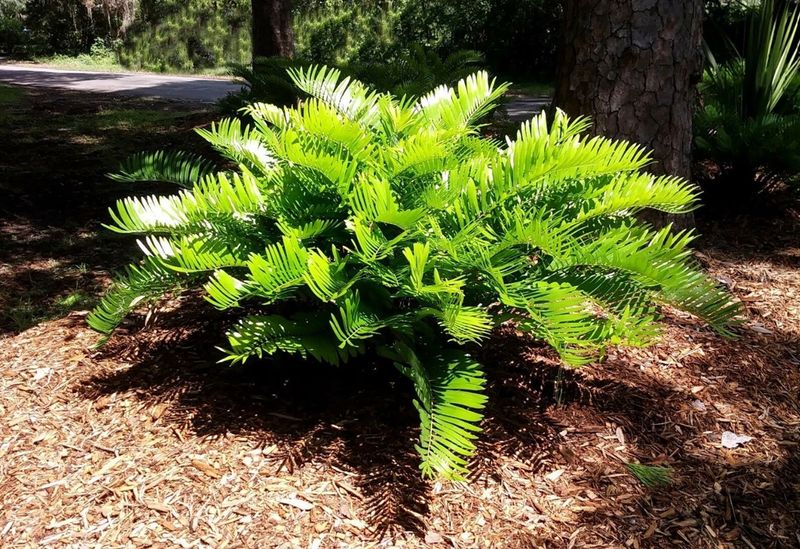
Coontie tops out at roughly 2 to 4 feet tall and spreads 3 to 5 feet wide at maturity, making it a genuinely compact plant that fits under windows, along pathways, and beneath taller trees without crowding. UF/IFAS places it in USDA Hardiness Zones 8B through 11, covering virtually all of Florida from the Panhandle south through the Keys.
Sun exposure is flexible, but not unlimited. Coontie grows in full sun to full shade, and UF/IFAS notes it performs best with some shade or partial shade rather than unrelenting afternoon sun. A site under a canopy of pines or on the north or east side of a structure often suits it well. The non-negotiable requirement is drainage: coontie is not a candidate for low spots that collect water after rain, and it should not go into areas prone to standing water.
Drought tolerance is real but conditional. UF/IFAS Florida-Friendly guidance confirms that established plants need minimal supplemental irrigation, but newly transplanted coonties are a different story. During the first growing season, regular watering is necessary while the root system develops. Skipping irrigation during establishment is the fastest way to lose a plant that would otherwise prove very durable.
Salt tolerance is similarly specific. Coontie handles salt air and salt spray well enough to be useful in coastal Florida landscapes, but that does not mean it survives flooding, storm surge, or saturated soil. UF/IFAS documents salt tolerance without promising immunity to every coastal stress. A beachside yard with good drainage is a reasonable site; a low area that floods after a tropical storm is not.
Matching the plant to actual site conditions, rather than a best-case scenario, is what makes the difference between a thriving coontie and a struggling one.
The Atala connection adds habitat value
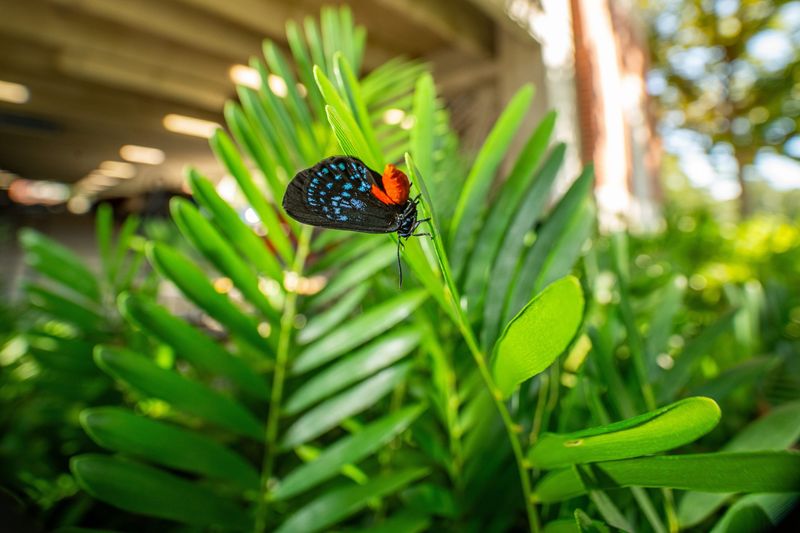
Coontie holds a specific and irreplaceable role for one Florida butterfly. The Atala, Eumaeus atala, lays its eggs exclusively on coontie, and the caterpillars feed on the plant’s foliage as their primary food source. That relationship is not a general pollinator benefit but a direct larval-host dependency: UF/IFAS identifies coontie as the Atala’s native host plant, and the butterfly’s historical decline tracked closely with the overharvesting of coontie for commercial starch production in the 19th and early 20th centuries.
Garden plantings have helped create local Atala colonies, particularly in South Florida where the butterfly’s natural range is centered. The National Park Service notes the Atala’s conservation-sensitive history and its limited geographic distribution. Atala remains a rare butterfly, and its presence in any given yard depends on local conditions, proximity to existing colonies, and available habitat well beyond a single plant. Planting coontie provides potential host habitat; it does not guarantee that Atalas will appear.
Adult Atala butterflies also need nectar sources, so coontie alone does not complete the picture for anyone hoping to support them. The Florida Wildflower Foundation describes the Atala’s nectar preferences alongside its coontie dependency, and pairing coontie with native flowering plants gives adults a reason to stay once they arrive.
One practical point that catches new gardeners off guard: Atala caterpillars can strip coontie foliage dramatically and quickly. The plant typically pushes out new growth after the caterpillars move on, so a temporarily bare coontie is not a plant emergency. UF/IFAS butterfly guidance advises against automatic insecticide use when supporting Atala is the goal. Spraying caterpillar-covered coonties eliminates the very wildlife benefit that made the plant worth planting.
Plant slowly growing coontie for its mature form
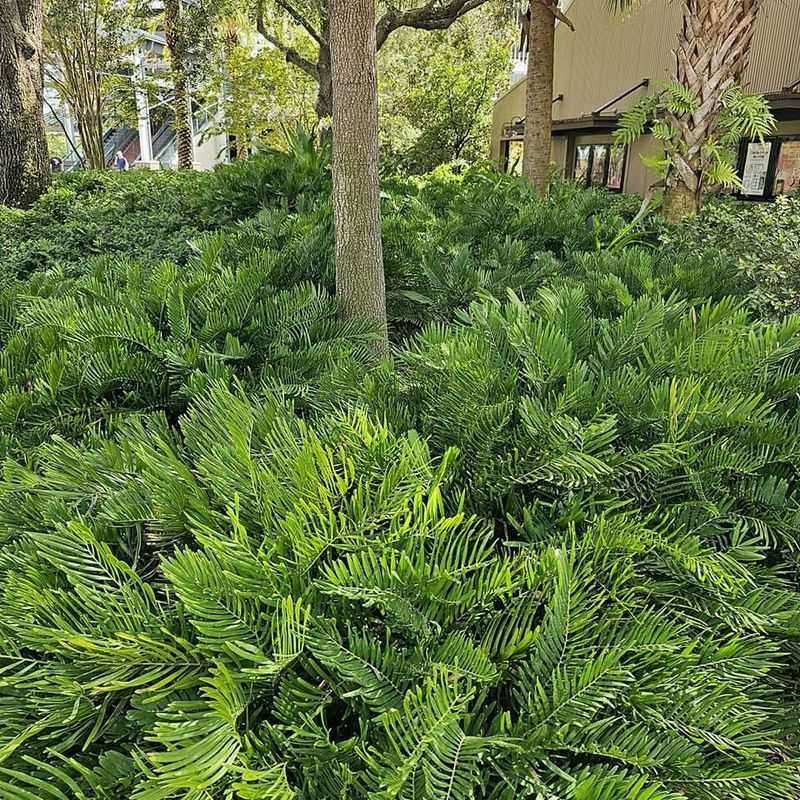
Patience is the central skill coontie requires. This is a genuinely slow-growing plant, and gardeners who expect quick groundcover from a nursery pot will be disappointed. The right mental model is planting for mature form, meaning the 3-to-5-foot spread the plant will eventually reach, not the small clump it looks like at installation.
UF/IFAS recommends spacing coontie approximately 3 to 5 feet on center when planting for a massed or groundcover effect. That spacing reflects the plant’s mature width, so a newly planted bed will look sparse for a while. Filling gaps with annuals or other low natives during the establishment years is a practical way to manage the look without crowding the coonties as they grow. Closer spacing can work for a denser low groundcover, but the plants should not be walked on.
Site preparation matters more than most gardeners expect. Well-drained soil is non-negotiable, and amending a poorly draining site is far easier before planting than after. Water the plant regularly during the first growing season, then taper irrigation as the root system establishes. UF/IFAS Charlotte County Extension notes that coontie’s slow growth also makes nursery plants relatively expensive, so protecting each plant through proper establishment is worth the extra attention.
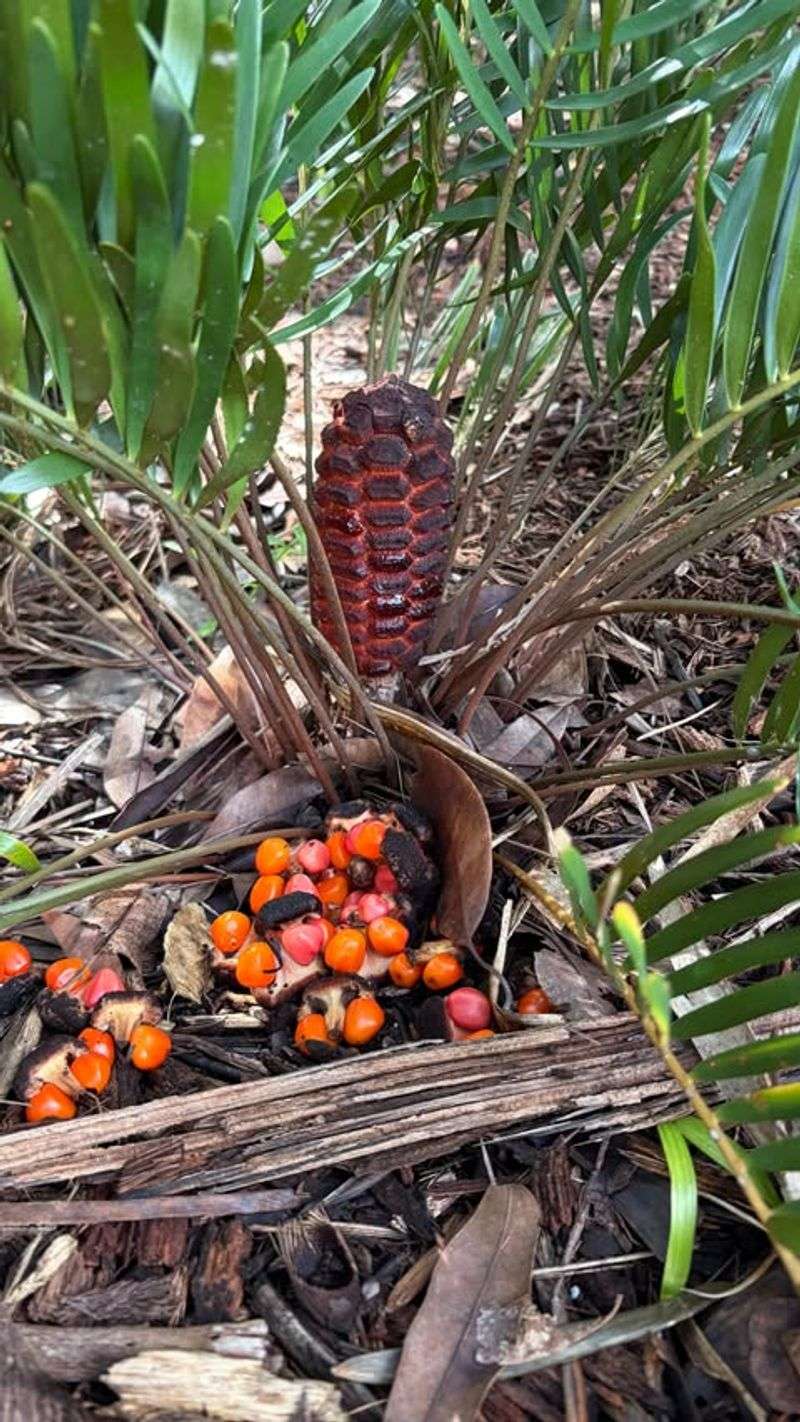
One detail that surprises many gardeners is that coontie plants are dioecious: each individual plant is either male or female, not both. UF/IFAS Duval County Extension explains that female plants produce the conspicuous orange-red seed cones that many gardeners find ornamentally appealing, while male plants produce pollen-bearing cones with a different appearance. A single coontie may not produce seeds at all, and buyers cannot always determine the sex of a plant before it cones. Planting several specimens improves the odds of getting both sexes and the seed display that comes with them.
Manage pests without treating a native as maintenance-free
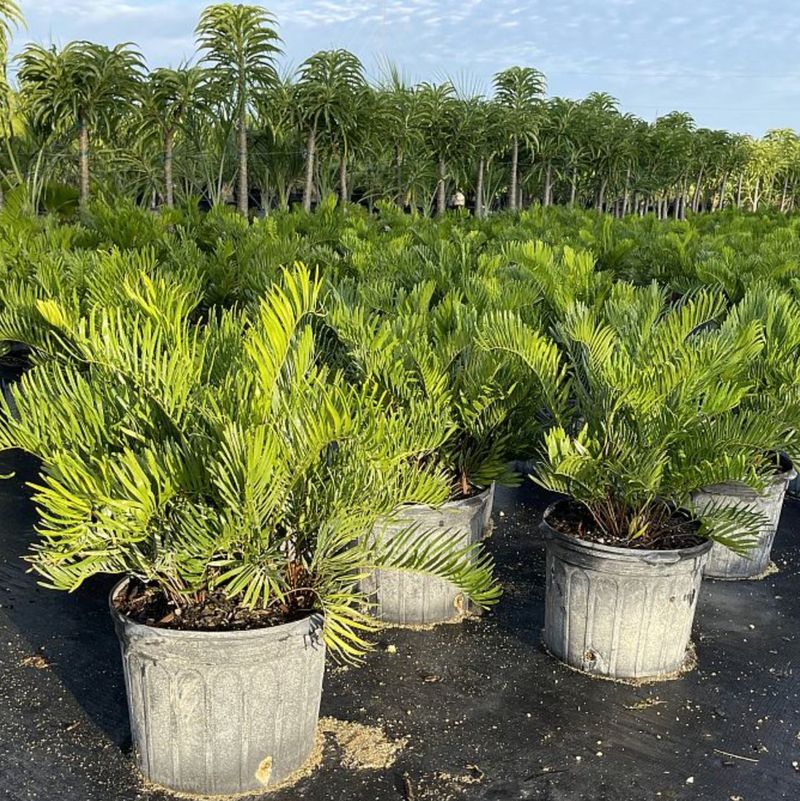
Native status does not come with a pest-free guarantee. Coontie is genuinely low maintenance after establishment, but that is different from saying it never needs attention. Several insects can cause real damage, and missing early signs of infestation can mean losing a plant that took years to reach a useful size.
Scale insects and mealybugs are the most common problems, and sooty mold, a black fungal coating that grows on the honeydew these insects excrete, is often the first visible sign that something is wrong. UF/IFAS specifically identifies Florida red scale as a serious threat to coontie, noting that it can be fatal if not controlled. Florida red scale is not always easy to spot because it blends against the leaf surface, which is why routine inspection matters more than routine spraying.
The right response to a pest problem starts with identification, not a trip to the pesticide shelf. UF/IFAS scale management guidance emphasizes inspecting plants carefully and confirming what pest is present before choosing a treatment. Broad-spectrum insecticides applied without identification can kill beneficial insects, including the predators that naturally suppress scale populations, making the long-term problem worse.
Checking the undersides of leaves and the base of fronds during routine garden visits catches infestations early, when they are easiest to manage. A plant showing yellowing, stunted new growth, or a sticky residue on leaves deserves a close look before the next watering, not after several more weeks pass. Coontie’s slow growth means a severe infestation can set a plant back considerably, and recovery at this plant’s pace takes time. Treating it as low maintenance rather than no maintenance keeps that investment protected.
Source coontie legally and protect people and pets
Before the first plant goes in the ground, two things need to be clear: where the plant comes from and who can safely be around it. Both points carry consequences that go beyond gardening preference.
Coontie should be purchased from a reputable nursery that propagates plants legally. Past commercial overharvesting of wild coontie for starch production drove the plant to near-scarcity in many parts of Florida, and UF/IFAS Charlotte County Extension states clearly that wild collection is illegal or restricted. Digging plants from natural areas, vacant lots, or roadsides is not a budget shortcut; it is a legal risk and an ecological harm. Florida Attorney General guidance on native plant sales addresses the regulatory framework around wild-collected plants, and the safest path is always a licensed nursery with propagated stock.
Toxicity is the second issue that requires plain language. Every part of coontie is poisonous, and the seeds are among the most toxic portions. UF/IFAS toxic landscape plant guidance lists coontie among plants that pose a serious ingestion risk. Reported symptoms of coontie poisoning include vomiting, abdominal pain, dark stools, bloody diarrhea, and liver failure.
The bright orange-red seeds on female plants are visually attractive, which makes them a particular concern around young children and pets who may pick them up.
UF/IFAS documents the plant’s toxic compounds and its history as a starch source for Indigenous peoples and later settlers. That historical processing required extensive, complex preparation to remove toxins. Mentioning that history is appropriate context, but it should not be read as an invitation to experiment. Raw coontie is poisonous, and home preparation or consumption is not safe.
Plant it for its landscape value, keep seeds out of reach, and treat the orange-red cones as ornamental, not edible.
A strong Florida recommendation does not fit every yard
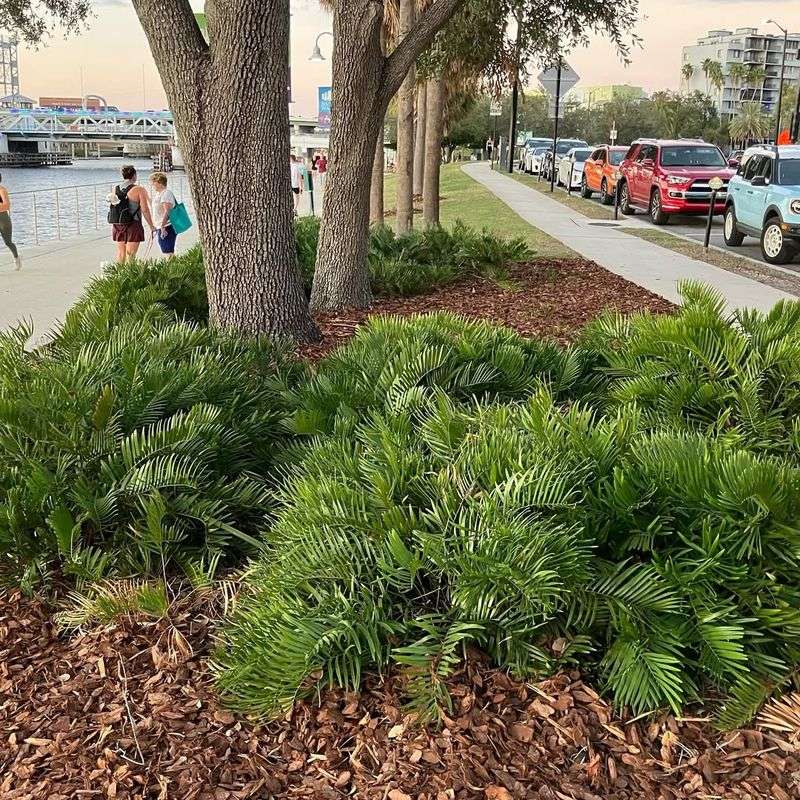
Coontie earns its reputation on specific, verifiable terms. UF/IFAS recommends it as a Florida-native, evergreen cycad with documented drought tolerance after establishment, real salt tolerance in well-drained coastal sites, adaptability from full sun to shade, and a clear ecological role as the Atala butterfly’s larval host. Those qualities are meaningful and well supported.
The plant still asks something of the gardener: well-drained soil, consistent water through the first growing season, patience with slow growth, periodic pest inspection, safe placement away from children and pets, and legal nursery sourcing. Coontie’s value to Atala butterflies is real for some local colonies in South Florida, but a single plant cannot promise a colony, and the butterfly’s broader recovery involves factors well beyond any garden.
UF/IFAS support for native plants like coontie reflects horticultural and ecological evidence, not a statewide mandate or mass-planting campaign. A yard with fast-draining soil, a partly shaded spot, and a gardener willing to wait for results is a yard where coontie will likely thrive. A low, wet site or a yard where children play among the plants unsupervised is a yard where it probably should not go. Choosing coontie because it genuinely fits your site is a sounder decision than choosing it because a headline says everyone else already did.