
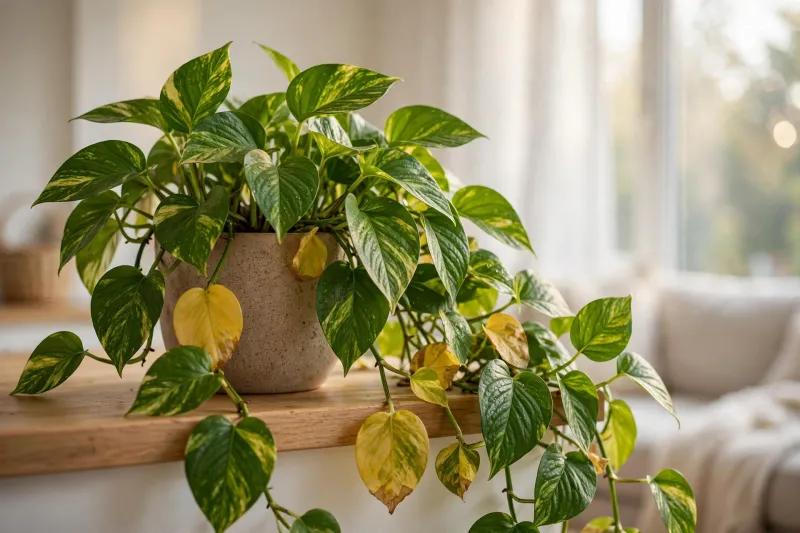
Your pothos looked fine all fall, then the heat came on and the leaves started turning yellow and falling off. It is easy to blame the furnace, but the real cause can be harder to spot.
Dry air and cold window glass are two things worth checking, along with water, light, and plain old leaf aging. Here is how to work through the clues at home, one step at a time.
Yellow leaves alone do not identify the cause
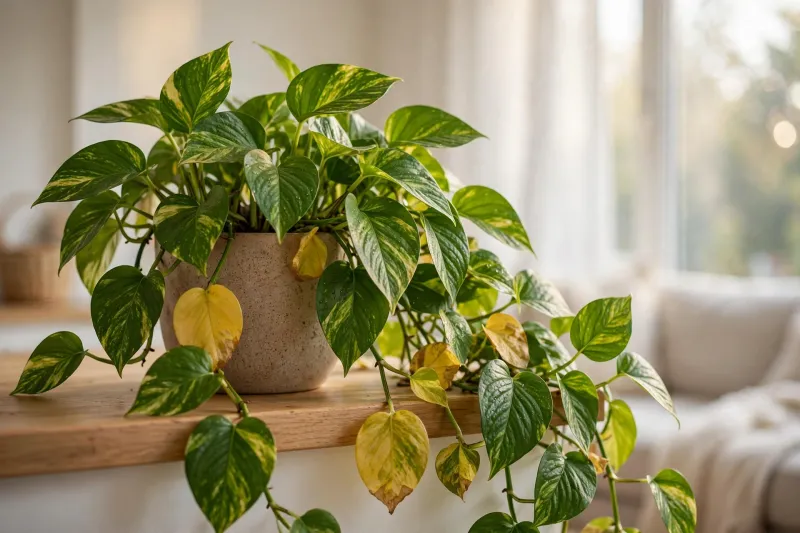
Timing is a good clue, but it is not proof. When leaves yellow just as the heating season starts, the conditions around your plant are worth a look.
Still, a yellow leaf is a general signal that the plant is unhappy, and many problems can produce it.
According to Iowa State Extension guidance on houseplant problems, yellowing and leaf drop can come from overwatering, underwatering, poor drainage, too little or too much light, temperature changes, and normal aging. UC IPM also lists pests among the possible causes.
Pothos-specific advice from Clemson Extension adds that hot and cold air near windowsills and vents can dry leaves and damage plant cells. That makes location a smart first check, but not the only one.
Think of the next sections as a checklist. You will look at humidity, glass and vents, light and watering, and the roots.
By the end, you should have a clearer picture of what is stressing your plant, even if no single clue settles it.
What dry indoor air can—and cannot—explain
Heated homes often feel drier in winter, and that is a fair thing to suspect. But low humidity is not a proven reason for yellow leaves or leaf drop.
General houseplant guidance links dry air more specifically to brown tips and crispy edges, as described in Iowa State’s houseplant diagnosis guide.
Pothos is also fairly forgiving. Clemson Extension notes that it tolerates typical home humidity, though it lists 50 to 70 percent as a preferred range.
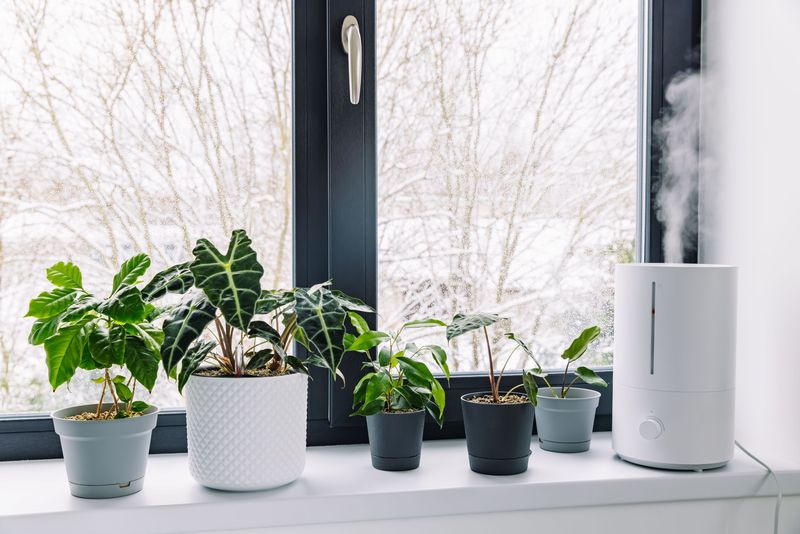
If your air feels very dry, a small humidifier near the plant is a practical option. Iowa State says many houseplants prefer roughly 40 to 50 percent relative humidity.
Treat those numbers as care preferences, not a test that proves humidity caused your plant’s trouble.
Skip the spray bottle as a fix. Iowa State Extension says the humidity boost from misting lasts only a few minutes.
Check for cold glass, drafts, and direct vent airflow
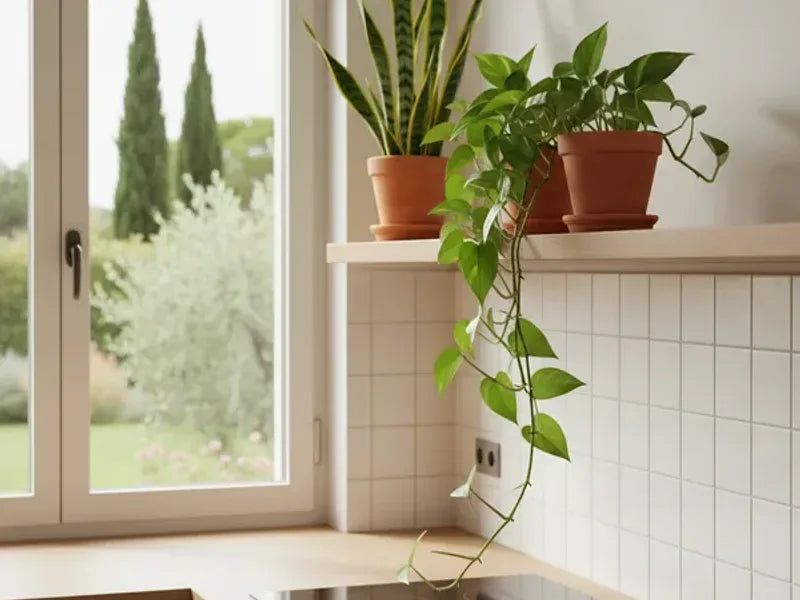
Take a close look at where each vine actually sits. Leaves pressed against a chilly window can get much colder than the room air.
A heating vent can blow hot, dry air straight onto foliage, and a drafty door or window can send cold gusts across the plant.
Run the back of your hand along the glass and across the vent opening. If it feels cold or blasty to you, a pothos sitting there may feel it too.
Also check whether any leaves touch the window, since those are the ones most exposed.
Extension advice supports moving plants out of these spots. Mississippi State Extension recommends keeping foliage away from cold glass, and Clemson Extension advises keeping pothos away from windowsills and heating vents.
Treat this as a smart adjustment rather than a verdict. Moving the plant lowers one possible stress, but it does not prove the glass or the vent caused the yellowing.
Other factors may still be at work.
Winter light and water needs can change
Shorter days mean less light, and a pothos often grows more slowly in winter. A slower plant generally drinks less, so a routine that worked in summer may leave the mix wetter for longer.
Turning up the heat does not mean the plant needs more water.
Skip the calendar and test the potting mix instead. Clemson Extension advises letting pothos soil dry between waterings.
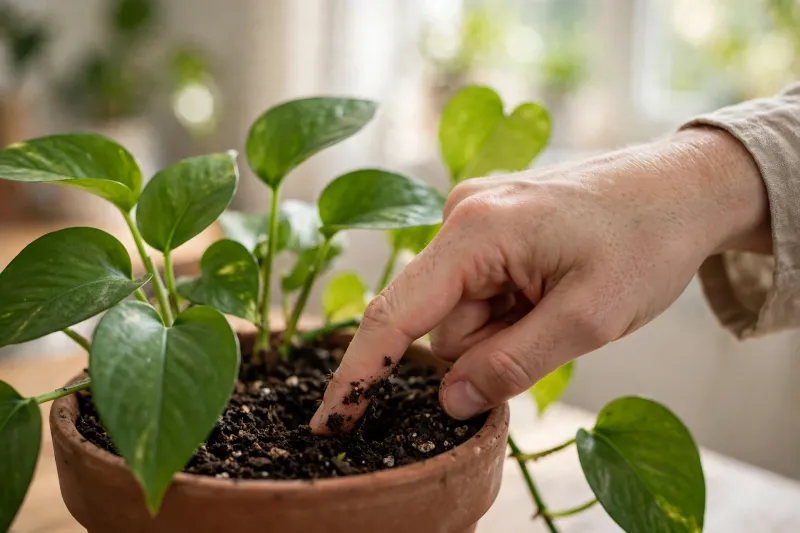
Push a finger into the mix, and water only when it feels dry at that depth. Then confirm the pot has drainage holes and empty any water standing in the saucer or decorative pot.
Look at the pattern of leaf loss too. Iowa State Extension says seasonal leaf drop can follow lower winter light.
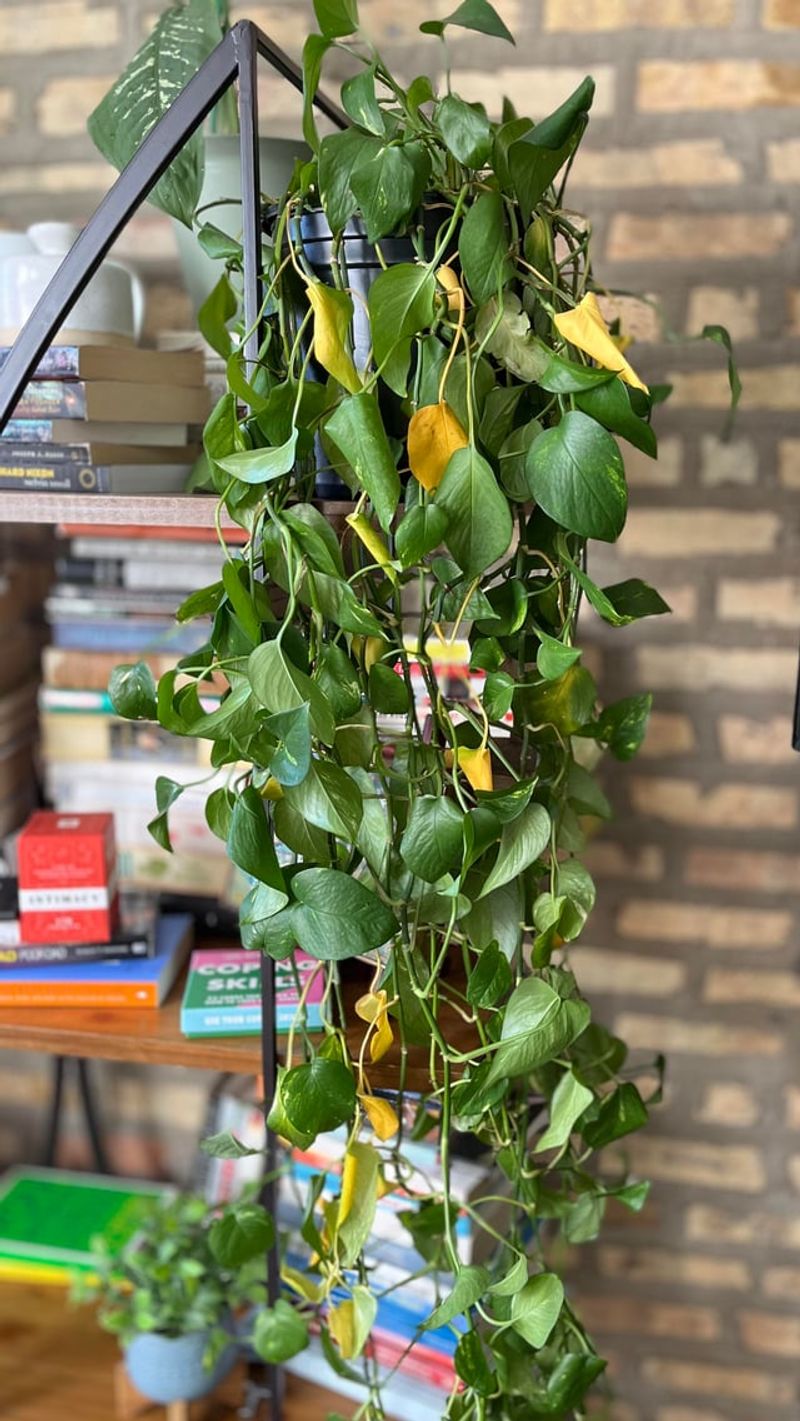
A few older inner leaves yellowing on an otherwise healthy plant may be normal aging, as noted in Iowa State’s diagnosis guide.
Broader decline is different. If many leaves across the plant are yellowing, vines are thinning, or growth has stalled, keep investigating.
UC IPM suggests also checking for pests.
If the pot stays soggy, check drainage and roots
When the potting mix is still wet days after watering, resist the urge to add more. Start with the pot.
Make sure the drainage holes are clear, the plant is not sitting in a full saucer, and the mix is not packed down tight.
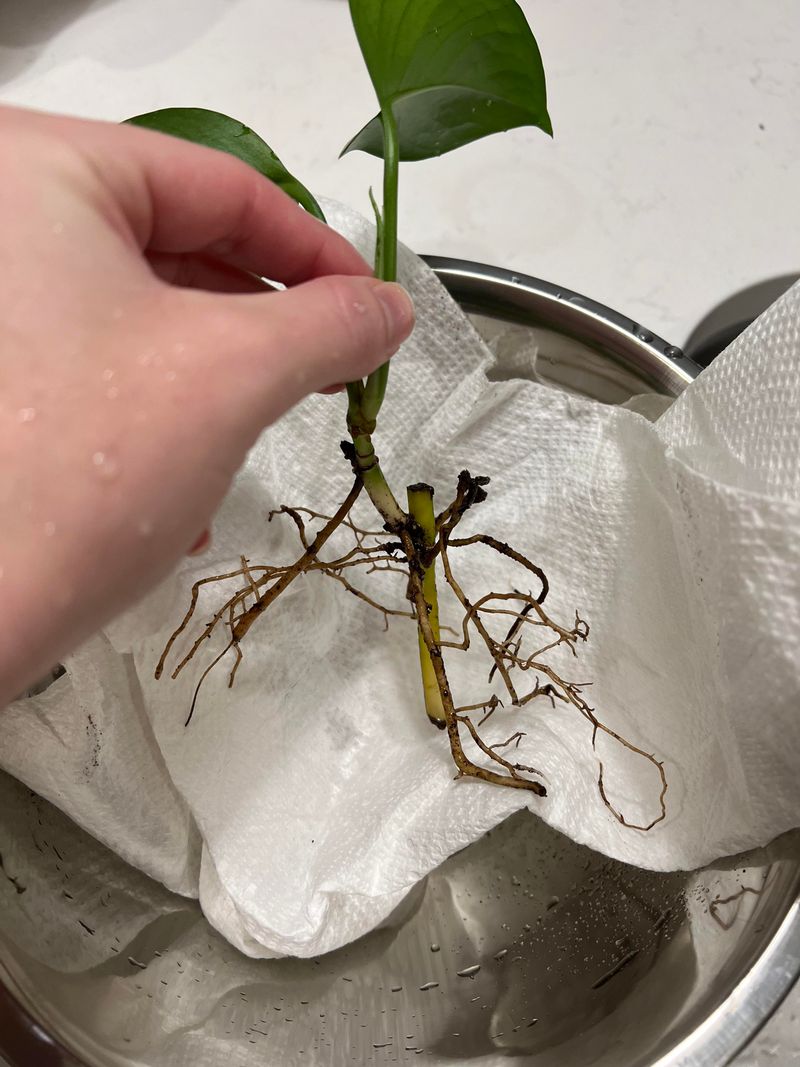
If the mix stays soggy, slide the plant out gently and look at the roots. Per the University of Florida Emerging Pathogens Institute, healthy roots are generally firm and light-colored, while soft, dark roots can point to root rot.
Keep your conclusions modest. A few dark roots do not mean the plant is doomed, and yellow leaves alone cannot confirm root disease.
Pests and watering problems can look similar above the soil, and UC IPM is a handy reference for comparing symptoms.
If the roots look firm and pale, you can tuck the plant back into a pot that drains well and move on to the other checks.
Make low-risk changes and watch new growth
Work through the easy fixes in order. First, shift the plant so no foliage touches cold glass and it is out of the path of drafts and heating vents, as Mississippi State Extension suggests.
Keep it in bright, indirect light, not a dim corner.
Next, check the potting mix before every watering and make sure water can drain out. Clemson Extension offers pothos-specific guidance on this.
If your home air is very dry, a humidifier may help, and Iowa State Extension covers ways to raise humidity.
These steps can reduce ongoing stress, but they will not turn yellow leaves green again. Instead, watch what happens next.
Is leaf loss slowing? Does new growth look firmer and greener?
A few older leaves dropping over winter is common, as Iowa State explains.
A pothos rarely announces its trouble clearly, but fresh leaves tell the story.