
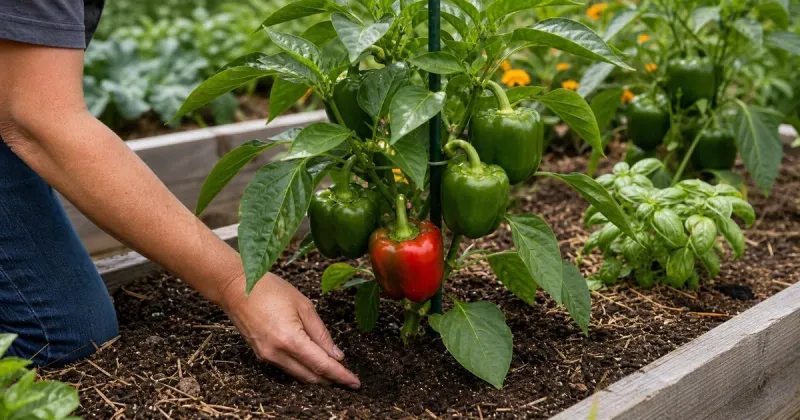
Your pepper plant is loaded with fruit, but the peppers just stay green as the days cool off. That can feel like a sign something went wrong.
Often it is simply a slower season, and you still have good options. Here is how to read what your plants are doing and what to do before frost shows up.
Cool weather can slow color development without setting a cutoff
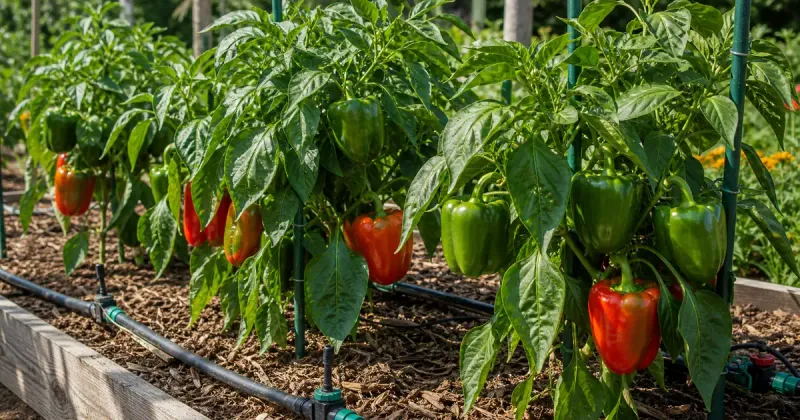
When the weather cools, pepper plants tend to grow more slowly, and the fruit can take longer to change color. Utah State Extension notes that peppers like sun and a long growing season, so a cooling fall can leave green fruit hanging around.
A pepper commonly needs about 35 to 45 days from flower to full color, according to University of Maryland Extension. That range shifts with the variety and the temperature, so your own fruit may run faster or slower.
Nobody has pinned down a certain November night temperature that makes existing fruit stop coloring, and no one can promise a set number of extra weeks. Cool temperatures are linked to poor growth, flower drop, and weak fruit set, but those problems involve the plant and new flowers.
They do not tell you that fruit already on the plant has stopped changing. A stalled pepper is a slower pepper, not automatically a lost one.
Green fruit may be immature—or its mature color
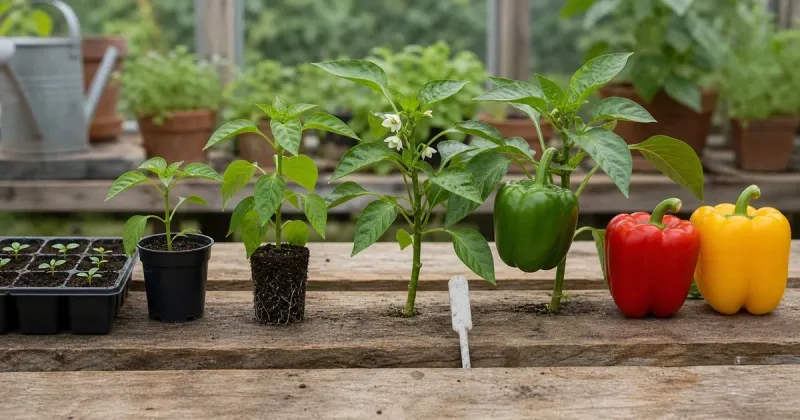
Some peppers are meant to be eaten green, and a green pepper on your plant is not automatically a failed crop. Varieties mature to different colors, including red, yellow, orange, and brown, as described by Utah State Extension.
Not every green pepper is destined to turn red, either. Check your plant tag or seed packet to see what color your variety finishes as.
A mature green pepper is full-sized, firm, and glossy with thick walls. A small, thin-walled, soft pepper may simply not be finished growing.
Maryland Extension also treats green harvest as a normal option. Size and firmness are your best clues for sorting the usable fruit from the unfinished.
Keep the plant healthy while time remains
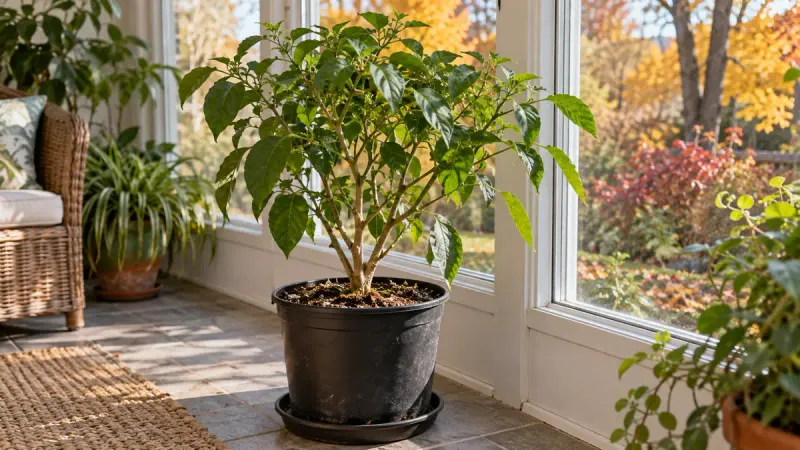
If frost is not close, the best move is boring but sound: keep your pepper in its usual sunny spot and keep it healthy. Peppers prefer sun and a long season, as Utah State Extension explains.
Water when the soil dries out and watch for pests.
These steps support the plant, but they will not guarantee a quick color change. Think of them as giving the fruit the best chance while the calendar allows.
You may hear that stripping off every flower and small pepper makes the rest color faster. That has not been shown as a reliable end-of-season trick.
A UMass Extension newsletter discusses removing damaged or undersized fruit in some production settings, but that is not a promise of faster color. Leave healthy fruit alone unless it is clearly damaged.
Harvest usable green peppers before frost threatens
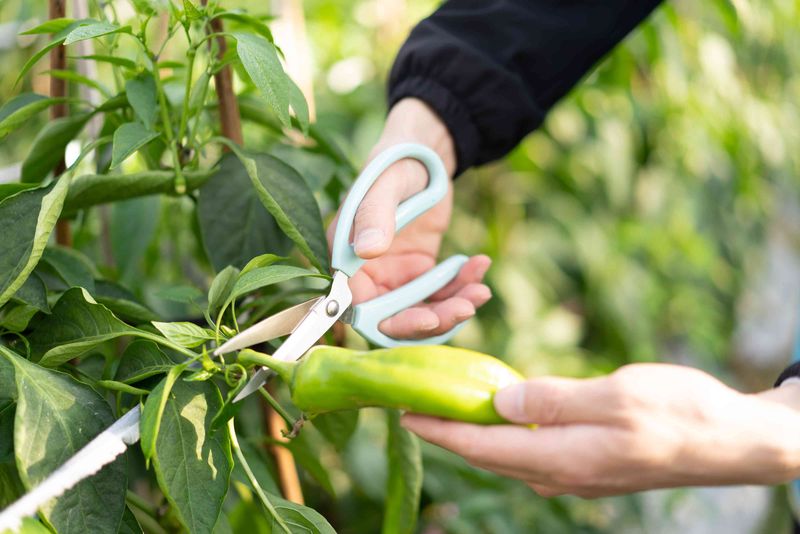
When a cold snap is on the way, pick your peppers. Mature green peppers are good to eat, and both Utah State Extension and Maryland Extension support harvesting them along with partly colored and fully colored fruit.
Use pruners or scissors to cut the stem rather than yanking the pepper off. Pulling can snap branches, which matters if you hope to save the plant through a mild cold spell.
Be choosy about what you pick. A full-sized, firm, glossy pepper is a good bet.
A tiny, soft one is probably not mature, so it will not give you much. Sort the harvest by size, and use the biggest green peppers first in stuffed peppers, fajitas, or salsa.
A picked pepper may change color, but full ripening is not guaranteed
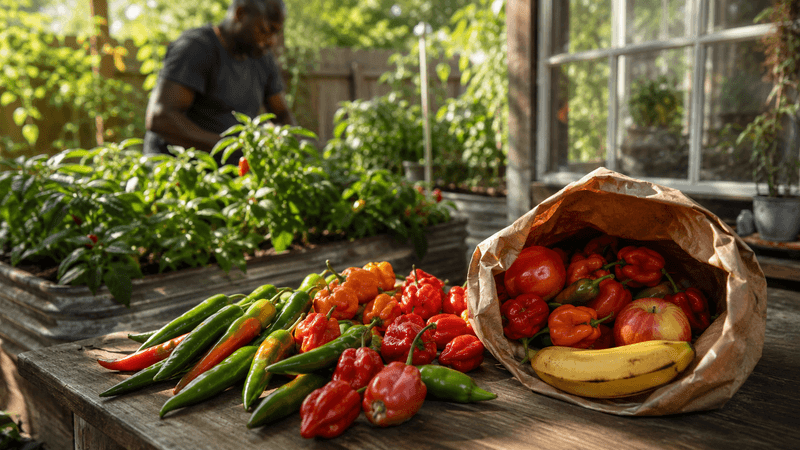
Once picked, a partly colored pepper may keep changing color in warm conditions. UC Davis describes the best color change for partly colored fruit at 68 to 77°F with very high humidity, above 95 percent.
That is hard to match safely in a home kitchen.
Maryland Extension takes a different view and says peppers do not ripen further after harvest. The sources differ, so the honest takeaway is that some color may develop, but full ripening is not a sure thing.
Skip the banana or apple bag. UC Davis calls peppers nonclimacteric, meaning they respond little to ethylene, so that shortcut is not well supported.
Do not count on the same color or flavor you would get from fruit ripened on the plant. Use green peppers as green peppers, and treat any color change as a bonus.
Use a cover for limited frost protection, not faster coloring
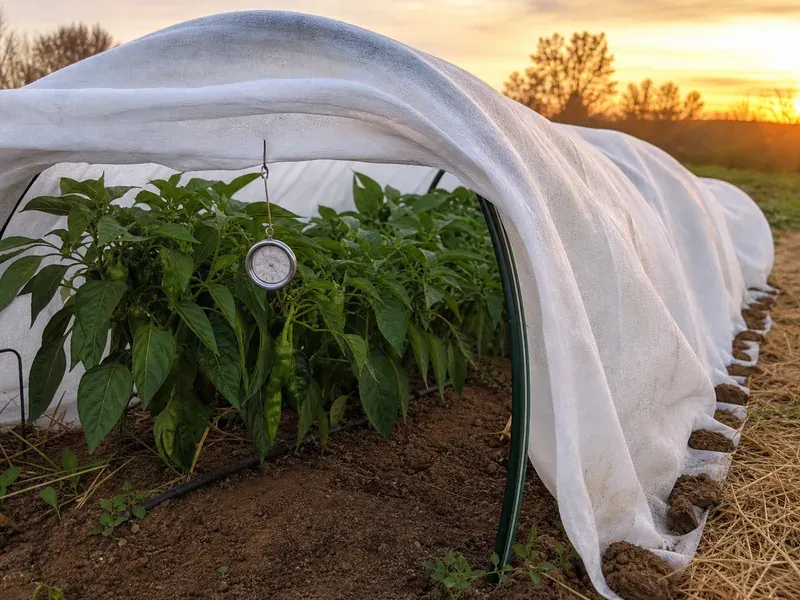
A cover can help your plants through a short, light cold event. University of Georgia Extension advises that covers reach the ground and be anchored so cold air does not slip in.
If you use plastic, hold it up on hoops or a frame so it does not touch the leaves, because contact can damage foliage. Take the cover off when temperatures rise so plants do not overheat.
Keep your expectations realistic. A cover does not guarantee protection through a hard freeze, and it is not a dependable way to make peppers color faster.
Do not run overhead sprinklers through a freeze as a casual trick either. UGA notes that method needs continuous sprinkling and is impractical for home gardeners.
If a hard freeze is forecast, harvest what is usable instead of betting on the cover.
Let local frost risk—not the calendar—guide the final decision
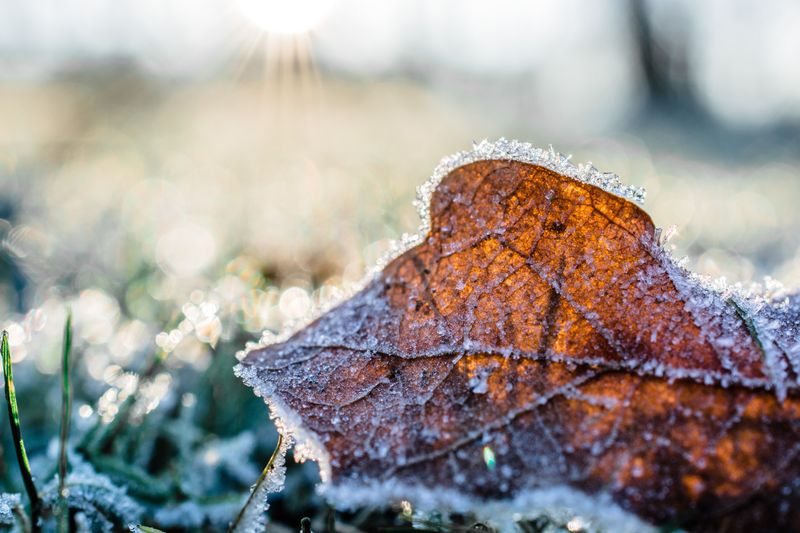
Frost timing changes a lot across the South. Florida shows how much: UF/IFAS guidance says peppers are harmed by frost and freezes, and that frost risk varies markedly by region, especially between North and South Florida.
Texas gardeners see similar swings from the Panhandle to the Gulf coast.
So check your location and your local forecast. If frost is far off and the plant looks good, leave firm fruit on and keep giving it sun.
Utah State Extension reminds growers that peppers like a long season.
If a freeze is coming, harvest mature green peppers. For a short cold night, a properly supported and anchored cover may help.
The month on the calendar cannot tell you when a pepper will color, but your forecast can tell you when to pick.