
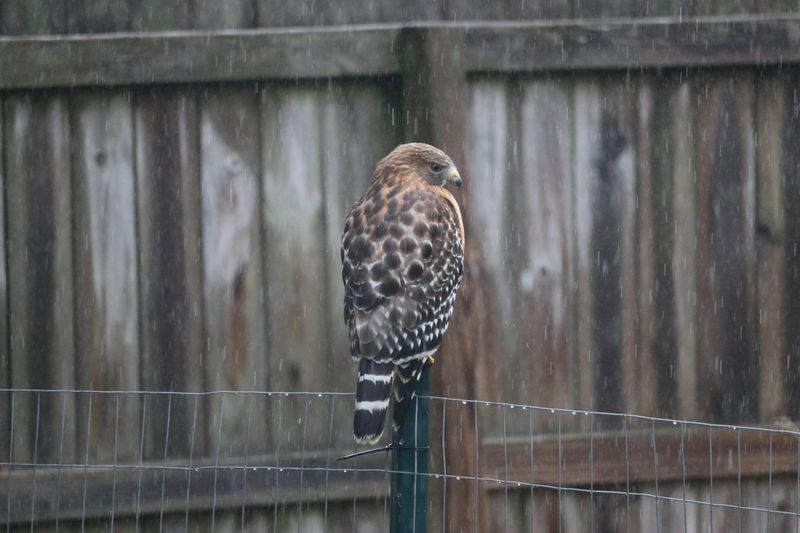
A big hawk perched on a backyard fence can stop you mid-step. Seeing one raises a fair question about why it picked your street.
Some North Carolina hawks do live and nest in towns and suburbs, but the reasons usually stretch well beyond one yard. Here is what is known, what is not, and how to treat a hawk neighbor with care.
Why hawks use some North Carolina neighborhoods
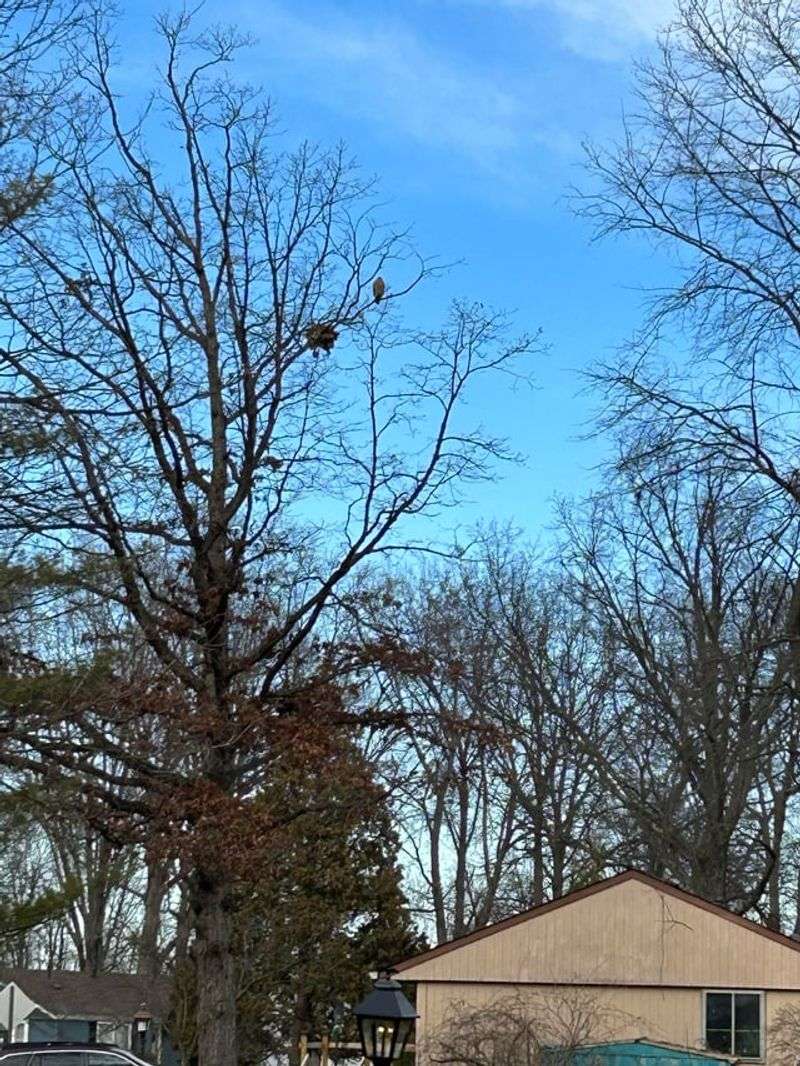
Some North Carolina hawks do live and nest in towns and suburbs. NC Wildlife says red-shouldered hawks use these areas where mature woods, streams, rivers, or swamps provide suitable habitat.
The key words are suitable habitat. Houses alone do not make a place good for a hawk.
Red-shouldered hawks lean toward wooded, often waterside settings. Picture a neighborhood built around a creek corridor with tall hardwoods, and you have the kind of spot they can work with.
A street of new homes with few mature trees and no water nearby is a very different story.
Red-tailed hawks follow a different pattern. According to NC Wildlife, red-tailed hawks can adapt to urban areas, though they generally prefer woods for nesting and open areas for feeding.
That is why you often see them hunting along highway medians, ball fields, and large lawns while a woodlot nearby holds the nest.
Residential settings also vary across the state. Mountain towns, Piedmont suburbs, and coastal plain neighborhoods offer different mixes of forest, farmland, and wetlands, and NC Wildlife’s overview of habitat types in North Carolina shows how much that mix changes from region to region.
Two yards a few miles apart may offer a hawk very different options.
So when a hawk shows up near you, the better question is what the larger landscape around your street looks like. Tall trees, a stream, and open ground within a short flight are the clues worth noticing.
What a wildlife-friendly yard may contribute
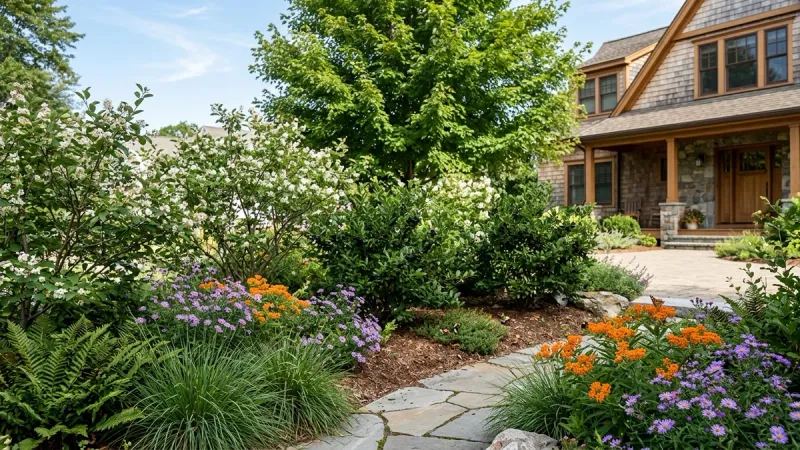
A layered yard gives wildlife things to eat and places to hide. NC Wildlife’s guidance on suburban backyards recommends native grasses and wildflowers, shrubs, and small trees.
It also lists red-shouldered hawks among the species that use suburban backyard habitat.
Think of each layer as a job. Native grasses and wildflowers can supply seeds and insects, shrubs can offer shelter and berries, and small trees add perches and nesting spots for songbirds.
Those smaller animals may in turn become part of what a hawk hunts nearby.
That chain is a possible indirect link, not a guarantee. A hawk does not read your plant list.
Red-shouldered hawks are described by NC Wildlife as birds of mature woods and waterways, so the forest and creek down the road likely matter more than any border bed.
Your yard is one small piece of a much larger patchwork that includes neighbors’ lawns, greenways, and woodlots. No planting can promise a hawk visit or a nest.
Still, native plantings are worth adding for their own sake. They help pollinators, feed songbirds, and fit North Carolina conditions, so a weekend spent adding a few native shrubs or a patch of wildflowers pays off whether or not a hawk ever notices.
The prey may matter more than the plants
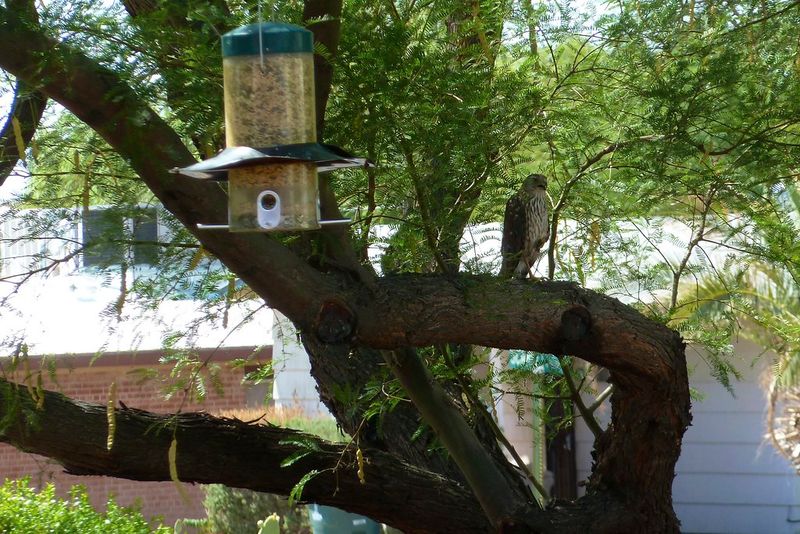
Food is what a hawk is really after. Different hawks want different meals, so the species you see tells you something about what it is hunting.
NC Wildlife notes that red-tailed hawks eat a varied menu, including rodents, rabbits, amphibians, reptiles, and insects. A red-tail on a fence post beside a field edge is probably scanning for small mammals in the grass.
Cooper’s hawks are another matter. The Cornell Lab’s Cooper’s hawk life history describes a diet made up mainly of birds.
A fast, medium-size hawk that darts through shrubs near your feeders is likely hunting the birds gathered there, not reacting to your plants.
If you see this at your feeders, nothing has gone wrong. Hawks hunting where prey gathers is normal behavior.
Some people pause feeding for a week or two, and others move feeders closer to dense shrubs so birds have quick cover.
One more caution: a hawk is not a dependable pest-control service. It may take a few rodents, but it will not clear a yard of them, and it may be after something else entirely.
Treat any rodent help as a bonus rather than a plan.
What a hawk can—and cannot—tell you
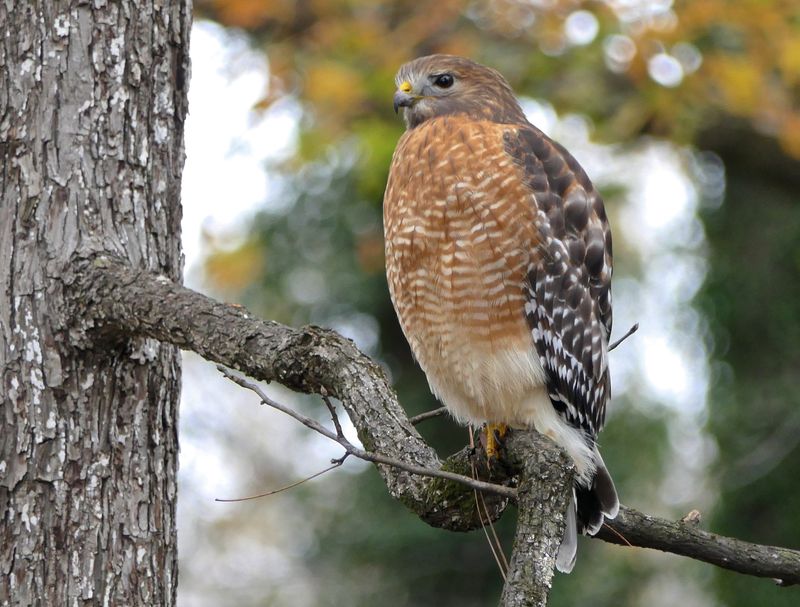
A hawk in your neighborhood tells you that prey is available somewhere nearby and that the surrounding landscape offers something it can use. It does not give your garden a grade.
A hawk can hunt over a yard that is not especially healthy, so its presence is not proof of a balanced food web.
The same goes for the popular idea that hawks are nesting closer to North Carolina homes than ever. Nobody can say that from sightings alone.
To show a trend, researchers would need nest locations and their distances from homes tracked over time in North Carolina, and that data was not found.
Other studies measure different things. A long-term Chicago study found rising winter occupancy of Cooper’s and sharp-shinned hawks at sampled sites from 1996 to 2016.
It looked at feeder-area observations and winter establishment, not nests, not North Carolina, and not individual gardens.
The USGS Breeding Bird Survey tracks something else again: how abundant breeding birds are over time. Abundance says how many birds there are, not how close their nests sit to houses.
Seeing more hawks, having more hawks, and having nests nearer to homes are three separate questions. Whether nests are moving closer remains an open one.
You can still enjoy your visitor. Keep adding native layers, as NC Wildlife recommends, because they help many species, but skip the hawk-as-report-card idea.
Reduce risks from rodent-control products
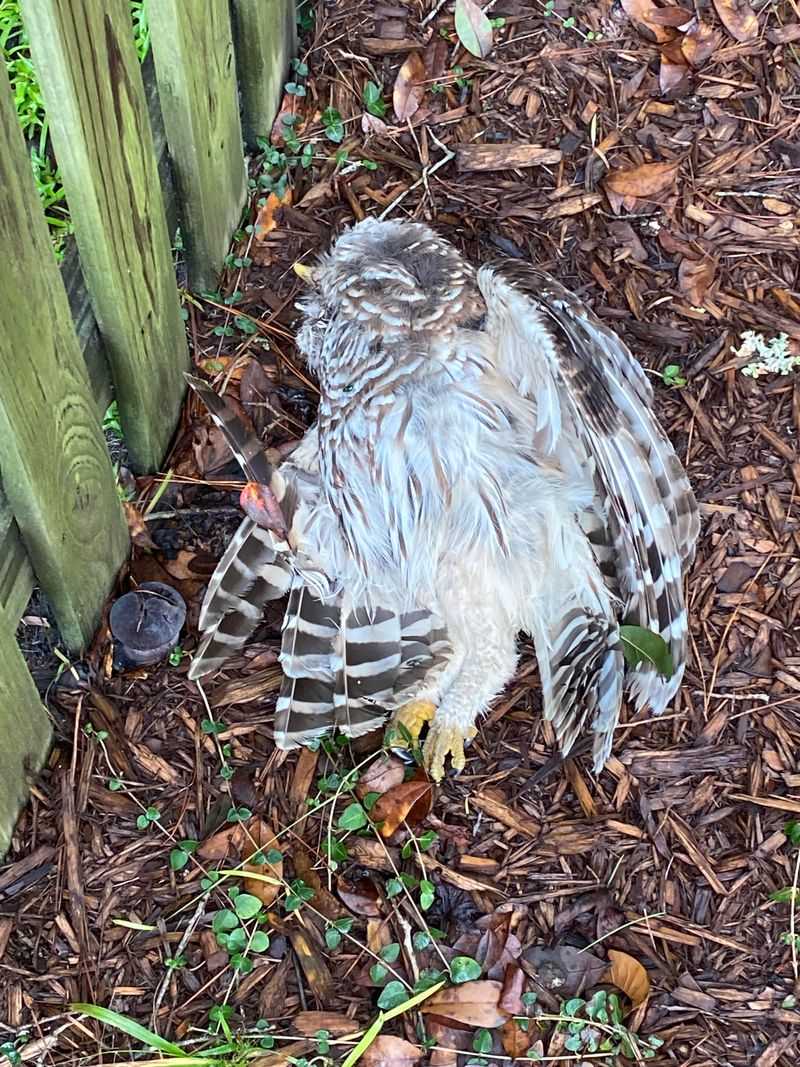
Rodent poison can travel up the food chain. The EPA’s rodent control pesticide safety review warns that predators and scavengers can be harmed after eating rodents that consumed certain rodenticides.
Not every product works the same way, but the risk is real enough to take seriously.
The simplest step is to avoid rodent poison where you can. Seal gaps around sheds and foundations, store birdseed and pet food in lidded metal bins, and clean up fallen seed beneath feeders.
Snap traps placed out of reach of pets and wildlife are another option some homeowners choose.
If you do use any pest-control product, follow the label exactly. Labels spell out where a product may be placed, how much to use, and how to dispose of leftovers and dead animals.
Keep expectations realistic. Skipping poison does not mean hawks will move in, and it will not guarantee any particular wildlife outcome.
It simply lowers one risk for the owls, hawks, foxes, and other animals that already share your area.
Give an active nest space
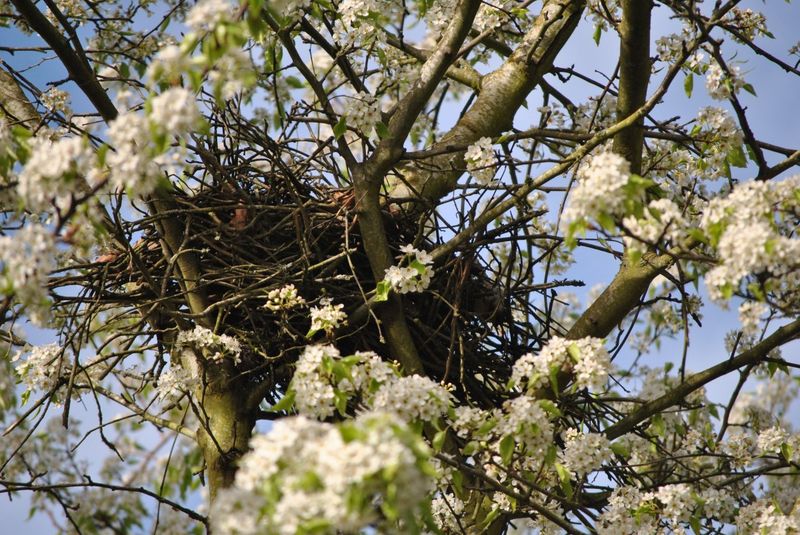
If a hawk nests near you, the best move is to leave the nest and young alone. NC Wildlife says all North Carolina hawks are protected, and harming or destroying an active hawk nest is illegal.
Do not climb, trim, or poke around a tree that holds one, and keep pets and kids back.
Some hawks defend their nests by swooping at people. NC Wildlife’s advice for this on its red-shouldered hawk page is to avoid the immediate area for a few weeks, or for 24 hours when young hawks are out of the nest.
A different walking route or a side door can solve the problem.
You may also spot a hawk sitting on the ground. Do not assume it is hurt.
As NC Wildlife notes on its red-tailed hawk page, it may simply be eating prey or roadkill. Watch from a distance and give it time to finish.
Call a licensed raptor rehabilitator if there is clear evidence of injury or sickness, such as a drooping wing, visible wounds, or labored behavior. The same goes if the bird is in immediate danger, like sitting in a busy road.
Supporting habitat is about offering options, not choosing where wildlife settles. The hawks decide that part.