
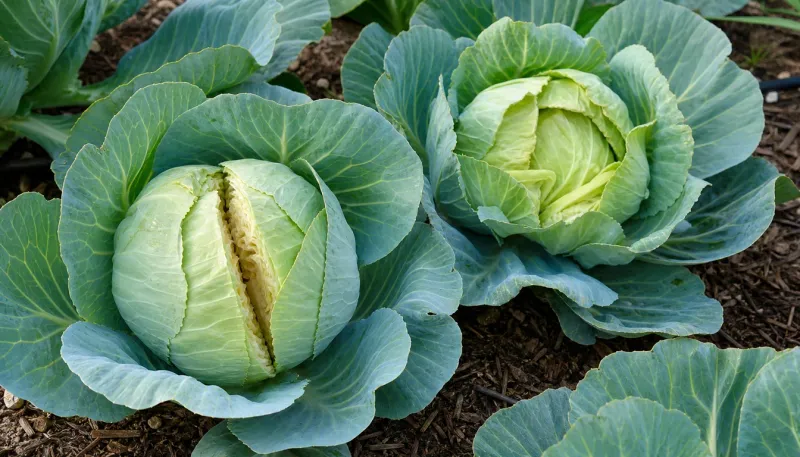
A firm cabbage head that looks perfect on Monday can be cracked open by Friday. It often happens when a heavy rain or a big watering follows a dry spell.
The good news is that you can lower the odds with smart timing and a few simple habits. Here is how to read your plants, decide what to do, and handle a head that has already split.
Why mature cabbage heads can split after a sudden influx of water
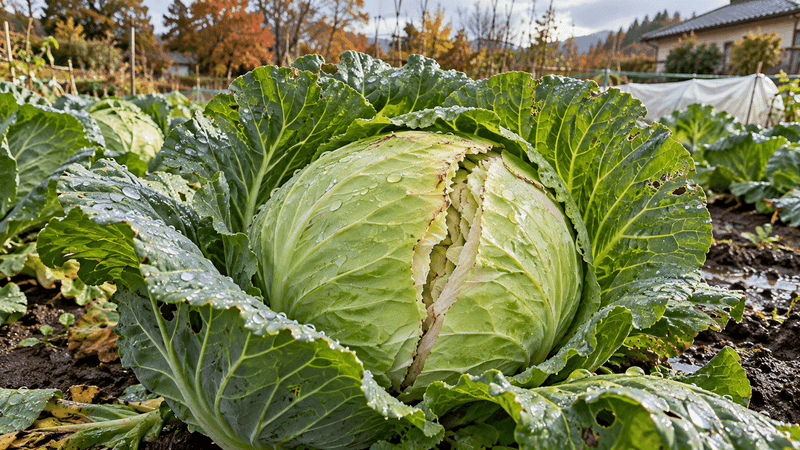
Picture a cabbage head that is already packed tight with leaves. If the plant keeps growing and pulling in water, the inside swells faster than the outer leaves can stretch.
Utah State University Extension describes splitting as a problem of mature heads that keep taking up water, and the pressure can crack the outer leaves open.
Heavy rain after a dry spell is a common risk pattern. The roots go from thirsty to flooded, and the head can swell quickly.
Rain is not the only trigger, though. A big irrigation soaking can do the same thing.
A rainy week does not doom every cabbage. Young heads still filling out are less likely to split, and plants that have had steady moisture handle a downpour better.
The real danger zone is a firm, mature head sitting in the garden when a sudden surge of water arrives. Iowa State University Extension also links splitting to heads that are left too long after they firm up.
Check maturity and local timing before deciding to harvest
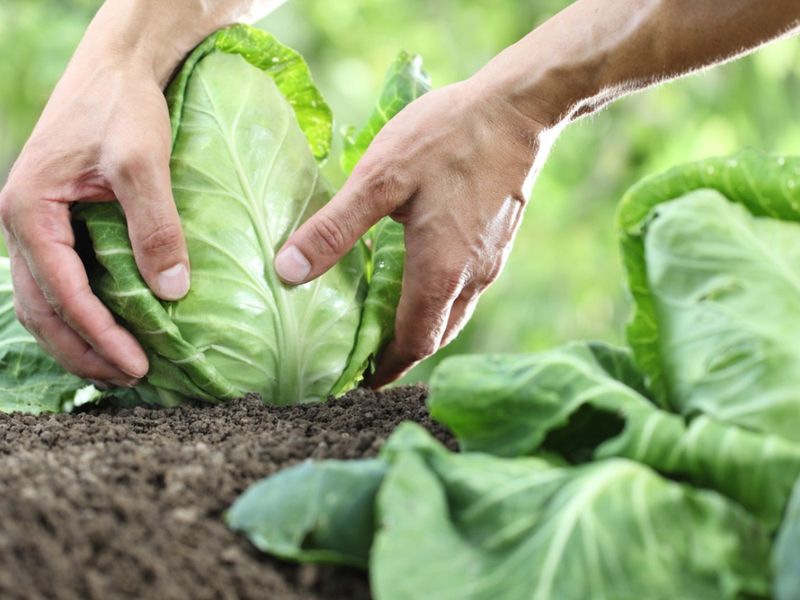
Squeeze the head gently. A mature cabbage feels dense and solid, with little give.
If it feels loose or spongy, it is still filling out and has more growing to do.
Variety matters here. University of Saskatchewan gardening guidance notes that early varieties are often more prone to splitting, while types with better field-holding ability may wait longer before harvest.
That does not mean any one variety is safe, so check your seed tag and watch the heads closely.
November is only one possible scenario. Cabbage is a cool-season crop in Florida, and UF/IFAS cole crop guidance lists planting windows that differ by region.
Texas fall planting dates also vary a lot, as shown in the Texas A&M AgriLife fall gardening guide.
So judge your own crop. Check planting date, head firmness, and the forecast, rather than assuming your cabbage is ready.
Harvest a firm, mature head before forecast heavy rain
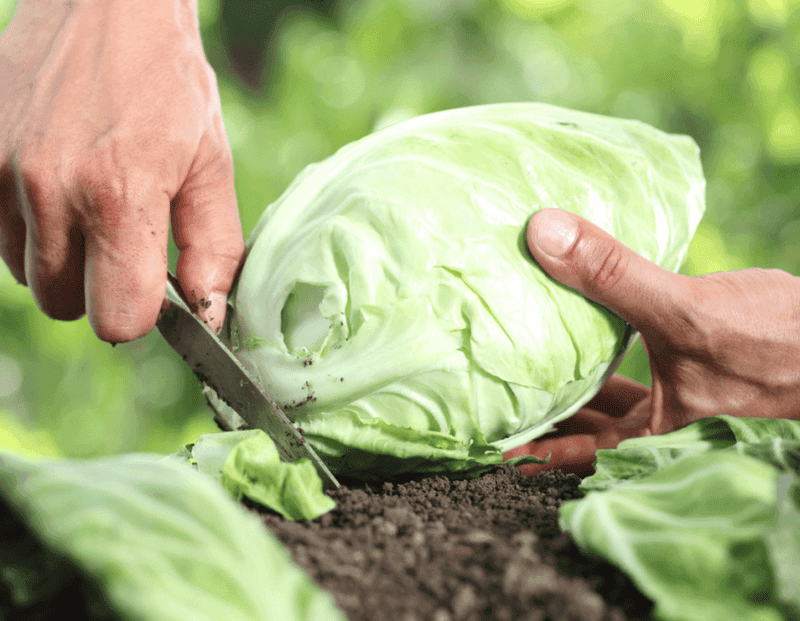
When a big storm is on the way and a head feels solid, cut it. Timely harvest is the main safeguard, and extension guidance such as Iowa State’s harvest advice points to picking firm heads promptly.
The Texas A&M AgriLife guide offers similar direction for fall gardens.
Use a sharp knife and cut just below the head, leaving the outer leaves and stem in the ground if you like. Cabbage stores well in the refrigerator, so an early harvest costs you very little.
Harvesting is a sure move, because a head on the kitchen counter cannot split in the garden. Damaging the plant to slow its water uptake is a different thing.
It may help in some cases, but it is a fallback for when you truly cannot harvest yet, and the next section covers it.
A gentle twist may reduce risk, but it damages the plant
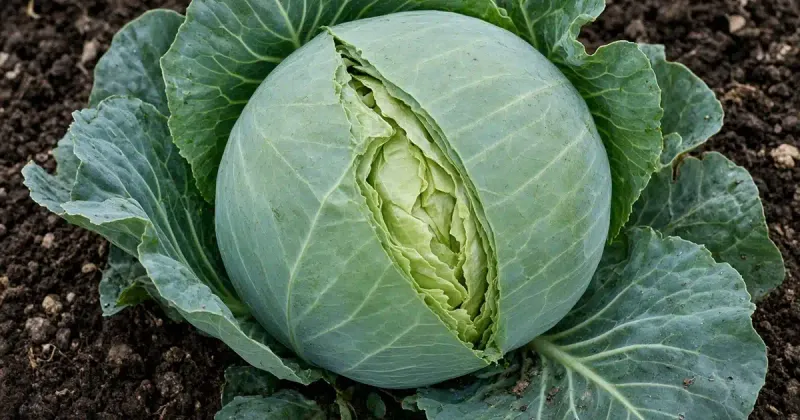
Sometimes a head is mature but you cannot pick it yet. In that case, several extension guides suggest a gentle quarter turn of the plant or head, or cutting some roots with a spade, to reduce water uptake.
South Dakota State University Extension and Utah State University both describe it.
Treat it as a possible way to lower risk, not a guaranteed stop. The sources give no success rate, so some heads may still split.
The move also hurts the plant, because it breaks roots. UF/IFAS advises planning to harvest within a week afterward.
Only try it on a mature head with no cracks. Twisting cannot close or repair a split that has already formed.
Keep soil moisture more consistent through the growing season
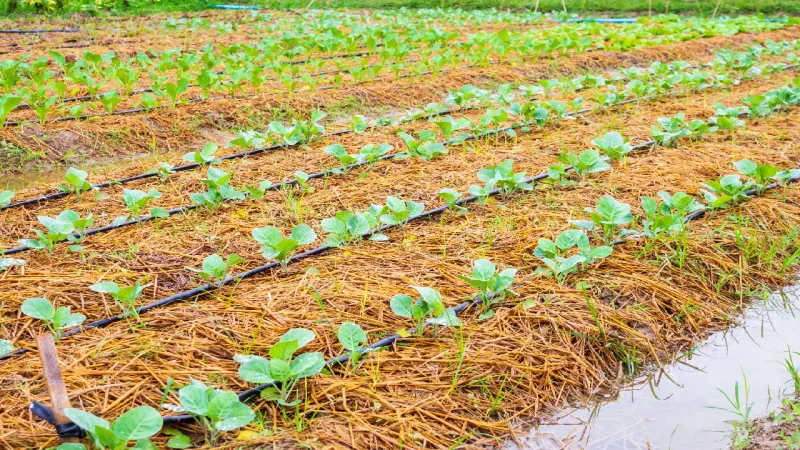
Cabbage that dries out and then gets a flood is more likely to crack. Swings in moisture make the plant pull in a lot of water all at once.
A steadier supply helps keep growth even.
UF/IFAS recommends regular, small amounts of water, and its cabbage tips sheet suggests drip irrigation as one way to do it. A layer of mulch can also slow evaporation, which may keep the soil from drying out so fast between waterings.
Sandy soils, common in much of Florida and parts of Texas, dry quickly, so check them often. Push a finger a couple of inches down and water if it feels dry.
Even moisture lowers the odds, but it does not remove them. Mature heads can still split, as Utah State’s production problems page makes clear.
Harvest, trim, and use a split head promptly
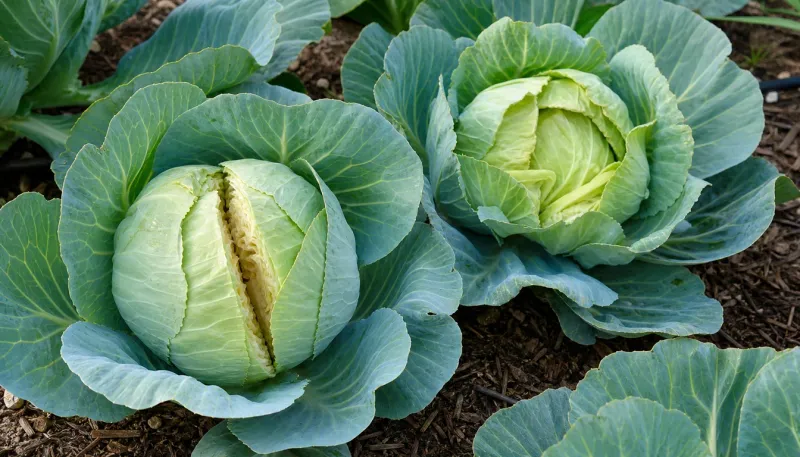
A split head is still good food. Cut it, trim away damaged or dirty leaves, and use it soon.
The University of Saskatchewan advises this because fungal or bacterial disease can set in through the open crack.
Slaw, soup, and stir-fry are easy ways to use a cabbage quickly. Leaving the head in the garden gives rot a chance to take hold.
No root twist can undo a split. Twisting only works as a precaution on an uncracked head.
For the rest of your crop, keep an eye on the sky. Cutting mature heads ahead of a downpour, as Iowa State suggests, is the best protection.
A cabbage in the fridge is worth more than one waiting for the storm.