
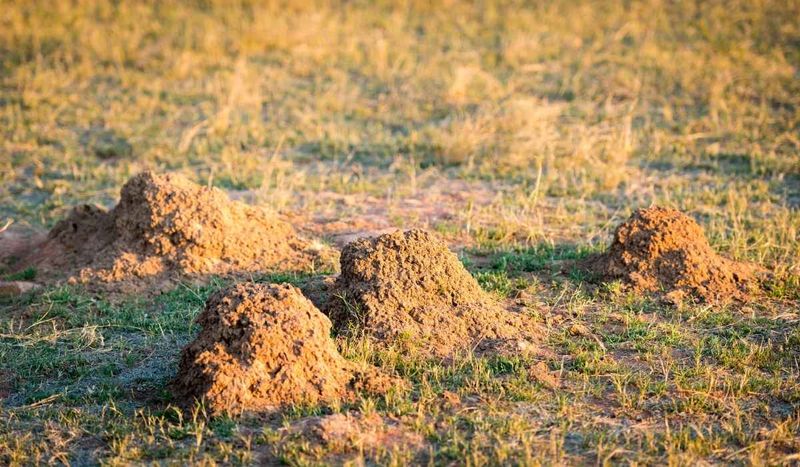
Nothing spoils a spring morning like a fresh fire ant mound popping up in your flower bed. Some of that trouble can be tackled months earlier, while ants are still out gathering food.
Fall baiting can help calm colonies before the next growing season, but it works only under the right conditions. Here is how North Carolina homeowners can decide if the time is right and apply bait with care.
Fall baiting can suppress colonies into spring
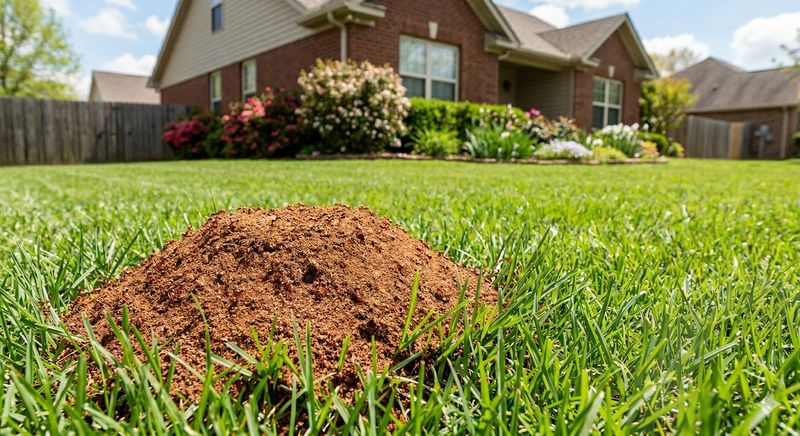
Picture your beds next April, with fewer mounds pushing up through the mulch. That is the goal of fall baiting, and it has real backing.
UGA Extension guidance says a late-summer treatment can give maximum suppression the following spring.
Texas A&M fire ant specialists also recommend tackling ants in the fall while they are still foraging. The key word is suppress.
Bait can turn colony activity down, but it does not promise a mound-free yard, and the title of this article should be read that way: fall baiting can help reduce spring activity when conditions are suitable.
The method works through the workers. Foragers find the bait granules, treat them like food, and carry them back underground.
The colony shares that food, including with the queen, so the treatment reaches ants you never see on the surface.
That is why ant behavior matters more than the name of the season. If workers are out and feeding, bait can travel home.
If the soil has turned cold and the ants have slowed down, granules may just sit there. Good timing, a dry application, and careful label reading all shape how much help you get.
The next sections walk through how to check for feeding, size up your yard, apply bait, and set fair expectations for spring.
Foraging activity—not the calendar—sets the window
Soil temperature tells the story. Fire ants forage less as the ground cools, and UGA Extension says that slowdown begins when soil drops below roughly 65 to 70 degrees Fahrenheit.
A North Carolina Extension source, a Chatham County fall guide, points to 70 to 85 degrees as a useful range for applying bait.
Treat both numbers as guidance, not hard cutoffs. A sunny bed on the coast may stay warm well after a shaded yard in the mountains has cooled off.
A calendar date cannot tell you what the ants in your own yard are doing.
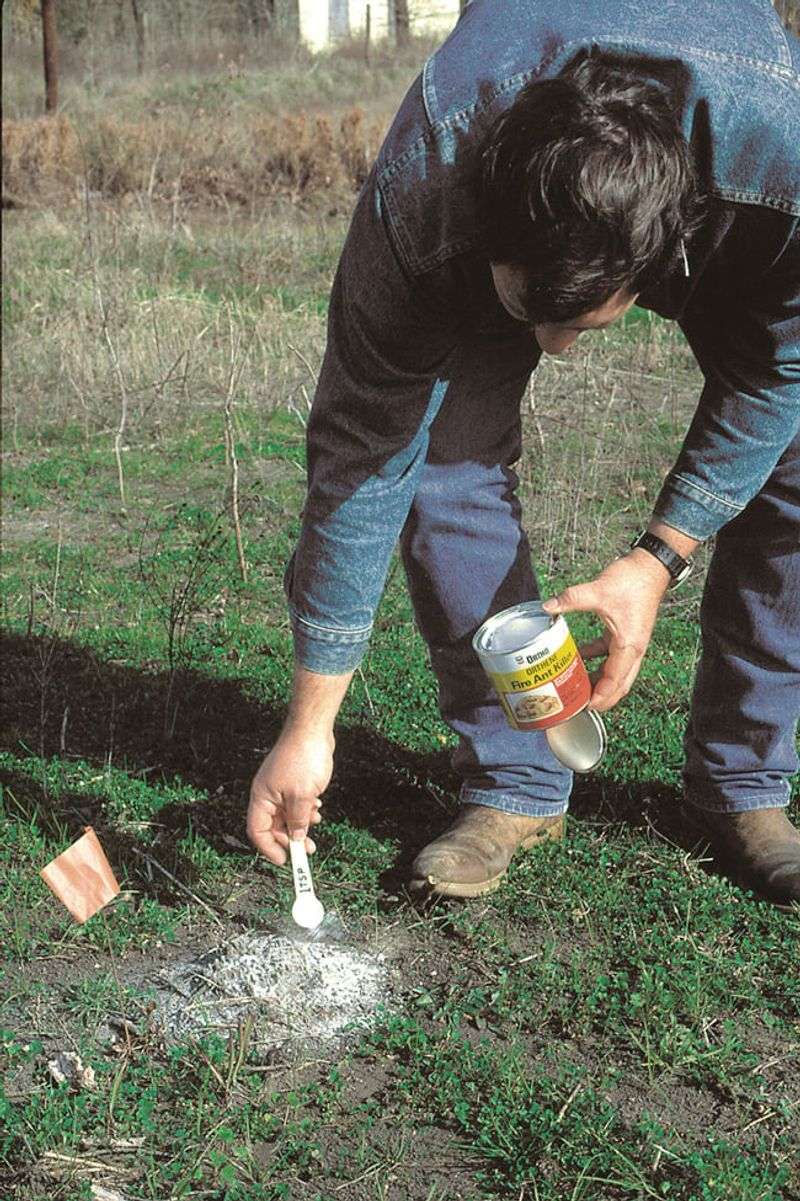
So test them. Put a small amount of bait, or a food attractant, near an active mound and watch.
Texas A&M suggests checking for pickup within about 30 minutes, and UGA lists potato chips, tuna, or pet food as possible test foods. If workers swarm the sample and haul it away, they are feeding.
If nothing happens, wait for a warmer spell and try again rather than spreading bait that will go unused.
Keep a few cautions in mind. Follow the bait label, and pick up leftover test food so pets and wildlife cannot reach it.
Whatever the thermometer says, the product label has the final word on when and how to apply.
Choose treatment scale to match the infestation

Take a walk across your yard with a notepad before you open any bag. Count the mounds and note where they sit.
A few stubborn colonies near the patio call for a different plan than a lawn dotted with mounds from fence to fence.
For a handful of colonies, many bait labels allow individual-mound placement, where you apply the labeled amount around each mound. Read the directions closely, because distance from the mound and amount vary by product.
For bigger problems, broadcast bait spread across the whole area may fit better. North Carolina Extension in Pender County recommends broadcast treatment when there are more than five mounds per quarter acre, or more than 20 per acre.
That reaches colonies hiding between the mounds you can see.
Think of those numbers as a starting point. They help you judge the scale of the problem, but they do not replace the instructions on your bait.
Some products specify a spreader type, a rate per thousand square feet, or limits on where bait can go.
A small yard with a few mounds near a bed edge may do fine with spot placement. A half-acre of turf with mounds everywhere will likely need broadcast coverage.
Match the method to what you counted, then follow the label for that method exactly.
Dry conditions and undisturbed mounds help bait work
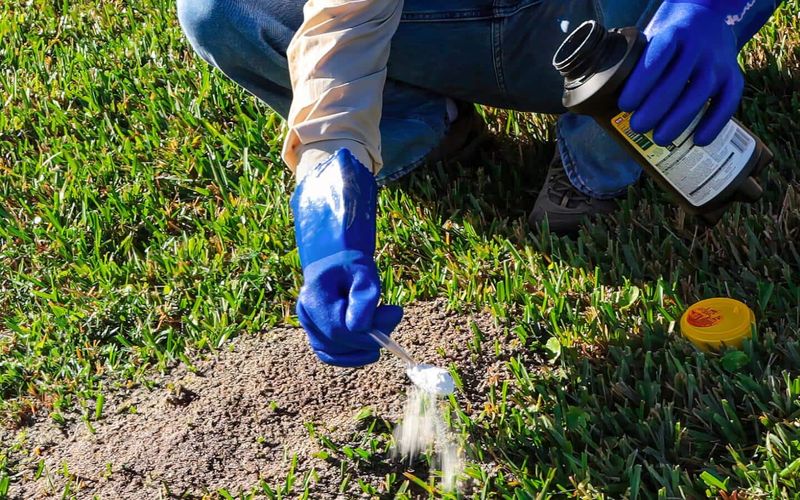
Wet bait is poor bait. Granules that soak up rain or irrigation can break down before workers pick them up.
Use fresh bait on dry ground and dry grass, and plan for a stretch with no rain or sprinklers. North Carolina Extension guidance commonly advises a dry window of at least 24 hours, though your label may list a different period, and the label wins.
Fresh matters too. Bait contains oils that attract ants, and old or damp product may be less appealing.
Use a newly opened container when you can and store it sealed.
Leave the mounds alone beforehand. Workers carry bait back to the colony, so you want ants calm and moving normally.
Texas A&M’s two-step method guidance says to avoid disturbing mounds, since a disturbed colony can interfere with treatment.
That means no poking with a shovel and no kicking the cone to see if ants come out. Do not pour bait onto the mound either, unless a specific label tells you to.
Stick to the labeled rate too. More bait is not better, and extra product wastes money and may break the rules on the bag.
Read how much to use, where to put it, and how long to keep water off, then follow those directions as written.
Results can be gradual, and products differ
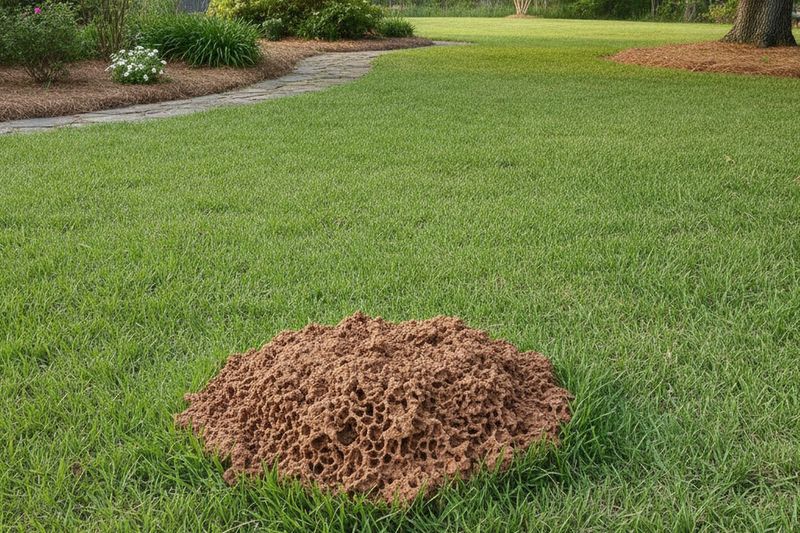
Patience is part of the plan. Bait is not a quick-kill product, and not all baits work at the same speed.
A Texas A&M broadcast bait publication describes some baits as relatively fast-acting and insect growth regulator baits as slower.
With a slow product applied in fall, full effect may not show until spring or later. Check the label for how long your product typically takes.
Timing research adds a wrinkle. A seasonal study of hydramethylnon and fenoxycarb baits found spring applications worked better when quick population suppression was the goal, while fall treatments brought more gradual suppression.
Those findings apply to the products and conditions studied. They are not a rule for every bait or every yard.
In practice, fall baiting is a reasonable way to reduce spring activity, and spring baiting may suit you better if you need faster results.
While you wait, resist the urge to re-treat early. Watch your beds and lawn and compare what you see to your label’s follow-up directions.
If a mound near a doorway or play area keeps bothering you, treat that one separately, but only in the way the label allows.
Expect a trend, not an overnight change.
Nearby colonies can repopulate a treated yard
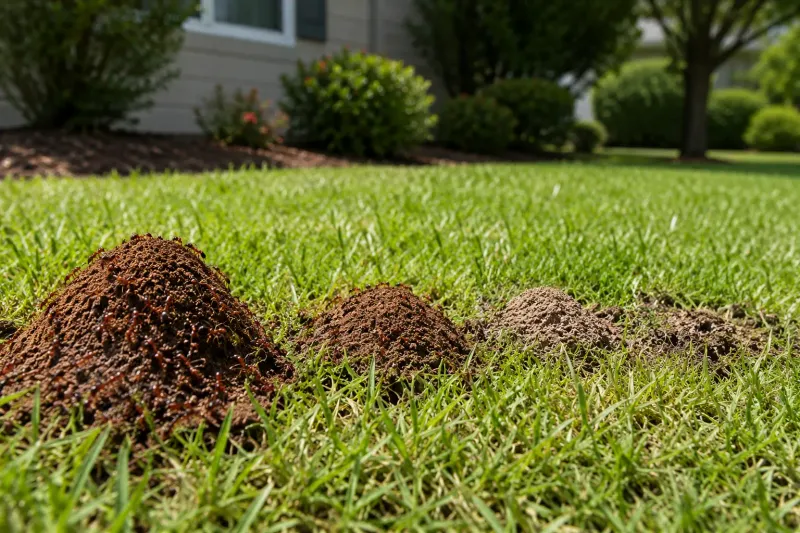
Your property line means nothing to a fire ant colony. Even a well-baited yard sits next to land that may hold untreated colonies.
UGA Extension notes that colonies can migrate into treated areas, so a quiet fall does not guarantee a clear spring.
That is why treatment is best seen as local suppression, not permanent prevention. You are lowering activity on your ground for a while.
New queens and moving colonies can still arrive from a neighbor’s lawn, a roadside, or an empty lot.
Texas A&M advises coordinating with neighbors where practical. A friendly word over the fence or a note in a neighborhood group may help several yards treat around the same time.
That will not always be possible, and no one has to do it, but a wider treated area gives ants fewer places to restart.
Set realistic goals for spring. You might see fewer mounds, smaller ones, or a slower return, but a few may still appear.
If they do, that does not mean the fall work failed. Spot-check beds and lawn edges, and follow your label for any follow-up treatment.
Let the product label define where and how to treat

Keep the decision rule simple. Bait when ants are actively feeding, pick a treatment that fits the size of your infestation, and let the label guide site, rate, placement, weather limits, and exposure precautions.
Sites matter most. A product made for lawns is not automatically approved for vegetable gardens, edible crops, or livestock areas.
North Carolina Extension warns that many pesticides are not labeled for fruit and vegetable gardens. Precautions for people, pets, and wildlife also depend on the product, so NC State Extension’s yard guide is a good place to read more before you buy.
Fall baiting can help trim spring activity when conditions line up, but it does not promise fewer mounds. Read first, then spread.