
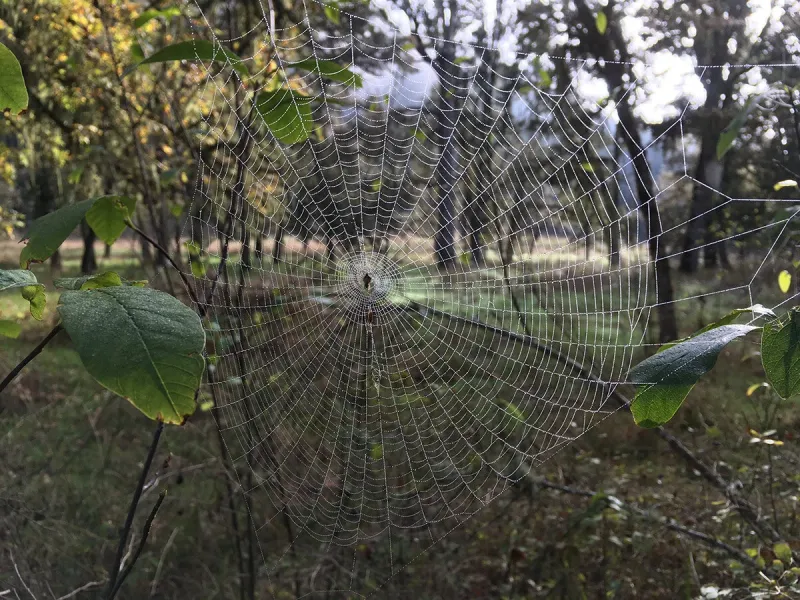
You walk out to water the tomatoes and find a wheel-shaped web strung across the path, with a big spider sitting in the middle. In some parts of California, late summer and fall bring exactly this kind of surprise.
The webs may catch some garden insects, but they are not a guaranteed pest fix. Here is what the pattern means and what to do when a web is in your way.
Why some webs seem to appear all at once
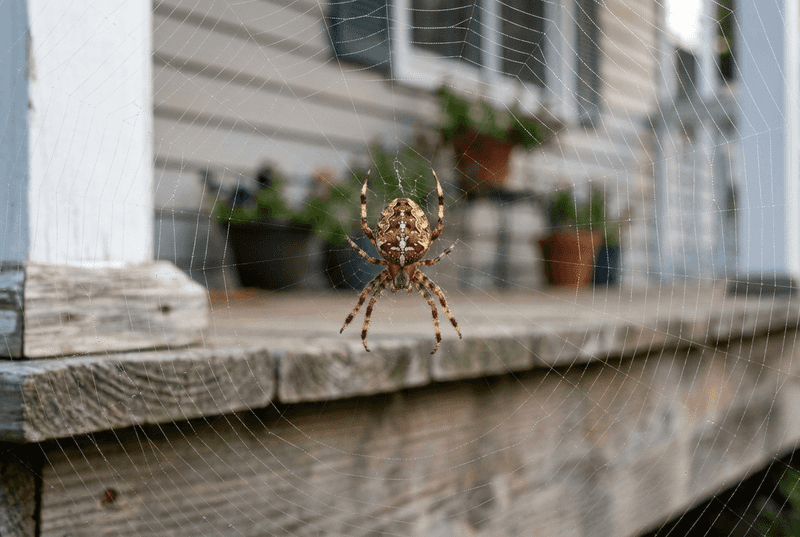
Early fall can feel like spider season in parts of California. UC Cooperative Extension in Ventura County describes fall as a time when spiders are especially noticeable on the Central Coast and many other parts of the state.
Walk the same path in July and again in October, and a web that was not there before can seem to have popped up overnight.
Part of the reason is size. Some species mature in late summer or early fall, so the spiders are bigger and their webs are wider and easier to spot.
The Department of Energy’s account of the banded garden spider says females mature in late summer or early fall. A grown female sitting in a large web simply catches your eye more than a young spider hiding in a corner.
The Natural History Museum of Los Angeles County adds a local example, noting that Neoscona orb-weavers are frequently seen in vertical webs in late summer. That points to a change in visibility, not proof of a statewide population boom.
Nobody has counted spiders across California yards to show that numbers jumped.
California also has many orb-weaver species, and they do not share one calendar. The same museum notes that some smaller Araneus species mature in spring.
So the fall webs in your yard may come from certain species in certain places, while a neighbor in another part of the state sees something different.
A wheel-shaped web is a clue, not an identification
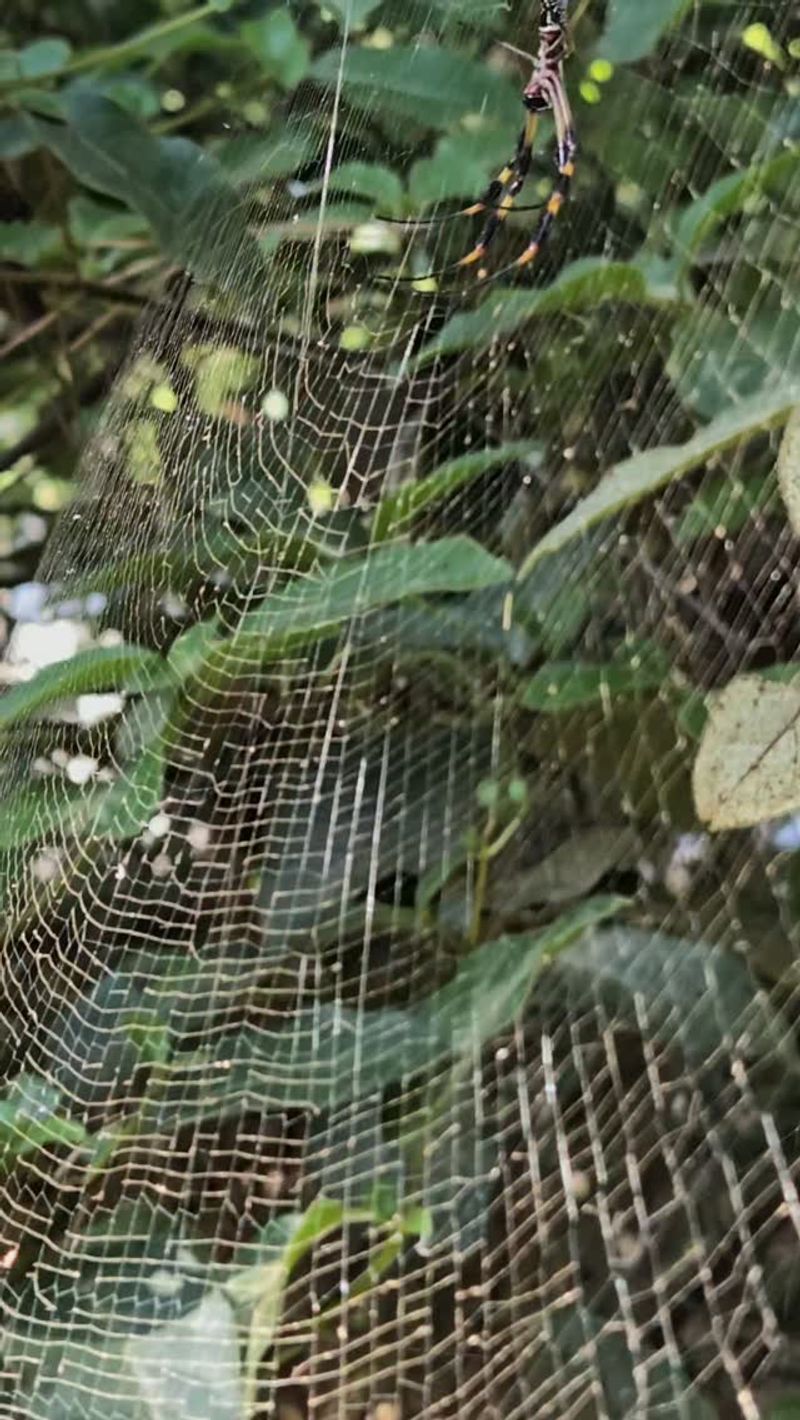
Spokes running out from a center, with a spiral of sticky thread wrapped around them: that is the classic orb web. Orb-weavers build these round, often upright webs to intercept insects that fly into them.
Seeing one tells you an orb-weaver is likely nearby, and that is about all it tells you.
Los Angeles gives a handy local example. The Natural History Museum’s survey lists Neoscona crucifera as the most commonly collected orb-weaver in the city, and says Neoscona spiders are often seen in vertical webs in late summer.
Webs from this group turn up around houses and gardens, which is why many homeowners notice them between the porch light and the shrubs.
Other species do things differently. The same source says local banded garden spiders may build lower webs in bushes and grasses.
Height, placement, and the time of day a spider is active all vary from species to species.
So a round web on your fence does not tell you which spider made it, or when it will mature, lay eggs, or disappear. If you want a name, photograph the spider and compare it with a regional guide or ask your local Extension office.
Until then, treat the web as a sign of an orb-weaver and nothing more.
What the web may catch—and what it does not prove
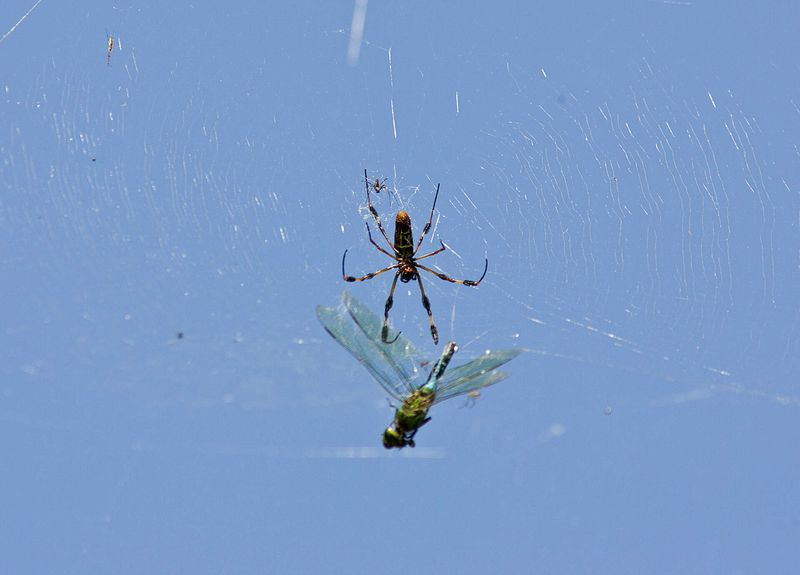
An orb web works like a net hung in a flight path. Insects that fly into it get stuck, and the spider feeds on them.
UC Cooperative Extension notes that these webs catch flying insects such as flies, moths, and wasps, and some of those may be pests in a garden.
That is only half the picture. A web cannot tell a pest from a pollinator or a harmless gnat.
Research on web-weaving spiders in a Mexican cocoa plantation found varied prey, with different spider groups eating different mixes of insects, including different shares of pests. A cocoa farm is nothing like a California backyard, so that study cannot say how much your spiders help.
UC IPM describes natural enemies like spiders as part of the wider mix of biological control and natural enemies of invertebrates, but nothing in these sources shows that orb-weavers reliably protect an ordinary yard from damage.
A fair way to think about it: the web may take a few pests along with plenty of other insects. Enjoy that as a bonus.
If aphids, caterpillars, or squash bugs are chewing your plants, you will still need to scout and manage them the usual way.
For some orb-weavers, fall brings the next generation
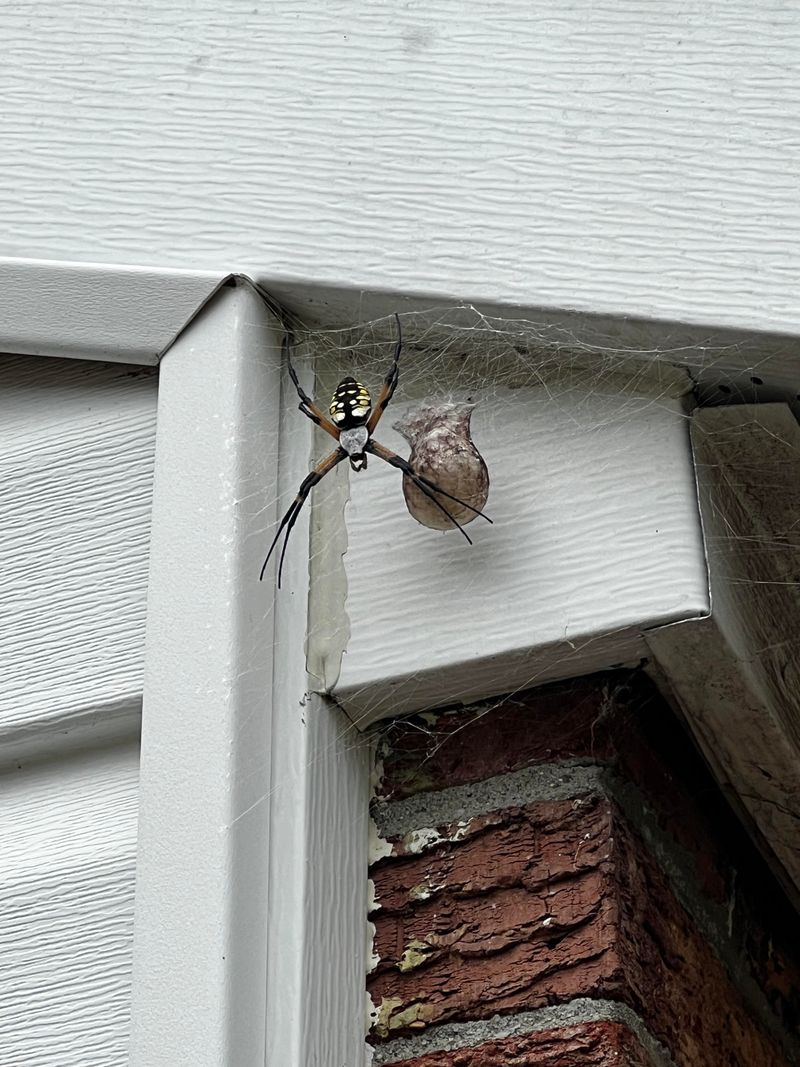
Late in the season, the big spider in your web may be nearing the end of her cycle. For some species, fall is when egg sacs appear.
The Natural History Museum describes fall egg sacs and annual life cycles for local Neoscona, and the Department of Energy account of banded garden spiders gives a similar picture.
In those examples, the adult female lays her eggs, and she may die afterward. The young spiders then overwinter inside the sac and emerge later.
Details such as timing and how many eggs a sac holds differ from species to species, so none of this should be read as a rule for every orb-weaver.
This is useful if you are wondering why a favorite web is suddenly empty in November. The spider may have finished her cycle, moved on, or been eaten by a bird.
For the species in these accounts, a visible adult is a seasonal sight, not a permanent resident.
If you spot a small papery sac tucked on a branch or eave, you do not need to identify it on the spot. Just notice where it is, and decide whether it is in a place you need to use before you disturb anything.
When an out-of-the-way web can stay
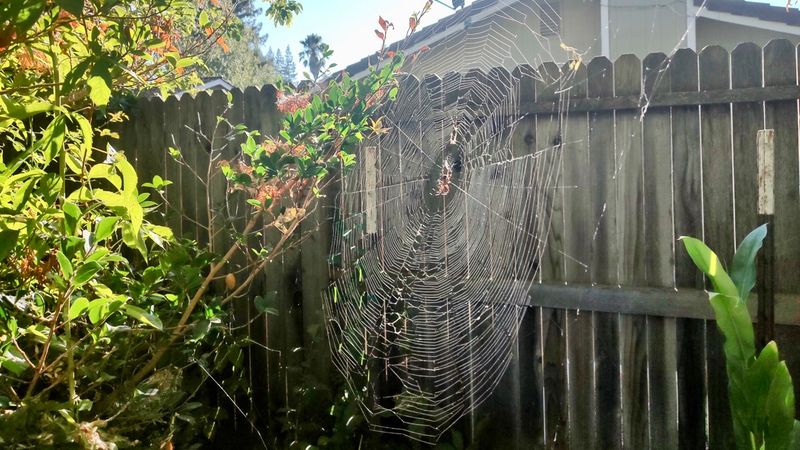
A web in the back corner of the yard, up near the eaves, or between two shrubs nobody brushes past is easy to live with. UC Cooperative Extension recommends no control for garden orb-weavers in general, and describes them as shy spiders that are not a threat to people.
Leaving the web alone is a reasonable, wildlife-friendly choice.
It is a choice, not a rule. If the web sits where you walk, hang laundry, or open a gate, taking it down is fine.
Brushing away a web is one of the ordinary steps UC IPM lists for managing spiders around a home.
Pesticides are a different story. UC IPM says pesticides are generally not needed for spiders.
Spraying can also harm the bees, butterflies, and other insects that visit a wildlife-friendly California garden, which is a poor trade for a spider that is minding its own business.
Spiders often rebuild nightly, so you may find a web back in the same spot tomorrow. If that bothers you, a little tidying or moving the spider can settle things without any chemicals.
When a web blocks the way, relocate the spider without handling it
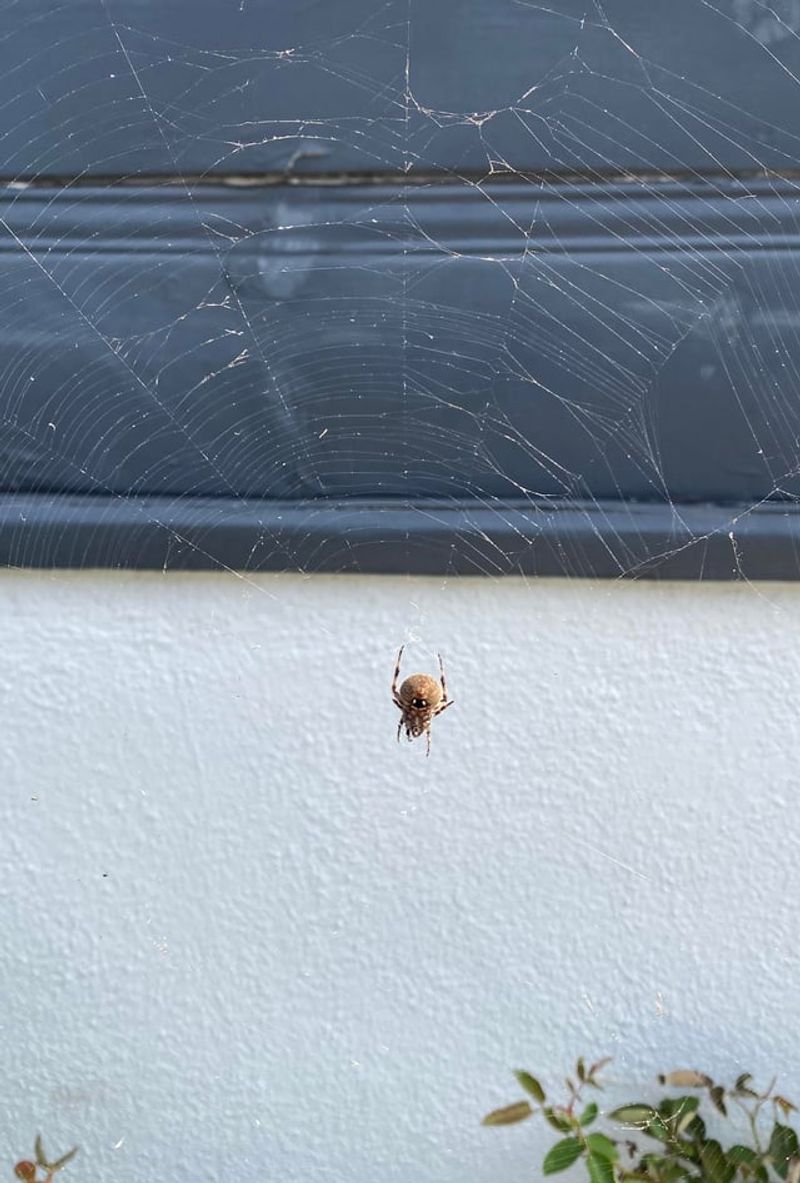
A web across the front door is a different problem from one in the back corner. Skip bare hands, especially if you have not confidently identified the spider.
Treating an unknown spider as harmless is not a safe habit, and no one can promise an unidentified spider will never bite.
UC San Diego’s guidance describes a simple no-contact method: place a jar over the spider, slide stiff paper underneath, and carry it away. UC Cooperative Extension supports moving an inconvenient garden spider to an out-of-the-way spot instead of using pesticides.
Pick a shrub or fence several yards from the doorway, and release it there.
It also helps to know what you are looking at. An orb web is open, flat, and exposed.
A black widow’s web is typically an irregular tangle in a sheltered, dry, undisturbed place. UC IPM names the black widow as California’s main spider of medical concern and says spiders seen openly in daytime are unlikely to bite.
That is general guidance, not a guarantee, so keep your distance if you are unsure.
The choice comes down to this. If a web is out of the way and you like it, leave it.
If it blocks a path, move the spider carefully and clear the web, without counting on it for pest control.
Either way, the spider will be gone with the first cold weeks, and the web will go with it.