
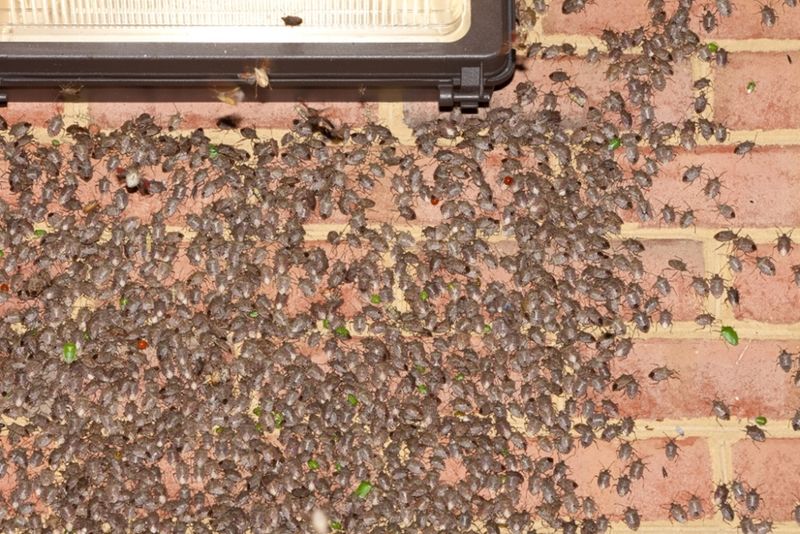
Cool fall evenings can bring stink bugs to doors, window screens, and porch lights. Some of these visitors may be brown marmorated stink bugs, but others are look-alikes that behave differently.
Knowing which one you have, and when to seal your house, can save you a lot of frustration. Here is a calm, practical plan for Southern yards.
First, make sure it’s a brown marmorated stink bug
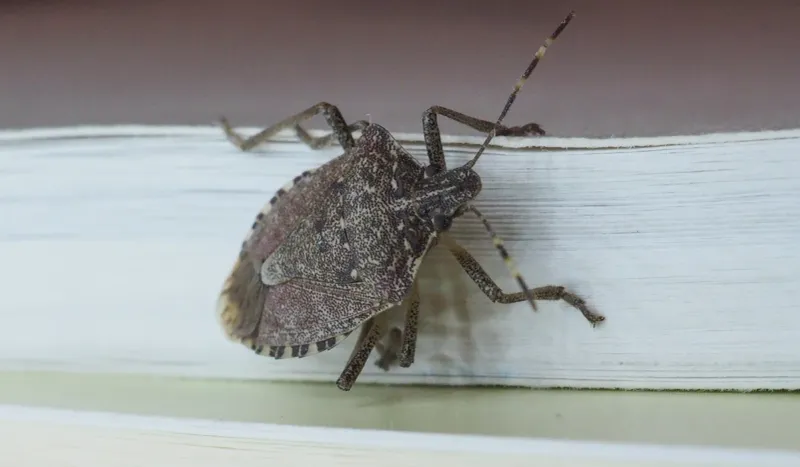
Plenty of shield-shaped bugs end up on Southern porches in fall, so a quick look is worth the effort. Adult brown marmorated stink bugs have light bands on their antennae and alternating light and dark markings along the exposed edge of the abdomen.
Those two clues are your best starting point, as described in UF/IFAS identification guidance.
Look-alikes are common in the South. In Texas, Extension sources list southern green, green, and brown stink bugs among the species gardeners often see, and you can read more about them in Texas A&M AgriLife pest information.
A bright green bug or a plain brown one without banded antennae may be something else entirely.
Florida readers should be careful too. Detections there have often been single hitchhiking bugs, and the published account includes observations only through 2018.
Current distribution can change, so treat any single sighting as a question, not an answer.
If you cannot tell what you are holding, snap a clear photo and send it to your county Extension office. A confirmed identification keeps you from using advice meant for a different insect.
A garden may be a feeding stop, not the proven source

Brown marmorated stink bugs are not picky eaters. According to UF/IFAS, they feed on many crops and landscape plants, including tomatoes, corn, soybeans, fruit trees, and ornamentals.
Later in the year, adults look for protected places to spend the winter, and buildings can be one of them.
Put those two facts together and your tomato bed becomes a plausible feeding stop. It does not prove that the bugs on your siding came from it.
They may have fed on a neighbor’s fruit trees, a hedge, or wild plants down the road.
That is why pulling out spent vegetable plants is not an established way to stop bugs from entering a house. The UC IPM guidance points to building exclusion as the recommended home-prevention step instead.
Normal garden tidying is still fine for other reasons. Just do not expect it to empty your walls, and do not tear out a healthy bed hoping it will fix the problem.
Why do they turn toward houses in fall?
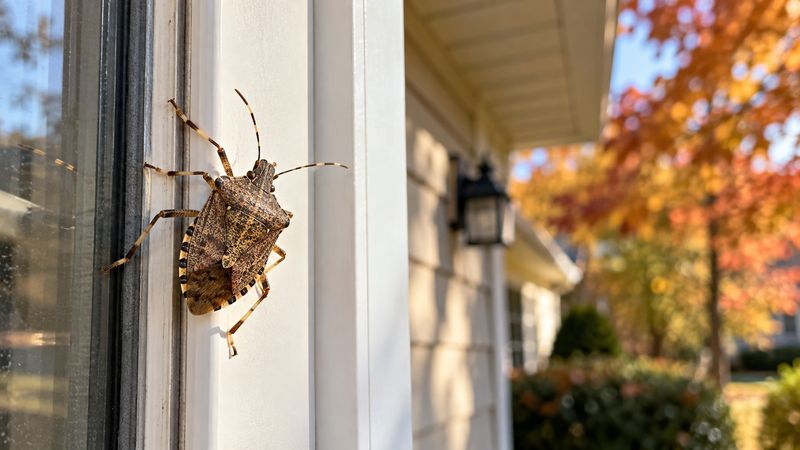
As days shorten and nights cool, adult brown marmorated stink bugs stop feeding and start hunting for shelter. UF/IFAS notes that they can slip into cracks, trim, attics, and wall spaces.
Warm, sunny walls often draw them in the afternoon.
The good news is that they do not reproduce indoors and they do not damage the structure. They are a nuisance, not a threat to your home’s framing or wiring.
Many people still find them unpleasant, especially when they wake up on a warm winter day and drift around the living room.
Because the bugs are looking for a tight, protected space, the most useful response is to make your house a poorer option. The NC State Extension FAQ backs exclusion as the main way to reduce the number that get in.
Gaps near rooflines, utility lines, and window frames are the usual weak points. The next sections cover when and how to close them.
When should you seal the house?
Timing makes a big difference. NC State advises inspecting and sealing in summer, before bugs try to return in late August.
Doing the work early means you close gaps before anything is looking for them.
Waiting has a cost. The NC State guidance cautions that bug-proofing in fall, winter, or early spring may trap bugs inside the walls.
Trapped bugs can then wander toward light and warmth inside your rooms.
If bugs are already arriving, you still have useful options. Fix ordinary problems like a torn screen or a door with a visible gap at the bottom, since those repairs are straightforward.
Before sealing suspected routes that might connect to bugs already inside, check with your local Extension office. Southern timing differs from North Carolina, so local advice on when bugs are active matters.
Put next summer’s inspection on your calendar now.
Close the small gaps around the building envelope
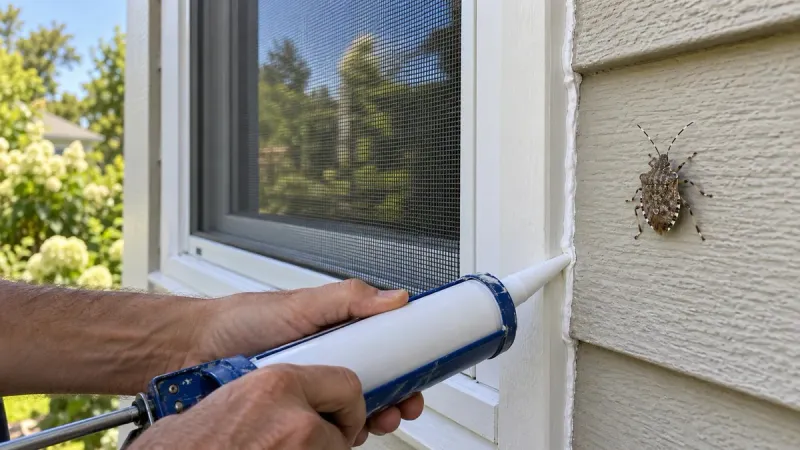
Start with a slow walk around the outside of the house. Check window and door screens for tears, and replace or patch anything damaged.
Add weatherstripping to doors, including the bottom sweep.
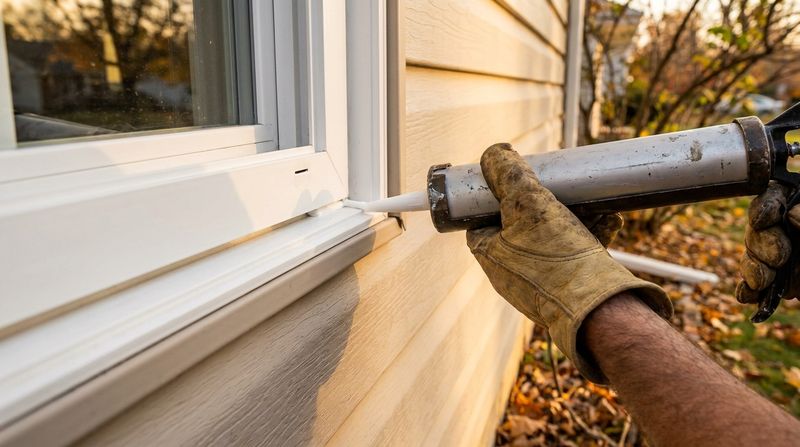
Next, look for gaps around windows and doors, utility penetrations, vents, siding, and fascia. UC IPM recommends a suitable caulk or foam sealant for these openings.
Pick a product rated for the surface and weather conditions where you are working.
Small is not the same as safe. NC State Extension notes adults can pass through openings as small as 3 by 7 millimeters, about the width of a few stacked pennies on edge.
Work in a sunny hour with a flashlight and check each wall, not just the one that looks busy. No single product will guarantee a bug-free house, but a careful inspection can reduce how many get in.
What should you do with bugs already inside?
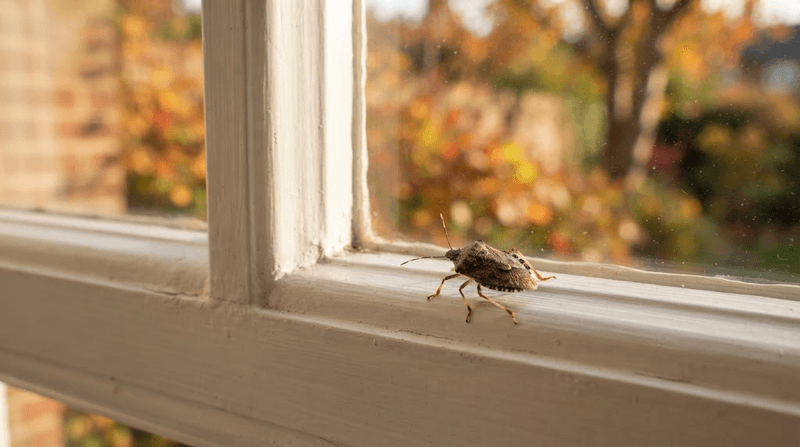
Slow, gentle handling works best. Scoop a bug into a container, then freeze it, or flush your attention to a soapy-water trap set in a shallow dish.
A dedicated vacuum is another choice, as the NC State Extension FAQ explains.
Use a vacuum you do not mind setting aside, since the smell can linger inside it. Empty it outdoors once you are done.
Skip the flyswatter and the tissue squeeze. Crushing or agitating a stink bug indoors can release an unpleasant defensive odor.
You may have heard that squashing one calls in more, but OSU Extension separates that defensive smell from the chemicals linked to bugs gathering at an overwintering site.
So the reason to avoid crushing is the smell, not a proven summoning effect. A cup, a piece of paper, and a freezer will handle most visitors.
Skip the fogger and focus on exclusion
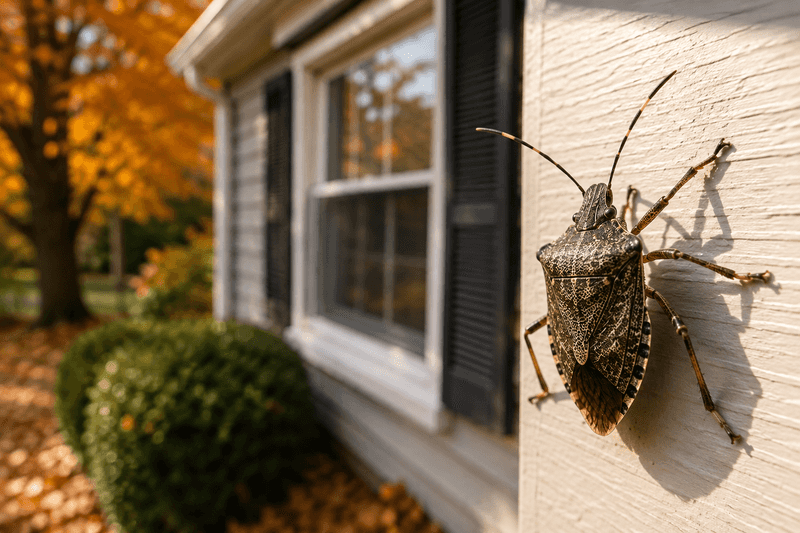
A fogger can feel like decisive action, but most of the bugs you care about are not out in the open. According to NC State, indoor sprays and foggers are generally ineffective against bugs sheltered in wall or crawl spaces.
Outdoor sprays have limits too. UC IPM says sealing is more effective than exterior insecticide applications, which may deter bugs briefly but break down quickly.
If you still consider a pesticide, read the product label closely and ask your local Extension office what is appropriate for your area. The EPA’s safe pest control page is a good place to review general safety steps.
No product promises a clean sweep, so put your effort where it counts: confirm the species, seal at the right time, and remove indoor bugs carefully. Your garden is a suspect, not a verdict.