
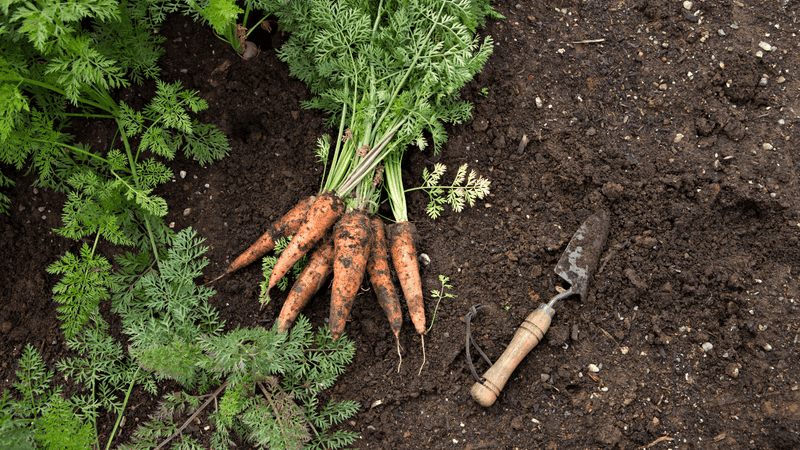
You pull a carrot from the cool fall soil and find two legs, a stubby nub, or a tangled knot. It is a letdown after weeks of waiting, but the shape of the root can give you clues.
Forking and stubbing often point to a damaged or blocked taproot, while twisting is a different problem tied to crowding. Here is how to read the clues and set up your next sowing for better odds.
Taproot damage can fork or stub carrots
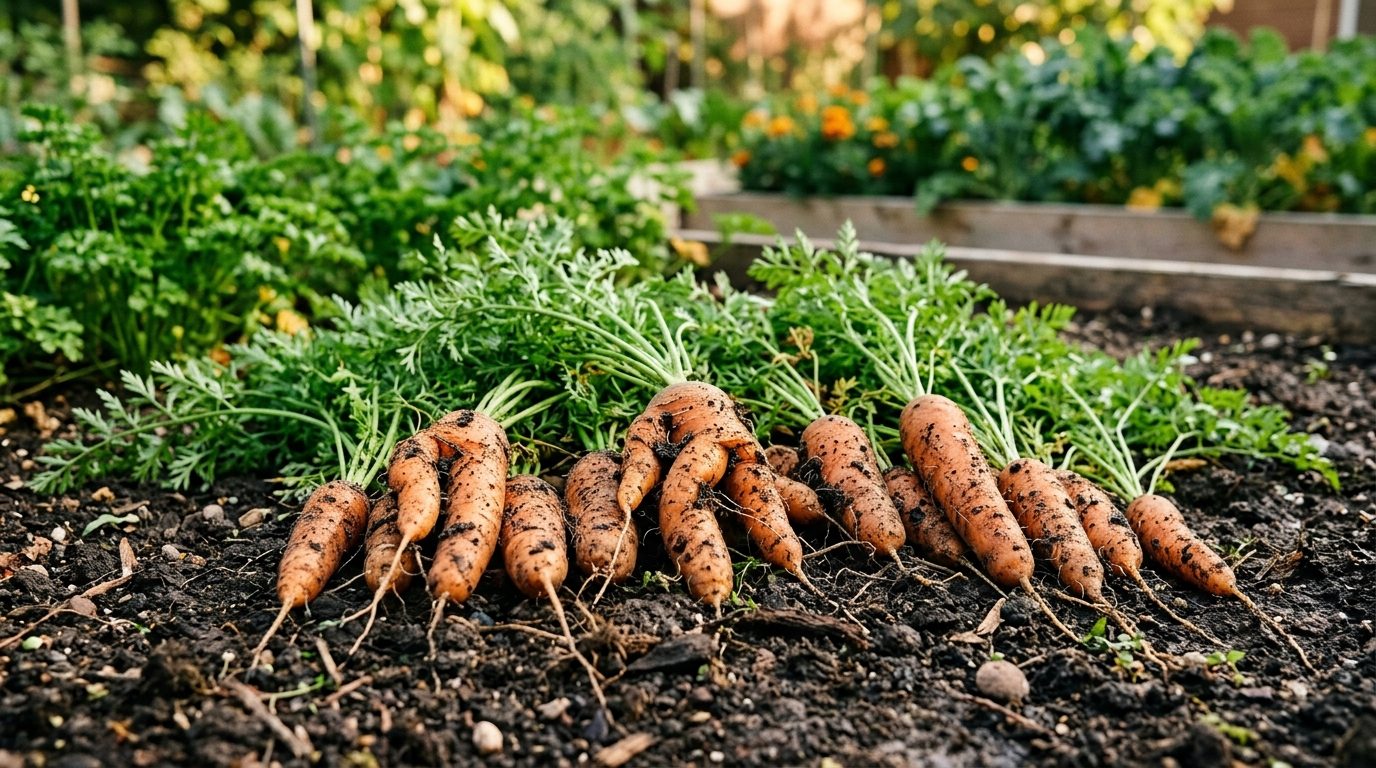
A carrot grows from one main root, called the taproot, and its growing tip needs a clear path downward. When that tip gets injured or blocked, the root may split into branches or stop short and turn stubby.
Utah State Extension lists rocky or compacted soil, fresh manure, excess nitrogen, and fertilizer placed against the root among the possible contributors.
Those are possibilities, not a verdict. A forked carrot does not prove that your soil was rocky or that you over-fed the bed.
University of Minnesota Extension notes that other root problems can leave a similar look, so it helps to treat the shape as a clue rather than a diagnosis.
Twisting is its own symptom, and it has a different likely cause that gets its own section below. Keeping the two apart will help you decide what to change before you sow again.
Rocks and hard soil can obstruct the growing root
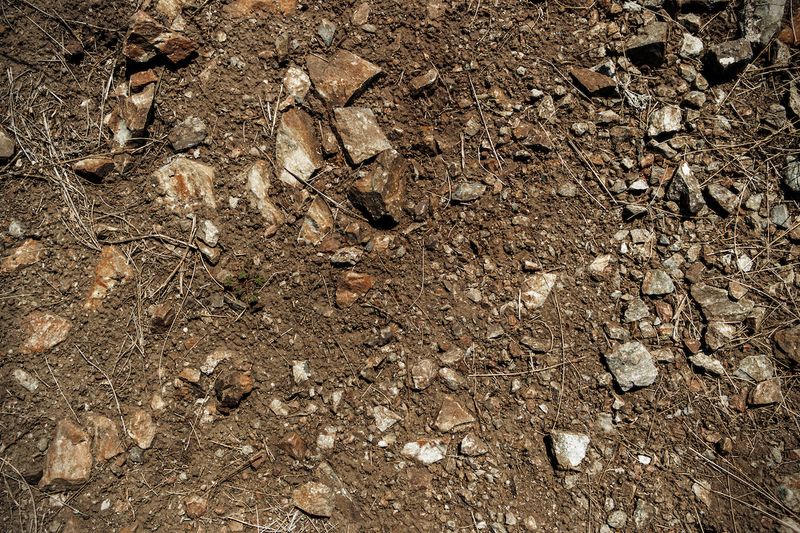
Picture a carrot tip pushing down and hitting a stone or a hard layer. It may bend around the obstacle, split, or simply quit growing deeper.
UC IPM guidance points to dense or rocky soil as a reason for misshapen roots and suggests deep, loose, well-drained ground.
Before sowing, loosen the bed and pull out stones, old roots, and clods. Texas gardeners dealing with heavy clay and Florida gardeners working sandy ground with buried debris both benefit from a quick sift by hand.
Watch for a hard layer under the surface, since a shovel that suddenly stops digging is a good hint.
As a regional reference, the Texas A&M home-garden guide recommends working soil about 8 to 12 inches deep. Treat that as a helpful target, not a rule for every variety.
Loosening can lower the odds of blocked roots, though it cannot promise perfectly straight carrots.
Fresh manure and excess nutrients can disrupt root growth
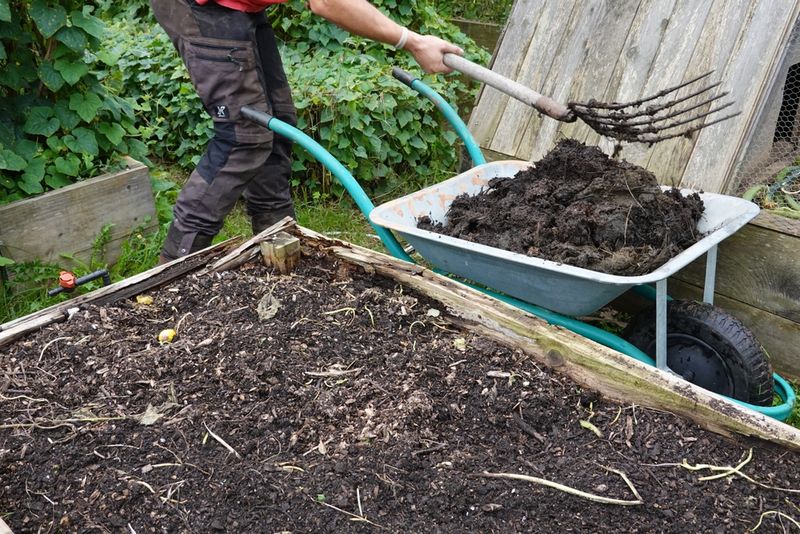
Few things feel more helpful than a load of manure on the garden, but carrots can be picky. Fresh manure, extra available nitrogen, or fertilizer sitting right against the root may contribute to malformed roots, according to Utah State Extension.
Again, these are possible contributors, not proof.
So skip fresh manure shortly before planting carrots. There is also a food-safety side: raw manure can carry pathogens, and carrots grow in direct contact with soil.
Wisconsin Extension advises a four-month gap before harvest when fresh manure is used on soil-contact crops.
That caution is about fresh manure, not all compost. Finished compost is a better choice, though its nutrient content varies and heavy applications can cause other soil problems, as Utah State guidance on manure and compost explains.
A soil test will tell you whether the bed needs anything at all.
Close planting can twist roots together
Pull up a clump of carrots and sometimes they come out wound around each other like braided rope. That is twisting, and it is a different story from a forked root.
UC IPM says closely planted carrots can twist together, become misshapen, or stay small.
Notice what that does not say. Crowding does not always cause forked roots, so a single split carrot in a thick row is not automatically a spacing problem.
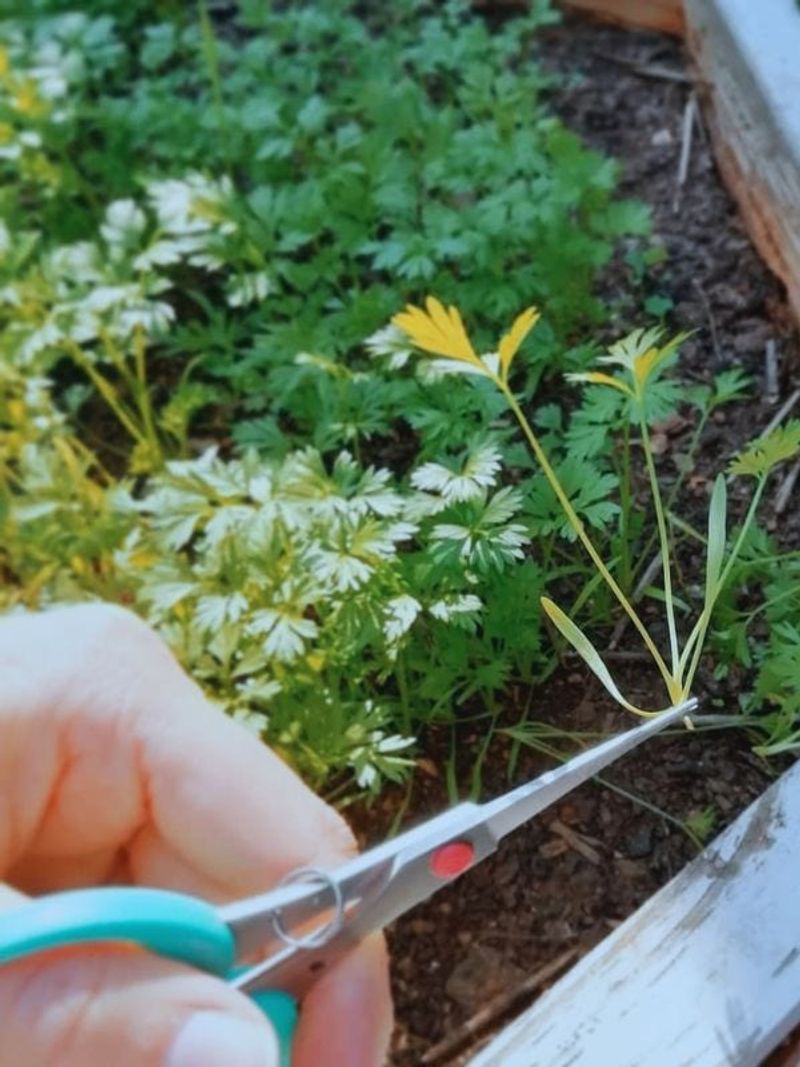
Sow seed directly in the bed, since carrots dislike having their roots disturbed. Once seedlings are up, thin them to the spacing printed on your seed packet.
Recommendations range from about 1 to 2 inches for some home-garden guides up to 2 to 4 inches for others, so the packet for your variety is the best guide. Thinning with scissors at soil level can avoid tugging neighbors loose.
Similar-looking roots can have other causes
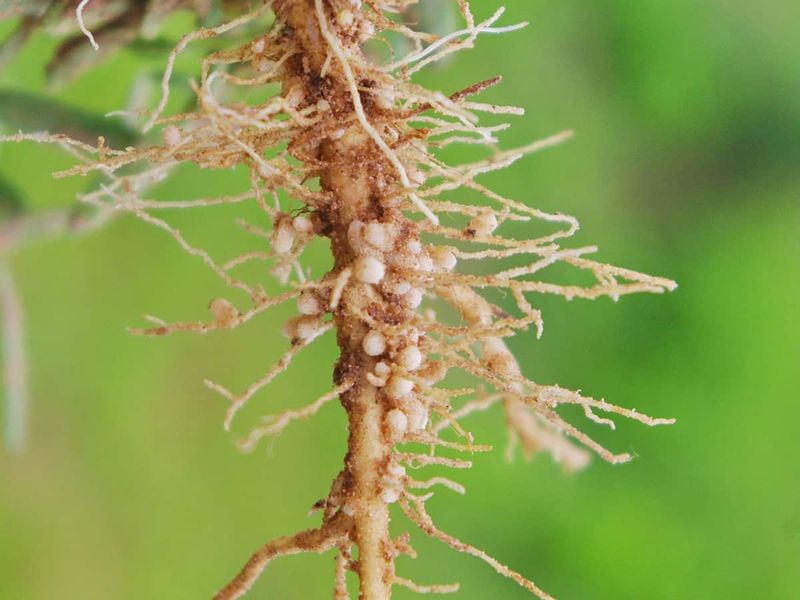
Before blaming your soil, look past the shape. Small swellings or galls on the roots can be a clue to root-knot nematodes, according to University of Minnesota Extension.
Yellowing or wilting tops and root lesions can go along with more serious damage, including Pythium.
A plain forked root with healthy tops and no galls looks different from those cases, but appearance alone cannot confirm a pest or disease. If you suspect one, your county Extension office can help with testing before you treat anything.
Water adds another wrinkle. Very wet, waterlogged soil can favor Pythium root dieback, as the UC IPM carrot guidelines describe.
Uneven moisture, on the other hand, is associated with cracking or splitting, which is a separate symptom from forking, as noted by Utah State Extension. Sorting your carrots into forked, cracked, and galled piles can tell you a lot.
Fall planting windows vary across the South
A single fall date for the whole South simply does not exist. In Florida, the UF/IFAS root crop chapter lists carrot planting from August through March in north and central Florida and September through March in south Florida.
Its north Florida production guidance names September through November as ideal.
Texas runs on a different clock. The Texas A&M home-garden guide points to August for fall crops in many areas outside South Texas, and July through February in South Texas.
Treat those ranges as regional guides, not instructions for your exact yard. A gardener in the Panhandle, the Gulf Coast, or the Florida Keys faces different soil temperatures and frost dates.
Check with your county Extension office for the window that fits your area, and plan your bed prep a couple of weeks ahead so the soil is ready when your sowing time arrives.
Prepare the next bed to reduce common risks
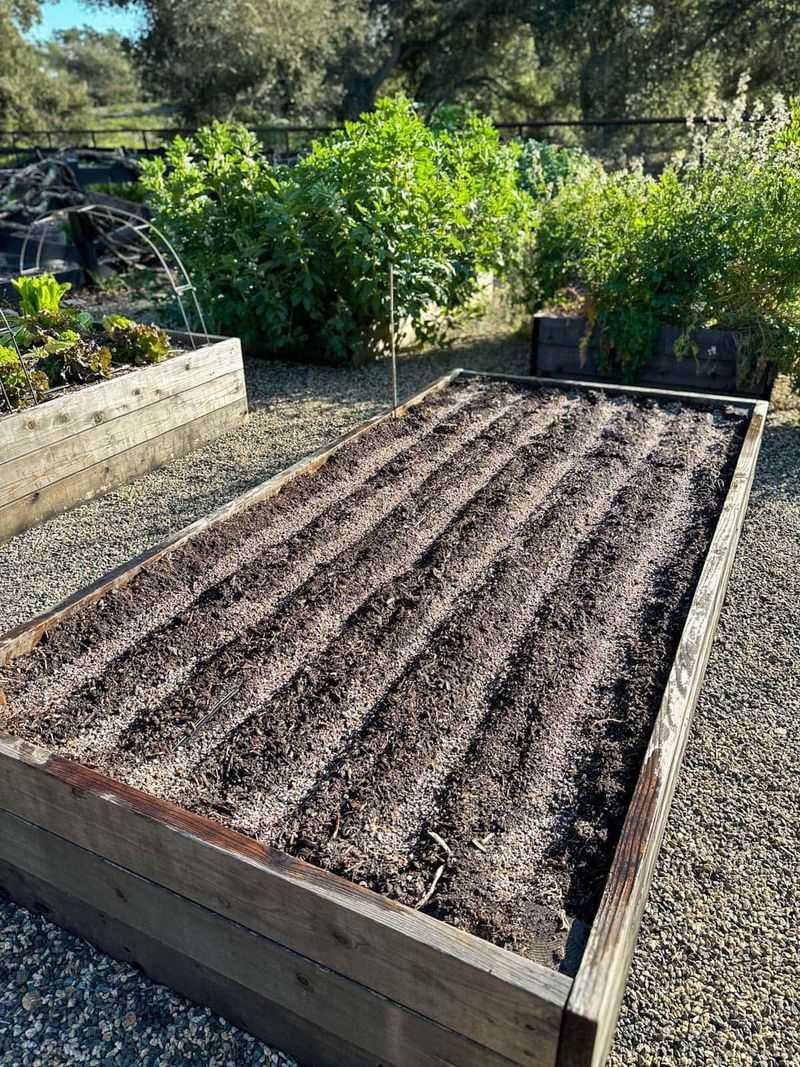
Start with the ground. Loosen the bed deeply and clear out stones and clods, which targets the obstruction risk UC IPM describes for dense or rocky soil.
Next, feed with care. Leave out fresh manure, add finished compost if you like, and let a soil test decide whether fertilizer is needed.
Then sow directly and thin to the packet spacing, which helps with the twisting and small roots that UC IPM links to close planting.
Finally, water steadily without letting the bed turn soggy. Very wet conditions can favor Pythium root dieback, per the UC IPM carrot guidelines, while uneven moisture is tied to cracking, as Utah State Extension notes.
These steps can improve your odds, but they cannot rule out nematodes or other hidden causes. Even a crooked carrot still tastes like a carrot.