

Those skinny green shoots crowding the bottom of your crape myrtle can look like a sign that something is wrong. Most of the time, they are just a normal habit of the plant.
Knowing which shoots to cut, which to keep, and when to hold off on bigger pruning can save you from fall mistakes. Here is how to handle them calmly before winter arrives.
A shoot at the base is not automatically a warning sign
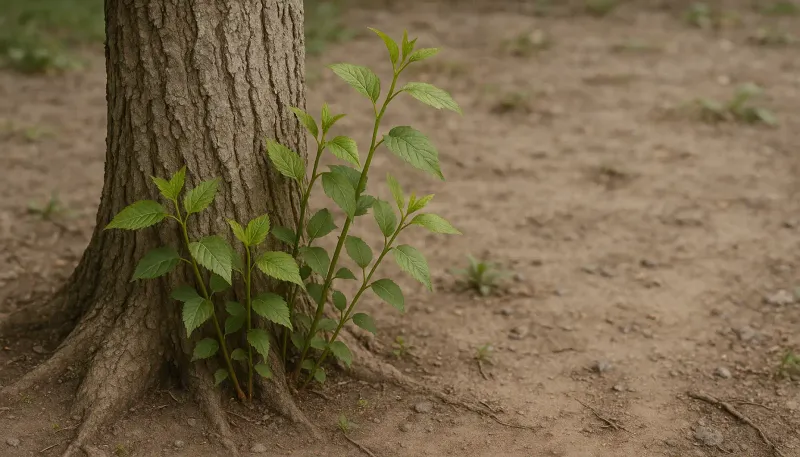
Walk out to your crape myrtle and look at where the new shoots are coming from. A true sucker comes up from a root or from the very base of the plant, right at or near the soil.
Shoots that sprout higher up, along the trunk or on branches, are usually called water sprouts or adventitious shoots. The difference matters because the advice for each one is not quite the same.
Here is the reassuring part. Maryland Extension notes that crape myrtles naturally produce new stems, and how much they sucker differs from plant to plant.
Seeing a few shoots at the bottom does not tell you the tree is sick, dying, or infected with anything in particular.
Suckers also are not useless. Extension guidance points out that root suckers have leaves that photosynthesize and send food to the roots, so calling them energy thieves is too simple.
Removing the ones you do not want is usually not a serious threat to the plant.
None of this means you should ignore everything. Look at the whole tree.
Leaves that are spotted, branches that die back, bark that is damaged, or sticky residue and insects are separate clues worth checking on their own. A sucker by itself is just a sucker, and the rest of the plant tells the bigger story.
Cultivar and growing conditions can shape how much it suckers
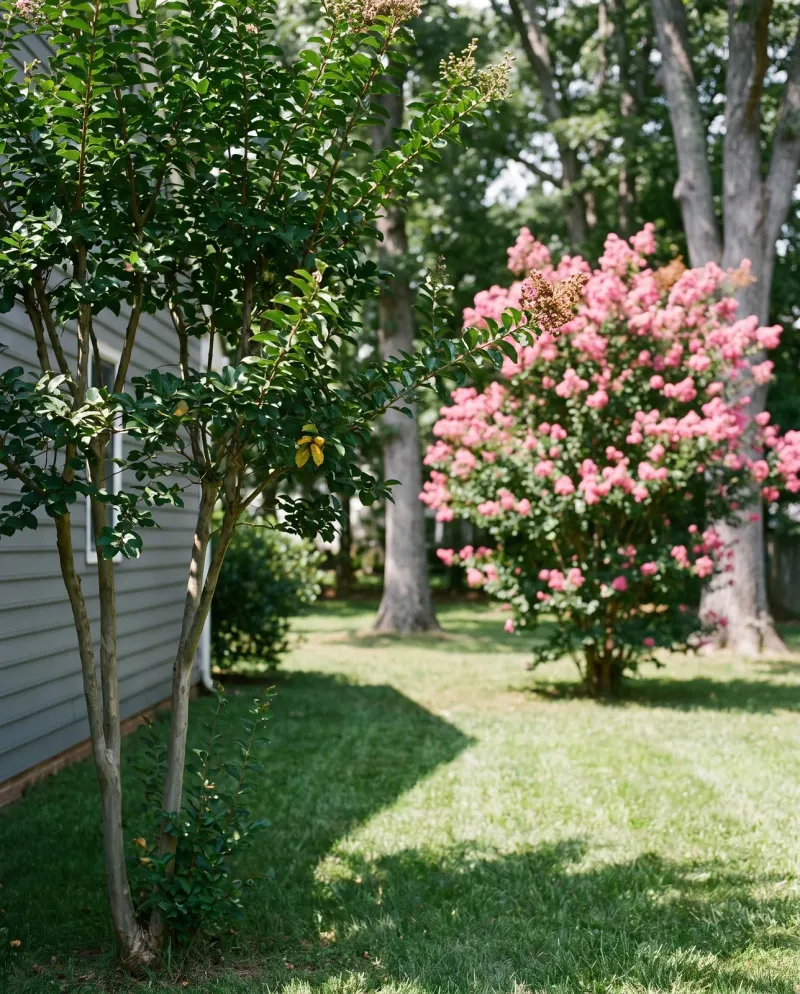
Two crape myrtles planted on the same street can behave very differently. Some cultivars send up shoots year after year, while others hardly produce any.
If your neighbor’s tree stays tidy and yours does not, that gap may simply come from the variety.
Conditions can play a part too. Extension advice says heavy pruning or plant stress may be followed by vigorous growth.
So it helps to think back over the past year without jumping to conclusions.
Ask yourself a few simple questions. Was the tree cut back hard last winter?
Did a mower, string trimmer, or shovel nick the trunk or roots? Was fertilizer spread close to the base?
Any of these may contribute to pushy growth, but none of them proves the cause. Think of them as clues, not a diagnosis.
Some crape myrtles, mostly tree forms, may be grafted, so shoots from below the graft could look different from the top. Still, University of California Ask Extension material and Georgia Extension note that crape myrtles are also grown from cuttings, so grafting is not the usual explanation.
Finally, do not add extra water or fertilizer just because suckers showed up. Water needs depend on whether the tree is established, your soil, the weather, and where it grows.
Choose the shape you want before removing shoots

Before you pick up pruners, decide what you want the plant to look like. A crape myrtle can be a single or few-trunked small tree, or a naturally multi-stemmed shrub-like form.
Both are valid, and neither is healthier than the other.
If you want a tree shape, choose the main trunks you plan to keep. Stand back and look for sturdy, well-placed stems, then treat the extra growth at the base as the shoots to remove.
For a multi-trunk look, you do not need to clear everything. UC Marin Master Gardeners suggest keeping about three to five well-spaced trunks.
Pick stems that grow outward in different directions so the plant has an open, balanced form.
A handy trick is to tie a bit of bright ribbon around the trunks you are keeping. That way you will not cut one by mistake when you start cleaning up.
Remember, this is about looks and upkeep. A crape myrtle with extra stems is not failing.
You are simply shaping the plant to fit your yard.
Remove unwanted suckers at the soil line
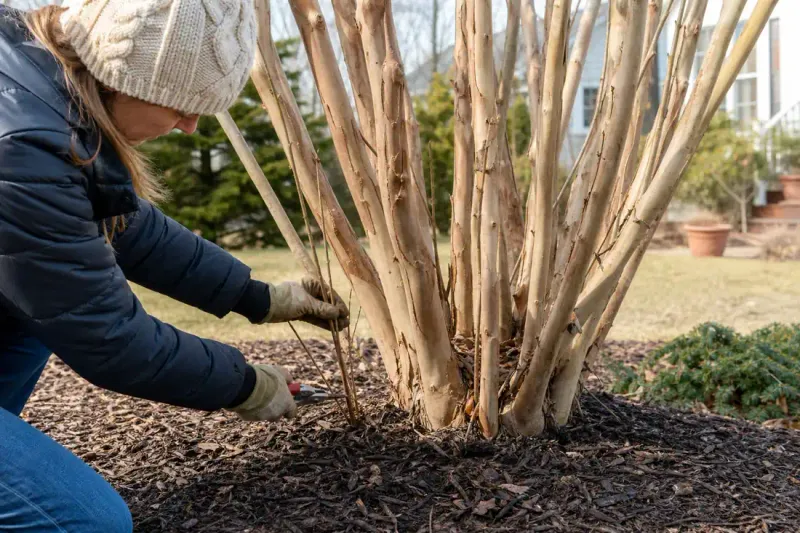
Grab clean, sharp pruners or loppers. For each unwanted basal sucker, cut the shoot off right at the soil line.
If you can reach the spot where it attaches without hurting the root, you may cut just below the surface, but only then.
Never cut the root that supports the shoot. This is the rule from University of California Ask Extension guidance.
When you are unsure, simply remove the visible shoot and leave the rest alone.
Timing helps. Young, tender shoots snip off with little effort, while older ones turn woody and tough.
UF/IFAS Extension says sucker removal can be done any time of year, so there is no need to wait.
Keep this job focused on the base. Shoots growing on the trunk or branches are a different matter.
Also skip herbicide shortcuts, since systemic products can harm the parent tree and contact sprays do not stop shoots from coming back.
Before winter, tidy the base but defer major pruning
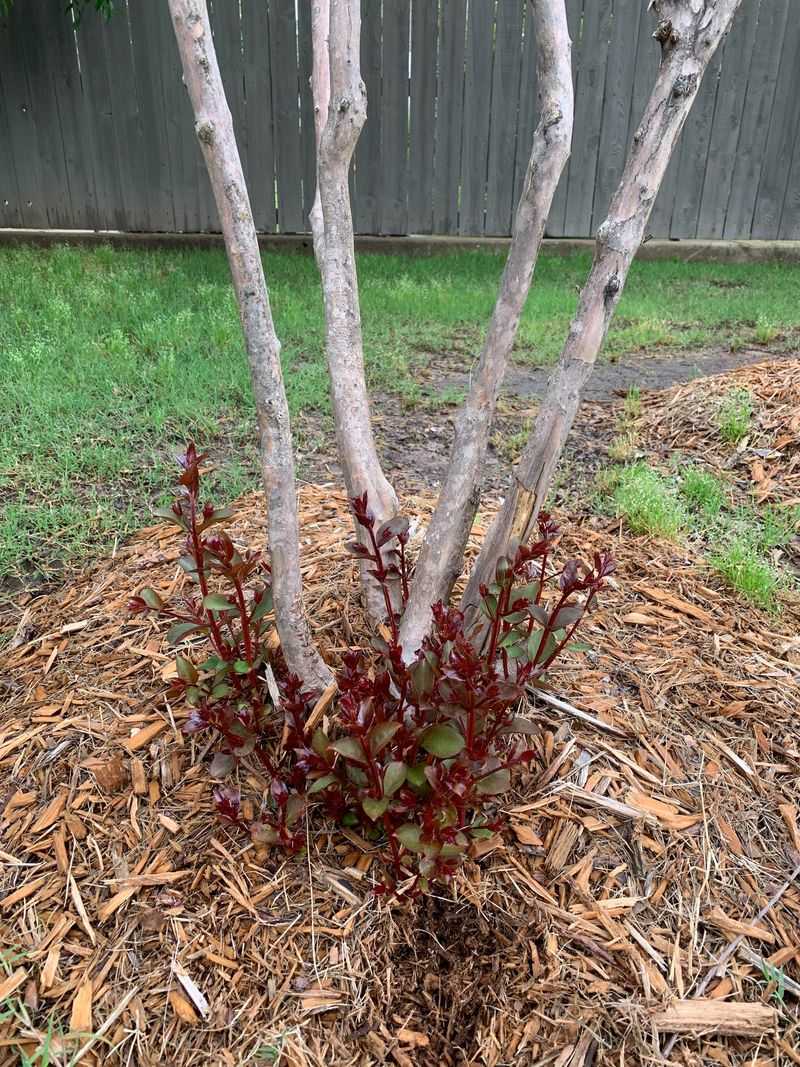
Fall cleanup and real pruning are two different jobs. Snipping a few small shoots at the base takes a few minutes and will not change how the tree grows.
Cutting into the canopy is a bigger step that deserves better timing.
Hard pruning in early fall is not a good idea. Georgia Extension advises against it because it can push out new growth right before the plant goes dormant.
For California, UC Master Gardeners of Sonoma County recommend pruning in the dormant season, with February or March as the latest window before new growth. Treat that as a broad range.
Coastal and inland yards have different winters, so your own timing may shift a bit.
Remember that canopy pruning is not a way to stop suckers. As UF/IFAS explains, small sucker removal and major pruning are separate tasks.
So this fall, clear the base, rake up fallen leaves, and let the branches rest. Save structural work for late winter.
Plan on maintenance, not a one-cut cure
Treat sucker removal like weeding or sweeping the patio. You remove the shoots your chosen shape does not need, and some will probably come back.
University of Arkansas Extension notes that suckers can return, and some varieties sucker again and again.
Returning shoots do not mean the tree is failing. As Extension guidance explains, suckering is common and is not a serious threat on its own.
If other signs show up, such as dying branches or damaged bark, look into those separately.
Skip herbicides as a shortcut, and leave major pruning for the dormant season.
A quick pass with pruners a couple of times a year is often all it takes.