
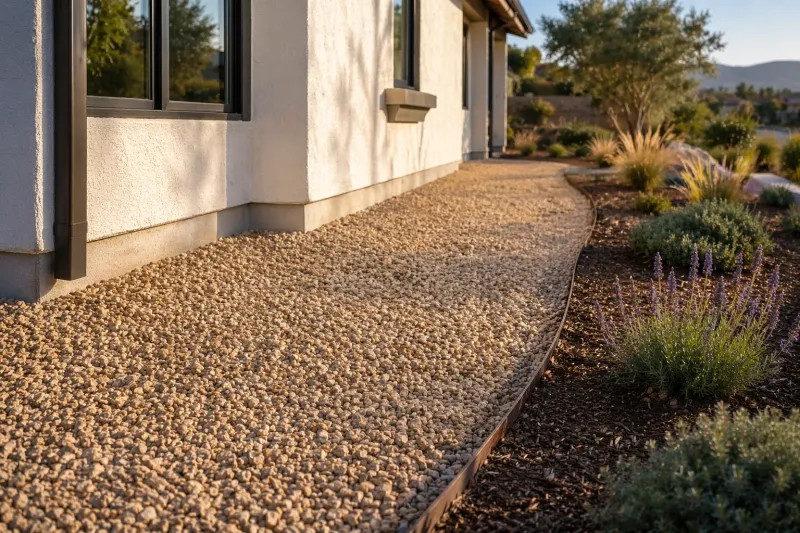
California is writing new fire rules for the strip of ground closest to your house, and many HOA plant lists may need to catch up. That first five feet, often called Zone 0 or the ember-resistant zone, is where flying embers can land and light up mulch, shrubs, and dry leaves.
If your HOA still requires bark mulch and tall hedges against the walls, your yard could end up out of step with state guidance. The good news is that you can start making smart, pretty, wildlife-friendly changes right now.
1. Understand the New Zone 0 Rules
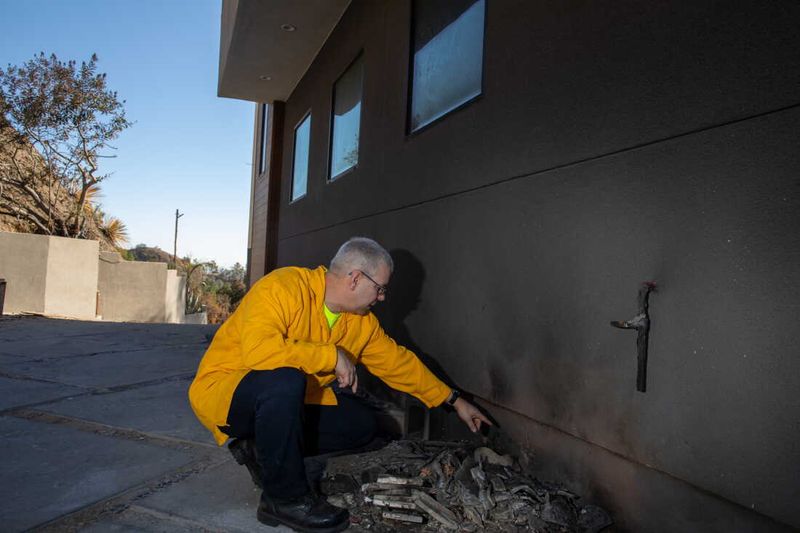
Embers, not walls of flame, start many home fires during California wildfires. That simple fact is behind Assembly Bill 3074, which asked the Board of Forestry to create rules for an ember-resistant zone within five feet of homes in high fire hazard areas.
Final details are still being worked out, and timelines may differ for new and existing homes. Draft language has focused on removing wood mulch, dead plants, and combustible materials from that strip, and limiting or spacing out live plants.
For HOA members, the key point is that state rules can override older landscape standards. If your community guidelines require shrubs pressed against the house, those rules will likely need an update, so it helps to plan ahead now.
2. Swap Bark Mulch for Gravel or Decomposed Granite
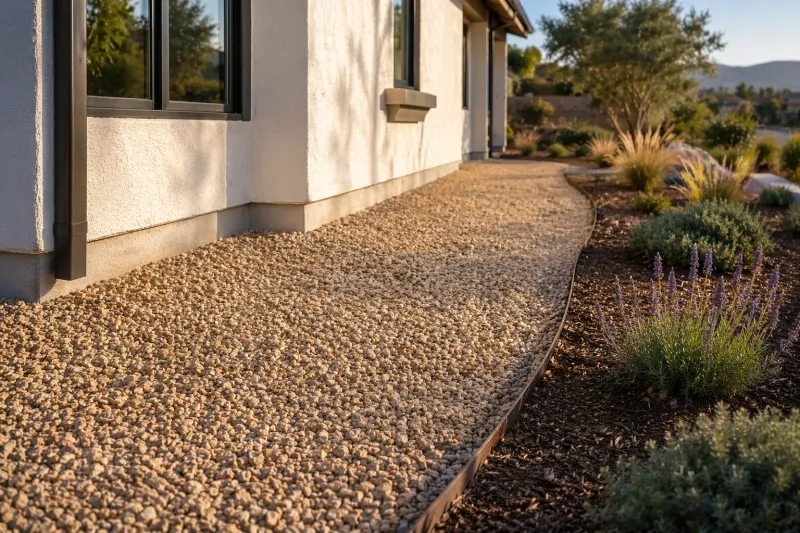
Picture a hot August afternoon in Riverside, with shredded bark baking against your stucco. Wood mulch can smolder for hours after one ember lands on it, which is why it tops nearly every Zone 0 removal list.
Gravel, crushed rock, decomposed granite, and pavers can work as noncombustible ground covers. They still help hold moisture in nearby soil and keep weeds down.
Choose lighter colored rock if you can, since dark stone may hold more heat near walls and plants. Ask your HOA board early, because many CC&Rs list approved mulch types, and rock may need a formal request until the list changes.
3. Low-Growing Succulents in Containers
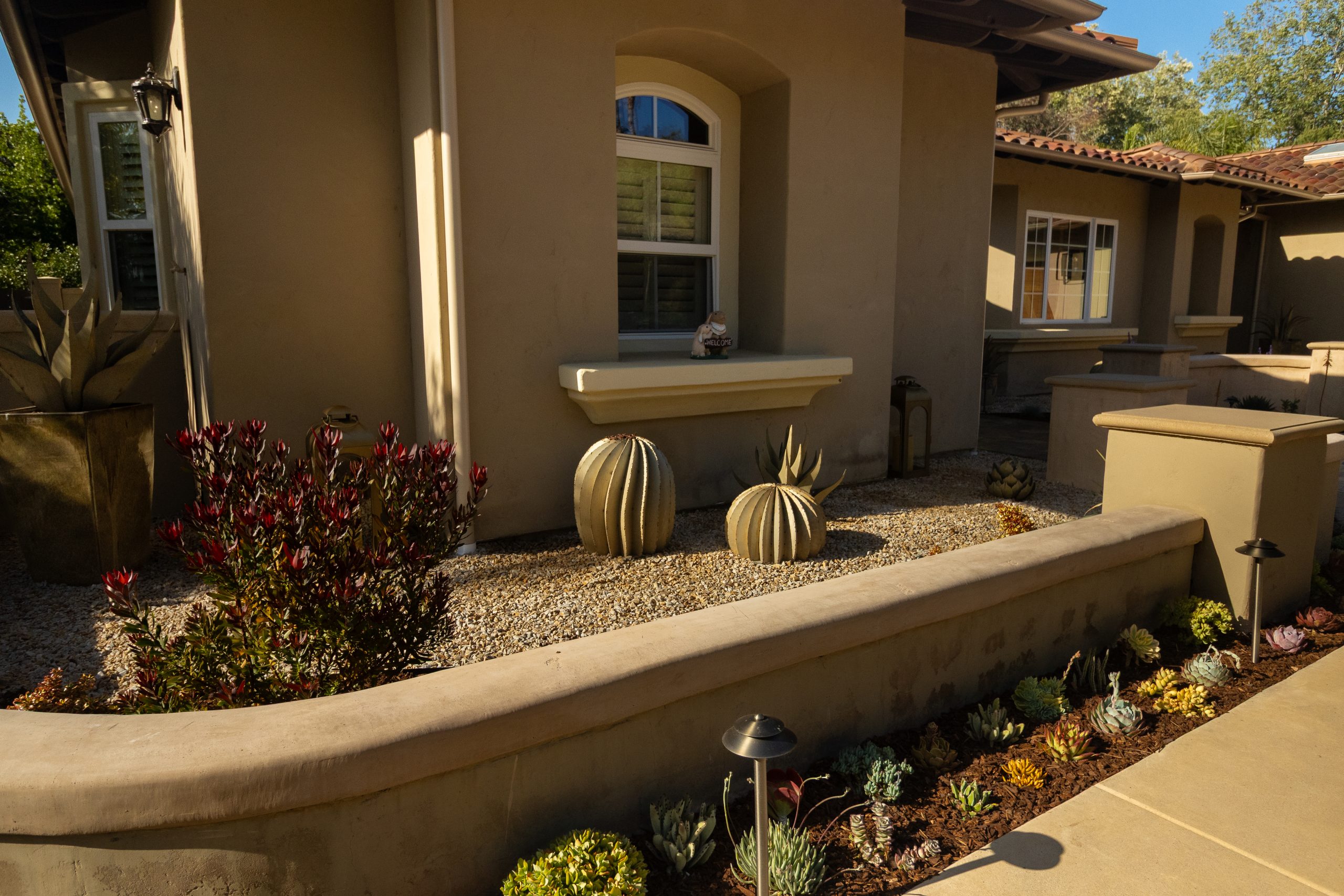
Plump, water-filled leaves give many succulents a natural edge in a fire-aware yard. Echeveria, small aloes, and Dudleya hold moisture well and stay low, so they tend to resist ignition better than twiggy shrubs.
Containers make them even more useful in the first five feet. Ceramic or metal pots on gravel let you keep color near the entry while leaving clear space between plants.
A fun bit: Dudleya, often called liveforever, grows wild on coastal California cliffs. It dislikes summer water, so give it a pot with sharp drainage and leave it mostly alone once the rains stop.
4. Native Low Ground Covers Like Yarrow
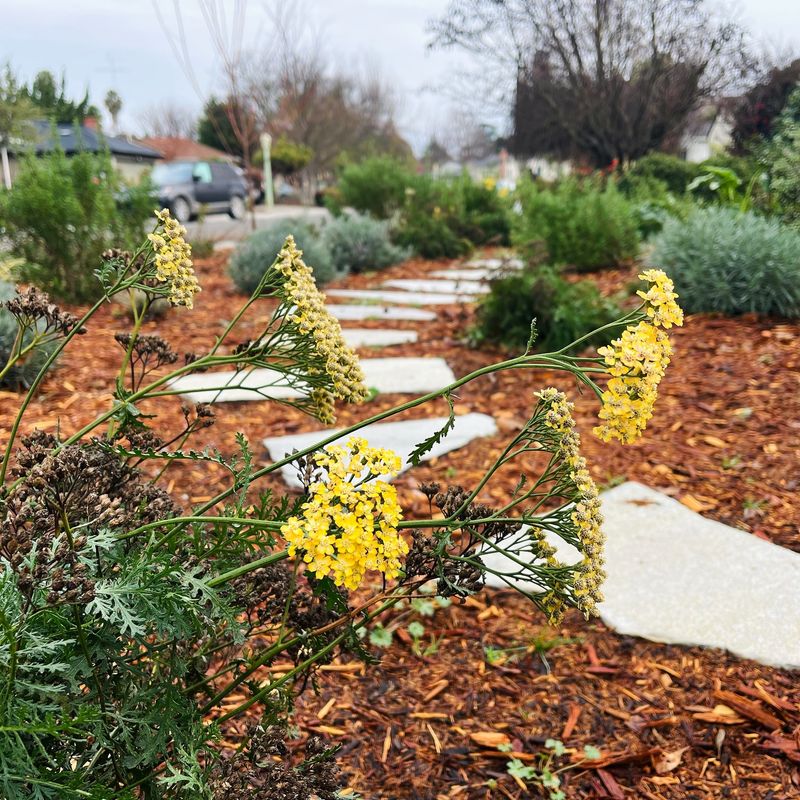
Bees love yarrow, and so will your water bill. California native Achillea millefolium spreads into a soft, ferny mat that stays low and green longer than many ground covers when watered lightly.
Its flat white flower clusters pull in native bees, hoverflies, and small butterflies. That means you can keep part of your Zone 0 strip alive and buzzing instead of turning it into bare rock.
Plant it in small patches separated by pavers rather than one solid blanket. Mow or trim spent stems after bloom so dry material does not pile up near the house.
5. Well-Watered Herbs Like Creeping Thyme
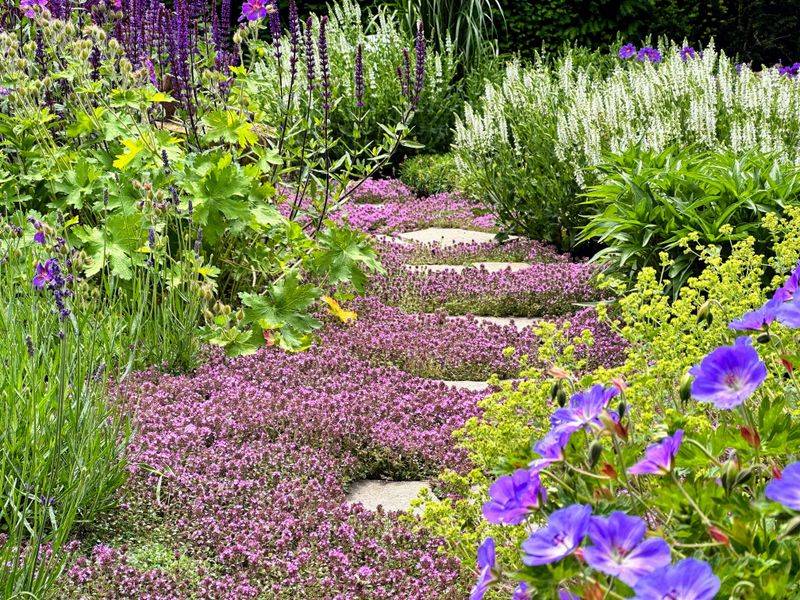
Step on it and you get a burst of fragrance. Creeping thyme fills the gaps between pavers and stays just a couple of inches tall, which keeps fuel low near the foundation.
Herbs tend to be oily, so they are not fire-proof. Kept trimmed and lightly irrigated with drip, though, they can stay green and lower risk than dry, woody plantings.
Tiny purple summer flowers bring in honeybees and native bees. It works best on coastal and inland valley sites with good drainage, and it pairs well with a gravel or flagstone Zone 0 plan.
6. Small Perennials Such as Seaside Daisy
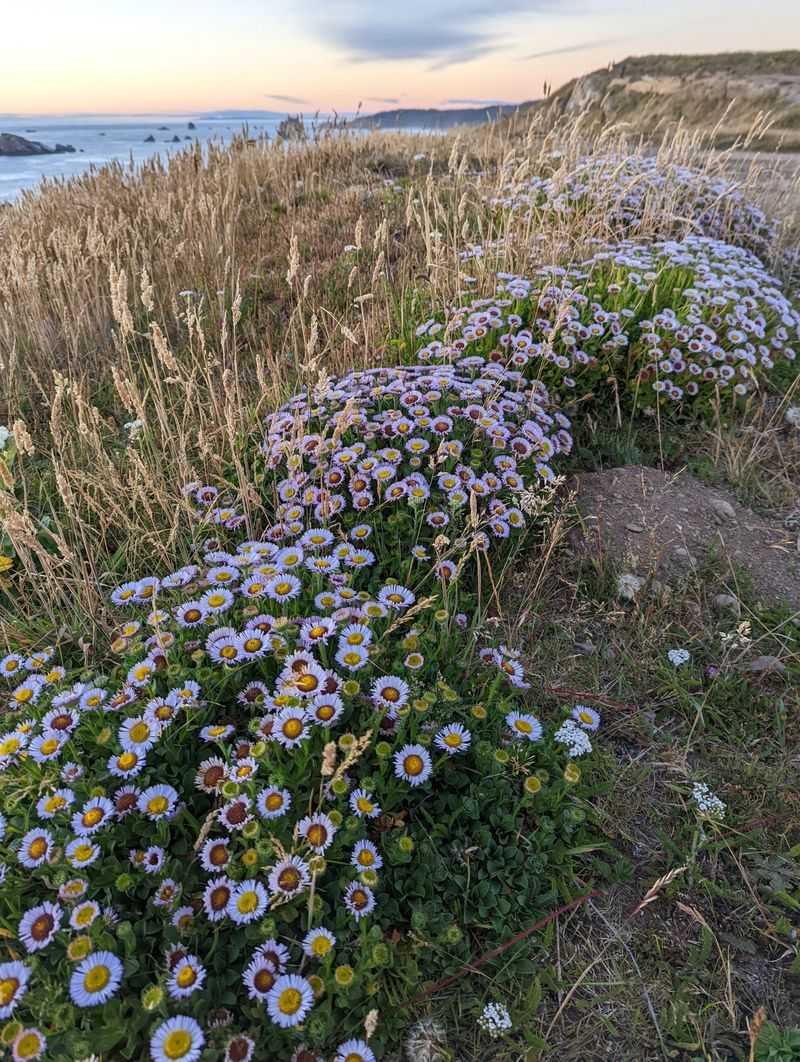
Coastal hikers know the cheerful pink-lavender faces of seaside daisy, Erigeron glaucus, tucked into bluffs from Oregon to Southern California. It forms tidy mounds under a foot tall.
Compact, separated clumps fit the spacing idea behind ember-resistant zones. Leave rock between each plant so a single ember cannot travel from one to the next.
Butterflies visit often, and deadheading keeps it blooming for months. Inland gardeners may want afternoon shade, since it prefers cooler air.
7. What to Pull Out First
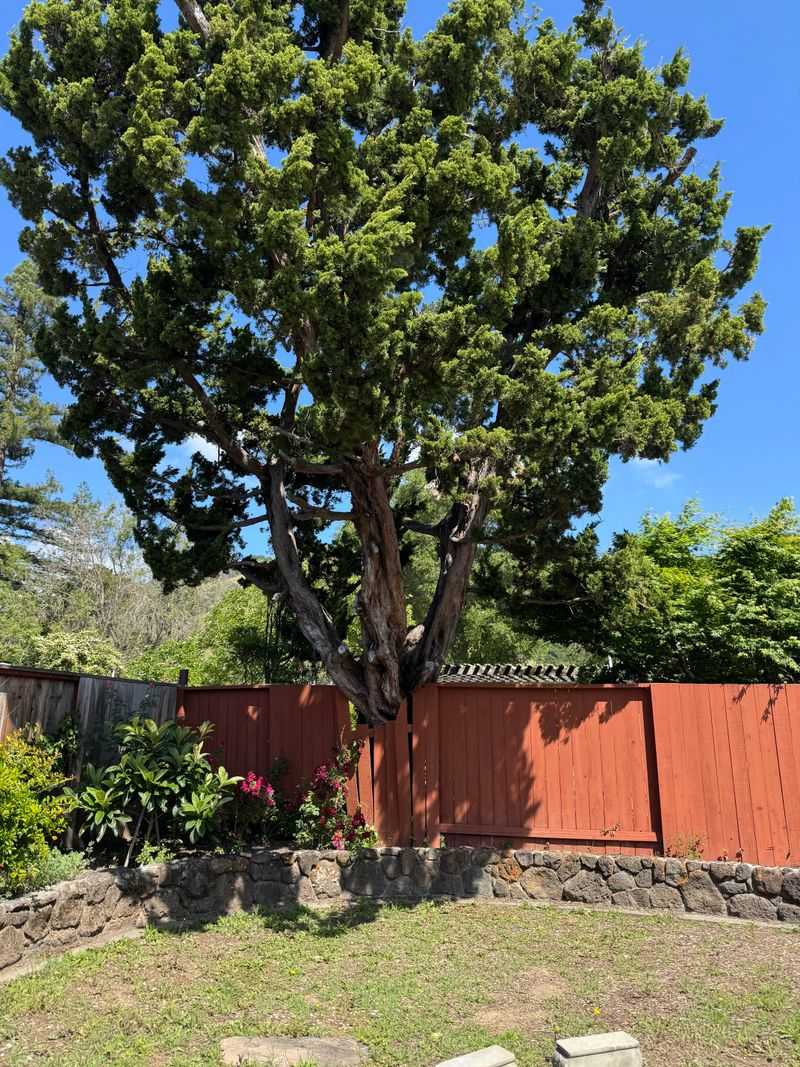
Junipers are the usual suspects. These shrubs pack oily, dense foliage and dead inner twigs, and fire officials often warn against keeping them near homes.
Rosemary hedges, Italian cypress, pampas grass, and overgrown ornamental grasses also deserve a hard look in the first five feet. So do woody vines climbing walls or fences that touch the house.
Start with whatever is dead, dry, or touching siding and eaves. Removing it first gives the biggest drop in risk for the least work, and you can replant the space bit by bit.
8. How to Talk to Your HOA Board
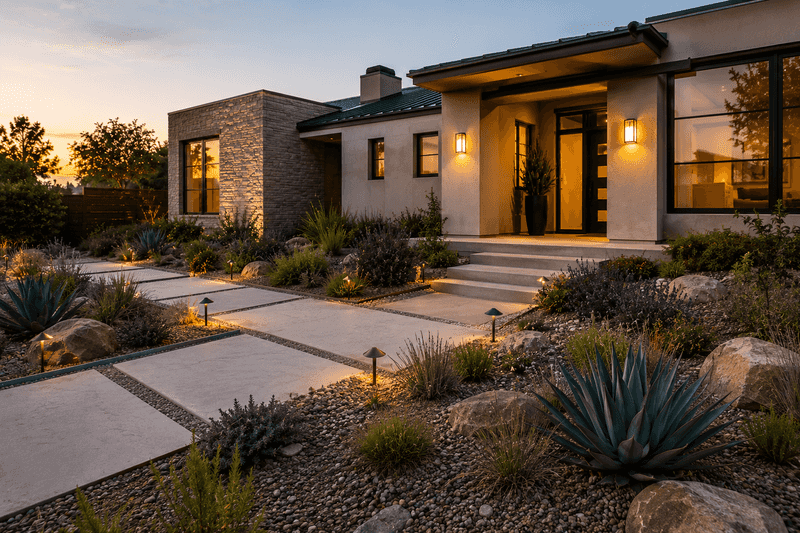
Nobody wants a violation letter for doing the right thing. Bring a simple sketch, a plant list, and a link to CAL FIRE defensible space guidance to your architectural committee.
California law already limits HOAs from banning water-wise landscaping, and fire-safety rules are moving in a similar direction. Many boards are looking for examples, so your plan could help shape the new list.
Offer to share before-and-after photos with neighbors. A good-looking ember-resistant entry often wins over skeptics faster than any rule ever could.