
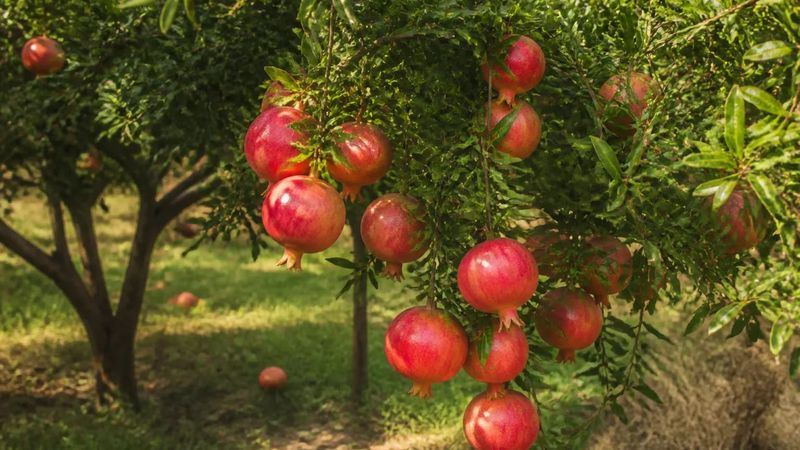
Walking out to find pomegranates on the ground can feel like a small garden disaster. It is easy to blame the hose, but fallen fruit is really a clue, not a verdict.
What the fruit looks like, how old your tree is, and how you have been watering can all point in different directions. A few minutes of careful looking now can save you from changing the wrong thing next year.
Start by identifying what fell
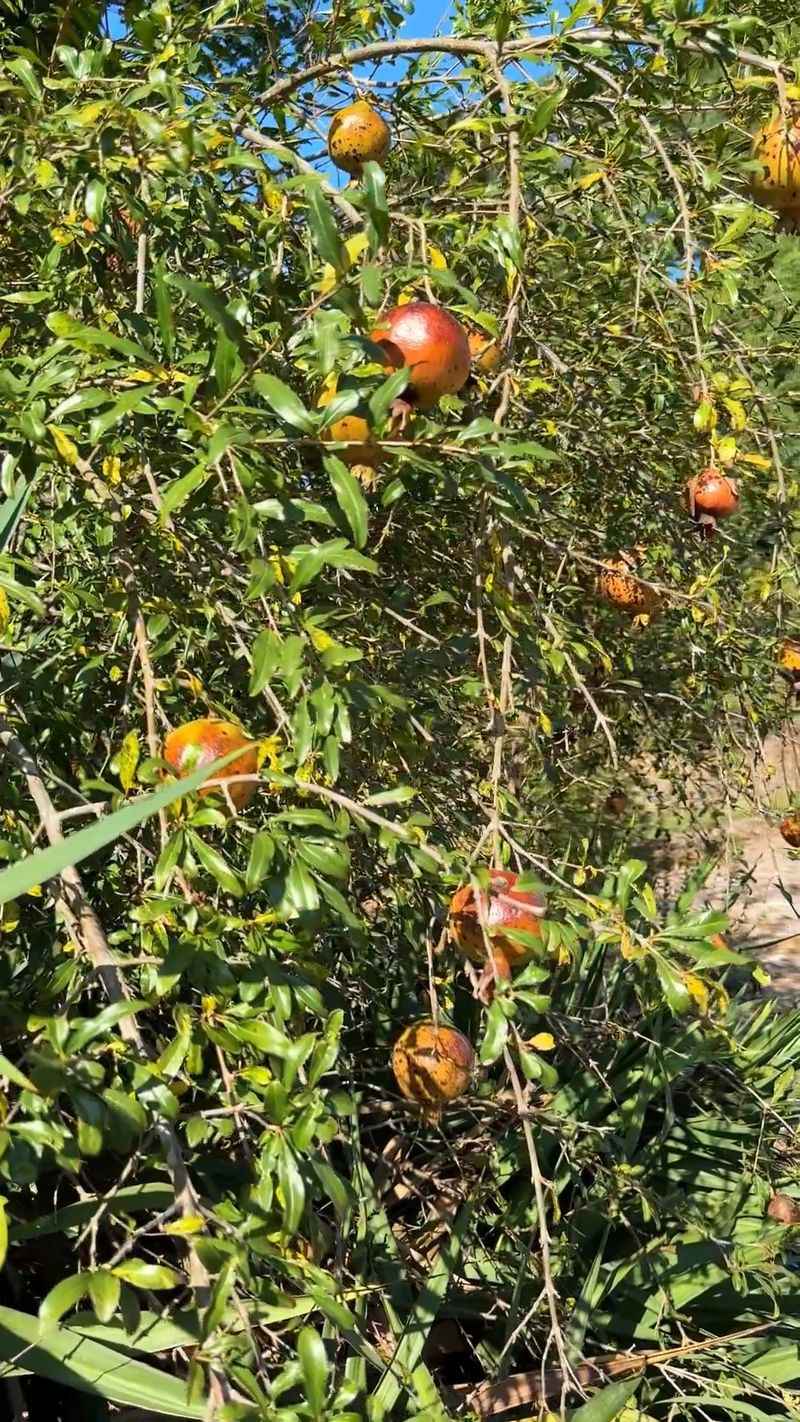
Before touching the irrigation timer, kneel down and look at what is actually on the ground. Pick up several fallen pieces rather than just one, because a single fruit can mislead you.
Sort them into piles: spent flowers or tiny fruit the size of a pea, developed fruit that looks whole, fruit that has split, fruit with dark spots or soft rotting areas, and fruit that has dried into hard, shriveled mummies.
Each pile points toward a different set of questions. Flowers and tiny fruit that fall early are often just part of how the tree works, since Florida Extension notes that pomegranates produce many flowers that never set fruit.
Developed fruit that is intact and green raises different questions than fruit that cracked open or went soft. Dried mummies on the ground or still hanging on the tree suggest something went wrong earlier in the season.
Cut a few open, too. California UC IPM describes black heart as internal decay that can show up without obvious outside symptoms, so a fruit that looks fine on the surface may not be fine inside.
Write down what you find, and snap a few photos.
These notes will not tell you the cause by themselves. They simply narrow the list, and they give you something concrete to compare against the watering, age, and fertilizer questions in the sections ahead.
A fallen fruit is not automatically unripe
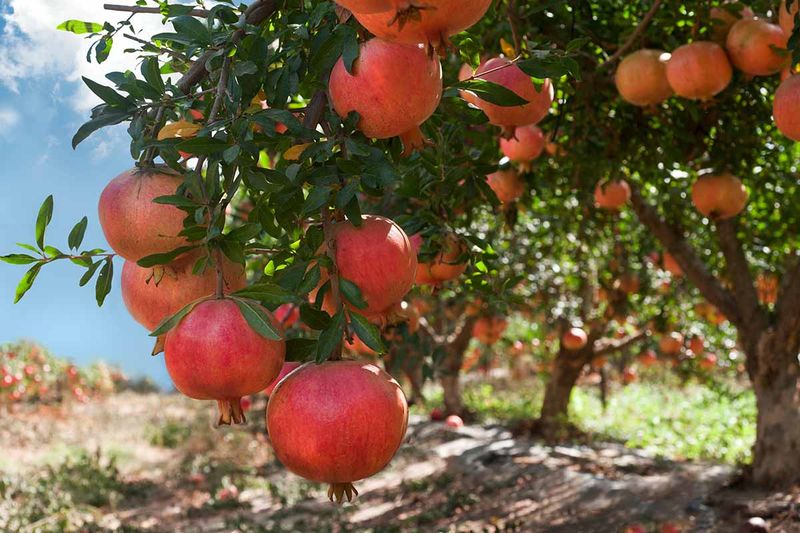
Plenty of gardeners assume that anything on the ground came down too soon. That is a risky guess.
Pomegranate varieties ripen at different times, and your local weather shifts the calendar even more.
As one California example, UC Cooperative Extension says ‘Wonderful’ commonly matures in late September and October, while ‘Granada’ matures earlier. That is one regional example, not a rule for every backyard from the coast to the interior valleys.
A tree in a cool coastal yard may run on a different clock than one in a hot inland valley.
So check your variety first. If you do not know it, look at the tree’s tag, your purchase records, or ask the nursery.
Then compare the fallen fruit with the signs that fit that variety, such as skin color and how the fruit looks overall, rather than judging by size alone.
One more caution: do not count on green fallen fruit ripening on the kitchen counter. UC Master Gardeners of Placer County note that pomegranates do not continue ripening after harvest.
If a fruit fell fully colored and split, it may well have been ripe, and that tells a very different story.
Water stress can affect fruit, but swings matter too
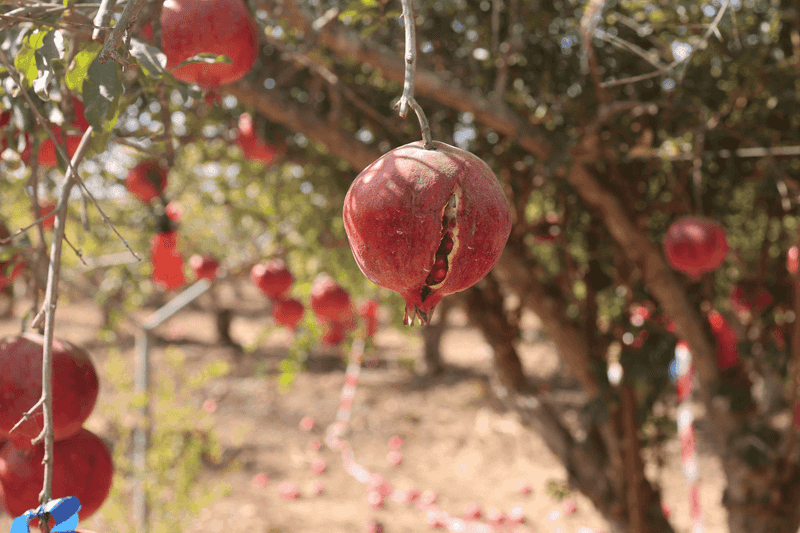
Water does matter for pomegranates, though the story is more layered than “give more” or “give less.” Pomegranates handle drought well once established, but University of Nevada, Reno Extension links drought and uneven moisture to smaller or poorer crops and to fruit cracking. A tree that gets bone dry for weeks may hold less fruit or lower quality fruit.
The opposite problem exists too. Florida Extension reports that excess irrigation can aggravate fruit drop, and abrupt changes in watering may contribute to splitting.
Picture a tree left dry through a hot spell, then soaked heavily in one go. The fruit swells quickly and the skin can burst.
This is why the fruit you collected in the first step matters. Split fruit fits better with swings in moisture.
Tiny fruit and flowers fall for other reasons. Intact, healthy-looking fruit that dropped tells you little about water alone, and fruit that was rotten inside points elsewhere.
The practical target is steadier, appropriate moisture. Water stress is one possible contributor, but a pile of fallen fruit does not prove it is the culprit, and it does not prove the answer is more water or less.
Build a steadier watering routine for next season
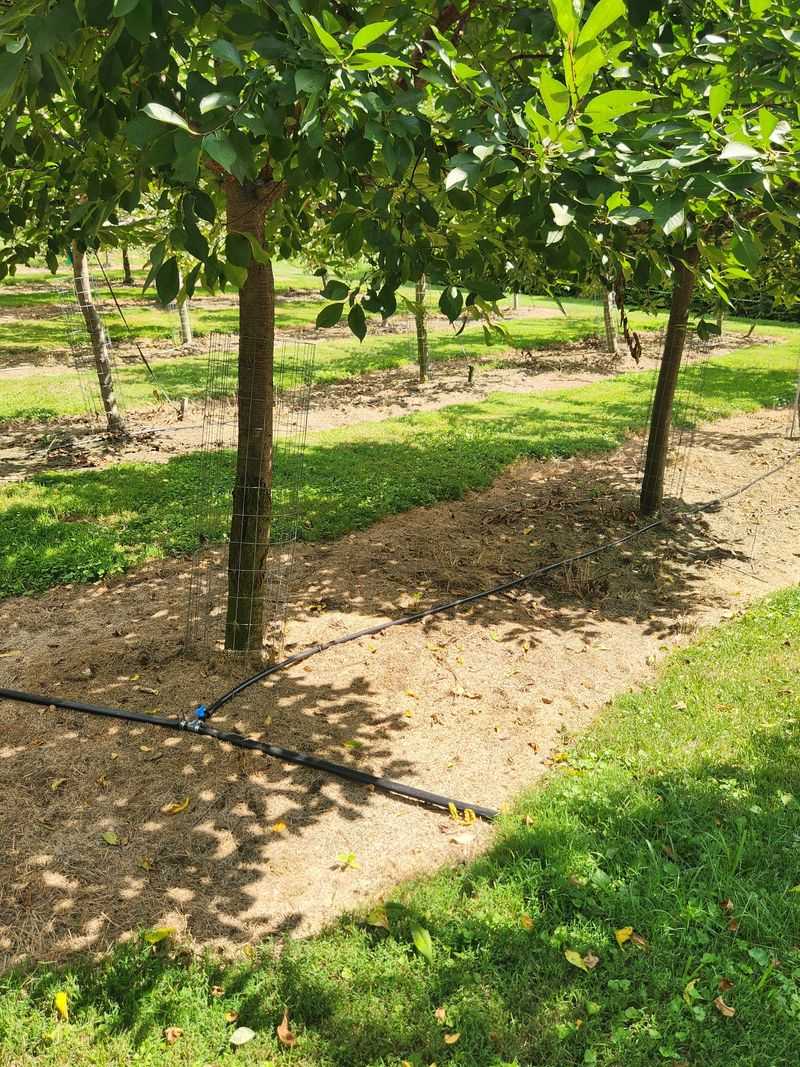
Start with your yard rather than a calendar. Sandy soil drains fast and dries out sooner, while heavier soil holds water longer.
Tree age, summer heat, any rainfall, and whether you use drip, sprinklers, or a hose all change how often your tree needs a drink.
UC IPM’s home fruit tree guidance gives different watering intervals for sandy and heavier soils and advises watering deeply around the drip line instead of at the trunk. The drip line is the ring on the ground under the outer edge of the branches, where many feeding roots grow.
Moving emitters or a hose out to that ring is a simple first change.
Next, avoid the pattern that causes trouble: a long dry stretch followed by a sudden heavy soaking. Aim for reasonably even soil moisture while fruit develops, and also avoid keeping the soil soggy for long periods.
Nevada Extension points out that drought can cut crop size and quality, so do not cut water off as harvest nears.
To adjust as you go, push a trowel or screwdriver several inches into the soil under the tree. If it comes out dry and crumbly deep down, the tree may need water.
If it is muddy, wait. A layer of mulch can also help soil moisture stay more even.
Change your routine gradually and watch how the tree responds.
What else could explain the drop?
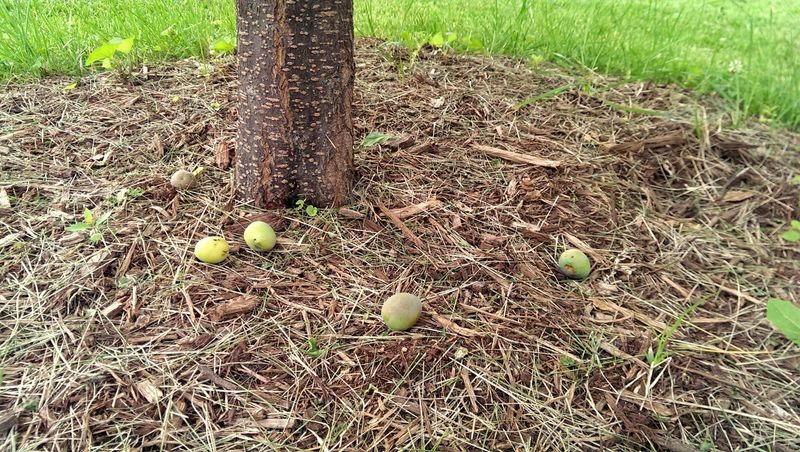
Before you overhaul your irrigation, consider other explanations. Pomegranate trees put out many flowers, and not all of them turn into fruit.
Seeing blossoms and tiny fruit on the ground in early summer can be normal.
Tree age may play a role. Florida Extension says heavy drop is not unusual in the juvenile period, roughly the first three to five years.
The same source says excess irrigation or over-fertilizing can aggravate drop. That is Florida guidance, so treat it as helpful context, not a California rule or proof about your tree.
Rot is another possibility. If fallen fruit is spotted, soft, or moldy, that is visible decay.
Black heart is different. For California, UC IPM describes black heart as internal decay that can occur without obvious exterior symptoms, so cutting fruit open is the only way to spot it.
Fruit drop alone cannot tell you a disease is present. Do not reach for a spray just because fruit fell.
If you suspect a disease, identify it first, and check California-specific guidance and product labels before treating anything. Extra fertilizer is not a reliable fix either, and it may make matters worse.
Use this season’s evidence to guide next year
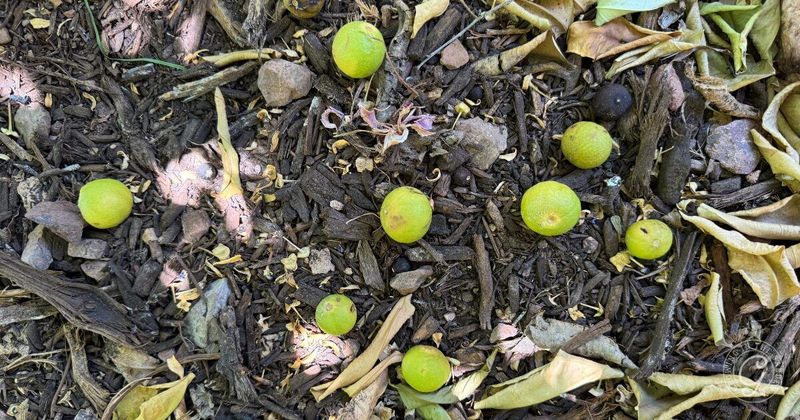
Turn what you found into a short record. Note the date fruit fell, its stage and condition, your tree’s age, any recent watering changes, and when you last fertilized.
Then read the pattern. Split fruit after a dry spell and a heavy soaking points toward moisture swings, so UC IPM’s watering guidance is a good starting place.
Rotten or hollow-looking fruit calls for a look at UC IPM’s pomegranate guidelines, and a young tree or heavy feeding may fit Florida Extension’s context.
Fallen fruit is a clue, so let it lead you to the right question.