
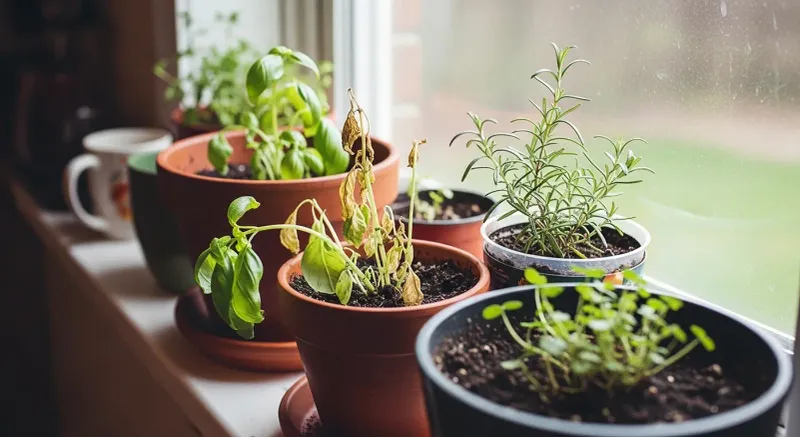
You carried your basil, parsley, and chives inside before the cold hit, and now the leaves are fading to yellow. It is a common worry, and it often shows up within a few weeks of the move.
Yellow leaves are a clue, not a final answer, so a little detective work goes a long way. Here is how to look at light, water, and a few other suspects so you can help your herbs settle in.
The move indoors can change both light and water needs
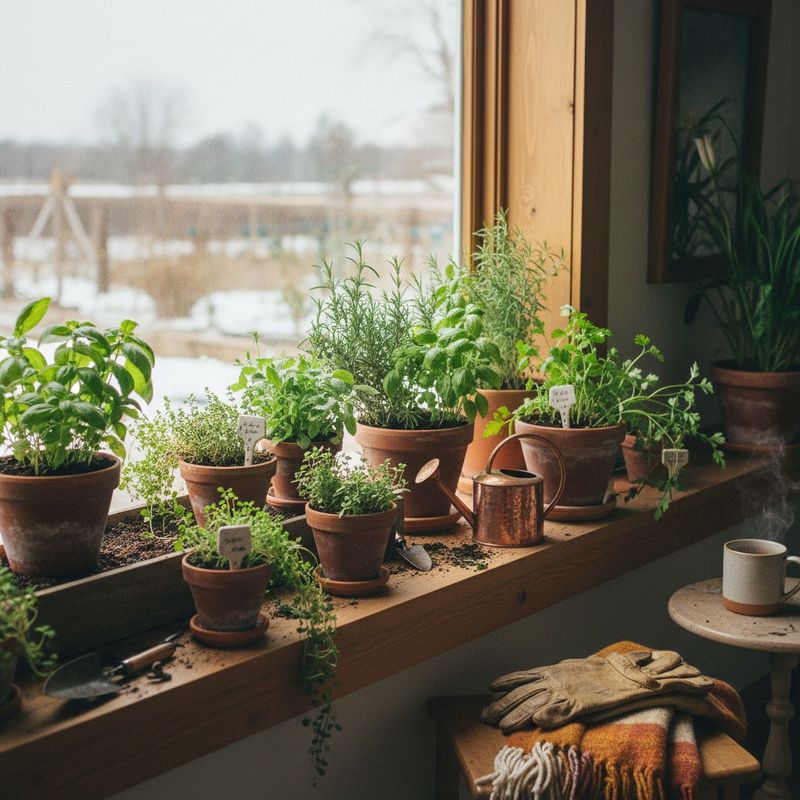
Outdoors, your herbs soaked up strong sun all day. Even a bright window usually delivers much less, and University of Minnesota Extension lighting guidance notes that inadequate light can cause pale foliage and stretched growth.
Less light usually means slower growth, and slower-growing plants drink less. If you keep watering on the same schedule you used on the patio, the potting mix can stay wet far longer than the roots like.
Both changes are common, credible contributors, but neither is a diagnosis. Yellow leaves can also come from root problems, nutrient issues, pests, cold, or plain old leaf aging.
Penn State Extension also notes that plants may need time to adjust after a move, and some yellowing or leaf drop can happen during that adjustment.
Check the plant before changing its care
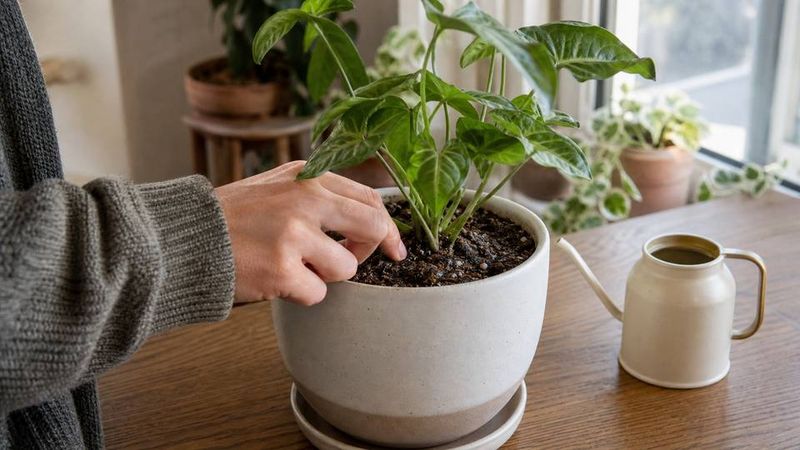
Before you change anything, spend two minutes gathering clues. Push a finger an inch or so into the mix.
If it feels soggy or cool and wet, moisture may be part of the story.
Lift the pot and look at the saucer for standing water, and check that drainage holes are not blocked. Then look at the growth itself.
Pale, stretched stems with wide gaps between leaves point toward weak light, while mushy stems or a sour smell from the mix may suggest root trouble.
Turn leaves over and scan stems for tiny insects, webbing, or sticky residue. Think about cold, too, since a pot touching a chilly windowpane can be stressed.
Old, lower leaves yellowing slowly can simply be normal aging.
No single sign settles the question. Penn State Extension’s plant-health guide lists many possible causes, and Utah State University Extension shows that overwatering symptoms can resemble other problems.
Treat each clue as one piece of the puzzle.
Give the herbs the brightest suitable spot
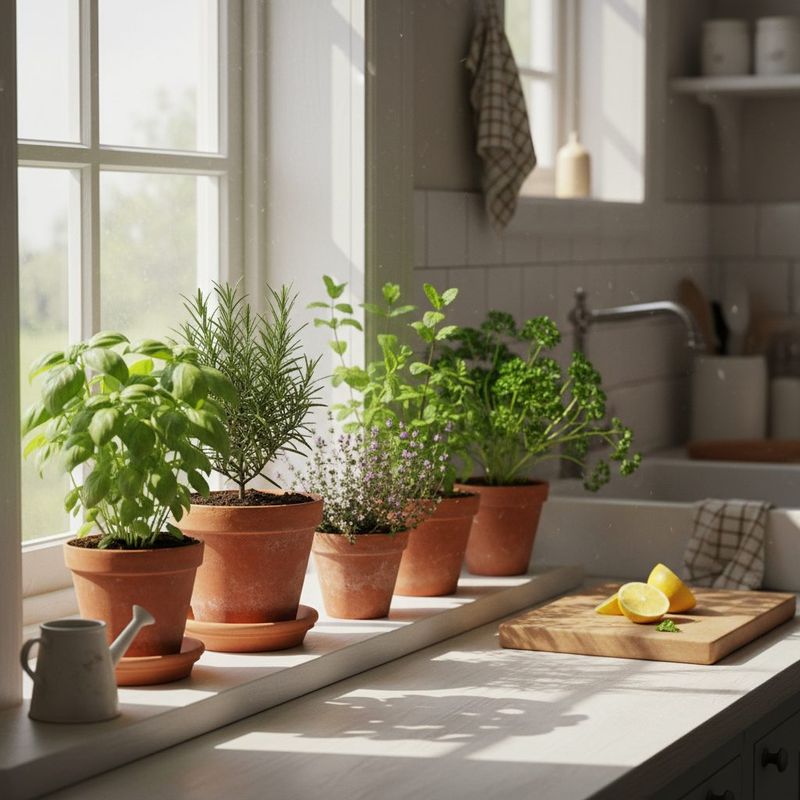
Start with the brightest window you have, and give pots a quarter turn every week or so so growth stays even. A sunny south-facing window is often recommended, but direction alone does not tell you how much light actually lands on the leaves.
Roof overhangs, trees, curtains, season, and time of day all change the picture, a point UGA Extension’s herb guide makes clearly. UGA’s indoor plant guide also warns against assuming a plant near a window gets enough.
Try watching the spot through a sunny day and see how long direct light really reaches the pot.
If the window falls short, a grow light is a reasonable fix. Advice on hours varies: Illinois Extension suggests roughly 12 to 16 hours of supplemental light, while Minnesota Extension mentions 10 to 12 hours for basil in dark months.
Treat those as general ranges, follow your light’s instructions, and watch how the plant responds.
Let the potting mix—not a calendar—guide watering
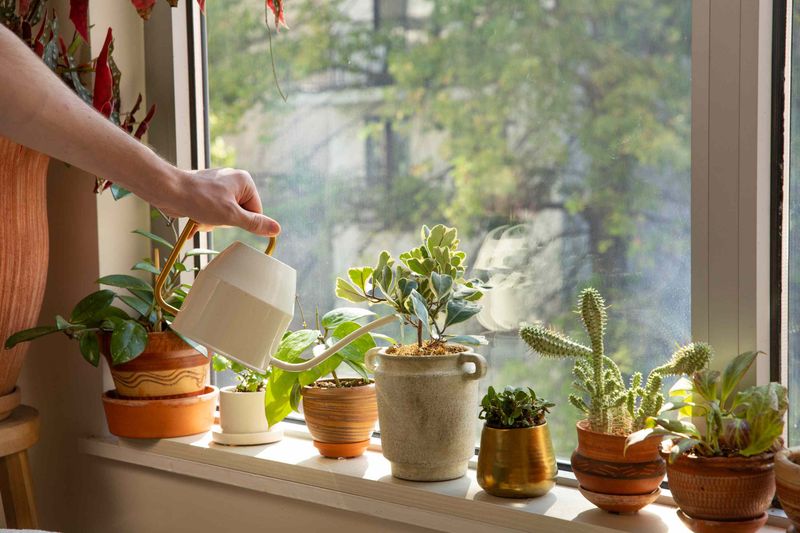
Forget “every Saturday.” Indoor conditions change from week to week, so let the mix tell you when to water. UGA suggests holding off if the soil is still moist about an inch down, and Minnesota Extension uses a shallower half-inch check for indoor herbs.
Water thoroughly when the mix is ready, then let the extra drain away. Tip out the saucer afterward so roots are not sitting in a puddle.
Southern homes with air conditioning, a heater running, or a humid kitchen can all change how fast pots dry.
Use a container with drainage holes and a well-drained potting mix, as Illinois Extension’s container guide recommends. Each herb has its own thirst, so check each pot separately.
The goal is not a perfect schedule. It is avoiding mix that stays wet day after day, which may help roots stay healthier.
See the UGA herb guide for the inch-deep check.
In the South, move plants by weather, not by October alone
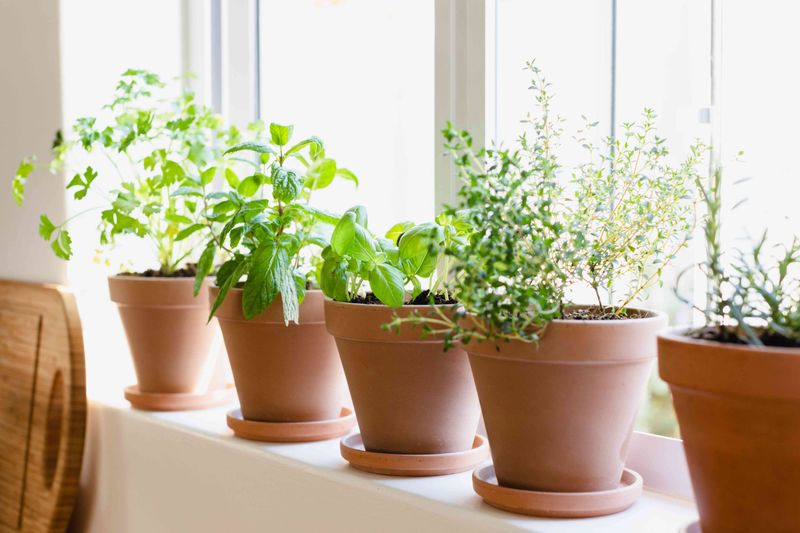
October means very different things in Houston, Orlando, and the Texas Panhandle. A better cue is the forecast and what each herb can handle.
Texas A&M AgriLife describes basil as tender and vulnerable at the first sign of frost, while UGA Extension notes parsley and chives can be fall or cool-season herbs. That means basil may need to come in first, while the others can often stay out longer.
Before any pot crosses the threshold, check leaves, stems, and soil for pests. Illinois Extension recommends this inspection.
Where practical, ease plants in by giving them a few days in a shadier, sheltered spot first.
Even with care, a few yellow or dropped leaves can show up while plants adjust, as Penn State Extension notes. That alone does not point to one specific problem.
Basil, parsley, and chives have different indoor outlooks
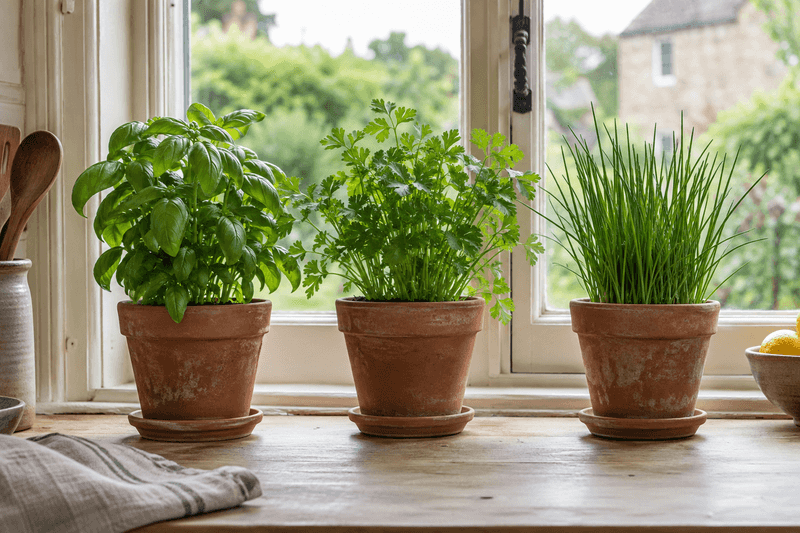
Basil is a tender annual, and even on a good windowsill it may eventually flower and fade, as Minnesota Extension explains. A tired basil plant in winter is not always a care failure.
Parsley is different. Illinois Extension says it can grow indoors with high light and cool conditions, so a warm, dim spot may leave it struggling.
Chives can live in pots, but Illinois Extension notes that plants potted in fall for indoor growing may turn leggy. Floppy, thin chives may simply be doing what is expected.
These differences help you set realistic hopes, not name a cause for any yellow leaf. Check the plant and the mix, then adjust light and watering.
As Penn State Extension suggests, plants need time to adjust. Better conditions may support healthier growth, but they cannot promise that existing yellow leaves will recover.
Often, the best sign of success is a fresh, green shoot.