
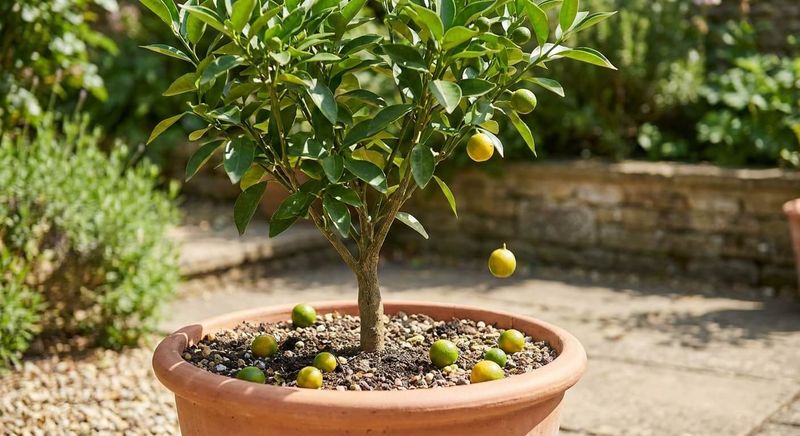
You spot a few tiny green lemons on the floor under your Meyer lemon, and your stomach drops. Before you blame yourself, know that some fruit loss is part of how citrus works.
Watering swings between bone dry and soaked may add stress, but they are only one thing to check. Here is how to read the clues and set up a calmer routine for your indoor tree.
A few tiny lemons can fall without signaling failure
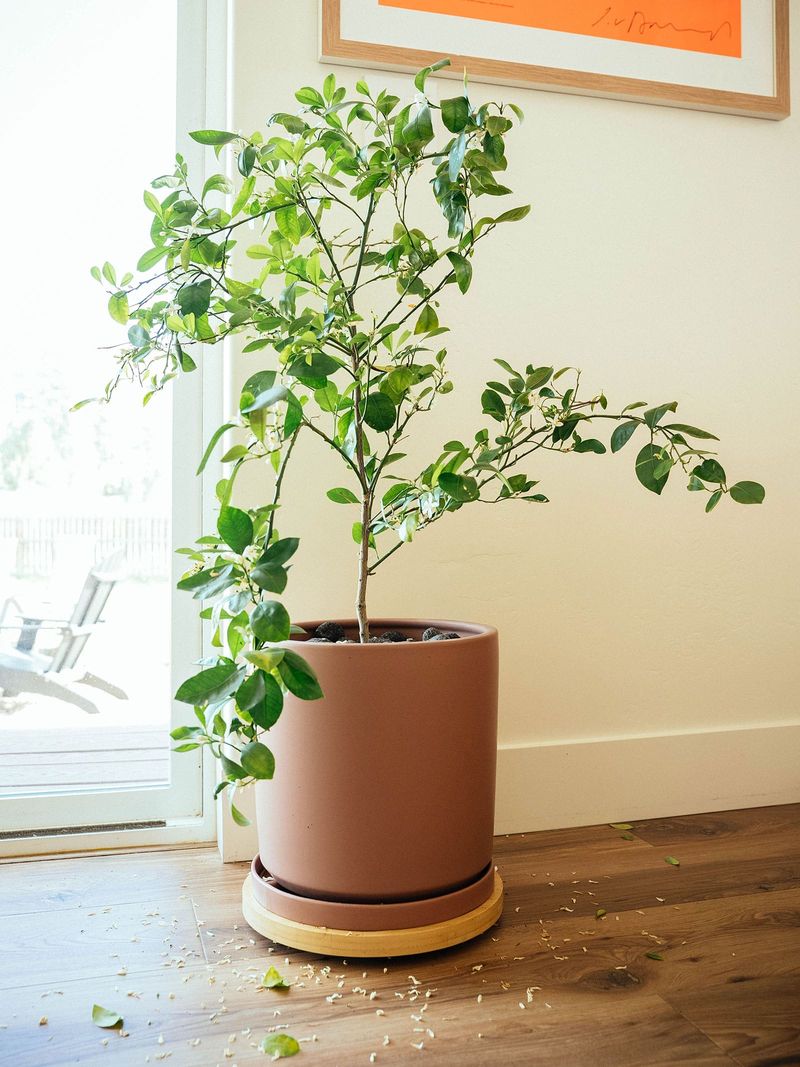
Finding a handful of pea-sized lemons on the floor can feel alarming, but it is often normal. A citrus tree sets more fruit than it can carry, so it sheds the extras.
UC IPM guidance on citrus fruit drop notes that this small-fruit drop can continue until the fruit are about half an inch across.
So a few fallen fruitlets on their own do not prove that your watering or any other habit is wrong. What matters more is the pattern.
Is the loss a small trickle, or is nearly every fruit and flower falling within a short stretch?
Take a quick look at the whole picture. Note how big the fallen fruit are, how many you find, and whether the leaves still look green and firm.
Then think about what has changed lately, such as moving the pot, a cold draft, or an unusually dry stretch. Those clues help you decide where to look first, without guessing at a single cause.
Water stress is one possibility, not a diagnosis
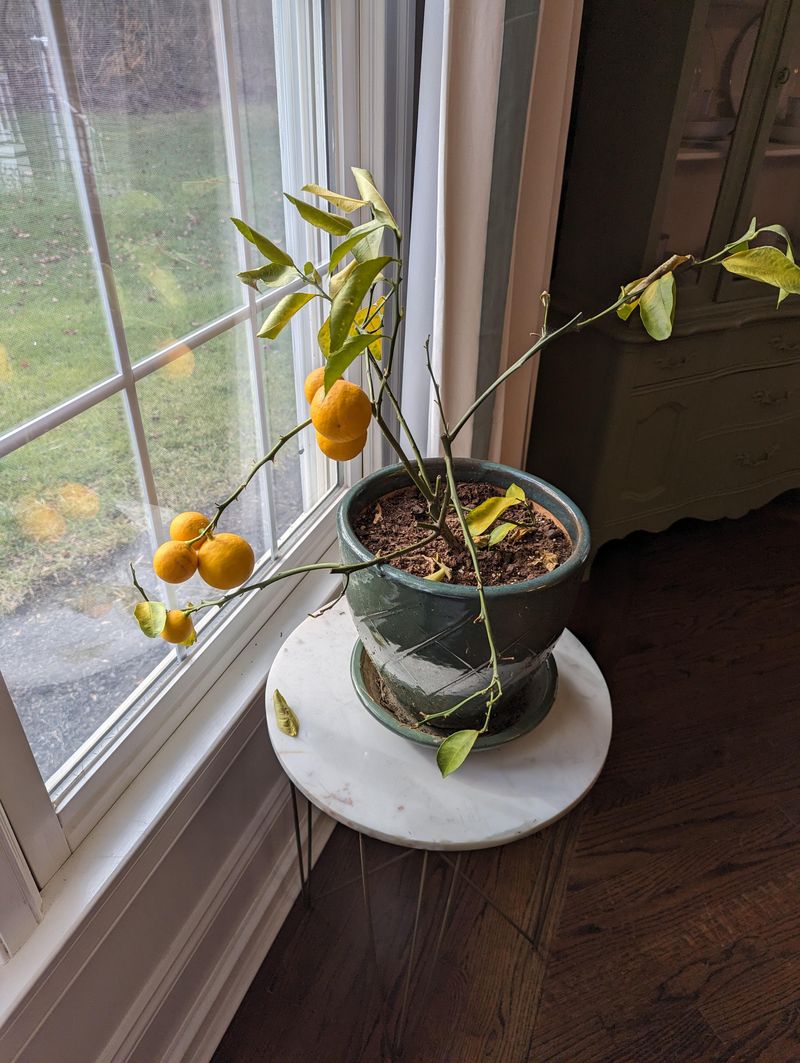
Drought stress is one of the things that can lead to excessive fruit drop in citrus, according to UC IPM. That makes a dry-then-soaked pattern worth a look.
It does not mean it is the reason your particular tree is dropping fruit.
Both extremes can cause trouble in a pot. Mississippi State Extension cautions that a root ball that dries out completely can shrink away from the container and become hard to rewet.
At the other end, a mix that stays saturated for long stretches is a common container citrus problem.
Natural shedding, low light, and sudden changes in temperature can look just the same from the outside. So before changing anything big, check the mix and the conditions around the tree.
Think of watering as one suspect on a short list, not the final verdict.
Check whether the mix is dry below the surface
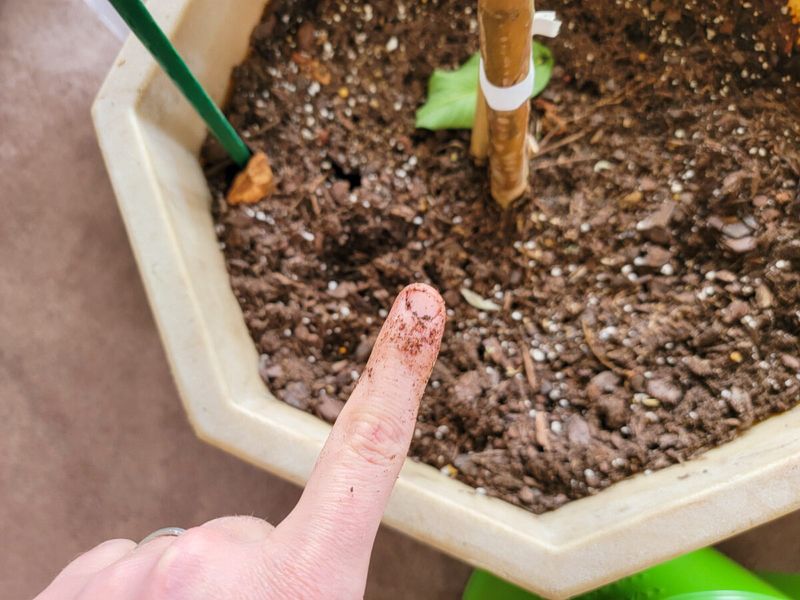
Surface looks can fool you. The top of the mix may appear dry while the pot below is still damp, or it may look dark and moist while the roots are thirsty.
Skip the calendar and use your finger instead.
Push a finger about an inch into the mix. Texas A&M container citrus guidance advises letting roughly the top inch of potting medium dry before watering.
If that inch feels dry and crumbly, it is time to water. If it feels cool and damp, wait and check again later.
You do not need to wait for the whole root ball to turn bone dry. That is the point of the upper-inch check, which gives you a margin of safety.
A wooden skewer left in the pot or lifting the pot to judge its weight can add extra clues, especially for deep containers.
Water thoroughly, then let excess drain
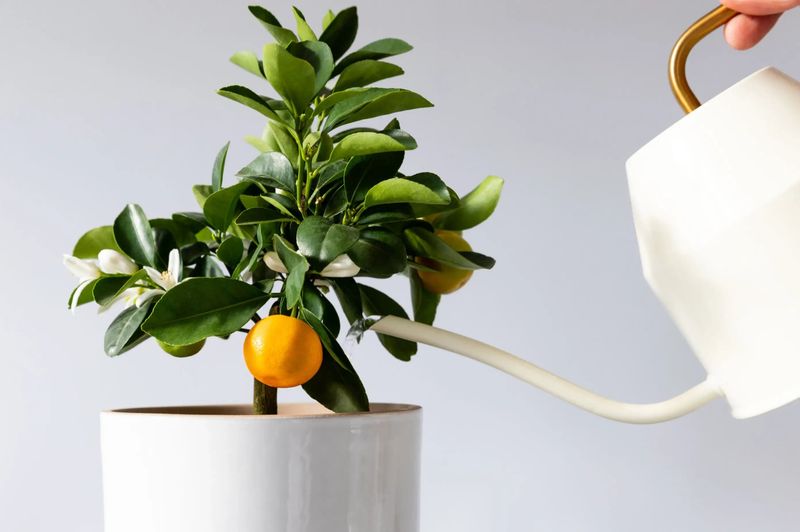
Once that upper inch has dried, give the pot a real drink. Pour slowly so the water soaks in rather than racing down the sides, and keep going until it runs out of the drainage holes.
Texas A&M guidance supports watering thoroughly and letting the excess drain away.
Then empty the saucer. A pot sitting in a pool of water keeps the lower mix saturated, and overwatering is a common problem with container citrus.
Many gardeners water in a sink or tub and let the pot drip for a while before returning it.
The aim is a middle path. You are avoiding a completely dry root ball, which Mississippi State Extension says can be hard to rewet, and you are avoiding prolonged saturation.
The goal is not a constantly wet pot. How much water you need depends on your pot, so rely on the drainage holes as your signal.
Adjust how often you check the pot
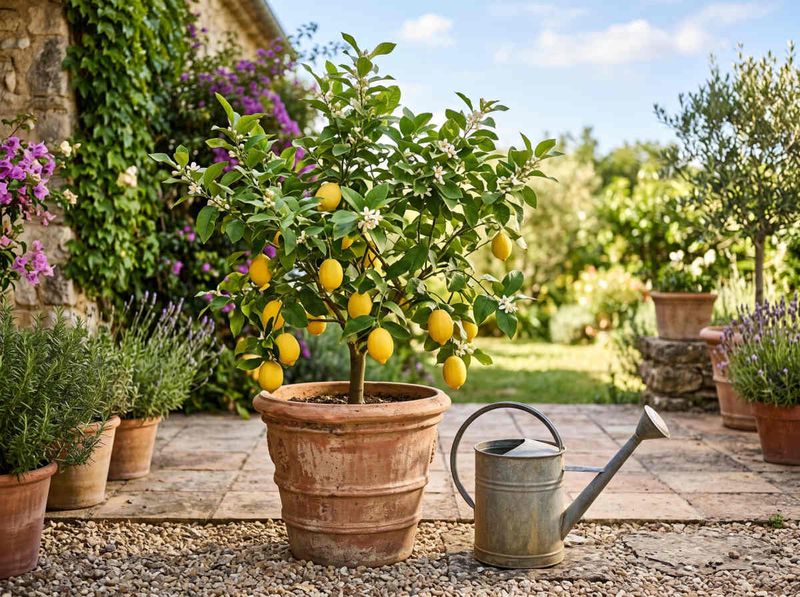
A friend’s lemon tree may need water twice as often as yours, and that is fine. Several things change how fast a pot dries out.
Mississippi State Extension points to container material, pot size, and potting medium as key factors.
Terracotta breathes and dries faster than glazed ceramic or plastic. A small pot holds less water than a large one.
A coarse, fast-draining mix dries sooner than a dense one.
Season matters too. Indoors in winter, a tree usually grows more slowly, so it uses water more slowly.
A warm room near a heating vent can pull moisture out faster, though. Texas A&M recommends watering as needed rather than on a fixed schedule.
So check often enough to catch the moment the upper inch dries, perhaps every few days at first, and let the mix tell you the rhythm of your own pot.
Review light and sudden environmental changes
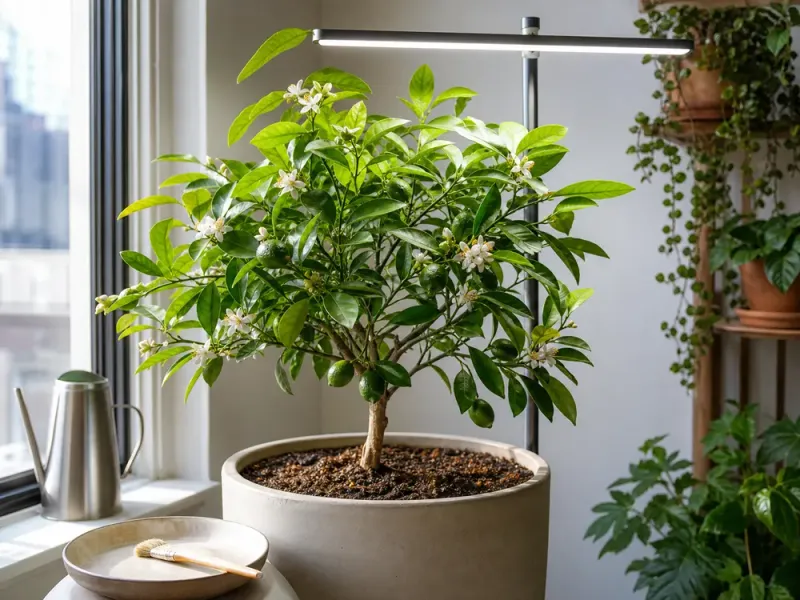
Watering is only part of the story. University of Wisconsin Extension reports that citrus needs plenty of direct light to produce fruit, and that abrupt environmental changes can cause flowers and young fruit to drop.
Walk around your tree with that in mind. Is it in the brightest window you have?
Did you recently move it, bring it in from outdoors, or park it near a cold glass pane or a heating vent? UC IPM also lists sudden temperature changes among the possible contributors to excessive drop.
Keep expectations realistic too. UF/IFAS says Meyer lemons can be grown in containers or indoors but are unlikely to fruit when kept inside.
Good light and steady conditions may help, yet they cannot promise a crop or stop every fruit from falling.
Use a steady check-based routine, without expecting guarantees
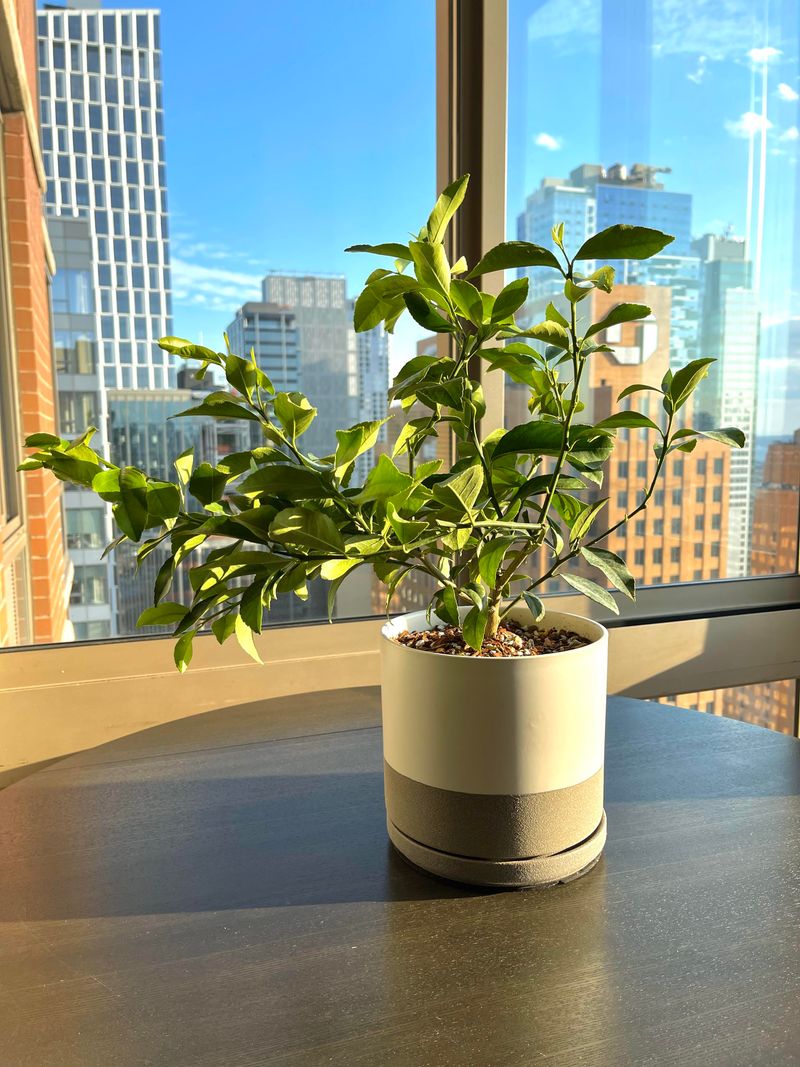
Your routine boils down to a short loop. Check the mix, water when the upper inch is dry, let the extra drain, and keep the root ball from either drying out completely or sitting soaked.
Texas A&M guidance backs this approach for container citrus.
Keep in mind that normal shedding will still happen, and indoor light and temperature still count.
A calmer pot is simply one less stress for your tree to juggle.