
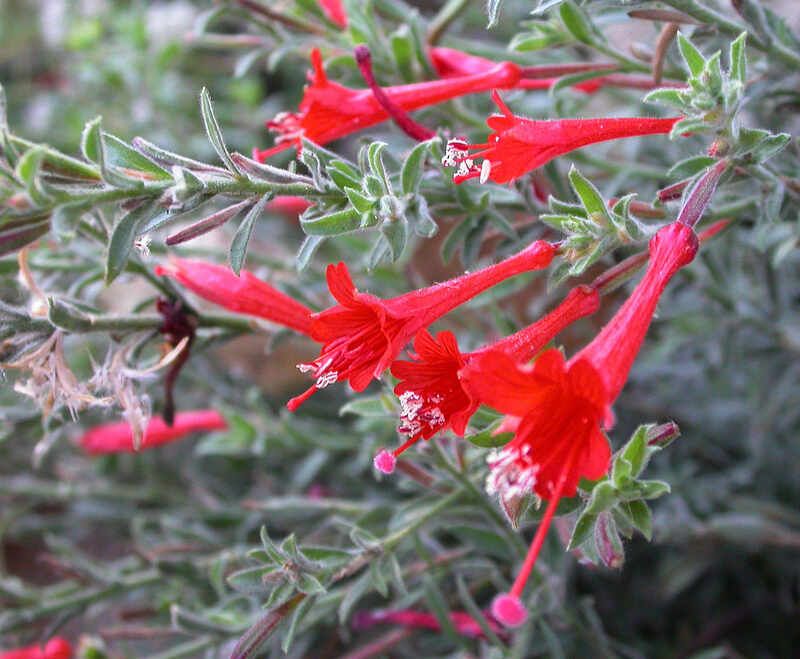
When California fuchsia starts winding down in fall, hummingbirds in your yard may have fewer natural nectar sources to visit. Woolly blue curls, a fragrant native shrub adapted to California’s dry-summer climate, can potentially fill some of that gap in the right garden.
The two plants work best as partners in a diverse habitat, not as a guaranteed relay race where one picks up exactly where the other leaves off. If your yard has a sunny, well-drained spot, woolly blue curls is worth a serious look.
Woolly blue curls can complement California fuchsia in the right garden
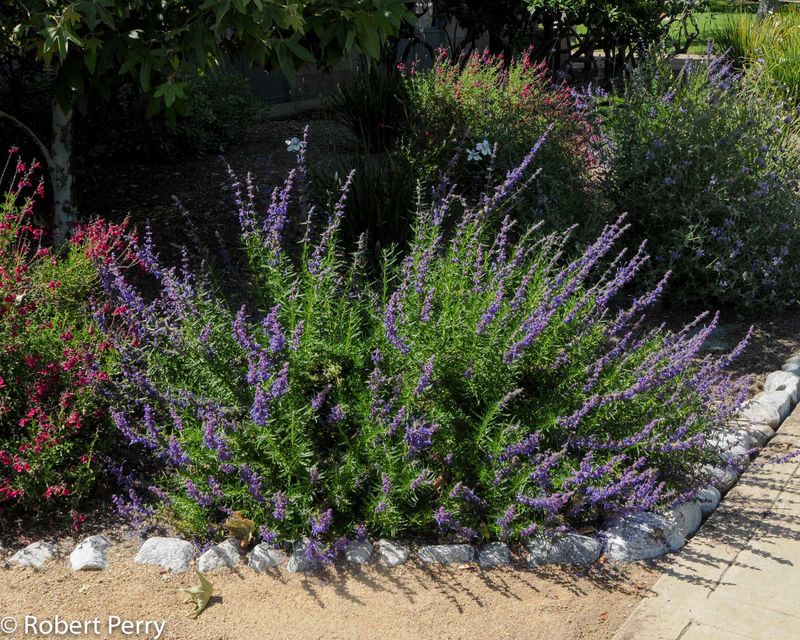
Woolly blue curls, known scientifically as Trichostema lanatum, is a California-native, evergreen shrub that grows naturally in chaparral habitat across much of the state. Calflora’s species record confirms it is endemic to California and northern Baja California, meaning it evolved here and is adapted to conditions that many imported ornamentals simply cannot handle long-term.
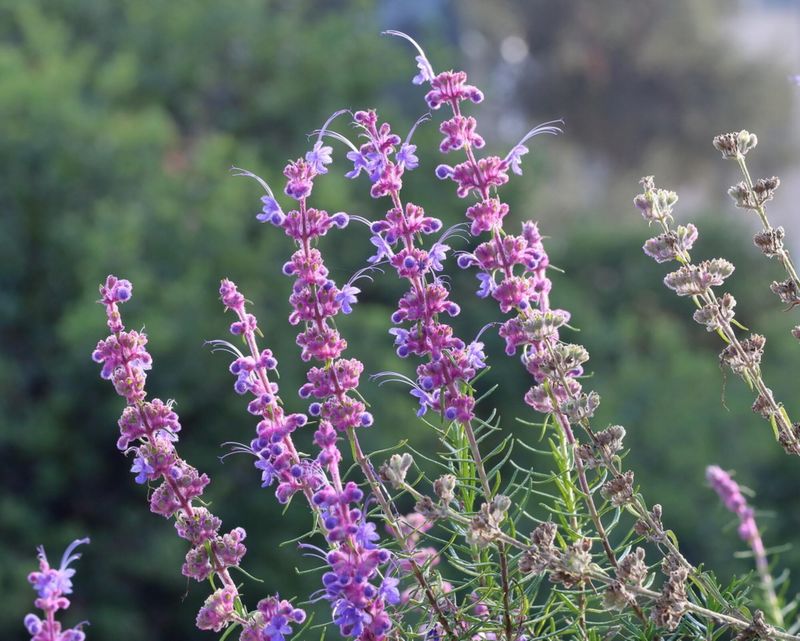
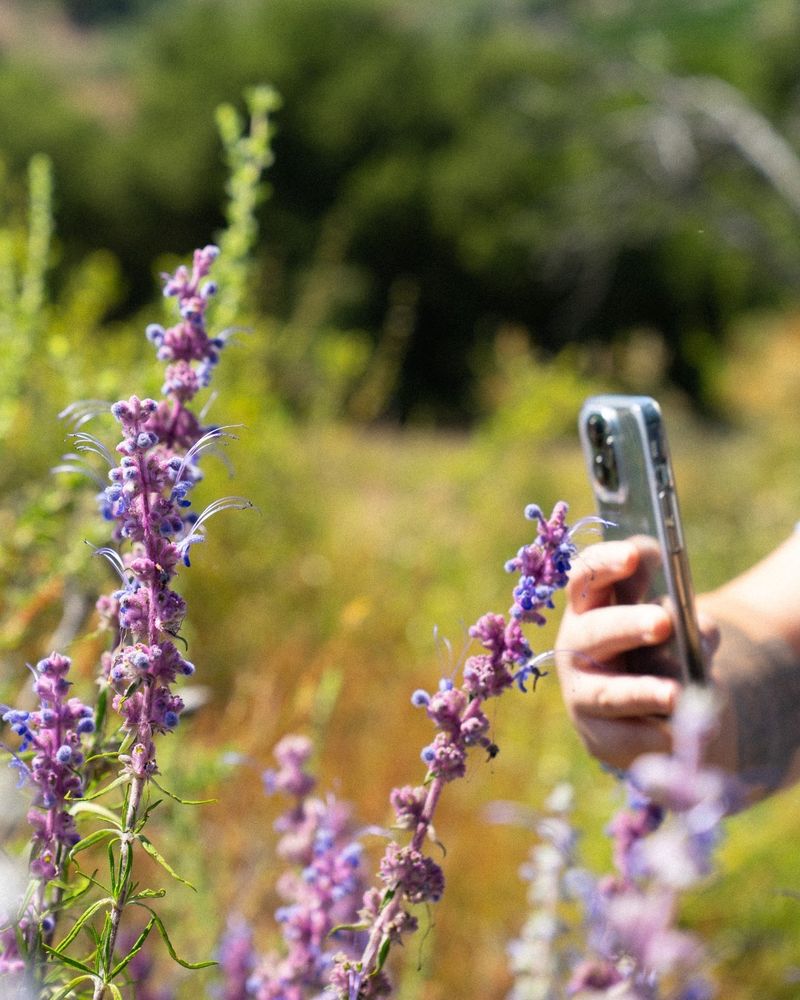
Its narrow, aromatic leaves, woolly stems, and fuzzy blue-to-purple flower clusters give it a distinctive look that stands out in any native planting.
At maturity, the shrub typically reaches around 3 to 5 feet tall and wide, depending on the site and plant form. UC Master Gardener guidance from Contra Costa describes it reaching 5 feet in both directions, so gardeners should plan for a fairly substantial shrub rather than a compact filler.
The San Diego Zoo plant profile echoes that size estimate and highlights the plant’s strong appeal to hummingbirds.
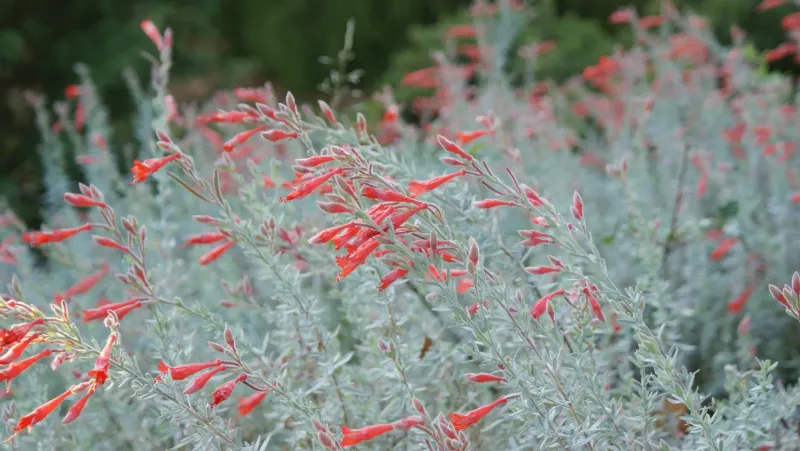
California fuchsia (Epilobium canum) is a reliable late-summer and fall nectar producer, and UC Master Gardener coverage of California fuchsia confirms its reputation as one of the best native plants for supporting hummingbirds heading into the cooler months. Woolly blue curls can serve as a complementary shrub that potentially provides nectar at a different point in the season, depending on your region and conditions.
What the evidence does not support is the idea that hummingbirds reliably chase woolly blue curls the moment fuchsia fades. Birds visit both plants when they are blooming and accessible, but no controlled research documents a specific behavioral handoff between the two.
Treat them as useful companions in a thoughtfully planted yard rather than as a guaranteed sequence.
Bloom timing may overlap rather than create a dependable handoff
California fuchsia typically starts blooming in summer and carries its orange-red flowers well into fall, with mild coastal locations sometimes seeing color into November. UC Master Gardener coverage of California fuchsia confirms this summer-to-fall pattern, noting that the plant commonly dies back or goes dormant in winter once temperatures drop and day length shortens.
Woolly blue curls is trickier to pin down. UC Contra Costa Master Gardener material places its bloom period in fall, winter, and spring, which would make it a potential successor to California fuchsia in some gardens.
However, the Pollinator Partnership’s California hummingbird guide lists its flowering from May through August, pointing toward spring and early summer instead.
Other California horticultural sources place it somewhere in between, suggesting that the actual bloom window shifts depending on the specific plant form, the local climate, the plant’s age, and how much sun and drainage the site provides. A gardener in coastal San Diego may see flowers at a completely different time than one in the inland foothills of the Sierra Nevada or the Central Valley.
UC ANR’s bird-friendly garden guidance reinforces a broader principle: planting natives with staggered bloom periods creates a more dependable nectar calendar than relying on any single species. The practical takeaway is that woolly blue curls may bloom before, during, or after California fuchsia in your specific yard.
The best way to find out is to plant both, observe them over a full season, and use that local data to refine your habitat planting over time. Overlap is possible, a clean handoff is not guaranteed, and regional variation makes any single statewide schedule unreliable.
Match the shrub to a sunny, summer-dry, well-drained site
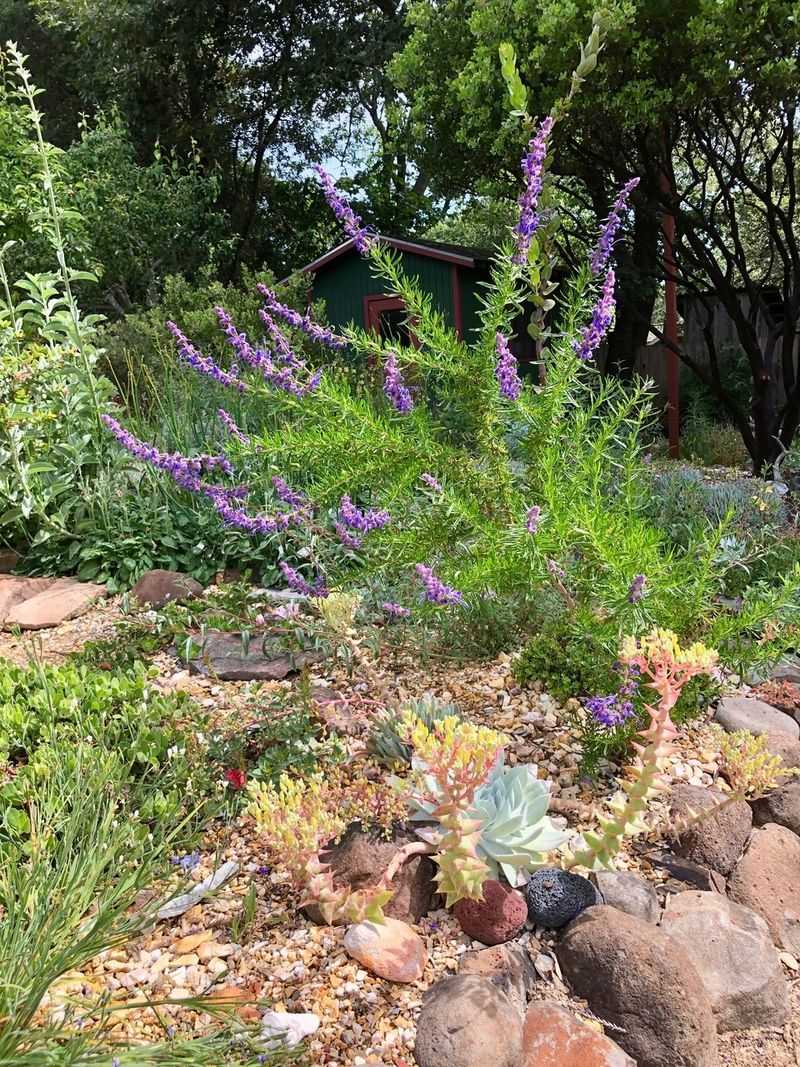
Before purchasing woolly blue curls, take an honest look at the spot you have in mind. The shrub performs best in full sun to part shade, and it genuinely needs a site that dries out between waterings.
UC Master Gardener guidance classifies it as very low water under WUCOLS criteria once established, which reflects its chaparral origins, where soils drain quickly and summer rain is rare.
Heavy clay that holds moisture for days after rain is one of the most common reasons woolly blue curls fails in California gardens. The roots need air as much as water, and prolonged saturation during warm months can cause rapid decline.
UCANR planting guidance recommends addressing poor drainage through site selection, mounding the planting area slightly, or building a raised bed rather than automatically amending clay with large quantities of compost or fertilizer.
Sandy loam, decomposed granite, or naturally rocky hillside soil are the kinds of conditions where this shrub thrives. The San Diego Zoo plant profile highlights its affinity for exactly these chaparral-type substrates.
A slope or raised area that sheds water naturally is often a better choice than a flat, compacted lawn area that has been amended over the years with organic material that retains moisture.
Plan for the plant’s mature footprint from the start. At 3 to 5 feet tall and wide, woolly blue curls needs enough room to grow without being crowded against a fence, a wall, or other shrubs that would reduce airflow around its stems.
UC Sonoma Master Gardener advice on growing natives notes that good air circulation around chaparral plants reduces disease pressure and keeps foliage in better condition through the dry season.
Plant during the cool season and plan for root establishment
Timing the planting correctly gives woolly blue curls its best chance. Fall through late winter is the broadly recommended window for most California natives, and the logic is straightforward: cooler air temperatures reduce stress on newly planted roots, and natural winter rainfall can do much of the irrigation work for you.
UCANR native planting guidance supports this seasonal approach, noting that fall planting allows roots to establish before the heat of summer arrives.
That said, fall planting does not guarantee success on its own. Local soil conditions, drainage quality, exposure to afternoon sun, and the size of the plant you purchase all affect how quickly roots anchor and spread.
A small four-inch pot planted in October in a spot with partial afternoon shade will behave differently from a five-gallon plant set into a south-facing slope in December.
UC Sonoma Master Gardener guidance recommends selecting a planting spot that already meets the plant’s sun and drainage needs rather than trying to engineer those conditions after the fact. Measure the mature footprint, clear competing weeds and grass from the area, and avoid digging in soil that is still waterlogged from recent rain.
UCANR advice on native plant establishment suggests settling the crown of the plant slightly above grade in heavy soils to help water drain away from the stem rather than pooling at the base.
After planting, a two-to-three-inch layer of mulch pulled back slightly from the stem can help moderate soil temperature and slow moisture loss during the first dry months.
Let drought tolerance develop gradually
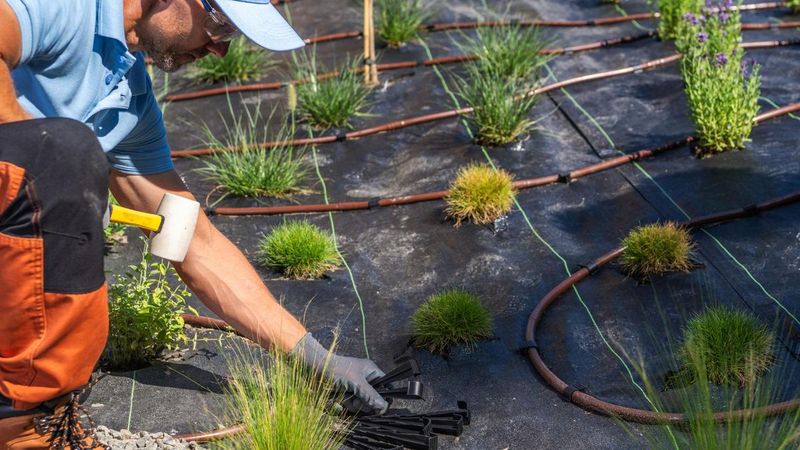
One of the most common mistakes with California natives is treating them as zero-water plants from the moment they go in the ground. Woolly blue curls earns its low-water reputation after it has established a root system capable of finding moisture deep in the soil, and that process takes time.
UC Master Gardener guidance on native plant care recommends keeping new plants moist but not waterlogged during their first season, then gradually shifting toward slower, deeper, less-frequent irrigation as the root zone expands.
How often you water depends on factors specific to your yard: soil texture, how quickly it drains, how much direct sun the plant receives, ambient temperatures, and the size of the plant you started with. A plant in sandy soil on a south-facing slope in the Central Valley needs different care than the same species in partial shade near the coast.
UC IPM guidance on irrigating trees and shrubs recommends checking soil moisture a few inches below the surface rather than watering on a fixed schedule, because conditions change week to week.
UCANR summer care guidance for California natives warns specifically that many chaparral-adapted plants, including summer-dry natives like woolly blue curls, can develop root problems when the soil stays persistently wet during warm weather. Standing water around the root zone in July or August is one of the quickest ways to lose an otherwise healthy plant.
Once the plant has been in the ground for a full year or two and shows consistent new growth, you can begin reducing irrigation frequency. WUCOLS IV classifies woolly blue curls as very low water at maturity in most California climate zones, meaning occasional deep soaks during extended dry spells are typically enough to keep a well-established plant healthy.
Getting to that point requires patience and attentive watering during the establishment window, not neglect.
Build a hummingbird habitat instead of relying on one shrub
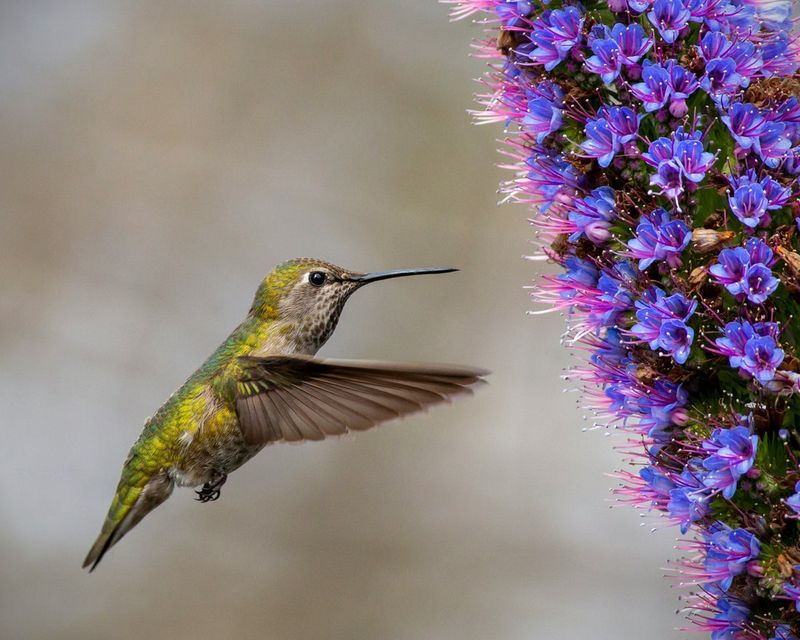
A single shrub, however attractive to hummingbirds, cannot carry the full weight of a functional habitat. CNPS hummingbird gardening guidance recommends combining California natives with staggered bloom periods so that nectar is available across more of the year, rather than concentrating in one short window.
Woolly blue curls and California fuchsia are a reasonable pairing, but adding other natives such as salvias, monkeyflowers, or penstemons appropriate to your region gives hummingbirds more reasons to stay and return.
Nectar is only part of what hummingbirds need. Cornell Lab of Ornithology life history data confirms that hummingbirds consume insects and spiders as a critical protein source, particularly when raising young.
A yard that offers flowering plants but eliminates insects through routine pesticide use is working against itself. Perches, dense shrubs for cover, and a shallow water source round out a habitat that hummingbirds can actually use for shelter and daily activity, not just a quick fuel stop.
Audubon’s native plant research makes a clear case that native plants support the full food web hummingbirds depend on, including the insects that live on and around them. Audubon’s California nectar source list can help you identify other region-appropriate options to plant alongside woolly blue curls and California fuchsia.
A supplemental feeder is optional, not essential, if your goal is to provide natural nectar through plants. Audubon’s hummingbird yard guidance identifies native plants as the preferred foundation.
If you do choose to use a feeder, Cornell Lab feeding guidance recommends a solution of one part white sugar to four parts water, no honey, no artificial sweetener, and no red dye, with regular cleaning and nectar replacement, especially in hot weather.
Avoid wet soil, routine pesticides, and careless fire-safety claims
Three specific mistakes can undermine an otherwise well-planned woolly blue curls planting. The first is wet soil.
UCANR summer care guidance is clear that chaparral natives adapted to dry California summers can suffer serious root damage when the soil stays saturated during warm months. If your site has clay soil that drains slowly or a low spot where water collects after irrigation or rain, woolly blue curls is not a good fit without a drainage solution such as a raised bed or mounded planting area.
The second mistake is assuming that a hummingbird-friendly yard and routine pesticide use are compatible. Audubon’s hummingbird yard guidance recommends minimizing or eliminating pesticide use because hummingbirds consume insects and spiders, especially when feeding nestlings.
Spraying to protect a plant while simultaneously eliminating the prey that hummingbirds need defeats the purpose of planting native nectar sources in the first place.
The third area requiring caution is fire safety. Woolly blue curls appears on some local fire-adapted plant lists, but no plant is automatically safe near a structure, and the term fireproof should never be applied to any garden plant.
CAL FIRE’s defensible space program emphasizes that what matters is the combination of plant placement, spacing between plants, removal of dead wood and dry material, slope, and local zone requirements. California Board of Forestry defensible space zone rules specify different requirements for the zones closest to a structure versus those farther away.
Before planting woolly blue curls near your home in a fire-prone area, check your local requirements and consult community wildfire protection guidance for your specific region. Responsible placement, regular removal of dead stems, and adequate spacing between shrubs are the factors that matter, not a plant’s label or reputation alone.
Pair the natives and observe your garden’s actual bloom pattern
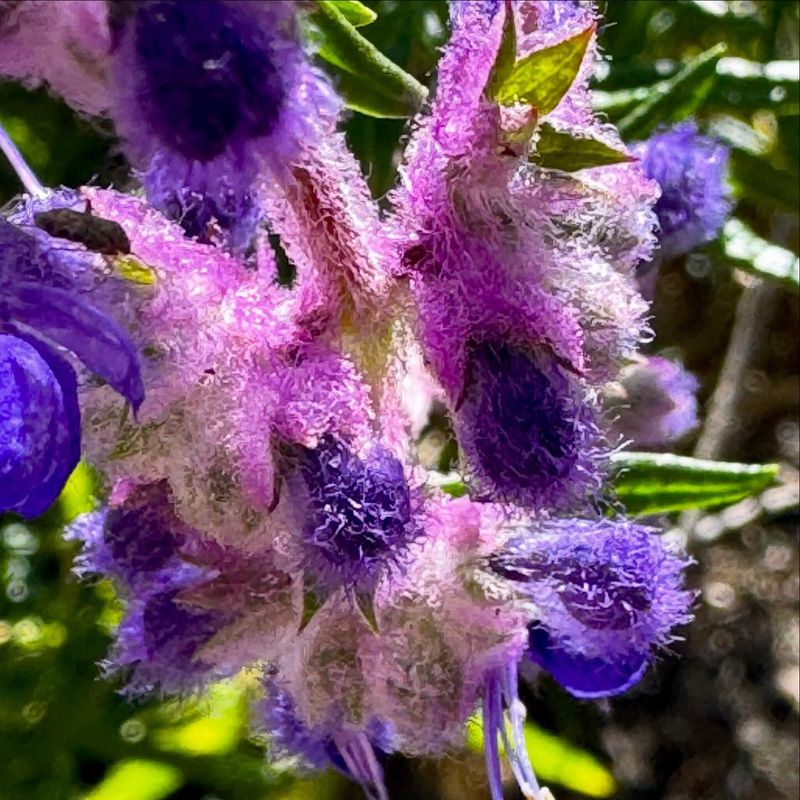
The most useful thing you can do after planting woolly blue curls alongside California fuchsia is pay attention to what actually happens in your yard. Bloom timing varies enough between regions, microclimates, and individual plants that your own observations over one or two full seasons will tell you more than any statewide generalization.
UC Master Gardener material on woolly blue curls notes the fall-through-spring bloom potential, but local conditions shape the actual outcome.
Before planting, confirm that your site offers genuine full sun and fast-draining soil. Provide consistent establishment irrigation during the first season, then ease off as the root system develops.
Keep the planting pesticide-free so hummingbirds can find the insects they need alongside the nectar. UC ANR bird-friendly garden guidance reinforces that a diverse planting with multiple natives in bloom at different times is more supportive than any single plant, however well-chosen.
A yard with woolly blue curls, California fuchsia, and a few other region-appropriate natives in a pesticide-conscious, well-drained setting gives hummingbirds genuine resources without requiring a feeder, a fixed bloom calendar, or a guaranteed handoff between species. Audubon’s hummingbird yard guidance puts it simply: native plants, thoughtfully combined, do the work.
The hummingbirds will tell you, visit by visit, which plants in your specific garden are earning their place.