
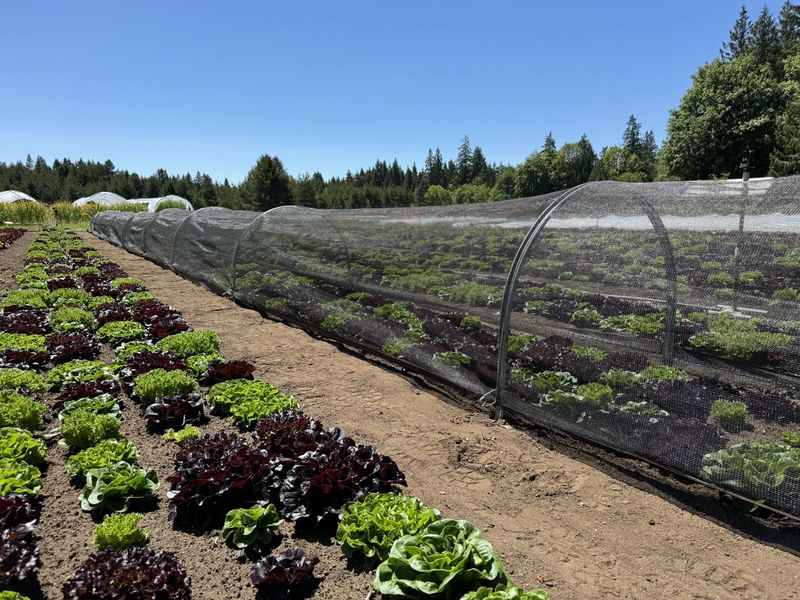
You planted lettuce for crisp, mild salads, and then a stretch of unexpectedly warm days rolls in. Leaves that tasted sweet last week can start to worry you, and a tall flower stalk is the thing every lettuce grower dreads.
Warm weather can stress lettuce, but a bad outcome is not guaranteed. A few simple checks on shade, water, variety, and harvest timing can help you get the most from your plants.
Fall is lettuce season, but local weather still matters
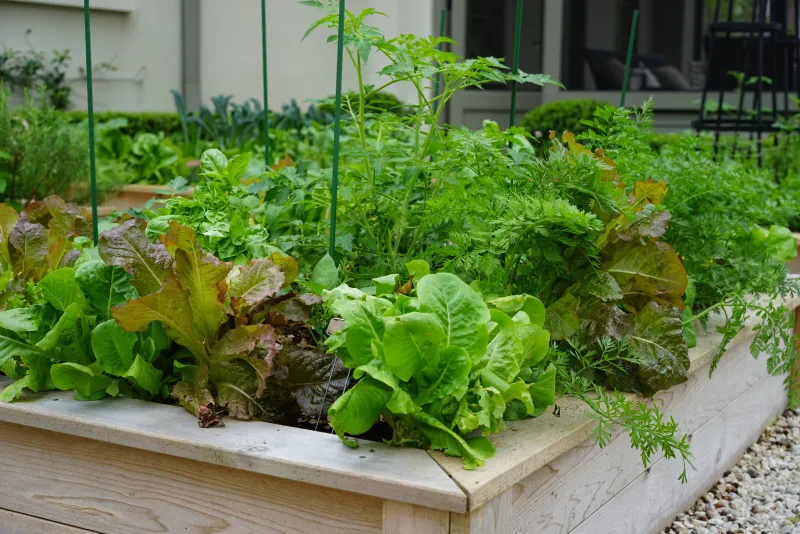
Autumn is a good time to grow lettuce in the South, even when the afternoons still feel like summer. UF/IFAS describes outdoor lettuce in Florida as a cool-season crop grown from October through April.
So a November planting or harvest in Florida is right on schedule.
Texas has its own calendar. For Central Texas, Texas A&M guidance lists September planting and November harvest for looseleaf lettuce.
Treat that as one regional example, not a schedule for the whole state, since Houston, the Panhandle, and the Rio Grande Valley all differ.
Local weather still decides how smooth the season goes. In west-central and southwest Florida, the National Weather Service in Tampa Bay notes that warmth often lingers well into October, with the usual real cooldown arriving in November.
That is regional background, not a forecast for your yard. Check your own local forecast and keep an eye on your plants.
Separate bitterness from bolting
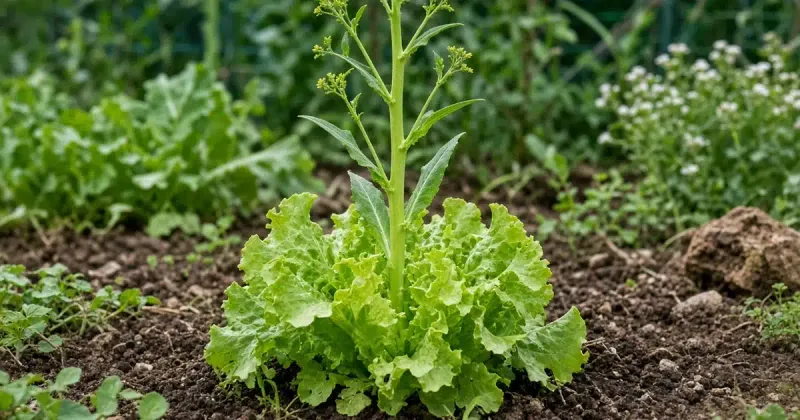
Bitter leaves and bolting often show up together, but they are two different problems. Bitterness is a flavor change.
Bolting is when the plant sends up a flowering stem and shifts from making leaves to making seed.
According to University of Minnesota Extension, heat and water stress can both contribute to bitter lettuce, and warm conditions can promote bolting. Heat is only one piece, though.
Variety and day length also matter, and a study of genetically diverse lettuce found different bolting responses among genotypes and a big role for photoperiod.
Be wary of anyone naming one magic temperature. Extension sources give different rough thresholds, and they describe effects that build over several warm days.
Use any number as a loose warning sign, since variety and growing conditions change the picture, as Delaware trials show.
A warm spell is a risk factor, not a verdict. Look for a stretched, pointed center and a milky taste to spot trouble early.
Shade may help, but results depend on the setup
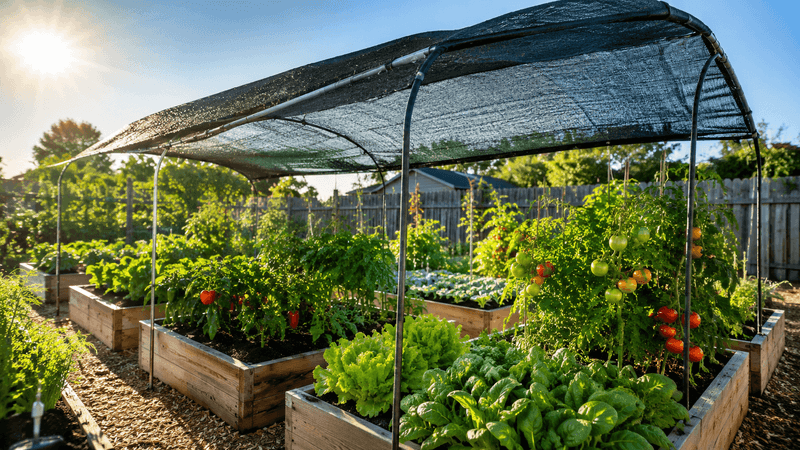
Shade cloth is worth a try when the afternoons run hot, but it is not a sure fix. The best evidence comes from very different setups than a home bed.
In Georgia, University of Georgia Extension considered 30 to 50 percent shade suitable for summer lettuce in north Georgia high tunnels, and the shaded tunnel produced more marketable lettuce than the field comparison.
Delaware results were more mixed. In spring trials, 30 percent black shade cloth reduced bitterness, but its effect on bolting varied, and some heat-sensitive varieties bolted more.
Later, summer trials with shade cloth on low tunnels showed no gain in marketable yield, and the researcher warned that low tunnels may trap heat.
Shade percentages also change with the system. Delaware Extension mentions 50 to 70 percent for very heat-sensitive crops, a different number from Georgia’s.
So no single percentage fits every Southern backyard. If you try shade, keep the sides open for airflow and watch how your own variety responds.
Keep soil consistently moist, not soggy
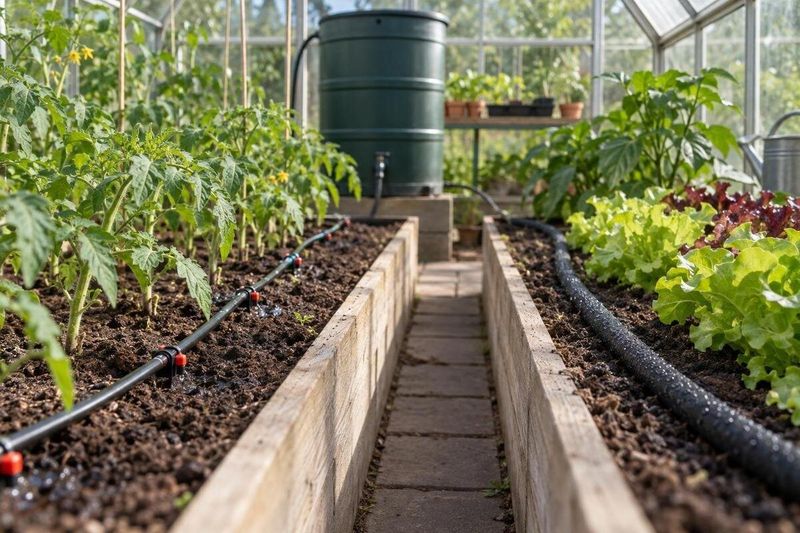
Thirsty lettuce is stressed lettuce, and stress is one thing that can nudge flavor in the wrong direction. Your finger is the best tool you have.
Push it an inch or two into the soil near the plants each morning during warm weather, and water when it feels dry rather than by a fixed calendar.
Lettuce roots are shallow, so the plants are sensitive to water stress, as Utah State University Extension explains. Drip irrigation is one option for delivering moisture efficiently, though a hose or watering can works fine for a small bed.
Soggy soil is a problem too. University of Georgia Extension advises watering as needed and avoiding poorly drained spots.
If water pools after a rain, consider a raised bed or loosening the soil with compost.
Better watering lowers one risk, but it cannot promise sweet leaves or undo bitterness that has already set in.
Choose suitable varieties and harvest before flowering
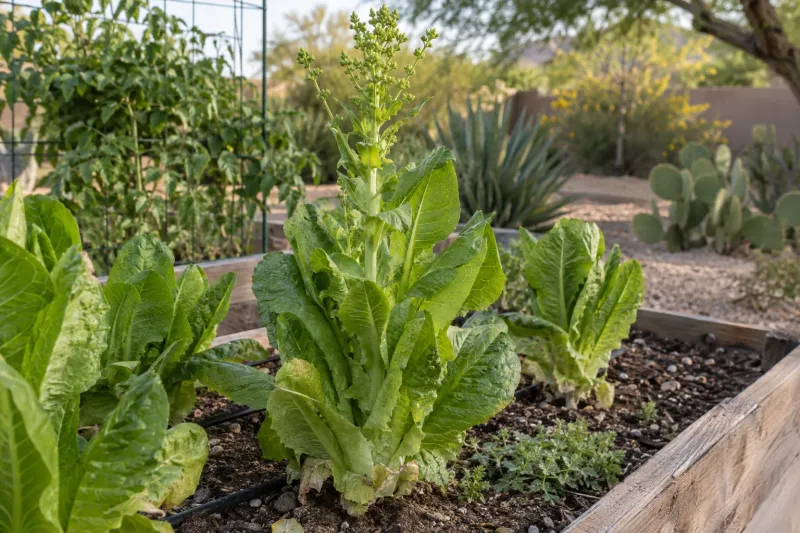
Some lettuces handle warm days better than others. UF/IFAS lists several cultivars with heat tolerance or slow-bolting traits, so check that list or ask your local extension office what grows well near you.
Seed packets often mention bolt resistance too.
Keep expectations realistic, since no variety is immune to warm conditions. A slow-bolting type simply gives you a better shot, and it works best alongside steady moisture and, if you choose, some shade.
Harvest habits matter as much as seed choice. For looseleaf types, University of Georgia Extension gives home gardeners guidance on picking outer leaves, which lets the plant keep producing from the center.
During a warm spell, pick a little more often and take the biggest usable leaves first. If the center starts to stretch upward or the leaves taste sharply bitter, harvest what is good and make room for a fresh planting.
Respond to a warm spell without expecting a guarantee
When the forecast turns warm, run through a short routine. First, check the soil with your finger and water if it is dry, without soaking the bed.
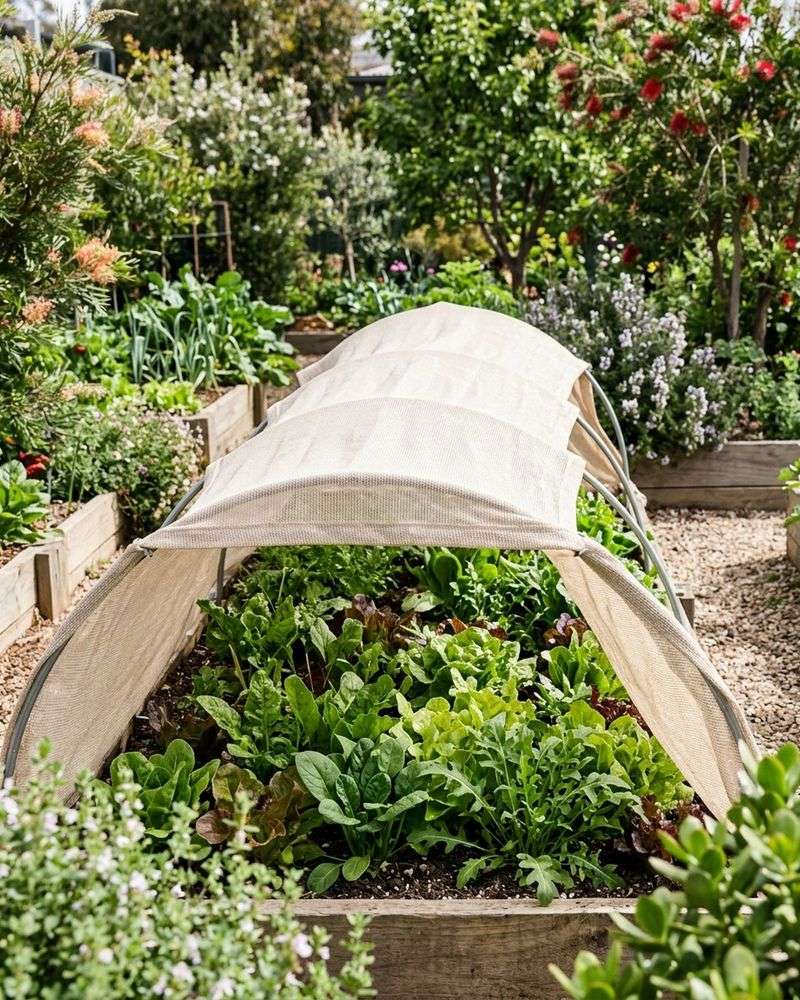
Second, consider adding shade cloth over a frame with open sides, so plants are not sealed into a heat trap.
Third, harvest usable leaves before any flower stalk appears. Picking a bit earlier than planned is a fair trade if the weather looks unsettled.
Each step may help protect quality, but none can promise sweet leaves, stop bolting, reverse bitterness, or add a set number of weeks to your harvest. Treat the results as information about your own garden, and note what worked for next fall.
Lettuce rewards the gardener who is paying attention, and a few minutes of notice often matters more than any gadget.