
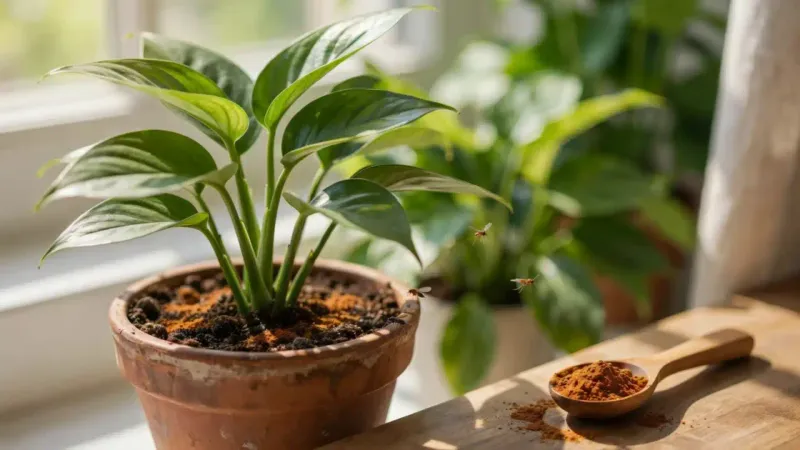
Tiny black flies hovering over a tray of tomato seedlings can ruin a gardener’s mood fast. Old potting mix gets blamed a lot, but the real story is more useful and less scary.
You do not have to bake every batch, though a few smart habits can keep your indoor seed-starting calm. Here is how to decide what to reuse, what to treat, and what to toss.
Damp, exposed mix—not reuse alone—creates gnat risk
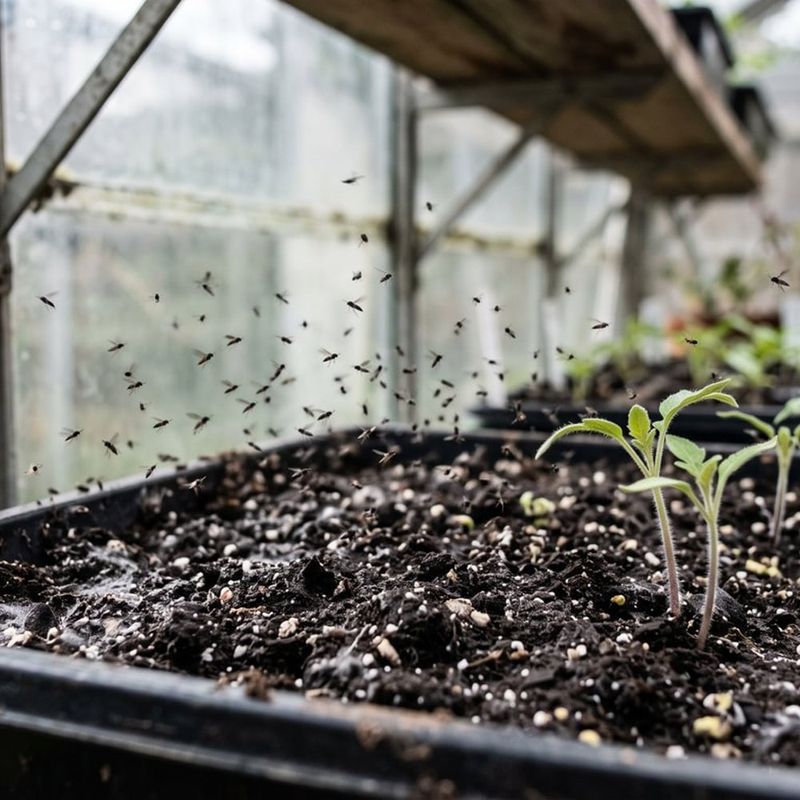
Old potting mix can carry fungus gnats, but reuse by itself does not guarantee a swarm. UC IPM guidance links these pests to moist, organic growing media, and notes that new or reused mix can become infested if it stays wet or meets gnats.
Females lay eggs in damp media, and the larvae live there. They feed mainly on fungi and decaying organic matter, and sometimes on roots.
Large numbers can injure young seedlings, which is why a tray of tomato starts deserves a close look.
Gnats can also arrive on a new plant, ride in on a pot, or drift in from outdoors. That means old mix is only one possible source, and fresh mix is not immune either.
A tray that stays soggy for days is the real welcome mat, and Cornell IPM describes the same pattern.
Baking is one tool you can choose, not a rule you must follow. The bigger levers are how wet the mix stays and whether gnats ever get access to it.
Reuse only mix from a healthy container
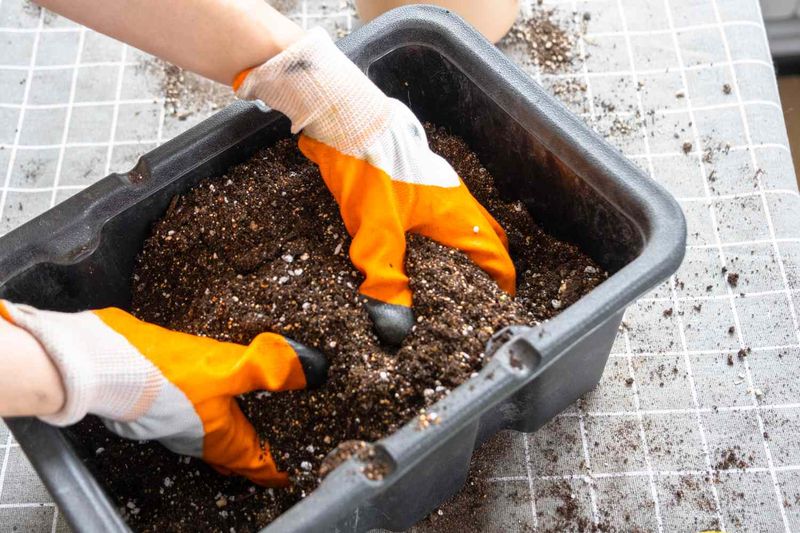
Last season’s pot of mix can be worth keeping, with limits. If the previous plants were healthy, the mix may be reusable.
If that container had disease, weeds, or insect trouble, it is smarter to let it go.
Extension advice is not identical on this point. NC State allows reuse where there was no soilborne disease.
Oklahoma State also warns against reuse after insect or weed problems. When in doubt, follow the stricter advice.
Old mix is often compacted and worn out, so it may need refreshing with new material to drain and feed well. Refreshing improves texture and nutrition, but it does not sanitize anything.
A pot that grew a diseased tomato does not become safe because you stirred in a fresh bag.
A quick check helps: smell it, look for pests or pale fungal growth, and crumble it. Sour smell, clumps, or visible bugs are your cue to skip it for seedlings.
Tomato seed-starting has a separate disease concern
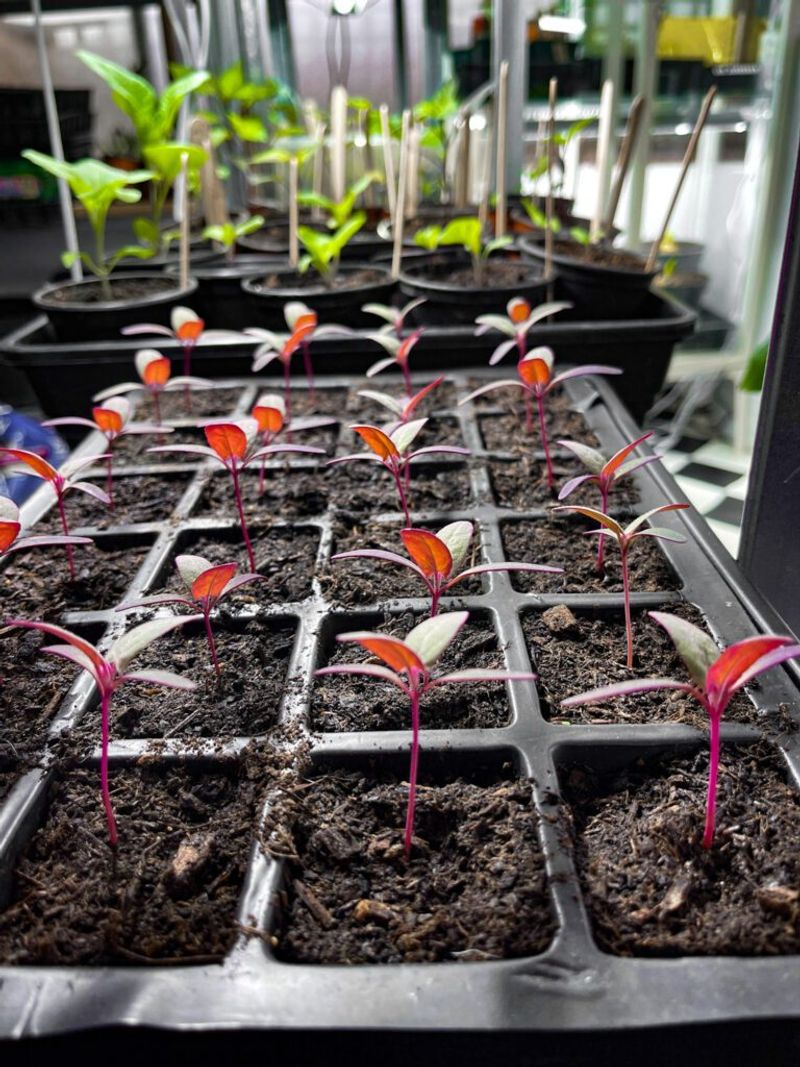
Gnats and damping-off are different problems, and it helps to keep them apart. Damping-off is a disease that can kill seeds or rot young seedlings at the soil line, often with a thin, pinched stem as the clue.
UC IPM recommends disease-free, well-drained media and clean containers. Penn State Extension gives similar advice for protecting vulnerable seedlings.
That is why fresh commercial seed-starting mix is a sensible default for tomatoes. It is a simple way to lower disease risk when seedlings are most fragile.
It is not proof that reused mix causes gnats, and it does not mean baking is required for everyone.
Scrub and rinse old trays and pots before planting, and make sure they drain. Clean containers and light, well-drained mix help with damping-off, while dry-down habits help with gnats.
You often need both.
Oven heat is an optional, controlled treatment
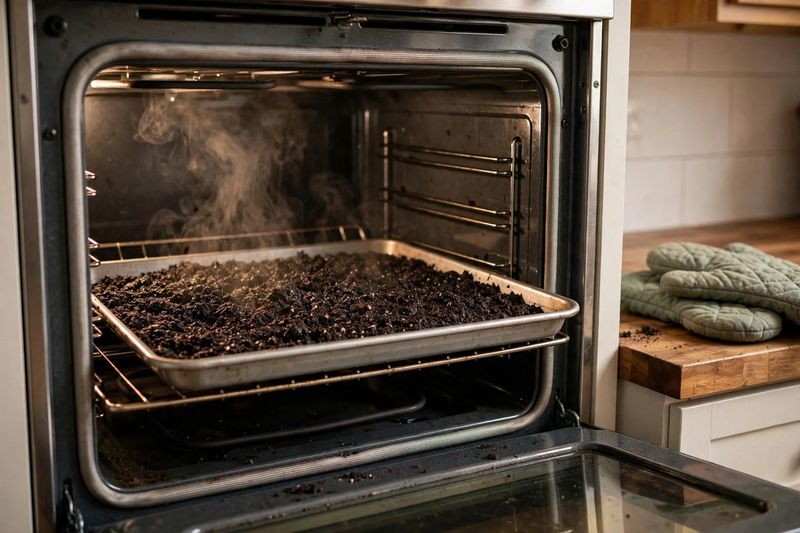
Some gardeners want extra assurance and choose to heat-treat suitable mix. If you do, follow a tested method rather than guessing.
UF/IFAS describes moistening the mix, placing it in a heat-proof container, and heating at 180 to 200°F for 30 to 60 minutes.
Check the temperature of the mix itself with a thermometer, not just the oven dial. Then let it cool thoroughly before using it.
UF/IFAS also warns that the process can smell strong, so an outdoor grill may be a better spot.
Hotter or longer is not better. UC Davis cautions that the whole batch needs to reach the target temperature, since cold spots happen, and that overheating can harm the mix and raise the risk of plant injury.
Think of this as pasteurizing, not a guarantee of sterile mix. It addresses organisms in that batch only.
Gnats arriving later, or a mix kept constantly wet, can still bring trouble back.
Bagged-mix solar treatment takes weeks
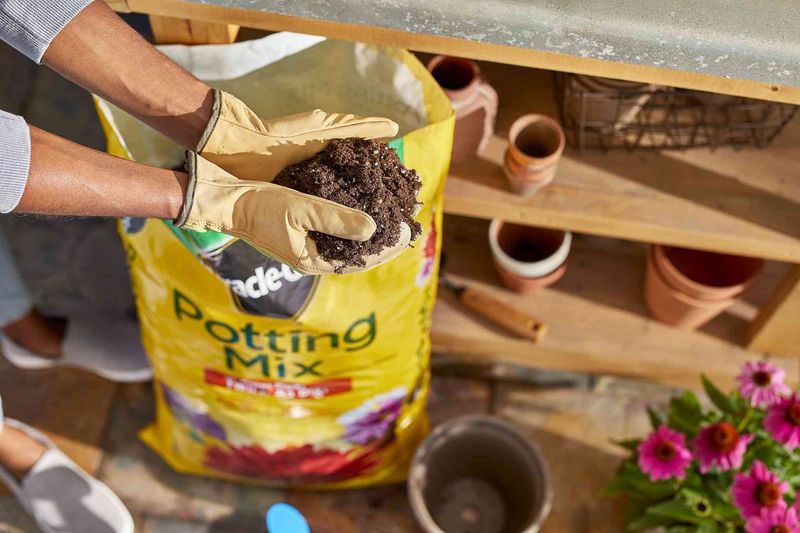
If heating mix indoors sounds unpleasant, solar treatment is a slower alternative. It needs patience, and a quick afternoon in the sun will not do it.
The UC IPM method for bagged mix is specific. Moisten the mix, keep it no deeper than about 8 inches in a plastic bag, and leave it in a sunny location for about 4 to 6 weeks.
Afterward, store it sealed to lower the chance of reinfestation.
Simply drying mix on a sunny day is not the same thing. Neither are instructions for solarizing garden beds, which use a different setup for a different job.
Treat this as its own method and follow the full steps.
Plan ahead if you want to use this approach. Start well before seed-starting time, and keep the bag closed and out of reach of rain, pets, and curious bugs.
Like oven heat, it treats the mix you put in the bag and cannot protect it from later exposure.
Dry storage and careful watering reduce opportunities for gnats
Mix that stays dry and plants that dry out between drinks give gnats less to work with. Store potting mix in a closed container so it does not soak up moisture or collect visitors.
A lidded bin in a dry garage or shed works well.
Watering habits matter just as much. Use pots and trays with drainage, avoid overwatering, and let the surface dry between waterings when the plant can tolerate it.
Tomato seedlings generally do fine with a drying-out period, and Oregon State Extension points to moisture control as a core fix.
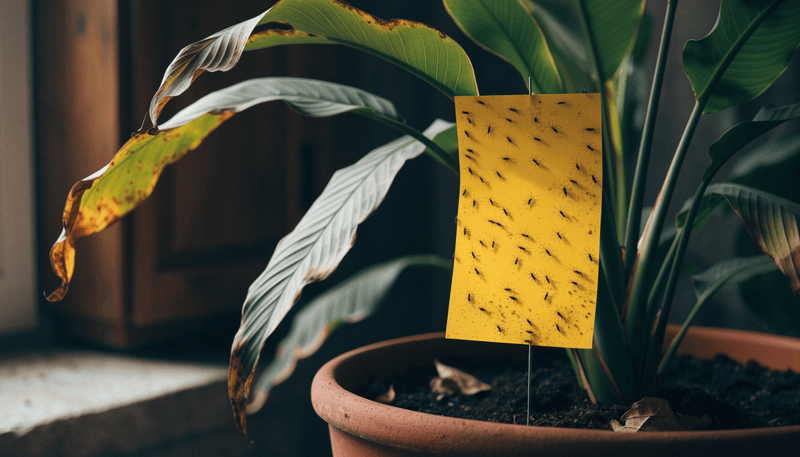
Yellow sticky traps are handy for spotting trouble early. They catch adults and show you how busy things are, as UC IPM notes.
Lay a few flat near the soil surface. They should not be your only control, since larvae stay in the mix.
These steps can cut the odds, not erase them. A gnat can still hitch a ride on a new houseplant, so keep watching.
When gnats appear, target larvae as well as adults
Spotting a few little flies is annoying, not an emergency. Adults mainly pester people and do not bite.
The worry is the larvae, because big numbers in the mix can injure seedlings, especially tender young roots.
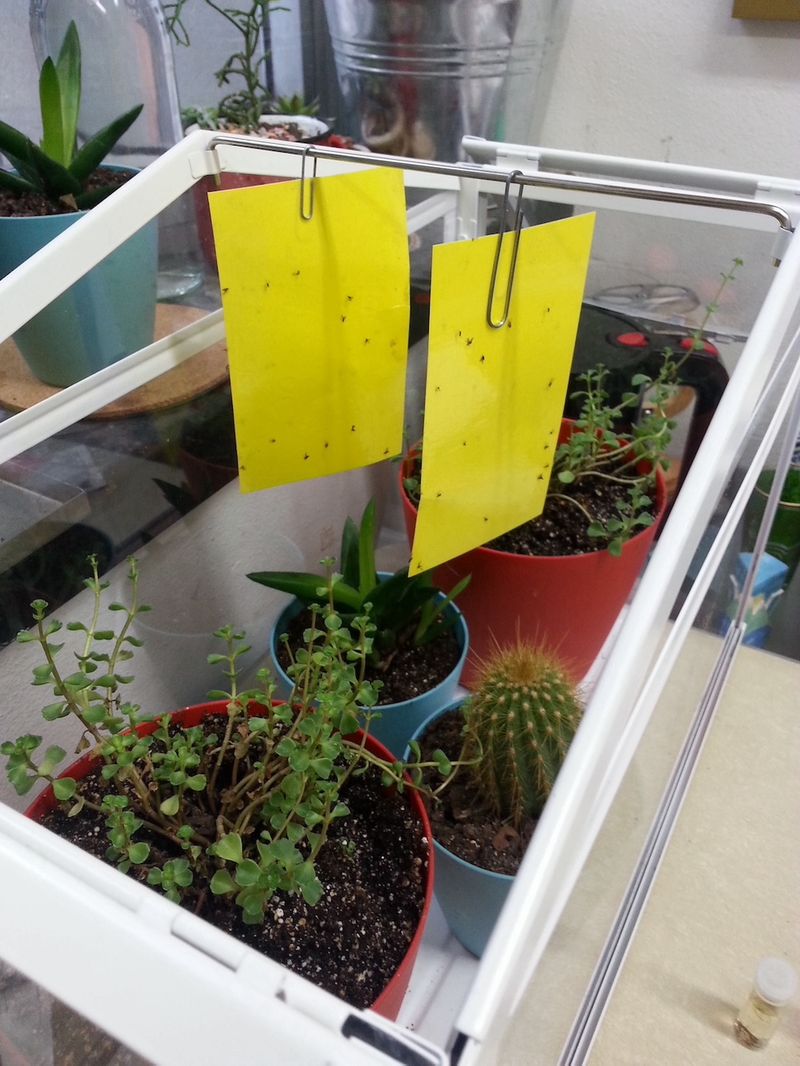
Use yellow sticky traps to monitor and catch adults, but also go after the larvae in the growing medium. UC IPM lists Bti and beneficial nematodes as options for the media.
Read and follow the product label, since directions differ.
Bti may need repeat applications, so plan on more than one round. No single treatment is guaranteed to end the problem, especially if the mix keeps staying wet.
Pair any treatment with a drier routine. Let the top layer dry out, empty saucers, and check your traps every few days.
Falling trap counts are a good sign that your plan is working, while a steady climb means it is time to adjust.
Choose the simplest suitable route for your mix
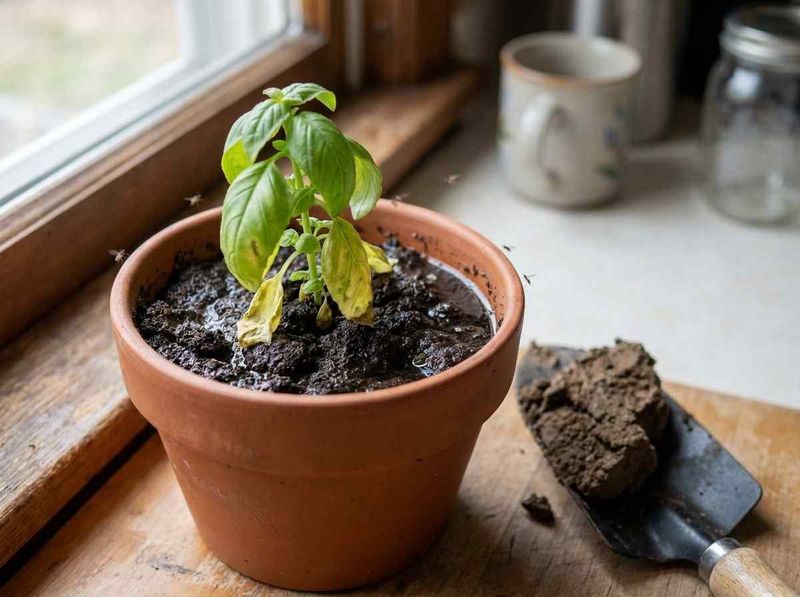
For the easiest tomato start, buy fresh, disease-free seed-starting mix and use clean containers, as UC IPM advises for damping-off. If you want to reuse, pick mix from healthy containers, as NC State allows, and keep it dry until use.
When sanitation seems worth the effort, choose controlled oven or grill heat using the UF/IFAS method, or the full multiweek solar bag method. Both are options, not requirements.
Neither treatment can block gnats that show up later or fix soil that stays soggy. A UC IPM overview frames wetness and exposure as the real drivers.
Your seedlings will not care how fancy your mix was, only how well it drains.