
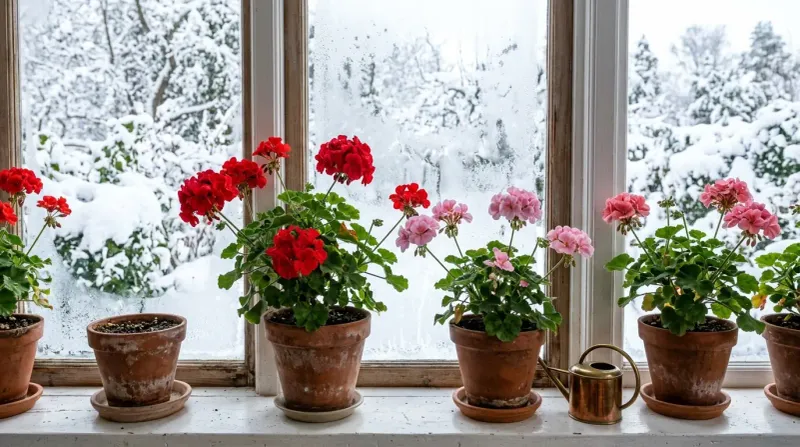
That tired pot of geraniums on your porch may be worth keeping, if you act at the right time. Most bedding geraniums are tender plants that do not handle frost well.
Saving one for next year costs far less than buying a new one, and there are three simple ways to do it. Here is how to pick a method that fits your space, your climate, and your plant.
The bedding geranium in this guide is a tender Pelargonium
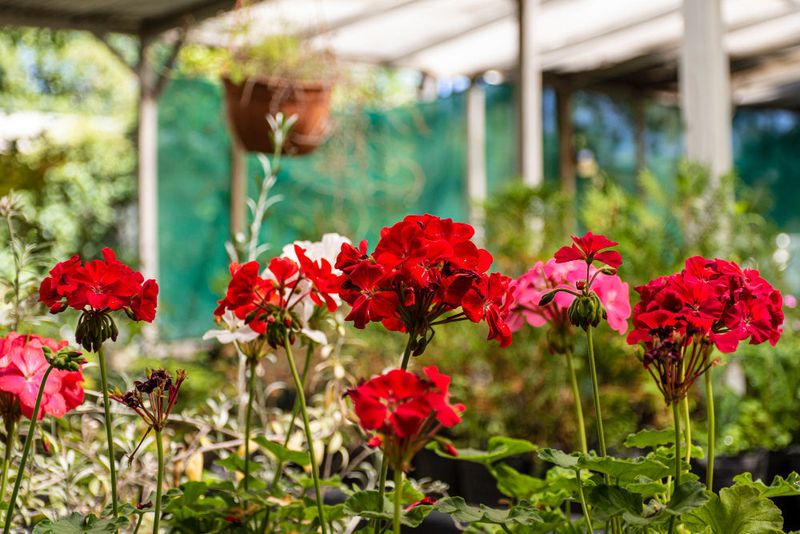
Garden centers sell two very different plants under one name. The ruffled, round-leaved plants with big pom-pom flower clusters in terracotta pots are Pelargonium, and they come from warm regions of South Africa.
True Geranium species, often called cranesbills, are hardy perennials with looser, flatter flowers that handle winter in the ground just fine.
This guide covers the tender kind only. If your plant has thick stems, scented or zoned leaves, and tight flower heads, it is almost certainly a Pelargonium.
Illinois Extension makes the same distinction and notes that common bedding geraniums are Pelargonium, while hardy cranesbills behave differently in winter.
Hardy cranesbills do not need any of the rescue steps below. Leave those in the garden and let them do their own thing.
Protect plants before frost and inspect them before bringing them in
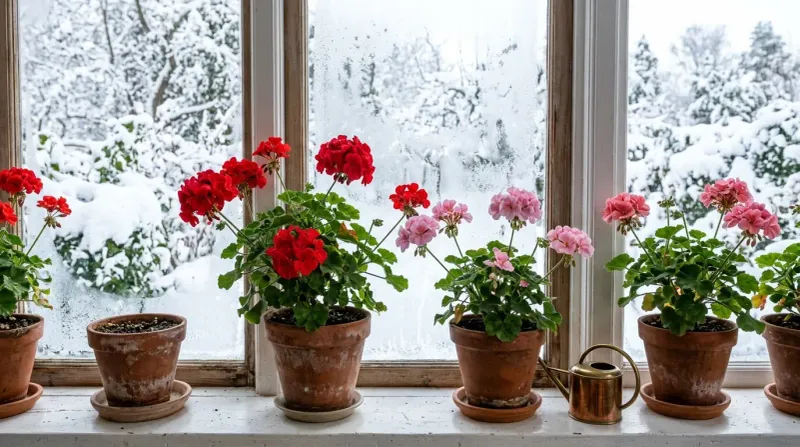
The most reliable plan is to move fast before frost arrives, not to hope a plant bounces back afterward. A plant already blackened and mushy from a hard freeze may not recover, and promising otherwise would be unfair to you.
Because frost exposure differs from the Gulf Coast to the Texas Hill Country, watch your own local forecast instead of relying on one magic temperature. Sources such as Clemson Extension give different temperatures, so the safest rule is simply to protect plants before frost.
Before anything comes inside, give each plant a close look. Check under leaves for insects, and look for spots, discoloration, wilting, or rot at the base.
Illinois Extension recommends discarding plants with these problems rather than carrying them indoors.
Root and stem rots can cause collapse, and Connecticut plant-disease guidance says recovery is unlikely once symptoms are heavy. If only one healthy shoot remains on a sick plant, a cutting from it is a better bet than the whole pot.
Bring the whole plant indoors for the simplest method
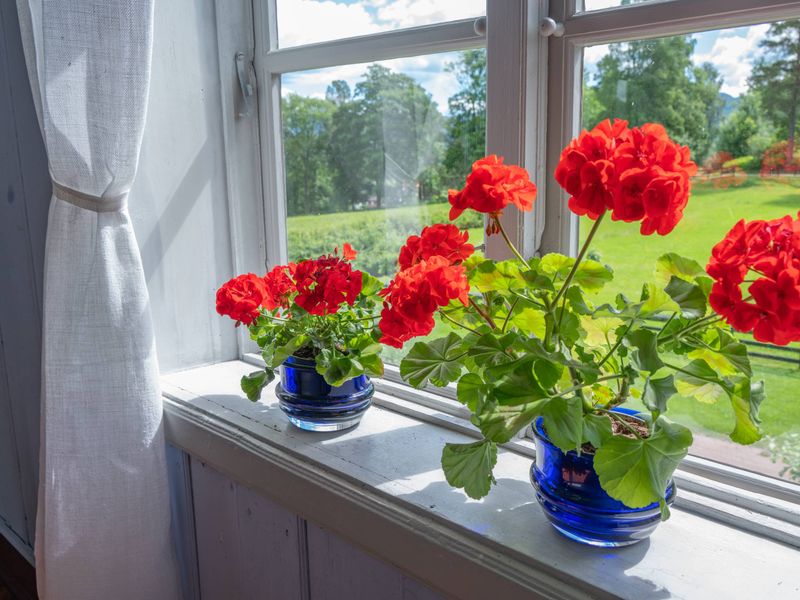
For many gardeners, moving the entire plant inside is the easiest route. Start with a healthy plant and pot it in a container with drainage holes.
Then trim it back by about one-third to one-half, which keeps it compact and easier to fit on a sill.
Light matters most after that. Set the pot in the brightest window you have, because Illinois Extension notes that low light combined with warm conditions can make plants tall and lanky.
A cooler spot near a bright window usually behaves better than a toasty dim corner.
Water only when the potting mix has dried out, and empty any saucer so the roots never sit in standing water. Poke a finger into the mix to check.
Soggy soil is a bigger danger indoors than a little dryness.
Root cuttings to save space and keep a backup
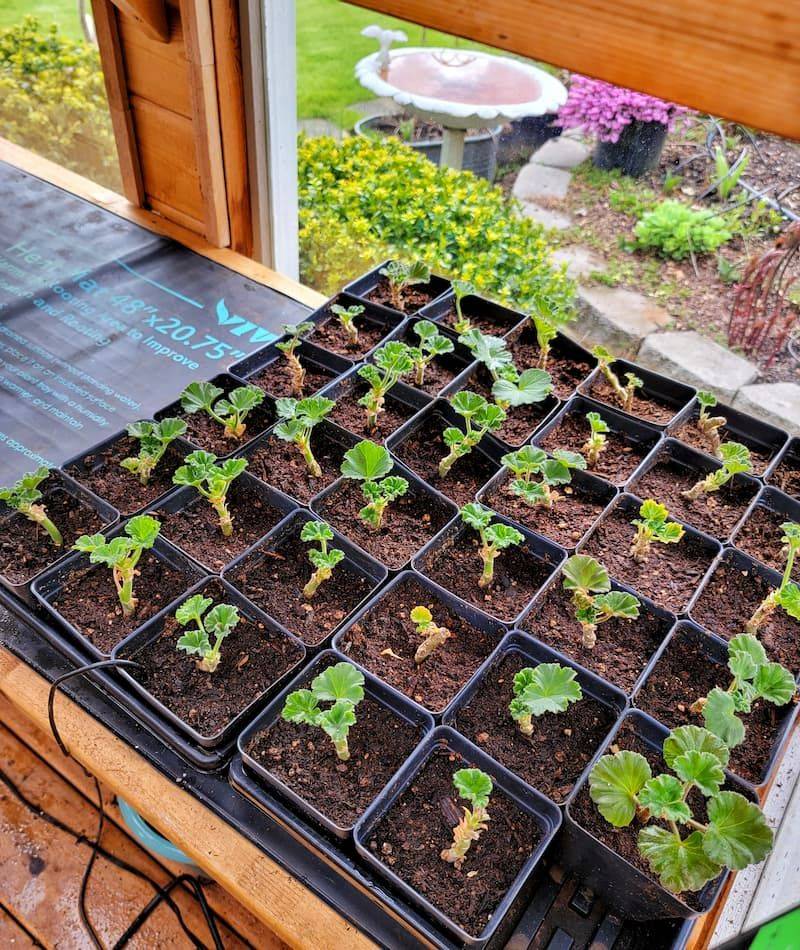
Short on window space? Cuttings let you keep a favorite color in a few small pots instead of one big one.
Snip tip cuttings about 3 to 4 inches long, then strip off the lower leaves so no foliage sits below the soil line.
Push each cutting into a container with drainage filled with perlite or another rooting medium. Keep the medium lightly moist and give the pots bright light.
According to Illinois Extension, rooting can take roughly four to eight weeks, so patience helps.
If you cover the pots to hold in humidity, check them often for mold and open the cover when you see any. Cuttings also make a handy insurance policy.
Even if the parent plant fails, you may still have new plants coming along.
Try bare-root storage only if you can manage its uncertainty
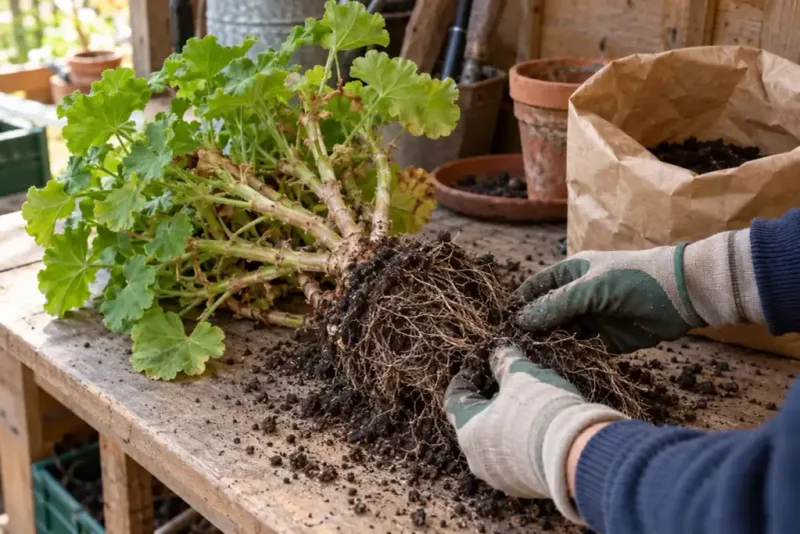
Storing plants dormant and bare-root saves the most room, but it is the least certain choice. You lift the plant, shake off the soil, and keep it in a cool, dry place around 45 to 50 degrees F.
Illinois Extension gives that range for storage.
Many Southern homes lack a spot that stays that cool and dry, since garages can swing warm or damp. University of Wisconsin Extension describes the method as challenging and suggests trying it alongside backup cuttings.
Treat it as an experiment rather than your main plan. Root a few cuttings from the same plant if you can, and only store plants that were healthy when you dug them up.
Use green tissue to assess a leafless plant in spring
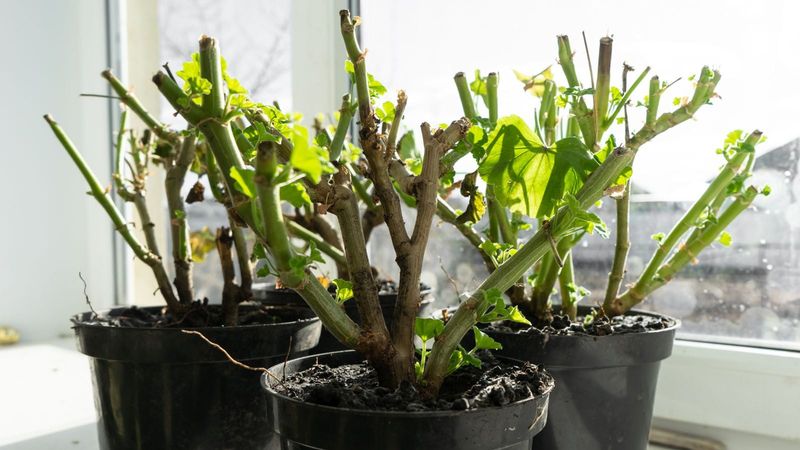
A bare, scraggly stick of a plant in late winter can look hopeless. Dropped leaves and dead branch tips are common during dormant storage, so they do not prove the plant is gone.
Illinois Extension advises cutting back to firm, green tissue in spring.
Make a clean cut and look inside. Firm green means there is a chance.
Then pot the plant in fresh mix with drainage and set it in bright light.
Think of this as a check, not a promise. Stems that are mushy, shriveled all the way down, or marked by disease may not come back, and Connecticut’s plant-disease handbook notes rot problems can be hard to reverse.
Severe cold damage can also leave nothing alive to save.
Move plants outdoors after frost danger passes
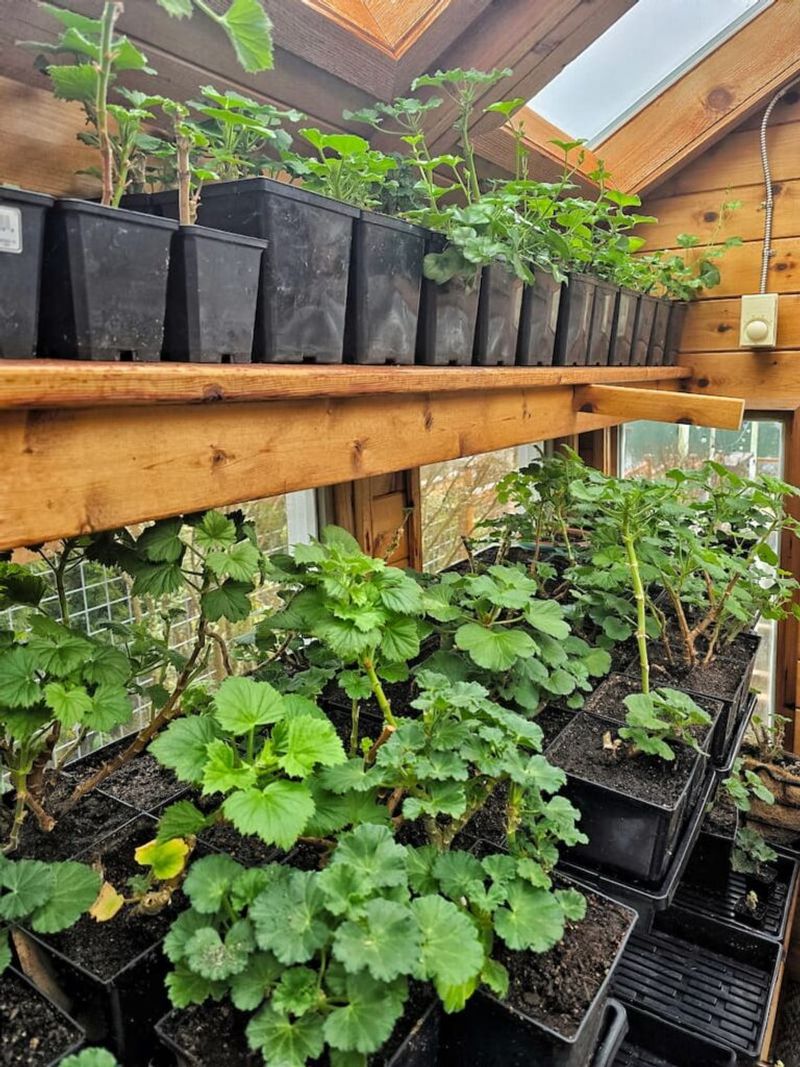
Hold your plants indoors until the last frost risk in your area is behind you. Then set them in strong light with good drainage.
Minnesota Extension advises watering when the soil is dry and fertilizing only once active growth appears.
Southern timing varies a lot. UF/IFAS says bedding geraniums can be used nearly year-round in warm climates, with planting from about October to March in central and southern Florida.
In north Florida, plants can do well through winter if brought in on cold nights.
That means some warm-area gardeners can skip routine indoor overwintering. Even so, a cold snap can still arrive, so keep a sheet or a movable pot handy.
UGA Extension reports that protected plants on the Georgia coast may keep blooming into January.
A healthy plant may flower again, but bigger blooms are not guaranteed
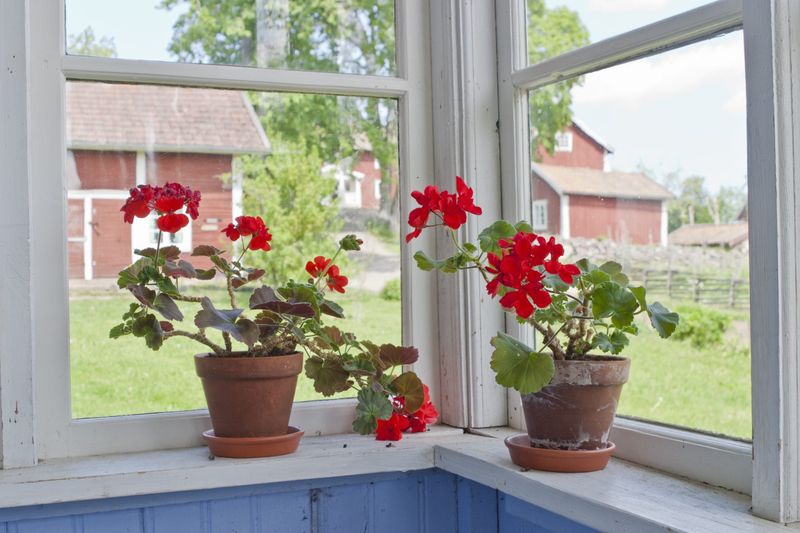
Overwintering can keep a healthy Pelargonium going for another season, and that is the real payoff. With strong light, good drainage, and careful watering, a saved plant can grow well and may flower.
UGA Extension ties good pruning and care to vigor and flowering, though it does not show that overwintering itself makes blooms larger.
So expect your saved plant to bloom like itself, maybe a bit better, maybe not. Choose the method that fits your space: a whole plant on a sunny sill, a tray of cuttings, or a bare-root try with backups.
Frost is the deadline that matters most in the South. Act before it arrives and your odds improve; wait until after and you are gambling.
A saved geranium is a small win, and sometimes that is plenty.