
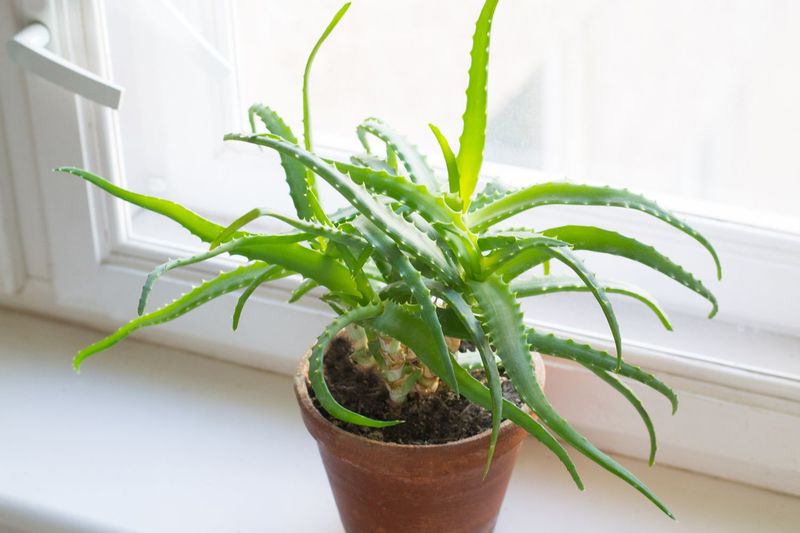
A soft, brown base on your indoor aloe is worrying, especially when the plant was fine on the porch a few months ago. A pot that holds water can be part of the story, but it is not the only suspect.
Winter cold, planting depth, and the mix all play a role too. Here is how to check each one before you decide what to do.
Mushy tissue is a clue, not a diagnosis
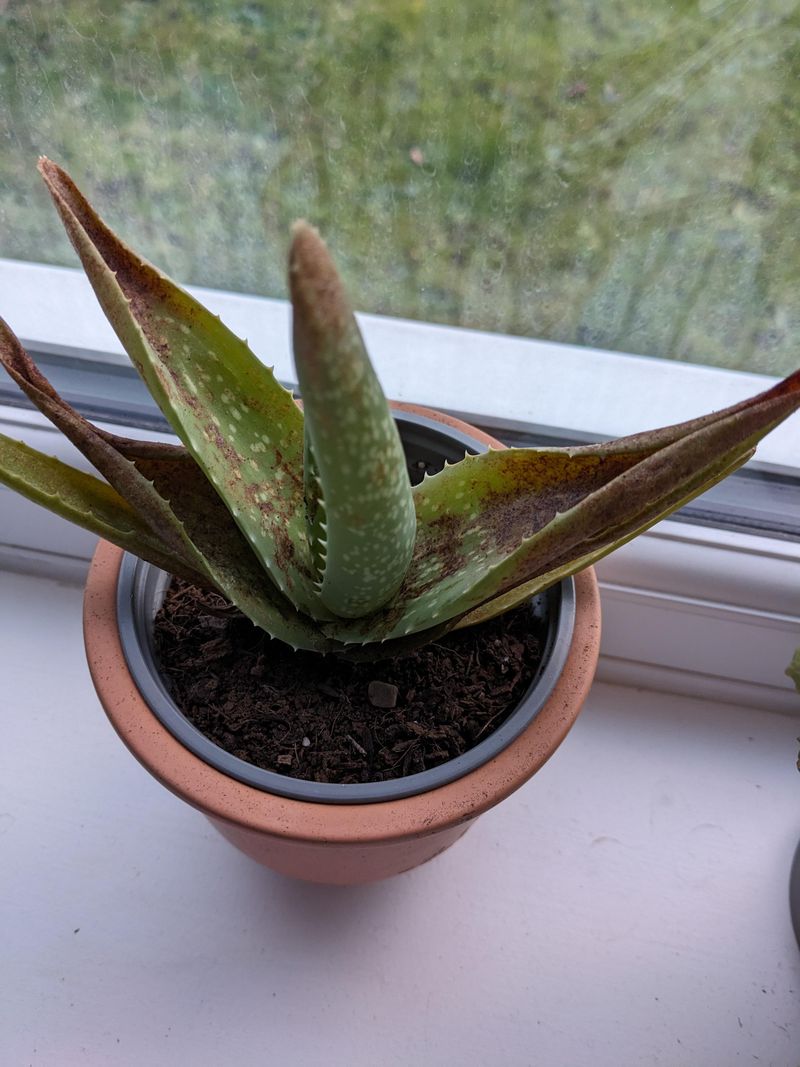
A soft, brown base tells you something is wrong, but it does not tell you why. University of Florida plant health specialists point out that symptoms like yellowing and wilting have several possible causes, so checking the roots and soil beats guessing from one sign.
Winter adds another suspect. The New York Botanical Garden notes that an aloe chilled on a cold windowsill or in a draft may discolor, and that can look a lot like rot.
Ask yourself whether the plant sits against cold glass or near a door that opens often.
Wet, water-soaked tissue, or leaves that collapse or detach from the crown, can fit soft rot. Texas A&M’s plant disease handbook describes it as not common, though, so keep other causes in mind.
Drooping alone is not proof of trouble either. Older outer Aloe vera leaves may sprawl naturally, and some aloe species grow in a sprawling form.
So instead of blaming the pot right away, work through the setup, the roots, and the temperature.
Does the pot let water escape?
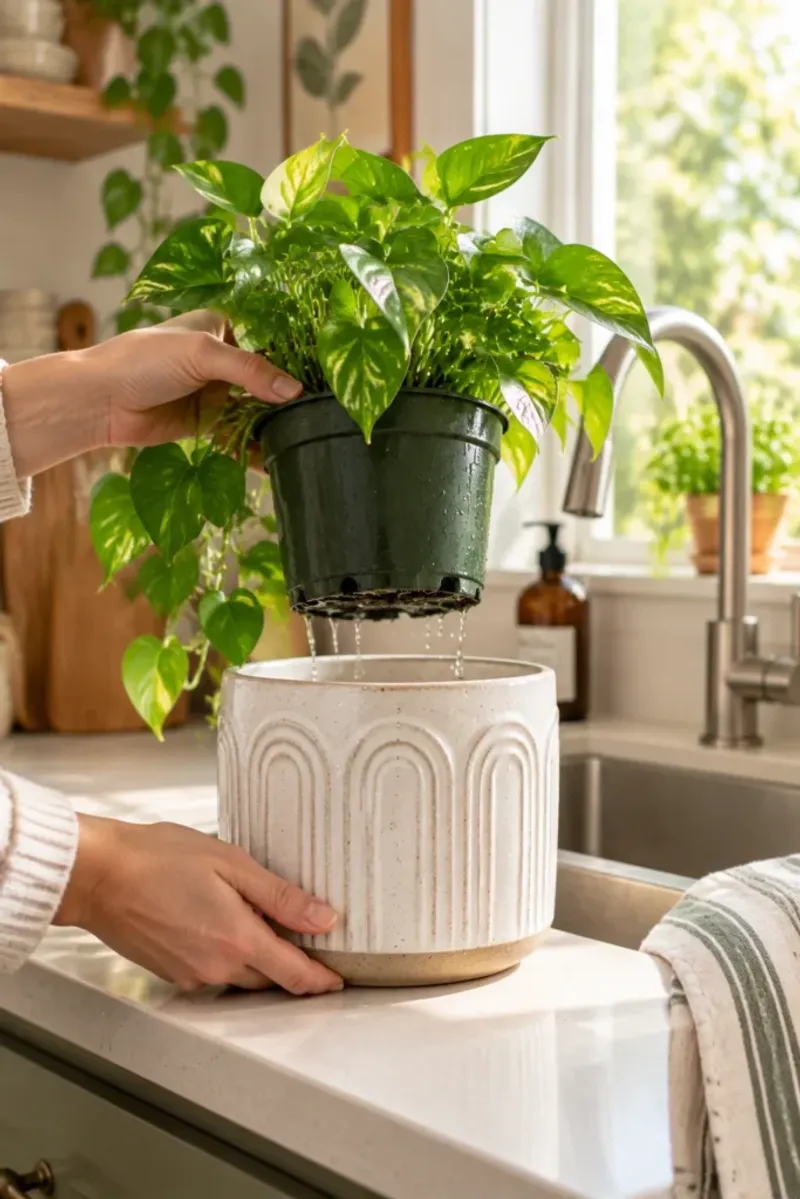
Start with a simple look at the container. Turn the pot over and confirm there is an open drainage hole, then press a finger into the mix to see if it feels freely draining or soggy.
Also check the saucer or decorative outer pot for standing water. NC State Extension’s container guidance stresses that containers need a way for excess water to leave.
If you love a decorative pot with no hole, use it as an outer cover. Keep the aloe in a removable nursery pot that does drain, and empty any runoff after watering.
The New York Botanical Garden also recommends a drainage hole for aloe.
Skip the gravel layer at the bottom of a sealed pot. University of California Master Gardeners explain that it does not replace a hole and may leave a saturated zone in the mix above it.
Water that has nowhere to go can keep aloe roots wet for days, which raises the risk of rot.
The roots show how far the damage has gone
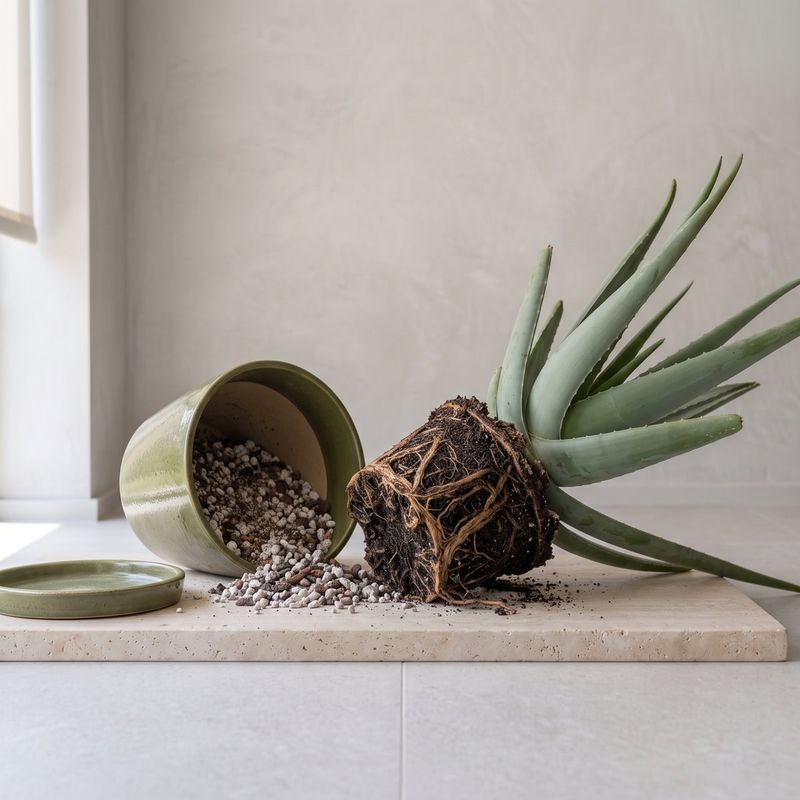
When an aloe is declining in wet mix, the root ball tells the most useful story. Slip the plant out of its pot, shake off loose mix, and look closely.
Do this on newspaper so cleanup is easy.
Healthy roots should feel firm. University of Florida guidance on diagnosing houseplants suggests inspecting roots and soil rather than relying on leaf symptoms alone.
Brown or black roots that feel soft, along with a sour smell from the mix, are consistent with root rot or prolonged waterlogging. Keep in mind that color and odor help you judge the problem but cannot name a specific disease by themselves.
Count what you see. Mostly firm roots with a few dark ones suggest limited trouble.
Mostly mush, or softness reaching up into the stem, points to a more serious situation.
A limited rot may be worth a careful repot
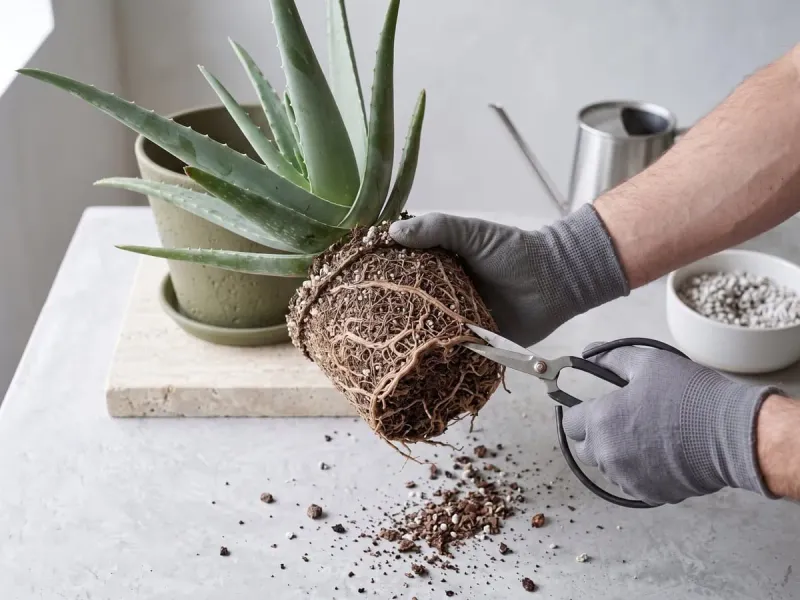
If the damage looks limited and healthy roots remain, a rescue attempt can make sense. South Dakota State University Extension supports removing dead or rotted roots and repotting in fresh mix.
Use clean scissors and a clean pot that has a drainage hole.
Choose a fast-draining mix, and pick a pot that is not much bigger than the root ball, since extra soil holds extra water. Virginia Tech Extension’s watering publication is a helpful reference for container houseplants.
Set the aloe at its previous planting depth, with the stem above the soil line. NYBG warns that burying the stem can lead to rot.
Be realistic about the outcome. Severe root or crown decay may not be salvageable, and even a careful repot cannot promise recovery.
Winter watering should follow the mix, not a calendar
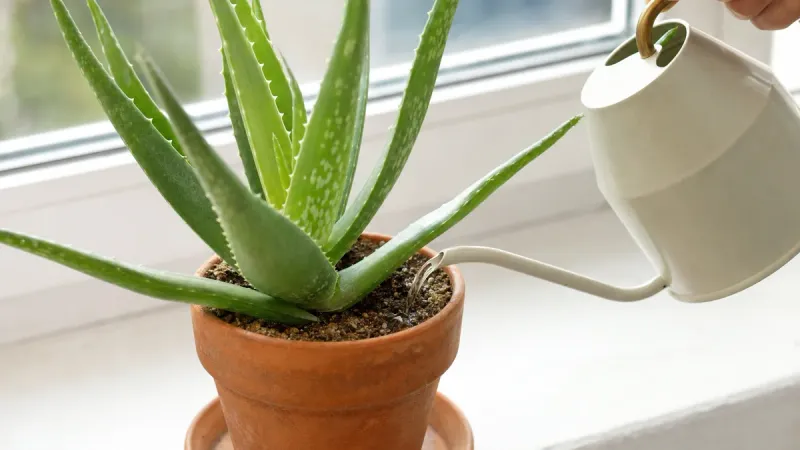
There is no magic number of days between waterings in winter. Let the mix dry substantially, then soak it and let the excess drain away.
Penn State Extension’s aloe guide recommends less water during the cooler, darker months.
After watering, wait a bit and look at the tray. NYBG advises checking after 15 minutes and emptying any standing water.
Drying time shifts with light, temperature, pot material, mix, plant size, and where the plant sits. A bright, warm spot may dry out in a week or two, while a dim corner with a plastic pot may stay damp far longer.
Virginia Tech Extension encourages judging the mix itself.
Poke a finger or a wooden skewer deep into the pot. If it comes out damp, wait.
Use the evidence to choose your next step
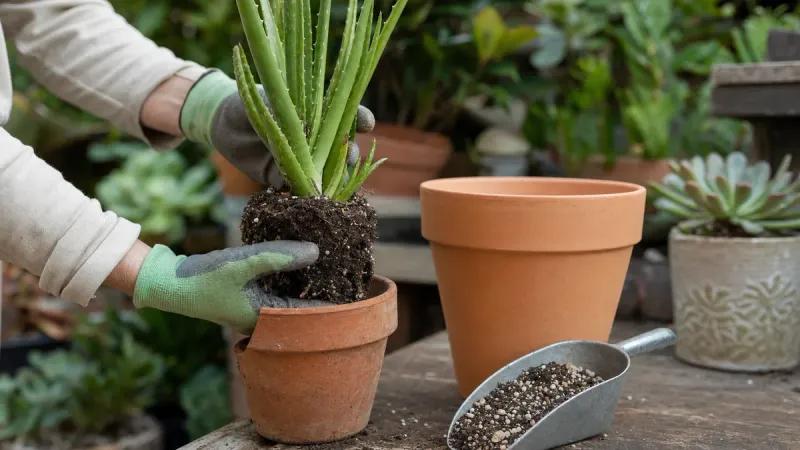
Fix any setup that traps water, look at the roots before trying a rescue, and let the mix guide your watering. NYBG’s aloe guide and South Dakota State University Extension both back that approach.
Poor drainage is a risk to investigate, not proof of the cause, and a badly damaged plant may not recover. Sometimes the best sign of success is a firm, green new leaf in spring.