
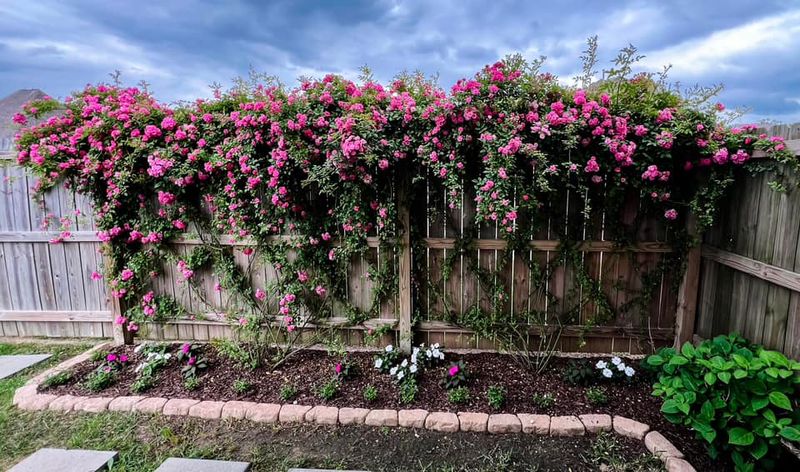
Fall feels like the right time to tidy up the garden, and rose bushes often get the first round of shears. In Central Texas, though, a big fall haircut is not the usual plan for most roses.
Texas advice changes by region and by the kind of rose you grow. Here is what to do now, and what to save for later.
A hard fall cut is not the Central Texas default
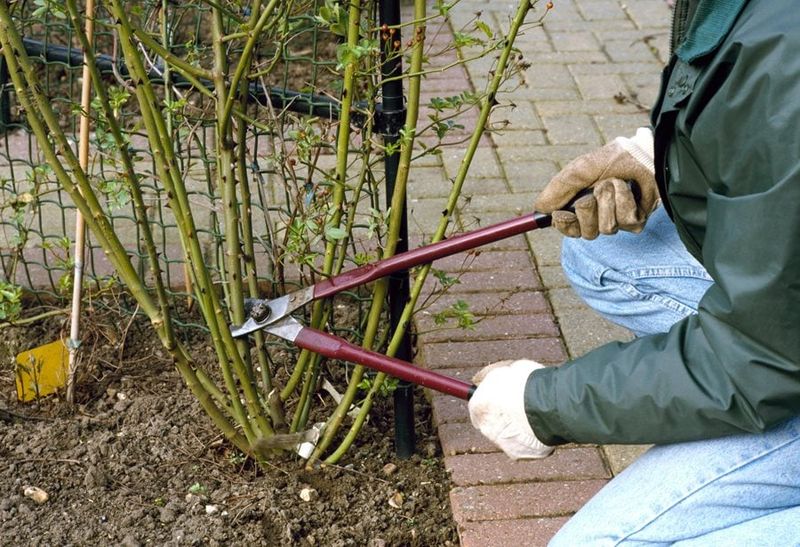
Let’s start with what a hard cut means here. It is the act of substantially shortening healthy canes or cutting back much of the bush.
It is not the same as snipping off dead, diseased, or broken growth, which is ordinary maintenance.
For Austin and the rest of Central Texas, Texas A&M AgriLife guidance for Travis County recommends pruning most non-climbing roses around Valentine’s Day, as long as they are still dormant. That means a substantial cut is not a routine fall chore.
Climbing roses and once-blooming roses follow different timing, which we will cover below.
Texas is a big place, and the advice is not the same everywhere. Smith County Master Gardeners, citing a local Texas A&M AgriLife Extension horticulturist, recommend a substantial early-fall prune for selected rose types, including some hybrid teas, grandfloras, and floribundas.
They also warn against fall-pruning once-blooming old garden roses and ramblers that flower on old wood, since that removes next spring’s blooms.
So neither schedule is a statewide rule. Think of the Travis County timing as the baseline for Central Texas gardeners, and the Smith County advice as a regional exception for certain roses.
This article lays out a limited fall approach. It will not promise more spring flowers, because skipping a hard cut does not guarantee them.
It simply keeps your fall work focused on cleanup and care while you figure out which rose you have.
Early-fall pruning and a late-season cut are different choices
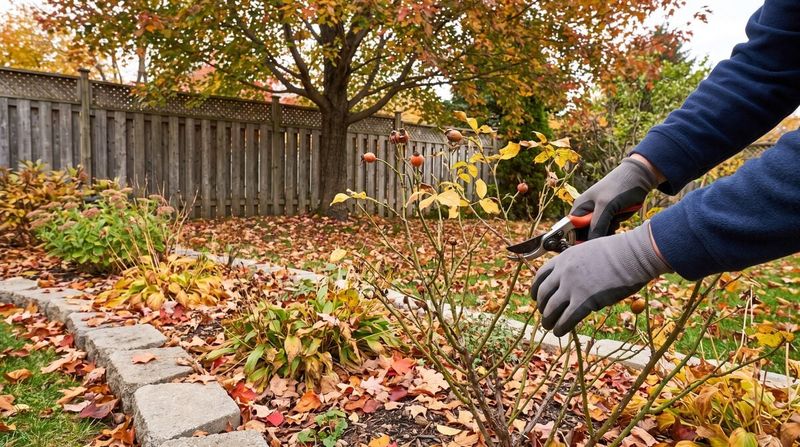
Timing is the whole story here. An early-fall trim is done while the weather is still warm, with the goal of encouraging a fall flush of flowers.
A late-season cut is made close to the first freezes, when the plant has little time left to grow.
Smith County Master Gardeners do recommend an early-fall prune for selected rose types to get that extra round of blooms. So fall pruning is not automatically harmful in Texas.
It depends on the rose and on how early in the season the cut is made.
The caution about late cuts comes from colder places. Iowa State Extension explains that pruning late in the season can encourage new growth that may be vulnerable to winter damage.
That advice reflects Iowa’s climate. It is not a proven or universal result for Texas roses.
Still, it is a reasonable reason to be careful. Central Texas can have mild stretches in November and then a sudden cold snap, so fresh growth from a late hard cut has no guarantee of surviving.
Do not copy the Smith County schedule into your Austin-area yard without thinking it through. Consider your local conditions, the type of rose, and whether you actually want a fall flush.
If you are unsure, leaving large cuts for later is the more conservative choice.
Identify the rose before choosing its pruning date
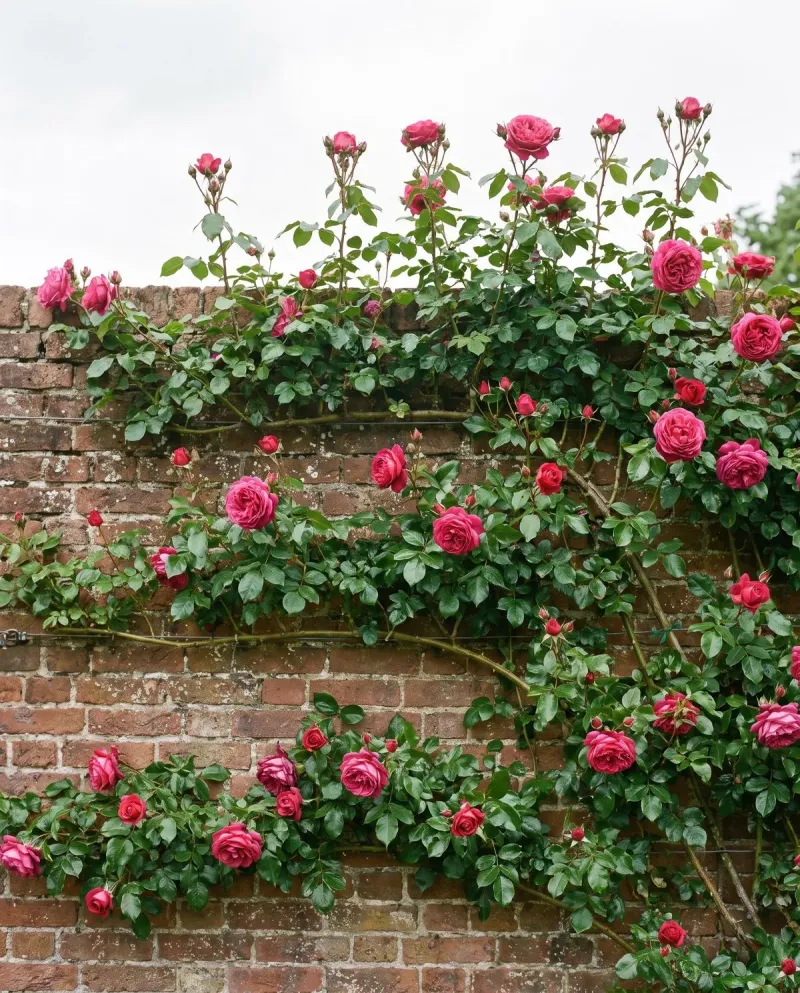
Pruning dates depend on the rose, so the first job is figuring out what you have. Check plant tags, old receipts, or photos, and note whether the bush blooms once or repeats through the season.
Roses that bloom only once a year should be pruned after they flower. The Travis County Master Gardener article on rose pruning says single-blooming roses and climbers may also need pruning after flowering.
Cutting them in fall would remove the wood that carries next spring’s flowers. Smith County guidance says the same about once-blooming old garden roses and ramblers.
For most other roses in Central Texas, the Travis County recommendation is to prune around Valentine’s Day, provided the plant is still dormant. That is a Central Texas timing for non-climbing roses, not a date for every rose in the state.
Repeat bloomers add one more option. According to the Travis County article, a light pruning in August can be used to encourage fall blooms in Central Texas.
That is a small trim in late summer, which is very different from a hard cut in late fall.
Some roses need very little cutting at all. Texas A&M’s Earth-Kind guidance on old roses describes pruning’s effects as depending on rose type and timing.
If you cannot tell what you have, hold off on big cuts and stick to cleanup.
Use fall cleanup for selective cuts, not shearing
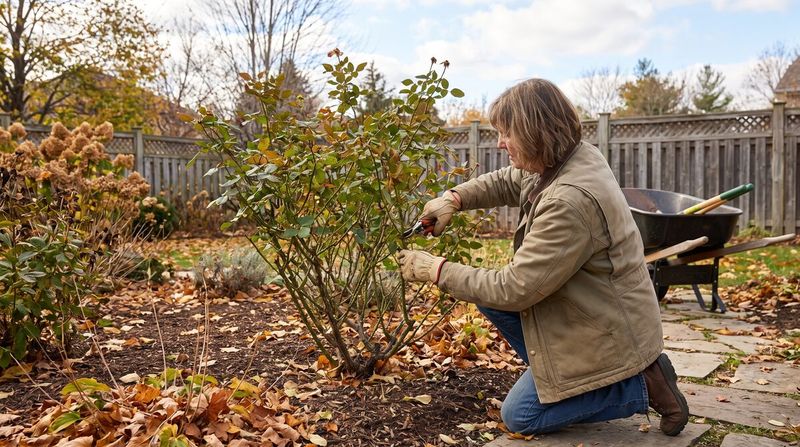
Walk around each bush with clean, sharp pruners and a bucket. You are hunting for three things: dead canes, diseased growth, and broken branches.
Those are the cuts Texas A&M’s Earth-Kind rose guidance lists as maintenance pruning.
Dead canes look brown, gray, or shriveled, and the inside of the cut is dry rather than green or white. Diseased growth might show black spotted leaves or discolored, sunken stems.
Broken branches are easy to spot after a storm, and they are best trimmed back to healthy tissue.
Leave healthy canes alone. Running hedge shears over the whole shrub is the kind of hard cut we are skipping this season.
Selective cuts take more patience, but they remove problems without taking off large amounts of good growth.
Cleanup does not end when the pruners go down. The Travis County guidance advises collecting and discarding clippings after pruning.
Fallen leaves and trimmings can carry disease, so rake them up and bag them rather than leaving them around the base of the plant.
Treat this as a limited, conservative fall routine. It tidies the plant and reduces leftover disease material, but it is not proven to be safer than other approaches, and it does not guarantee a better bloom.
Maintain mulch and water according to soil conditions
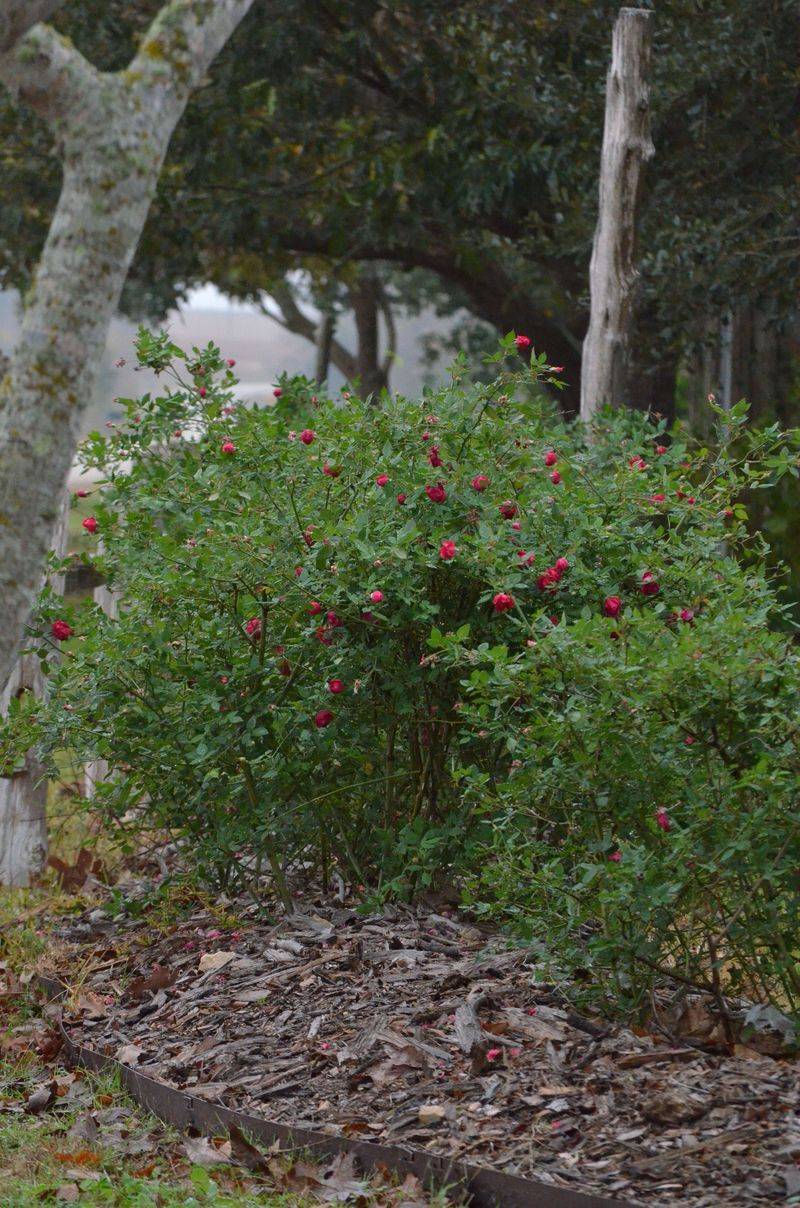
Roses are not all resting in fall. Some repeat bloomers keep growing and may even put out a fall flush, so they still need steady basic care.
Mulch and water are the two habits that matter most.
Texas A&M’s Earth-Kind guidance recommends keeping about three inches of organic mulch around the plants. Shredded bark or wood chips work well.
Top up thin spots and spread the mulch over the root zone, keeping it from piling right against the canes.
For watering, the same guidance says to water thoroughly when the soil is dry about one inch down in the root zone. Push a finger or a small trowel into the soil to check.
If it feels damp at that depth, wait a few days and check again.
Soil matters too. Many Central Texas yards have heavy clay, and frequent watering in poorly drained soil can promote root disease.
A light sprinkle every day may do more harm than one deep soak when the soil has actually dried out.
Think of these as general care practices that keep roses healthy through the fall. They are not tricks to force heavier flowering next spring, and no watering schedule can promise that result.
Plan larger cuts around the rose and the local season
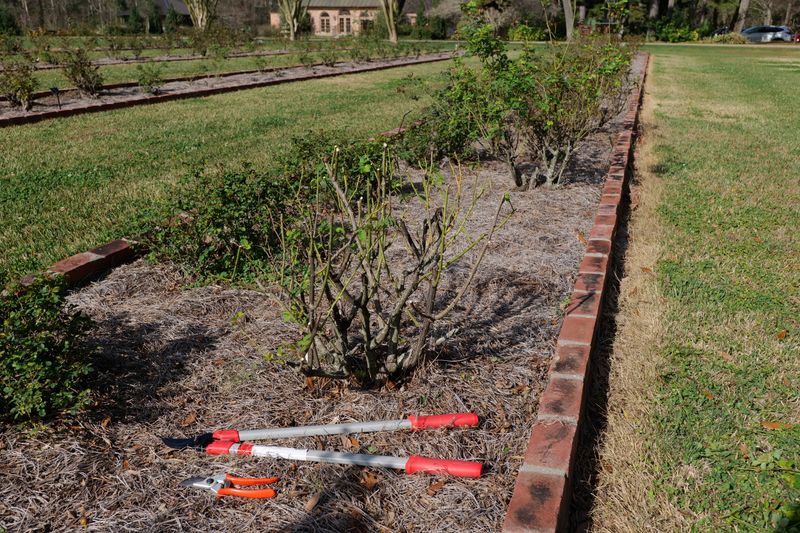
For Central Texas, the plan is simple. Use fall for limited cleanup and basic care, then decide on larger pruning once you know which rose you have.
For most non-climbing roses, Travis County guidance points to around Valentine’s Day if the plants are still dormant.
Skipping a hard fall cut will not guarantee a stronger spring bloom, because Texas A&M describes pruning’s effects as depending on rose type and timing. Good timing simply avoids cutting off wood you will want later.
Sometimes the best pruning decision is the one you leave for February.