
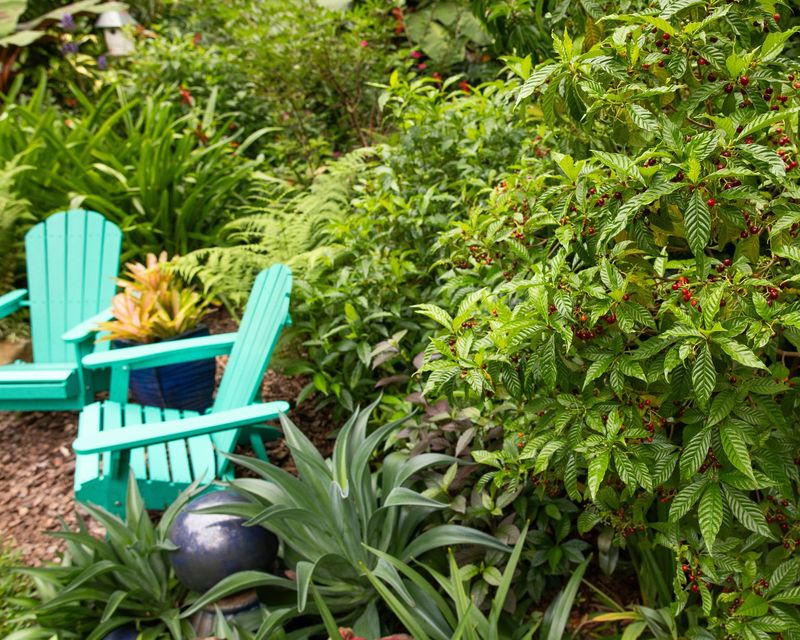
A spotless lawn can leave a hungry warbler with almost nothing to eat. Florida’s winter visitors need insects, shelter, and places to search for food, which closely clipped shrubs and bare beds often lack.
These seven native plants can help turn a neat but quiet yard into useful winter habitat. You can keep the clean edges while letting the planting beds do more for birds.
1. Southern Live Oak
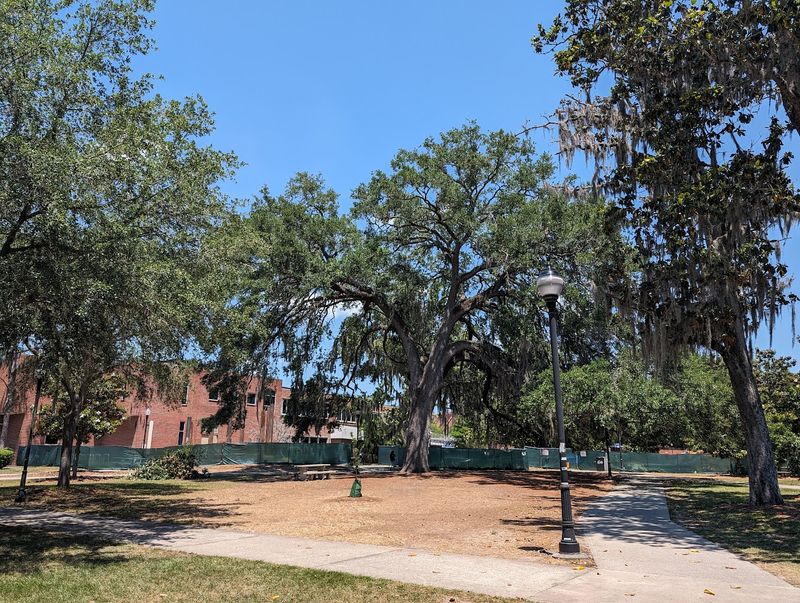
A big shade tree can also be a busy hunting ground, even when you barely notice the activity overhead. Southern live oak (Quercus virginiana) supports many insects, including caterpillars, and its branching canopy gives wintering warblers plenty of places to search.
Its main advantage is scale. A mature oak offers layers of leaves, twigs, and bark rather than the thin strip of habitat found in a tightly clipped hedge.
Give this tree a genuinely roomy spot in full sun, away from overhead wires and with space for its broad crown and roots. It suits many well-drained Florida sites, including sandy yards, but it is not a small foundation tree.
Keep a bed of fallen leaves beneath part of the canopy instead of extending lawn all the way to the trunk. Those leaves shelter small creatures and give ground-foraging birds another place to investigate.
Already have a healthy live oak? Protecting it may offer more immediate value than buying several new shrubs.
Avoid unnecessary canopy thinning, keep mulch off the trunk, and consult an ISA Certified Arborist about structural pruning rather than having the tree topped.
2. Wax Myrtle
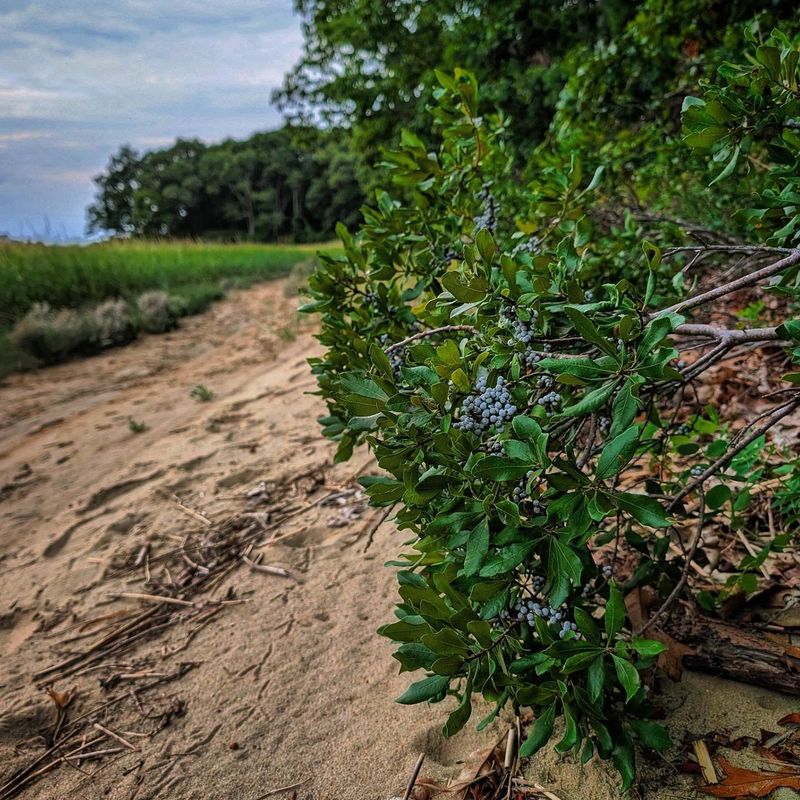
For yellow-rumped warblers, the little gray fruits on a wax myrtle can be more than decoration. These birds can digest the waxy coating, giving them access to a winter food source many other warblers cannot use.
Wax myrtle (Morella cerifera) also makes a useful evergreen screen. Its loose branches provide cover and support insects, so the plant contributes even when fruit is scarce.
Choose sun to partial shade and allow room for a large shrub or small tree, often around 10 to 20 feet tall. It handles a range of Florida soils once established, though a new planting still needs regular watering while its roots spread.
Fruit develops on female plants when a male is nearby. Ask the native nursery about plant sex and pollination instead of assuming every wax myrtle will produce berries.
For a bird-friendly screen, space plants according to their expected mature width and prune selectively. Repeated shearing can remove fruiting growth and create a dense outer shell with less useful branching inside.
Keep the outline relaxed but maintain a crisp bed edge. That simple contrast makes a wildlife planting look planned without turning it into a clipped wall.
3. American Beautyberry
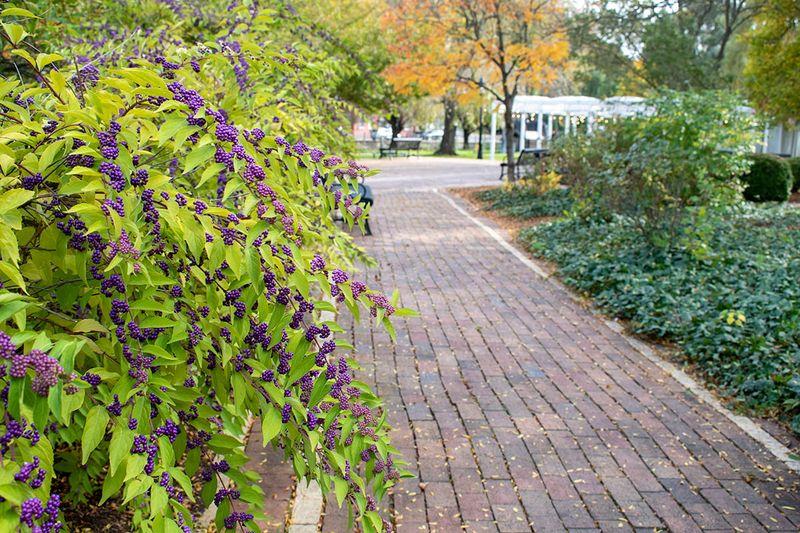
Purple berries make this shrub look dressed for a party, but the untidy space underneath may matter just as much to warblers. American beautyberry (Callicarpa americana) creates a low, open layer where birds can move between cover and fallen leaves.
Many birds eat its fruit, although beautyberry should not be treated as a dependable berry feeder for every warbler species. Its stronger role in a winter habitat plan is adding shrub structure, insect life, and a sheltered woodland edge.
Plant it in sun or partial shade, allowing roughly 4 to 8 feet for its arching shape. It fits naturally beneath an open tree canopy or along a fence where you can appreciate the fruit without forcing the branches into a narrow space.
Expect seasonal change. Beautyberry can lose its leaves in winter, especially in cooler parts of Florida, and birds may strip the berries before the season ends.
Leave fallen leaves beneath the branches and avoid routine insecticide sprays. If pruning is needed, late winter is a practical time because flowers and fruit develop on new growth.
Pair it with an evergreen shrub from this list so the bed still offers cover after beautyberry drops its leaves.
4. Yaupon Holly
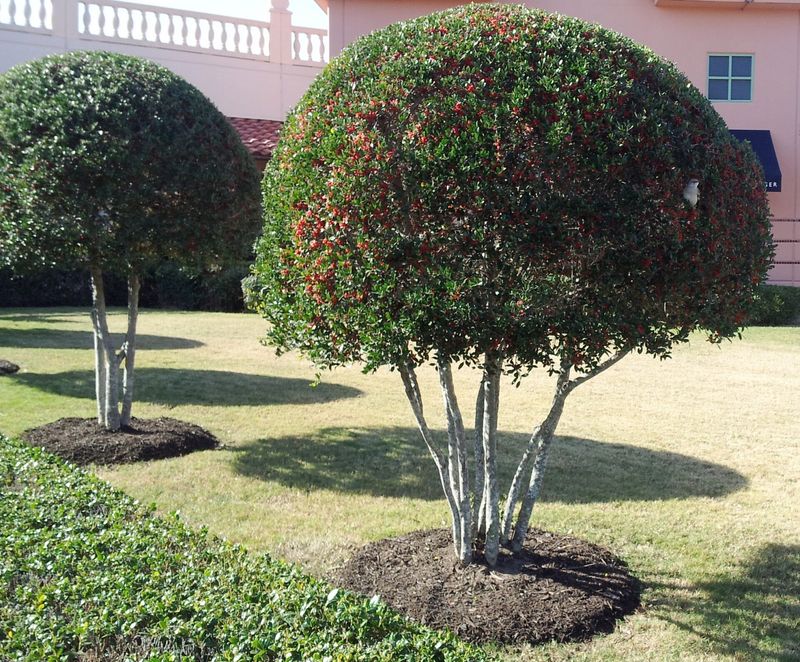
Need winter greenery that does not demand a box-shaped haircut? Yaupon holly (Ilex vomitoria) can provide a handsome screen while leaving birds a network of branches to explore.
The evergreen foliage offers dependable cover, and insects on leaves and twigs give warblers something to hunt. Female plants can also carry red fruit used by a variety of birds, though fruit is not the main food for most warblers.
Yaupon is especially useful in North and Central Florida landscapes. Give it sun to partial shade and choose a form that fits the available space, since standard plants can become small trees about 15 to 25 feet tall.
Compact selections have their place near walks, but a larger, loosely grown plant provides more vertical habitat. Check the label carefully rather than buying a tiny pot and assuming it will stay tiny.
Ask for a female plant if berries are part of your goal, and confirm that a male pollinator grows nearby. Avoid heavy trimming that repeatedly removes flowering or fruiting branches.
For an orderly finish, remove only awkward or damaged growth and keep paths clear. The plant can look intentional without losing the branching that makes it useful to birds.
5. Wild Coffee
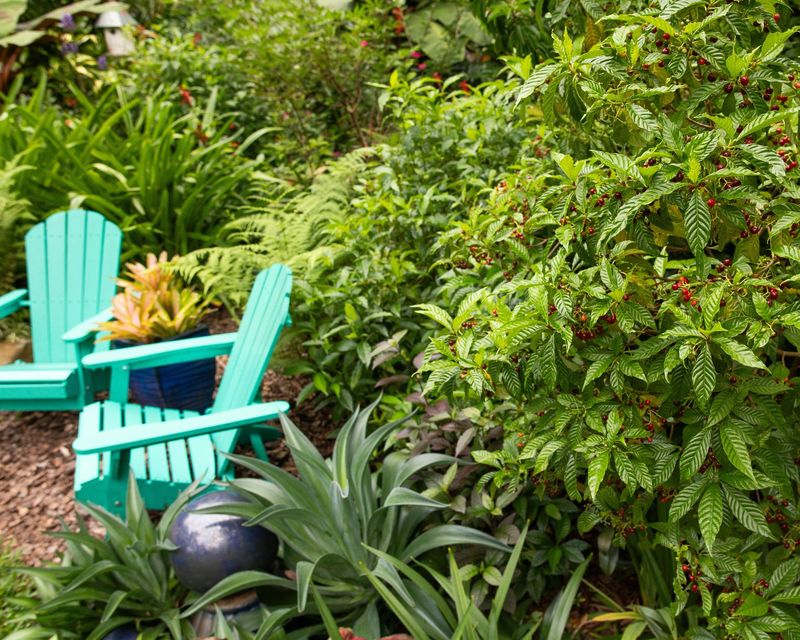
That shady corner under a tree does not have to stay bare. In warmer parts of Florida, wild coffee (Psychotria nervosa) fills the middle layer between the canopy and the ground.
Its glossy, deeply veined leaves give the yard a lush look, while the branching provides sheltered places for birds to search for insects. Red fruits attract several kinds of birds, but the plant’s value to warblers also comes from cover and the small prey living around it.
Use wild coffee mainly in South Florida and suitable protected locations in Central Florida. It is cold-sensitive, so it is not a reliable statewide choice for exposed yards with regular freezes.
Partial to full shade suits it well, especially where soil holds some moisture but drains freely. Expect a shrub commonly around 4 to 10 feet tall, with size depending on conditions.
Plant a small group beneath taller natives rather than isolating one shrub in a sea of lawn. Connected cover lets small birds move through the bed without making repeated open crossings.
Keep irrigation practical: water during establishment, then adjust to rainfall and the site. A shaded planting can still dry quickly in Florida’s sandy soil, particularly beneath thirsty tree roots.
6. Firebush
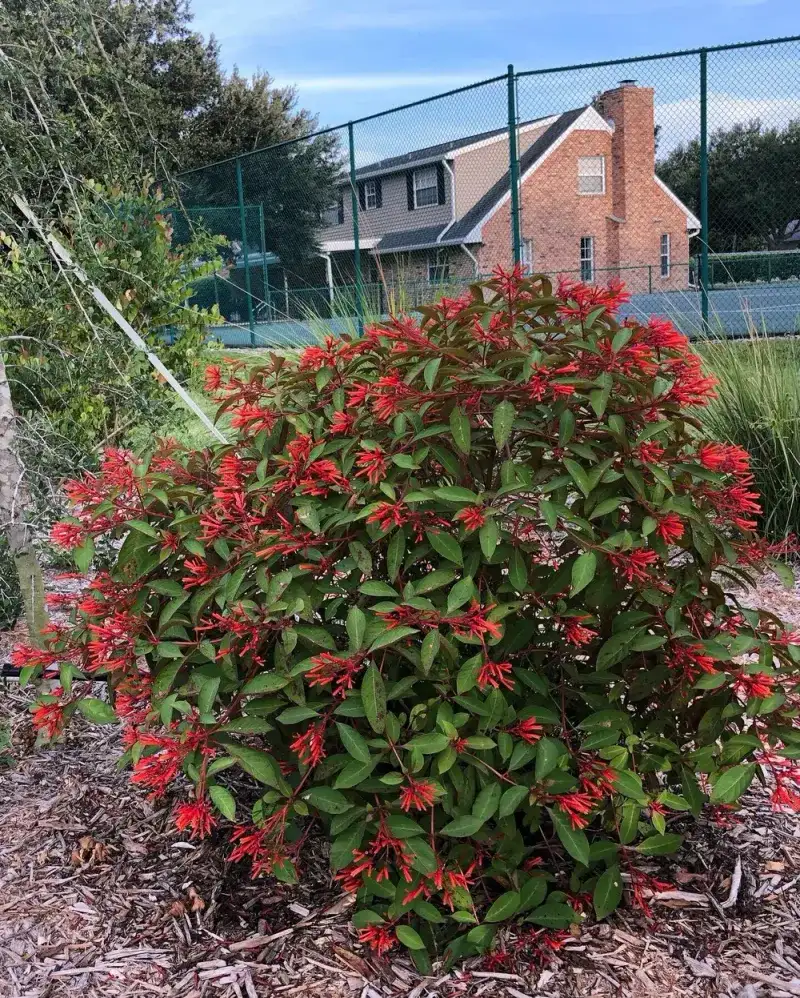
Orange-red flowers keep a sunny bed lively while much of the winter garden slows down. Native firebush (Hamelia patens var. patens) adds that color along with branching, fruit, and insect activity.
Its flowers are best known for attracting hummingbirds and butterflies, not for directly feeding warblers. For insect-eating winter visitors, the useful part is a living shrub where small prey can gather and birds can forage.
Firebush works best as dependable winter cover in frost-free South Florida. In colder areas it may lose leaves or die back after a freeze, so do not make it your only source of winter shelter.
Choose a sunny, well-drained location and allow generous room. In warm conditions, the native plant can grow into a large shrub, sometimes reaching 8 to 12 feet or more.
Buy from a nursery that can confirm the native variety. Plants sold under the broad firebush label may include nonnative forms or hybrids, and a small nursery specimen does not reveal its eventual size.
Skip frequent shearing and routine broad-spectrum insecticides. Light, selective pruning preserves its airy shape, while leaving some harmless insects means the garden can actually offer the food insect-eating birds came to find.
7. Simpson’s Stopper
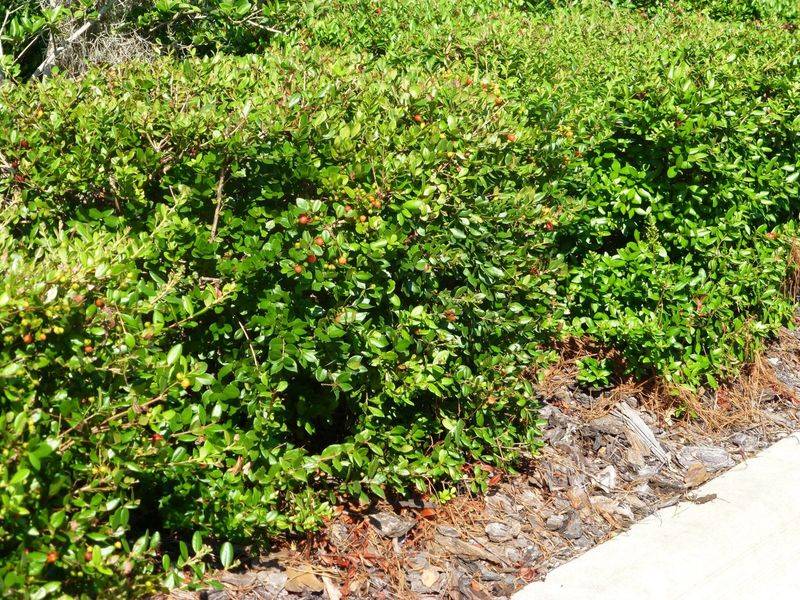
A privacy planting can look polished without becoming a wall of clipped leaves. Simpson’s stopper (Myrcianthes fragrans) offers small evergreen foliage, attractive bark, and a branching structure that works well in a layered Florida garden.
Its special contribution is lasting cover in suitable warm locations. Flowers draw insects, fruits feed various birds, and the leaves and branches give visiting warblers surfaces to inspect for small prey.
This native is best suited to South Florida and appropriate Central Florida sites. Check local cold tolerance before planting, especially inland where winter temperatures can fall lower than they do near the coast.
Provide sun to partial shade and well-drained soil. It can become a substantial shrub or small tree, often 10 to 20 feet tall, so match its mature size to the space rather than relying on constant trimming.
Use it behind lower shrubs to create different feeding heights. A single-species hedge may offer cover, but a mixed bed adds more kinds of leaves, branches, flowers, and seasonal food.
Start with one properly matched plant, retain some leaf litter, and reduce unnecessary pesticide use. These changes improve habitat without requiring a neglected-looking yard, though visits still depend on nearby habitat and the birds present that winter.