
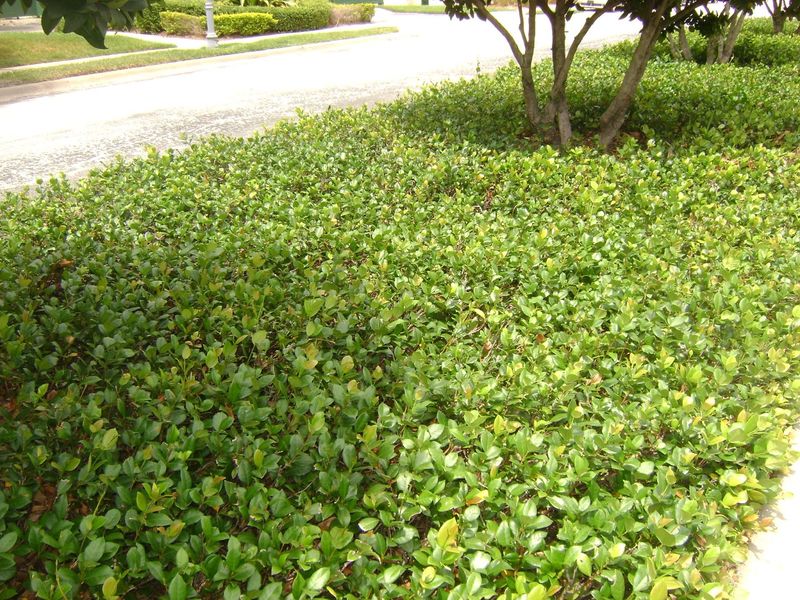
Patchy grass gets ugly fast when Florida watering rules tighten. The good news is that many native ground covers handle sandy soil, heat, and short dry spells better than thirsty turf.
They can soften bare spots, reduce mowing, and give pollinators a reason to visit. Here are seven Florida-friendly swaps that help a tired yard look cared for without asking for constant irrigation.
1. Sunshine Mimosa
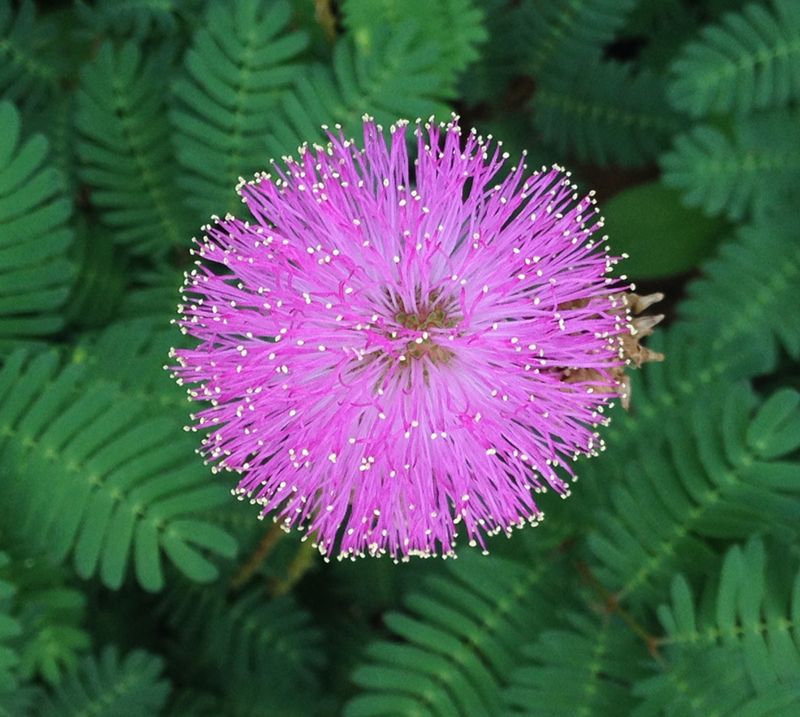
One barefoot step across sunshine mimosa explains why Florida gardeners get attached to it. The tiny leaflets fold when touched, which makes this native ground cover feel almost playful while it quietly fills thin, sunny patches where turf keeps giving up.
Sunshine mimosa is a standout for homeowners who want a lawn-like look without a stiff, formal feel. It stays low, spreads by runners, and can handle foot traffic better than many flowering ground covers once it is established.
In sandy Florida soil, it usually needs regular watering at planting, then far less attention than a struggling grass patch.
Pink puffball flowers appear during warm months and draw small bees, making it useful in pollinator-friendly front yards that still need to look tidy. Use it in full sun to light shade, especially along driveways, open side yards, and informal lawn replacement areas.
Give it room, because a happy patch will creep. That spreading habit is exactly what makes it valuable when irrigation limits expose every weak spot in the lawn.
2. Frogfruit
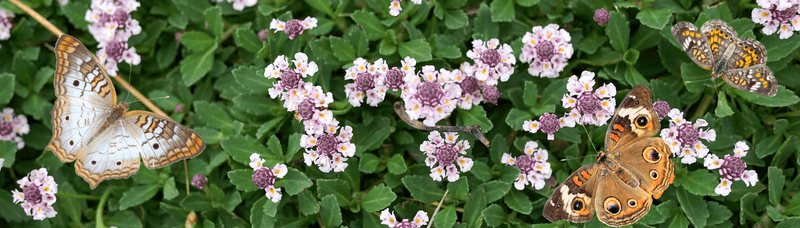
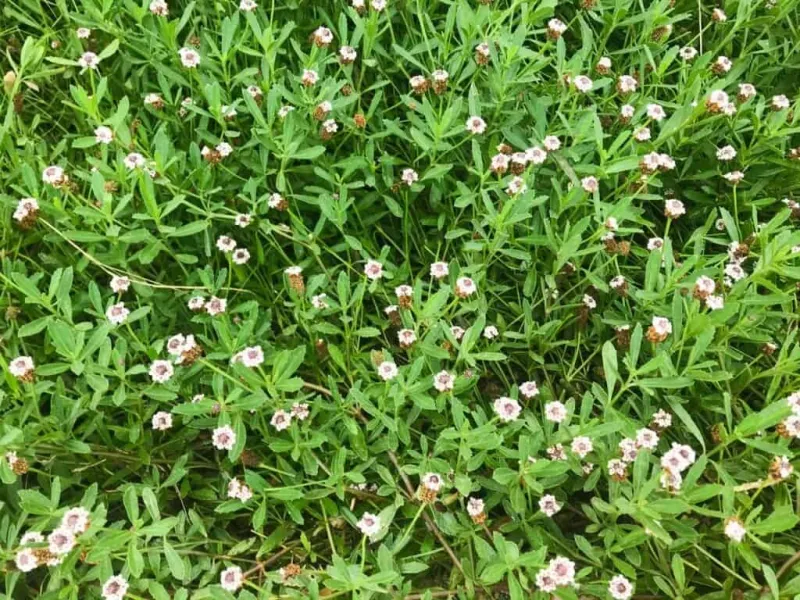
Butterflies seem to find frogfruit before some homeowners even notice the flowers. Its blooms are small, almost button-like, but they work hard in a Florida yard by feeding pollinators while covering bare ground.
Frogfruit is especially useful where grass thins near paths, mailboxes, and sunny borders. It grows low, spreads steadily, and tolerates mowing high if you want a more lawn-like finish.
Compared with many ornamental ground covers, it has a relaxed, meadow-edge look that fits casual Florida landscapes.
Moisture helps it establish, but mature plants can handle dry spells better than pampered turf. In areas that get occasional rainfall, frogfruit often bounces back nicely after looking tired during a hot, dry stretch.
Wildlife value gives frogfruit its special place on this list. It serves as a host plant for several small butterflies, so a patchy grass problem can turn into a living buffet.
Plant it where you can enjoy the activity up close, such as beside a porch walk or patio edge.
3. Beach Sunflower
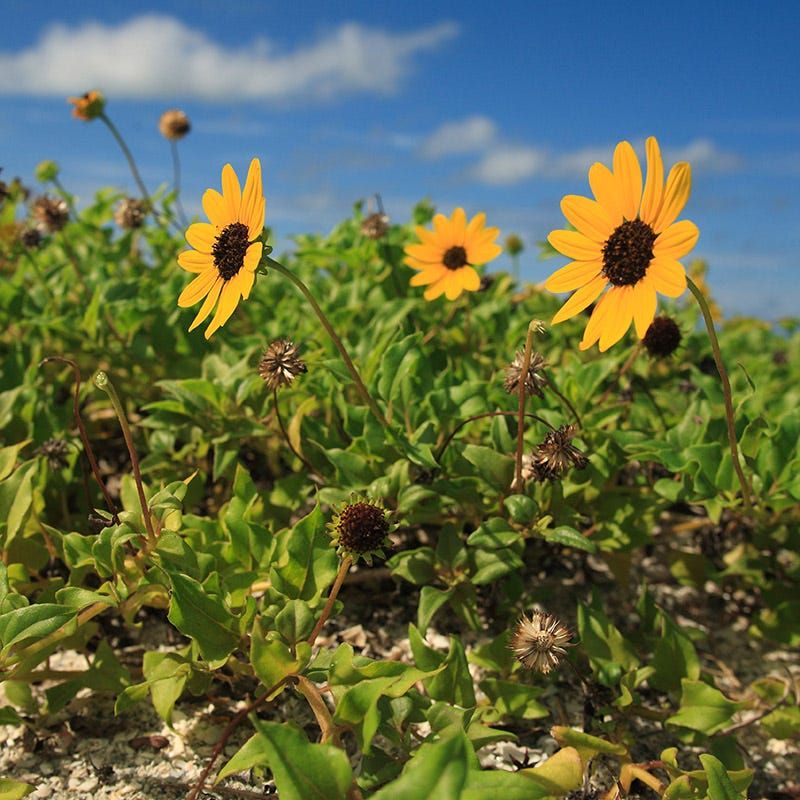
Hot sand, blazing sun, and salty breezes do not scare beach sunflower. That toughness makes it a smart swap for open Florida yards where grass fades from green to straw as soon as watering gets restricted.
Beach sunflower brings a brighter look than most lawn substitutes. Golden daisy-like blooms appear over a long warm season, creating a cheerful carpet that can lift curb appeal near sidewalks, driveways, and sunny foundation beds.
It is not meant for heavy foot traffic, so think of it as a showy ground cover for places you look at more than walk on.
Well-drained soil is the key. In Florida sand, that is often easy, but avoid soggy low spots that stay wet after summer storms.
Once rooted, beach sunflower can handle dry conditions and reflected heat, which makes it useful near hardscape where turf often struggles.
A light trim keeps it denser and neater. If your yard has a harsh full-sun strip that seems to punish grass, beach sunflower turns that problem area into a sunny, pollinator-friendly feature instead of another brown patch.
4. Twinflower
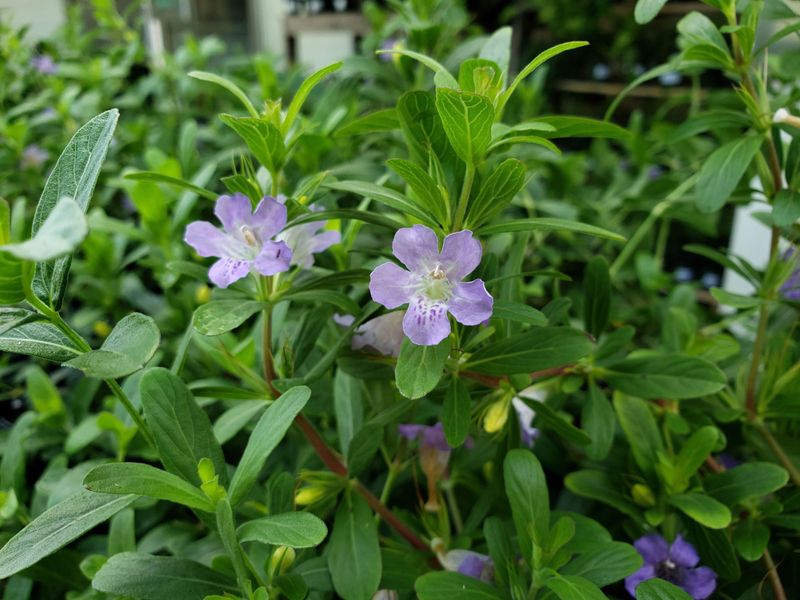
For the yard spot that never commits to full sun or deep shade, twinflower often feels like the missing piece. It has a softer look than turf and a quieter presence than beach sunflower, which makes it easy to tuck into everyday spaces.
Twinflower grows as a low, spreading native with small paired blooms that can appear pinkish, lavender, or pale purple. Its charm is subtle, but that is part of the appeal.
It can knit together bare soil around stepping stones, bed edges, and lightly used areas without making the space look overplanted.
Florida homeowners with irrigation limits often need plants that can manage uneven moisture. Twinflower prefers some moisture while getting established, yet it is more forgiving than thirsty grass once it settles in.
It also handles part sun, which helps in yards with palms, fences, or shifting afternoon shade.
Use it where you want a natural, low cover rather than a formal green carpet. A small starter area can expand over time, and occasional edging keeps it from wandering into places where you want a cleaner line.
5. Lyreleaf Sage
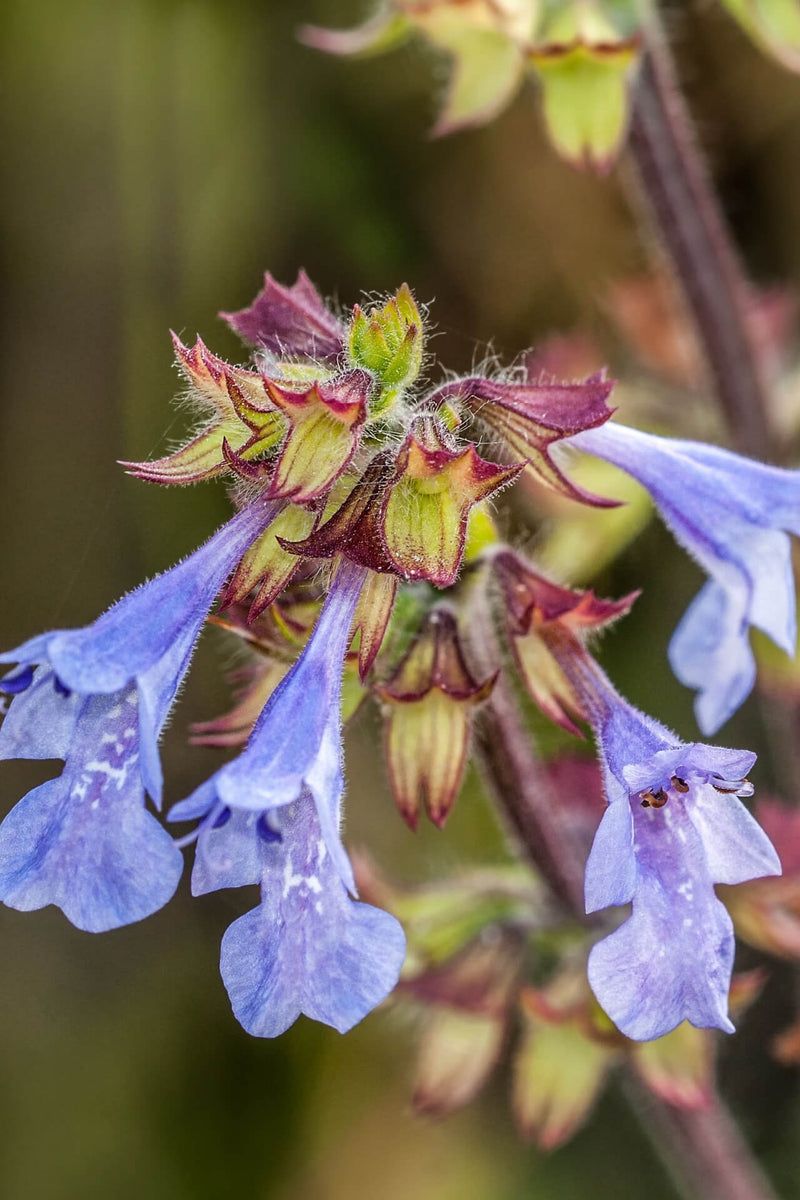
A shady patch under a live oak can make even patient gardeners grumble. Lyreleaf sage earns its spot because it handles those awkward part-shade areas where regular lawn grass becomes thin, dusty, and tired.
The plant forms low rosettes of leaves, then sends up purple-blue flower spikes that look far more polished than bare soil. In a mowed area, the foliage can stay low and act like a green filler.
In a wilder corner, the flowers bring height and seasonal color without much fuss.
Lyreleaf sage is a good choice for homeowners who want a native ground cover with a slightly woodland feel. It can spread by seed in friendly conditions, which is helpful when you need coverage but should be managed if you prefer crisp borders.
In Florida’s sandy soil, adding a little compost at planting can help young plants get going.
Pollinators visit the blooms, and the plant fits nicely near tree islands, shaded walkways, and low-maintenance backyard edges. It is different from the others here because it solves the partial-shade turf problem better than most sun-loving lawn swaps.
6. Railroad Vine
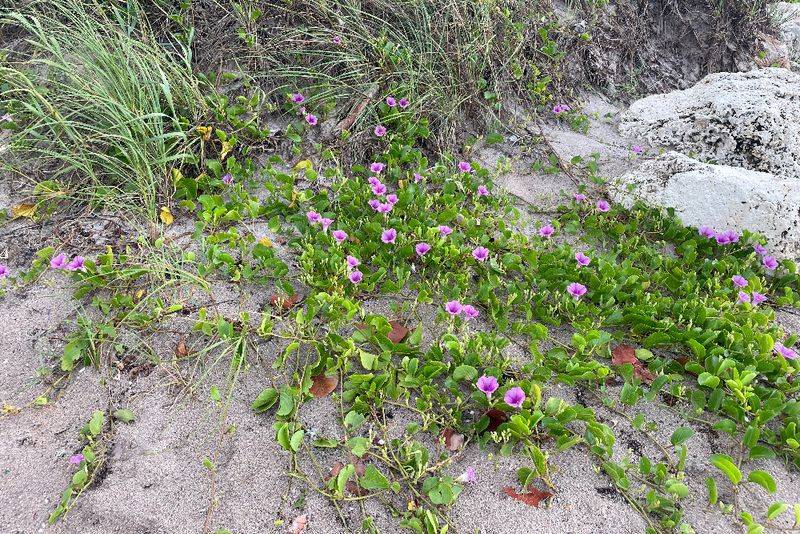
Give railroad vine a bare sandy slope, and it acts like it has been waiting for the assignment. This native beach plant is bold, fast-moving, and built for some of the toughest sunny sites in Florida.
Railroad vine has thick leaves and purple morning-glory-like flowers that bring a coastal feel even away from the dunes. It is best for large, open areas where you need coverage more than a walkable lawn.
Think dry banks, hot roadside edges, sandy corners, and big spaces that are hard to water evenly.
Its strength is also the reason to place it carefully. Railroad vine can travel, so it is not the pick for tiny garden beds or narrow strips beside delicate plants.
In the right spot, though, that energy helps stabilize loose sand and cover ground that grass refuses to hold.
Water young plants until roots are established, then back off. Once it settles, railroad vine is one of the more drought-tough native choices for Florida homeowners who want a rugged, beachy ground cover instead of a thirsty patch of turf.
7. Partridgeberry
Not every lawn problem happens in blazing sun. Under shrubs, along north-facing walls, or beneath high tree shade, partridgeberry offers a calm, green answer where grass simply thins out.
Partridgeberry is a low native creeper with glossy leaves, small white flowers, and bright red berries that add quiet detail at ground level. It has a woodland personality, so it works best in shaded or partly shaded areas with some organic matter in the soil.
If your yard is pure dry sand, improve the planting pocket with leaf mold, compost, or pine fines to help it settle in.
Unlike sunshine mimosa or frogfruit, partridgeberry is not trying to mimic a lawn. Its value is in making shaded bare soil look intentional.
It fits under native shrubs, beside shaded paths, and in low-traffic garden pockets where mowing never made sense anyway.
The berries can interest wildlife, and the evergreen look helps keep beds from appearing empty between bloom seasons. For homeowners tired of fighting grass in shade, partridgeberry changes the goal from forcing turf to building a small, neat forest-floor layer.