
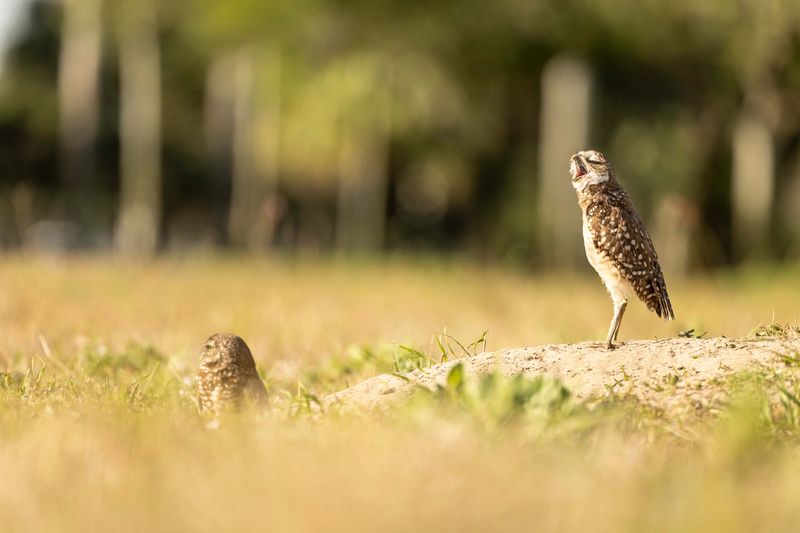
A deep hoot drifts across the yard after dark, and suddenly you are wondering who is out there and why. Fall brings more of these night sounds to Florida neighborhoods, and the questions that follow are practical ones.
What does the call mean, and what does it say about your yard? The answers are more careful, and more interesting, than the common guesses.
An owl’s call is communication, not a hunting report
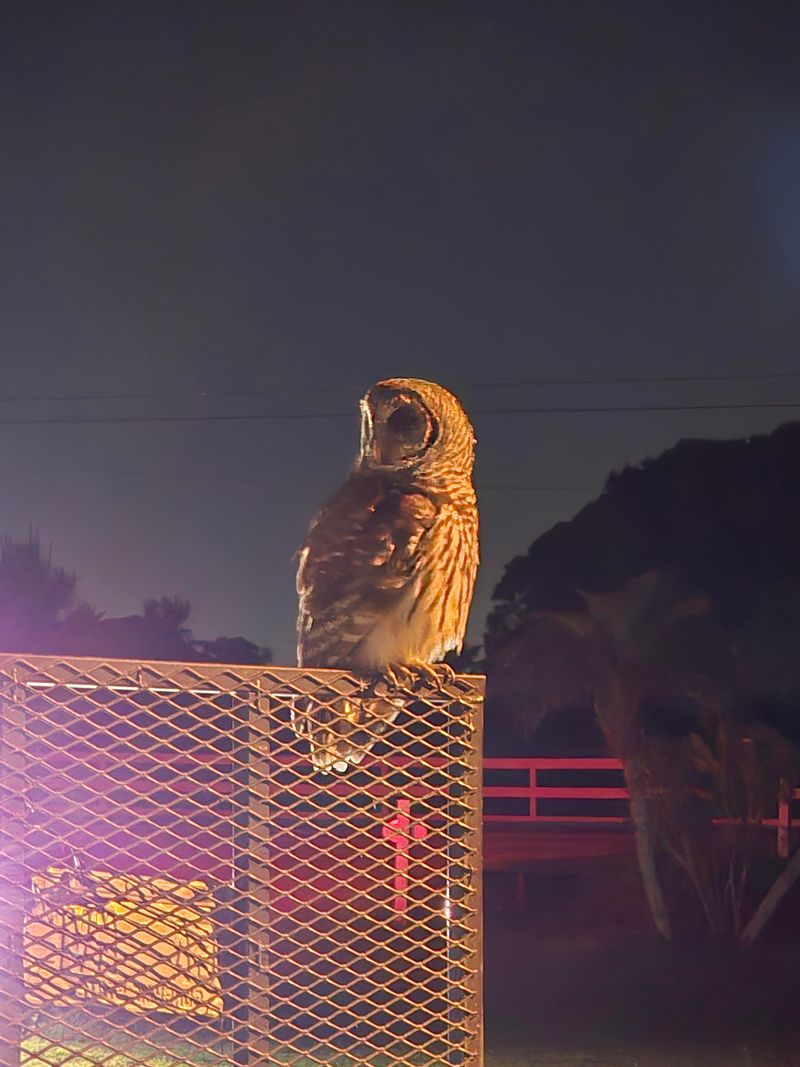
Plenty of people assume an owl hoots because it has spotted dinner. That idea sounds logical, but nothing links a call to a hunting target.
A hooting owl is far more likely to be sending a message than announcing a catch.
Owls use their voices to share information with other owls. According to Cornell Lab owl call guidance, calls can serve purposes such as defending territory, courtship, and keeping in contact with a mate or family members.
Which of those is behind the sound outside your window is something you cannot tell from the hoot alone.
It helps to separate two questions that tend to get blended together. One is why the owl is calling.
The other is whether the owl is hunting nearby. An owl can do both in the same evening, in the same general area, but the call is not the evidence for the second one.
Think of it like a neighbor shouting across a fence. You know someone is out there and trying to communicate, but you do not know whether they are headed to the grocery store or the mailbox.
The sound tells you a bird is present and active, and that is about all it confirms.
So when you hear that low, rolling hoot after sunset, treat it as a sign of a wild neighbor, not a report on what is moving through your garden beds. The sections ahead sort out what you can reasonably learn from it.
Fall does not identify the owl
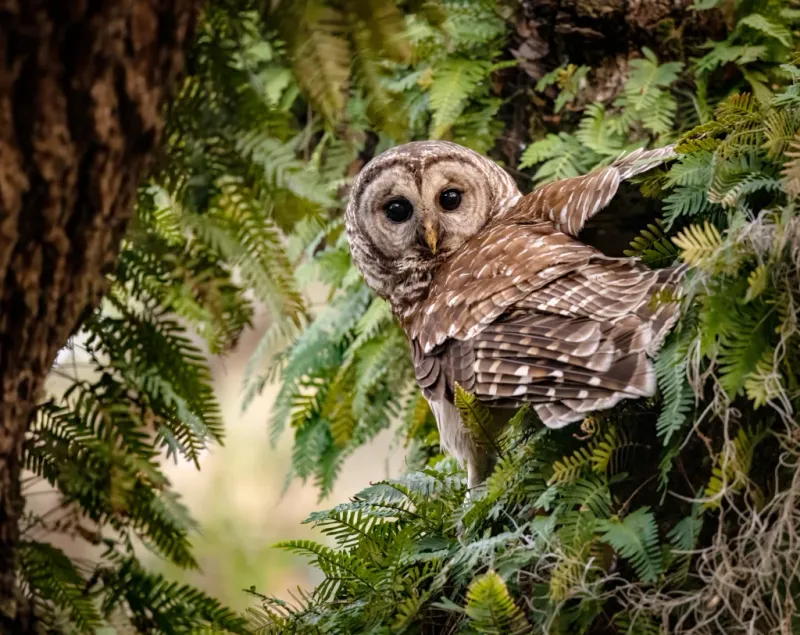
Autumn is a busy time for owl voices in some places, but it is not one uniform Florida pattern. Great Horned Owls are a good example.
Cornell Lab life history notes say their territorial hooting is especially common in fall and winter, including when young birds leave the area and adults defend their ground.
Florida Barred Owls run on a different calendar. UF/IFAS says they normally breed from late January to March.
That means a fall call is not automatically a mating call, and it is not automatically from one species either.
Season alone just cannot name the caller. A Great Horned Owl may be the voice you hear in October, but a Barred Owl can also be calling for reasons unrelated to breeding.
Even the hooting itself may not settle things. Cornell Lab Barred Owl sound pages show how distinctive Barred Owl calls can be, yet a quick listen through a window is rarely enough to be sure.
If you want to narrow it down, gather some clues. Jot down what you heard: a few deep, evenly spaced hoots, or a longer rhythmic phrase.
Record a clip on your phone and compare it with reference recordings. A daylight or flashlight-free glimpse of the bird on a branch can add even more.
Try a simple habit this month. Listen from the same spot at dusk for a few nights and note the time and pattern.
Those small notes will tell you more than the calendar ever could.
Florida owls hunt a varied menu

If an owl is hunting near your home, the menu depends on which owl it is and where you live. Barred Owls give a good picture of the range.
FWC lists rats and other small mammals, rabbits, squirrels, frogs, lizards, snakes, and birds among their prey.
Their hunting style is fairly patient. UF/IFAS notes that Barred Owls often hunt from a perch and mostly at night, though they may hunt during the day.
Small mammals are widely eaten, while crayfish are especially important in some settings. So a Barred Owl near a swampy creek may be eating very differently from one in a dry suburban pocket.
Great Horned Owls have an even wider reach. Cornell Lab describes a broad diet that is mostly mammals and birds, with reptiles, insects, and fish also on the list.
That is a big, flexible menu, and it shifts with whatever is available locally.
Notice what this does and does not tell you. Small mammals are a reasonable possibility for a foraging owl, but they are one item among many.
A frog near your pond, a lizard on the fence, or a roosting bird could just as easily be on the evening schedule.
It also does not let you work backward from a sound. Hearing a hoot does not prove which species is nearby, and it does not show that any particular prey is plentiful in your yard.
The menu is real, but the call is not a window into it.
A nearby call does not diagnose your yard
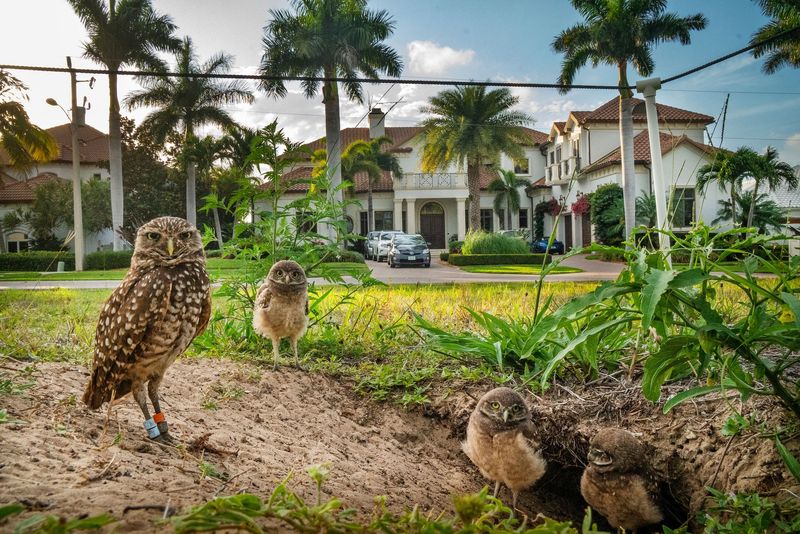
Owls are comfortable closer to people than many homeowners expect. FWC says Barred Owls are common in Florida and use dense forests, cypress swamps, and mixed woodlands, including in suburban areas.
Cornell Lab reports that Great Horned Owls also live in wooded suburbs and cities.
That means an owl can simply be part of your neighborhood. A mature tree line, a retention pond, or a patch of woods a few streets over may be enough to put one within earshot.
Its voice says the habitat suits an owl, not that your yard has a particular problem.
Here is the inference to drop: hearing an owl does not mean you have a rodent infestation. Prey varies with owl species and location, as UF/IFAS diet information shows, and a call cannot tell you what is living under your shed.
The reverse is just as shaky. A visiting owl is not evidence that it is controlling rodents, and no source shows that one owl will reliably reduce household rodent numbers.
It is a wild animal making its own choices over a large territory.
If you want to know about rodents, look for the real signs: droppings, gnaw marks, greasy rub marks along walls, or noises in the attic. Those clues describe your property.
The owl outside describes the neighborhood.
Reduce rodent attractants for your own home
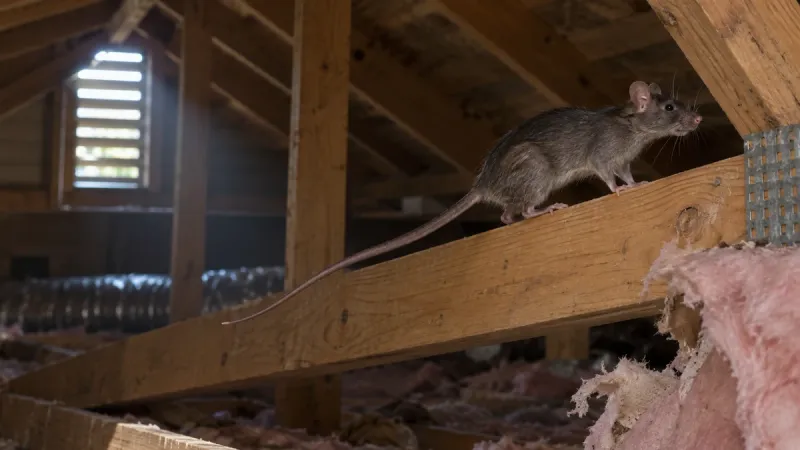
Rodent prevention works best when you treat it as its own project. UF/IFAS rat and mouse guidance recommends cutting back the food, water, and shelter available to rats and mice around your home.
Start with food, since it is the easiest to fix. Keep garbage in cans with tight lids.
Store pet food in sealed containers and bring bowls inside at night. Bird seed is a frequent culprit, so use sealed bins and sweep up spilled seed under feeders.
Next, look at water and shelter. Fix dripping hoses and spigots, and empty containers that hold standing water.
Clear piles of wood, leaf litter, old pots, and general clutter that give rodents a place to hide. Trim shrubs and vines away from walls and rooflines so there is no easy ladder to the house.
Then walk the outside of the house looking for gaps. Check around pipes, vents, garage doors, and where utility lines enter.
Seal openings with sturdy materials such as metal mesh or caulk rather than something a rodent can chew through.
Do these steps because they protect your home, full stop. They are not a way to lure an owl or persuade one to stay.
An owl may visit or it may not, and a clean, sealed yard is worth the effort either way.
Protect owls from unsafe fixes
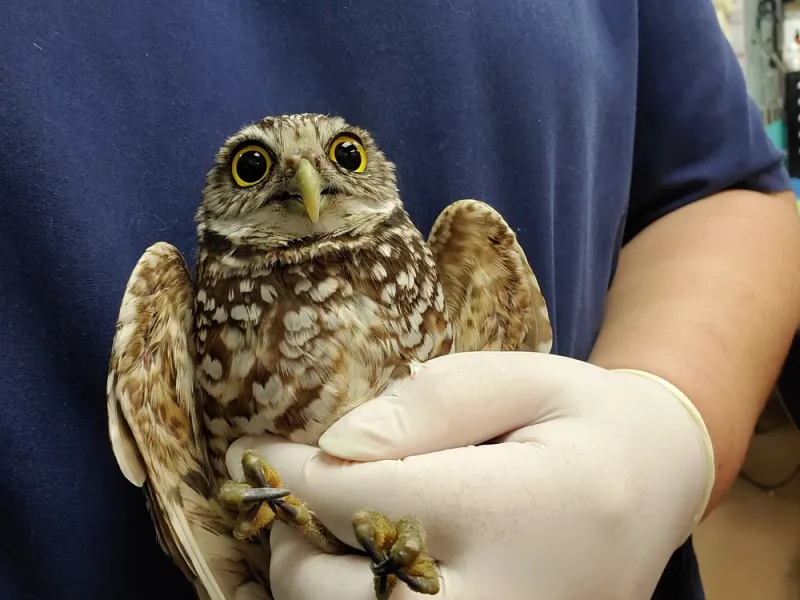
Poison is the fix to avoid. UF/IFAS rodenticide information explains that wildlife can be harmed by eating bait or by eating poisoned rodents, and owls are among the animals at risk.
Poison is not a wildlife-friendly way to manage prey. Start with prevention, and follow product labels closely if you ever use any product.
You might also come across an owl that looks like it is in trouble. If it appears injured or orphaned, FWC advises leaving it in place when possible and contacting a licensed wildlife rehabilitator.
Do not take it home to care for it yourself. Keep pets and children back while you make the call.
Many owls that look odd are fine. A fluffy young bird on the ground or a bird sitting still in daylight is not always in distress, which is another reason to call an expert before acting.
Go back to the first mystery for a moment. As Cornell Lab’s owl call guide explains, calls carry messages between owls.
They are not a verdict on your yard.
The hoot after dark is just a neighbor speaking in a language you only partly understand.