
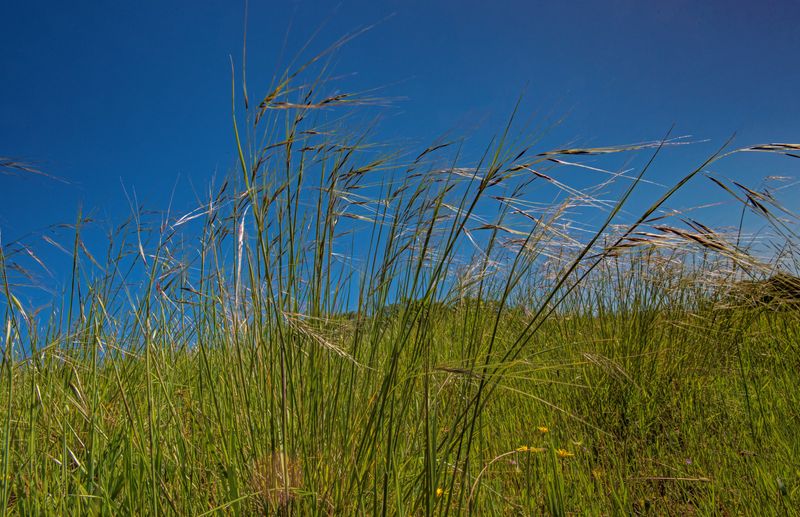
Heavy rain on a bare hillside can carry soil down the slope in a hurry. Purple needlegrass, California’s state grass, is a native bunchgrass with a coarse root system that may help hold soil in place.
It is not a magic fix, and it takes time to settle in. Here is how to decide if it fits your slope before the rainy season arrives.
Purple needlegrass may help stabilize soil, but it cannot secure every slope
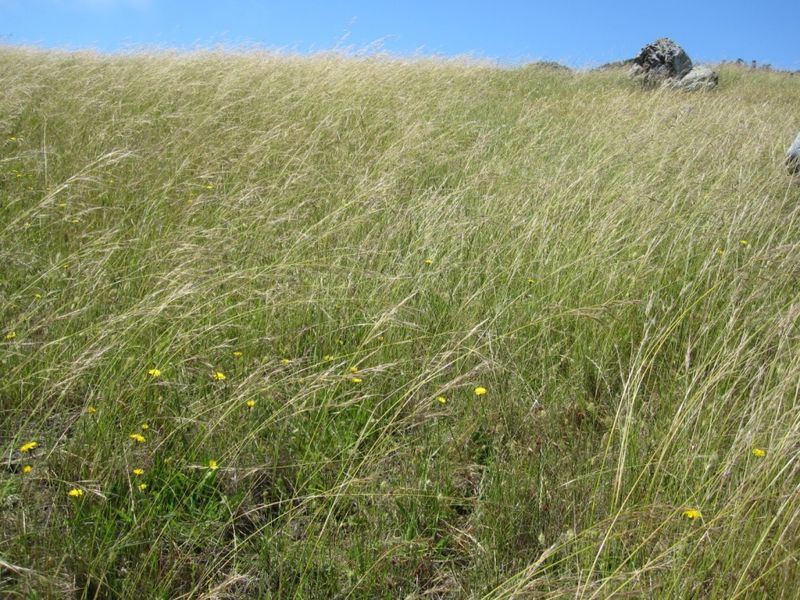
Purple needlegrass (Nassella pulchra) is a long-lived California native bunchgrass. The USDA Natural Resources Conservation Service describes it in its purple needlegrass plant guide as a plant valued for erosion control, because it can build a coarse root system, even on disturbed sites with low fertility.
That is good news for a sloped yard. Roots that spread through the soil can help bind it, and the leaves and clumps can slow water moving across the surface.
Established plants can contribute to soil stability, and that contribution is the useful part of the story.
Still, a plant’s root traits and a guaranteed result are two different things. Nothing in the guidance shows that a home planting of this grass prevents storm damage, slope failure, or landslides.
Slopes fail for many reasons, including steepness, soil type, water soaking in from above, and how the hillside was cut or filled.
Think of purple needlegrass as one helper on the team. It can add roots and cover over time, but it works best alongside good drainage, sensible planting design, and temporary protection while it grows in.
If your slope already shows cracks, sagging, or soil creeping downhill, call a qualified professional before you plant anything.
The rest of this guide covers how the roots behave, when to sow, how to protect a new planting, and what to watch for with fire and dogs.
Rooting varies with soil and site
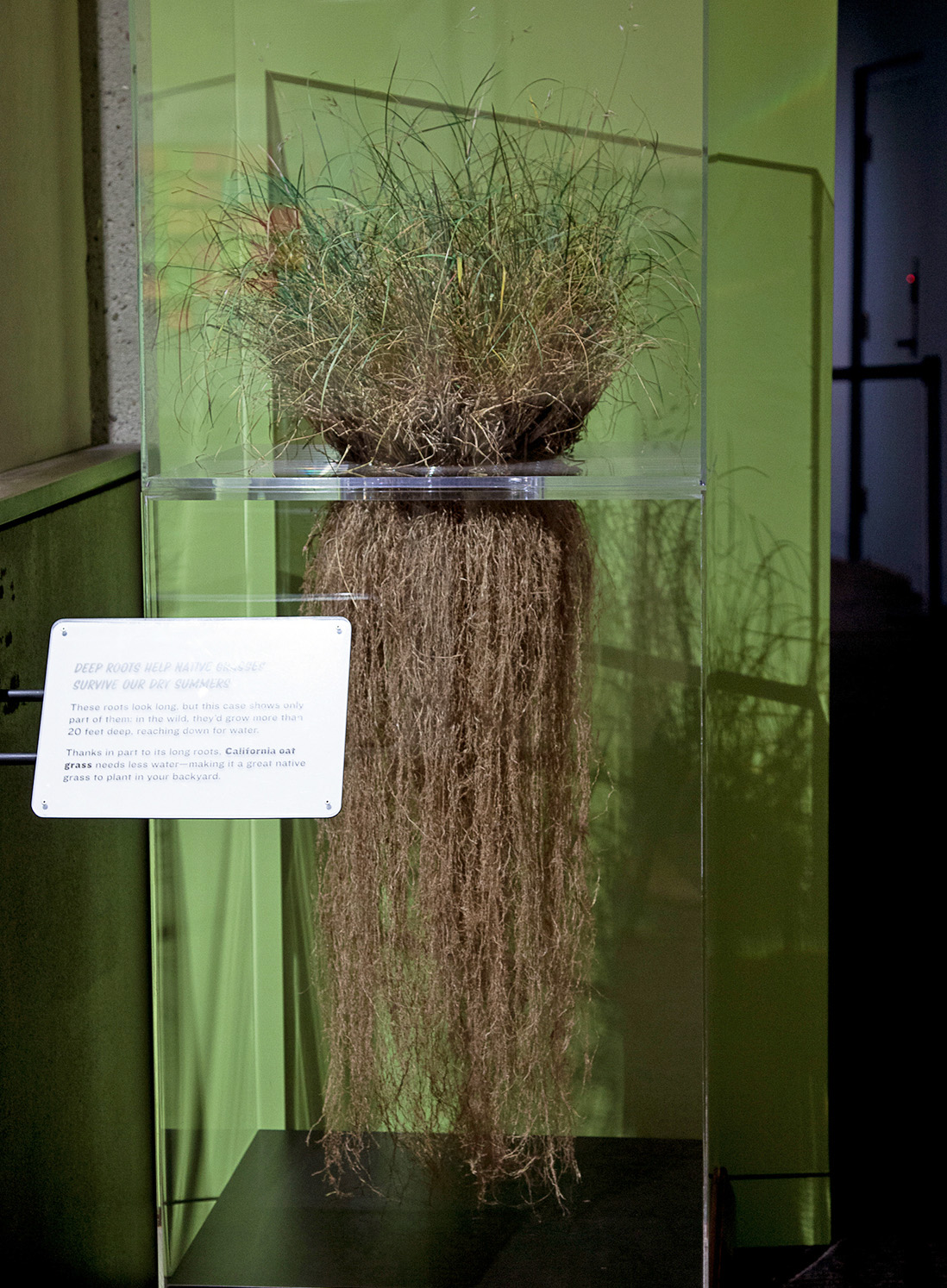
Purple needlegrass has fine, fibrous roots. A U.S.
Forest Service native plant account says the heaviest concentration sits around 6 to 12 inches down, with most roots in the top 2 feet or so and a likely maximum under about 3 feet.
Another Forest Service source, the Fire Effects Information System, reports roots reaching at least 25 inches on deep soils. The numbers differ because soil depth, moisture, and site conditions differ.
So skip any claim of one standard depth, and be wary of sources that promise roots many feet deep.
Here is a practical clue. On a thin, rocky, or compacted slope, expect roots to stay shallower than on deep, loose soil.
Digging a test hole in a few spots will tell you more about your yard than any single figure.
Also remember how this grass grows. As the NRCS plant guide notes, it forms bunches rather than knitting into continuous sod.
Between clumps there is open ground, so the roots are not a seamless erosion-control mat. Planting in a pattern with other plants helps cover those gaps.
Its cool-season growth fits a broad—but variable—rainfall pattern
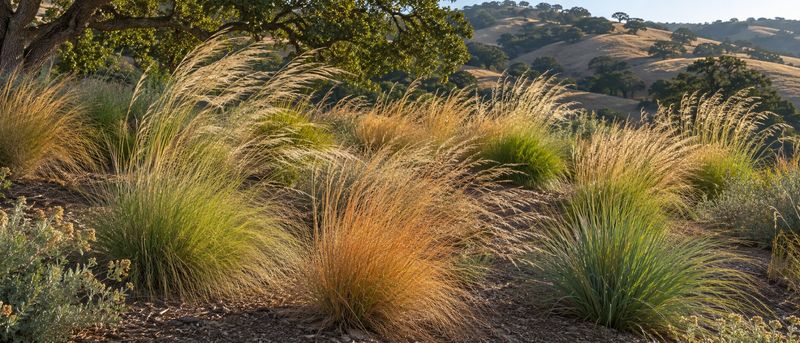
Purple needlegrass is a cool-season perennial. According to the NRCS plant guide, it grows during the cool, wet months and typically goes dormant when summer drought sets in.
A tan, dry-looking clump in August is often just resting.
That rhythm lines up well with California’s weather. A California Water Commission presentation on state precipitation shows most rain and snow arriving in the cool season, broadly October through April, with big swings from year to year.
Broad does not mean the same everywhere. A foggy coastal slope, an inland valley hillside, and a foothill property can get very different rain at very different times.
Purple needlegrass is also not right for every site.
Before you buy seed, look at your own conditions. Note when your first reliable rains usually arrive, how much sun the slope gets, and what grows wild nearby.
A local native plant nursery, your county’s UC Cooperative Extension office, or a native plant society chapter can tell you if this grass fits your area and when planting makes sense there.
Give seed a firm, weed-free start
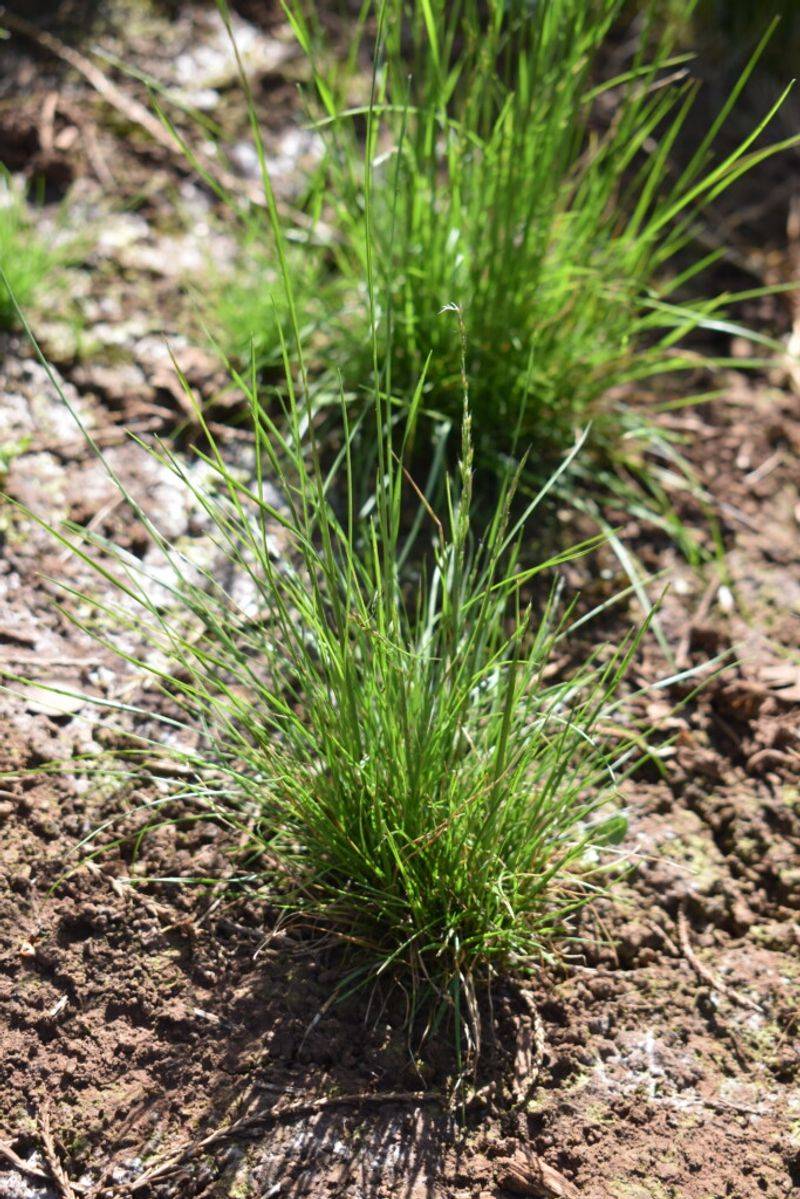
Timing and seedbed matter most. NRCS recommends in its plant guide sowing in the late dormant fall, which gives the best emergence and helps the young grass compete with annual weeds.
Start by clearing existing weeds well before sowing. The seedbed should be firm and weed-free, not fluffy and freshly tilled.
Walk it or press it down lightly, then sow seed about one-fourth to one-half inch deep. Seed buried too deep may never reach the surface.
On a slope, work carefully so you do not loosen more soil than needed. Sow when you can reasonably expect rain to follow, and check local conditions instead of trusting a statewide calendar date.
Now the reality check. Seedlings establish slowly, and weeds can crowd them out, especially in the first year.
A fresh seeding gives you no instant storm protection. Plan to pull or cut weeds around young plants, and be patient.
Roots take time, and so does a stand that looks full.
If a patch fails, that is common with native grass seed. Reseed the bare spot the next fall rather than assuming the whole plan was wrong.
Protect the slope while new roots establish
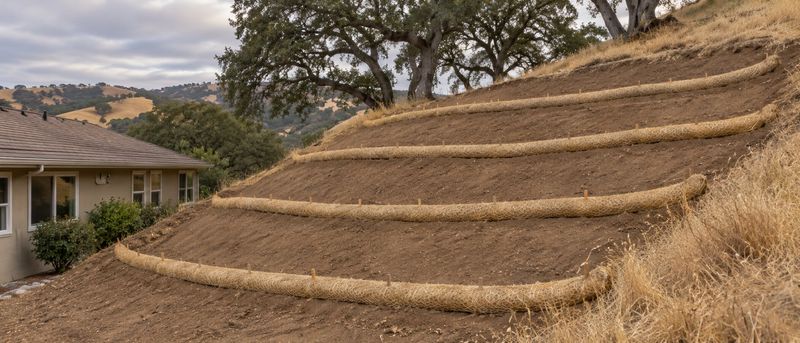
A new planting is most exposed right when the rains come. The UC Marin Master Gardeners hillside guidance recommends diverse plantings, staggered placement, and temporary erosion controls during the first couple of years while new roots take hold.
In practice, that means mixing purple needlegrass with other plants suited to your site, such as locally appropriate native shrubs and perennials, instead of relying on one species. Staggering plants, rather than lining them up in rows, helps break up the flow of water downhill.
Temporary controls can include straw wattles, erosion-control netting, or a layer of mulch. These cover the gaps between bunches that the NRCS notes are part of how this grass grows.
Check them after each significant storm and repair anything that shifts.
Planting is not a substitute for drainage planning. Water from roofs, patios, and driveways needs a safe route off the slope.
The UC Marin Master Gardeners advise hiring professionals for features like French drains and terracing.
If you see cracks, leaning fences or trees, bulging soil, or seeping water, treat the slope as potentially unstable. Get a professional assessment before you invest in planting.
Manage dry vegetation and consider dogs
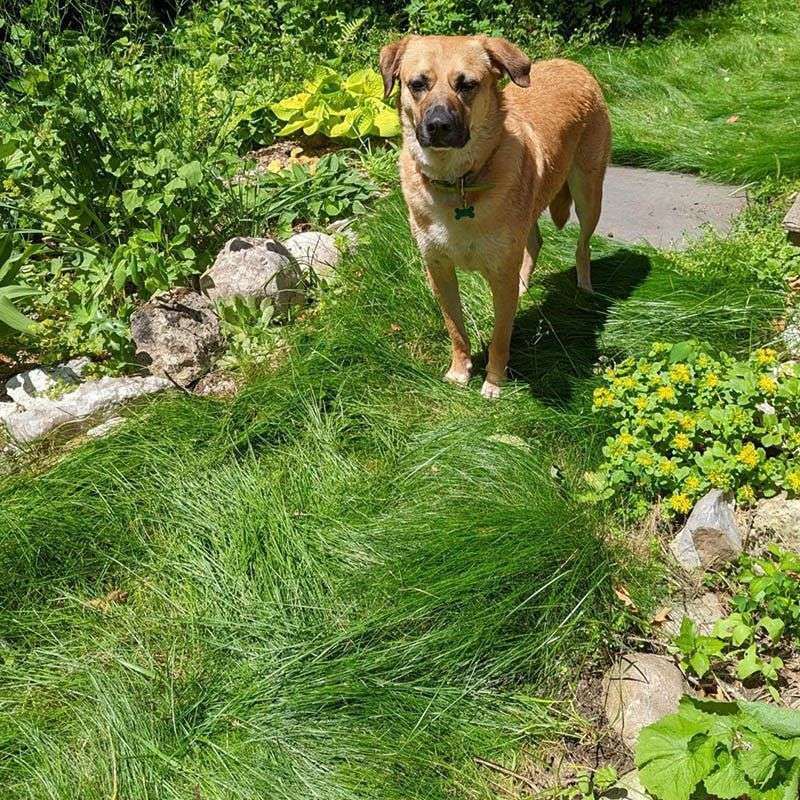
Dormant grass turns golden in summer, and that matters in fire country. CAL FIRE’s defensible space guidance calls for removing dead or dry vegetation and keeping space around your home.
Local rules can be stricter, so check with your city, county, or fire district.
Do not leave dry growth unmanaged near the house. Follow the required zones for your property, and ask your local fire authority how grasses and other plants should be spaced or trimmed where you live.
Dogs deserve a thought too. The NRCS plant guide warns that mature, sharp awned seeds can lodge in a dog’s fur and may injure the animal.
If dogs spend time in the planting, check fur, ears, paws, and between toes after walks through seeding grass in late spring and early summer. See a vet if a dog keeps shaking its head, licking a spot, or limping.
NRCS also notes that when the grass is used as a lawn, mowing before the seeds mature can avoid this problem. On a steep slope, that may not be practical, so keep dog areas separate from the seeding clumps.
Use needlegrass as one part of a slope plan

Purple needlegrass may be a good fit for a hillside planting, especially if you want a long-lived California native. The NRCS plant guide makes clear it takes time to establish, and it cannot guarantee protection from storms.
Pair it with the temporary erosion controls and professional drainage help described in the UC Marin Master Gardeners hillside advice, and get an expert opinion if the slope looks unstable.
A slope is rebuilt slowly, one season of roots at a time.