
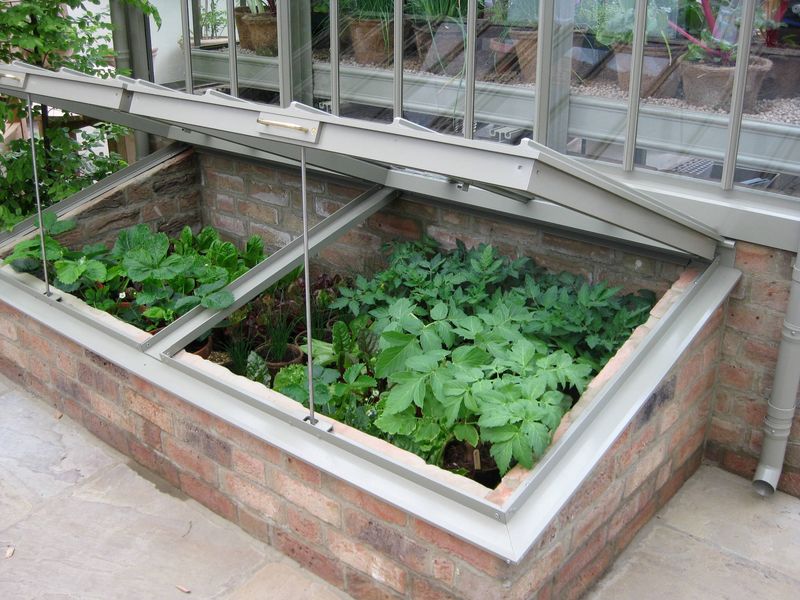
Most gardeners write off their chard once the first hard frost rolls in. Yet a simple cold frame set over a healthy fall planting can keep those colorful stalks within reach for weeks longer.
How long depends on where you live, how much winter sun you get, and how you tend the frame. Here is how to make the most of the extra time, and how to tell when the plants are just sitting tight.
Start with a mature fall planting
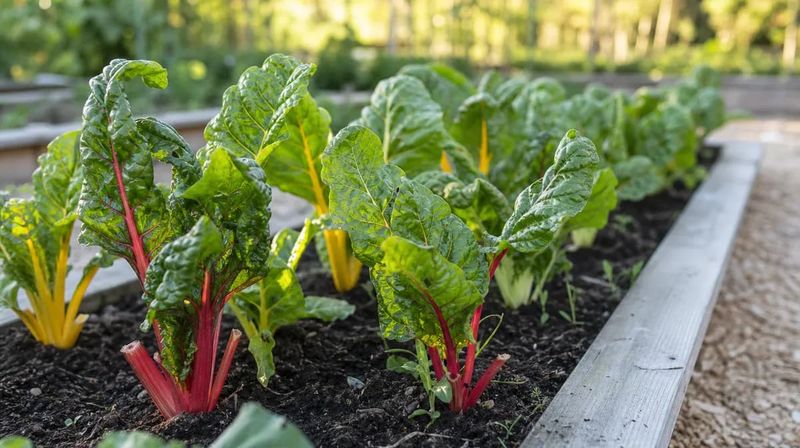
Picture a chard bed that is already full and leafy by the time nights turn cold. That is the one to cover.
A frame works best as protection for plants that are already established, not as a trick to make a brand-new seedling size up in winter, when growth is slow.
Young plants can still earn a spot under glass. A New York Botanical Garden cold-frame guide suggests chard as a baby-green crop, and notes that fall-sown frame crops can be harvested from early winter into spring, depending on conditions.
Think of tender small leaves rather than big, thick stalks.
Timing matters by region too. Oregon State guidance for gardens west of the Cascades says chard planted in late spring or early summer can last through a mild winter, with frost protection extending the season.
Check your own planting date before you build anything.
Light-frost tolerance does not guarantee new growth
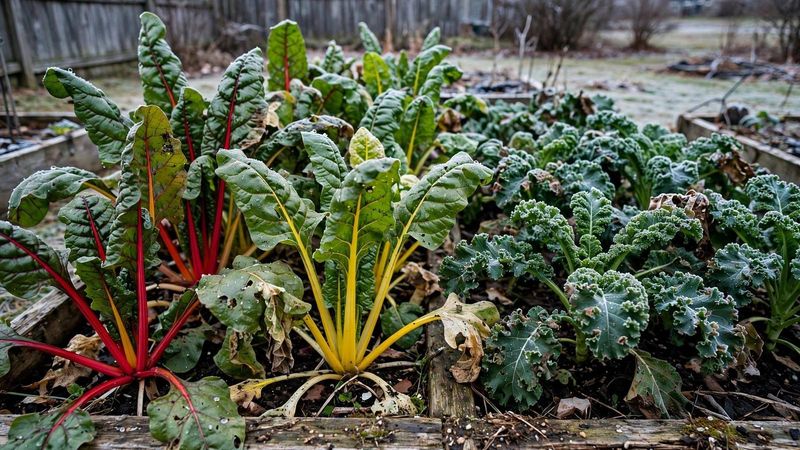
Chard handles a chilly snap better than many garden crops, but its toughness has limits. Utah State Extension says temperatures down to 32°F do not seriously damage young plants.
South Dakota State Extension lists chard as tolerant of light freezes, roughly 28 to 32°F.
Those numbers describe survival, not a promise of perfect leaves. Iowa State Extension notes chard may take minor damage below freezing and can recover in about 7 to 14 days.
Here is the clue to watch for. If leaves look limp after a frosty night but perk up by afternoon, the plant is alive.
If no new small leaves appear in the center for weeks, it is likely resting, not growing. Both can happen under the same frame.
Choose a sunny, well-drained site
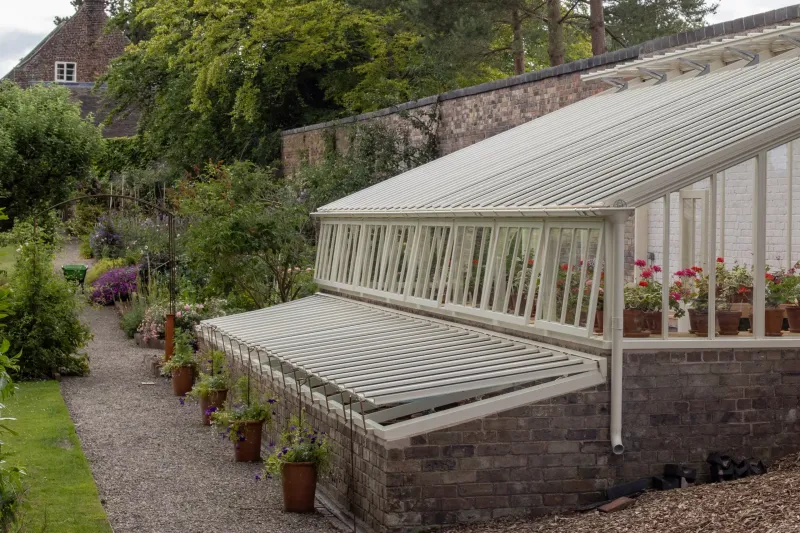
Where you put the frame matters as much as the frame itself. A cold frame runs on sunshine, so pick a spot that gets sun through the short days of winter.
University of Minnesota Extension recommends a south-facing location to maximize solar heating.
Look at drainage as well. A soggy bed in cold weather invites rot, so choose ground where water does not pool after a storm, or raise the bed a bit.
Fit counts too. A snug lid with few gaps helps hold in the warmth gathered on sunny days, a point covered in Iowa State’s cold-frame guide.
Good siting helps, but it has limits. It will not stop every hard freeze, and it cannot guarantee growth in January.
Monitor temperatures and manage the cover
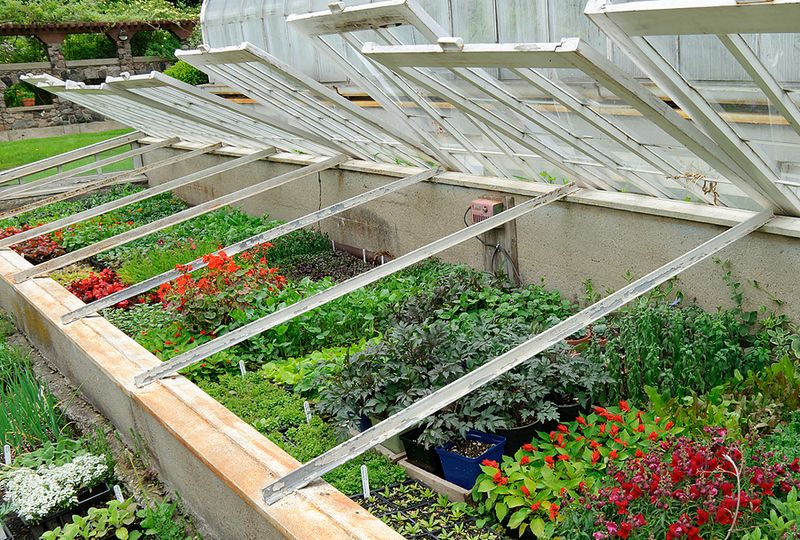
An unheated frame needs a little daily attention. Put a thermometer inside, since a sunny winter afternoon can heat things up fast.
Iowa State advises venting when the air temperature rises above 85°F and closing the frame before sunset to trap the day’s warmth, as described in its cold-frame guide.
The lid also keeps rain out, so check the soil and water when it feels dry. Extra insulation, such as straw or a blanket over the lid on cold nights, may help in some conditions.
Even so, South Dakota State Extension notes that cold frames moderate conditions rather than guarantee warmth, and a severe cold snap can still hurt crops.
If you build a wooden frame, avoid lumber treated with CCA, creosote, or pentachlorophenol. NC State Extension warns these treatments are harmful to growing plants.
Harvest outer leaves and leave the center intact
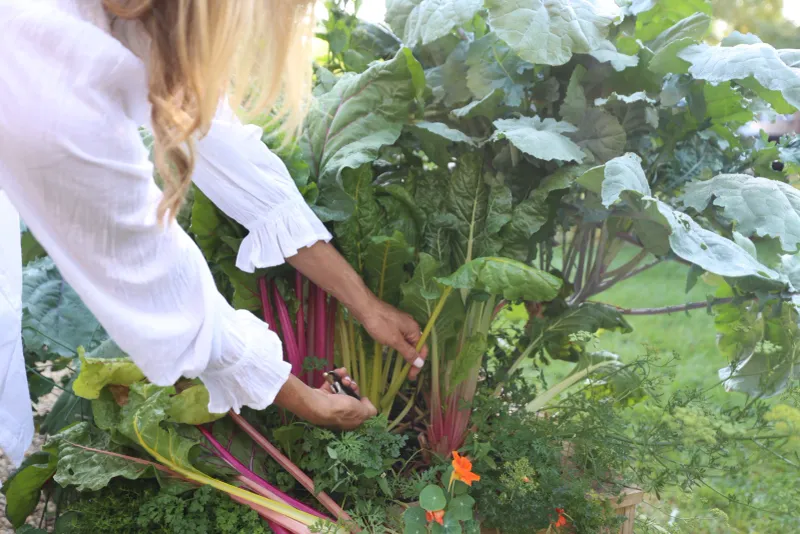
Picking is simple. Snip the outer, older leaves and stalks near the base, and leave the small center leaves to keep developing.
The plant keeps its growing point, and you keep a supply for the kitchen.
Regular, light pickings can encourage more leaf production when conditions allow, as outlined in the Royal Horticultural Society’s chard guide. Take only a few leaves at a time, especially in cold weather.
Picking is not a switch that forces growth. When days are short and nights are cold, a plant may produce little no matter how carefully you harvest.
In those weeks, take less, not more, so the plant keeps enough leaf to stay healthy until spring.
Treat January harvests as a possibility, not a promise
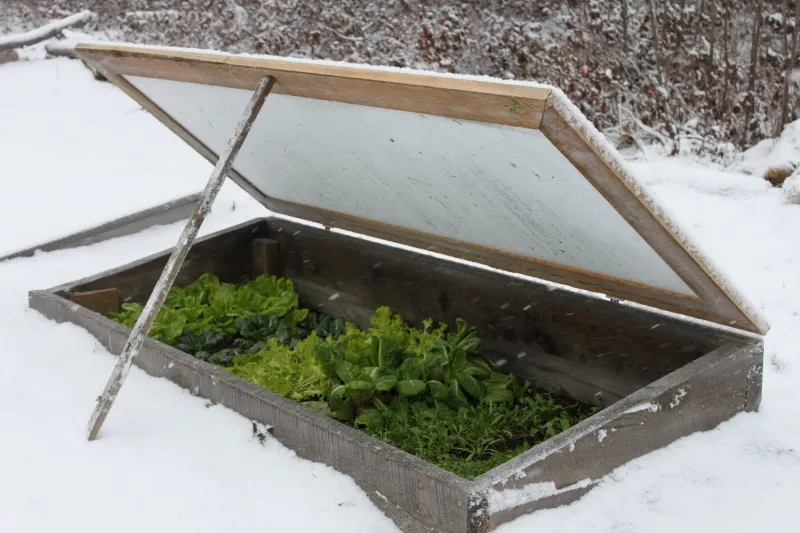
Results differ a lot by region. Wisconsin Extension says a cold frame usually keeps fresh chard available well into December in southern Wisconsin.
That is a good result for a cold state, but it stops short of January.
Purdue is more cautious. Its winter-production guidance says chard growth slows substantially in January and it may not be harvestable then, even in unheated high tunnels.
A home cold frame is smaller and gives less protection than a high tunnel.
Mild regions fare better, but their advice does not carry everywhere. Oregon State’s guidance applies west of the Cascades, where winters are often mild.
So expect that a few January pickings may happen in some places and some years. In many others, growth will slow or stop, and as the RHS notes, protected chard may give only a few leaves in mild spells and then grow faster again in spring.
Aim for a longer harvest window
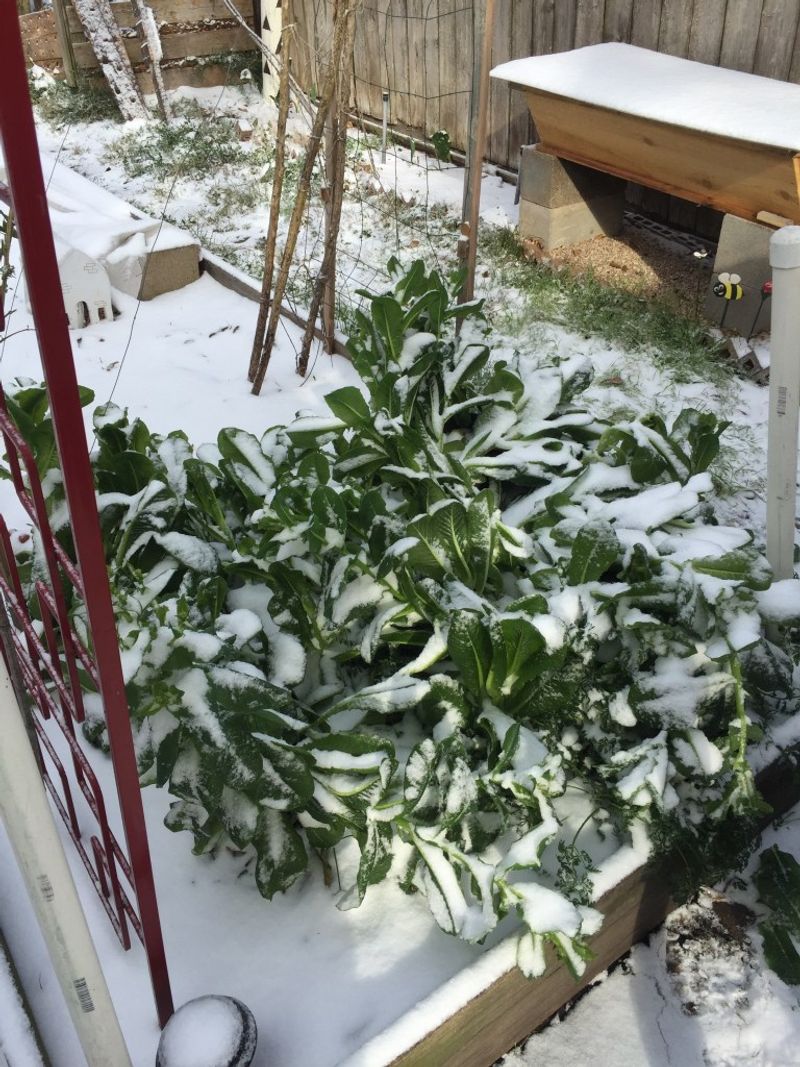
Start with a mature fall crop, keep the frame vented and closed on schedule, and judge success by your own winter. Gardeners in places like southern Wisconsin may see fresh chard well into December, while Purdue’s findings show January can be a standstill.
A cold frame buys you time, not a guarantee. Any bowl of greens picked after the garden has gone quiet is a fine reward.