
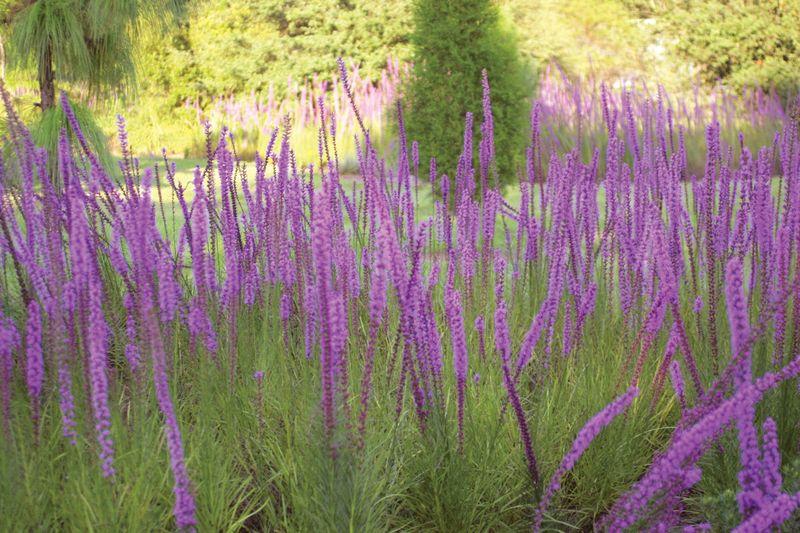
A sandy Florida slope can change fast after one hard storm. Mulch slides, bare soil opens up, and runoff starts carving little channels through the yard.
Native ground covers can help knit that loose sand together while adding flowers, wildlife value, and year-round green. Here are seven Florida-friendly picks that earn their keep when rainwater starts moving downhill.
1. Sunshine Mimosa
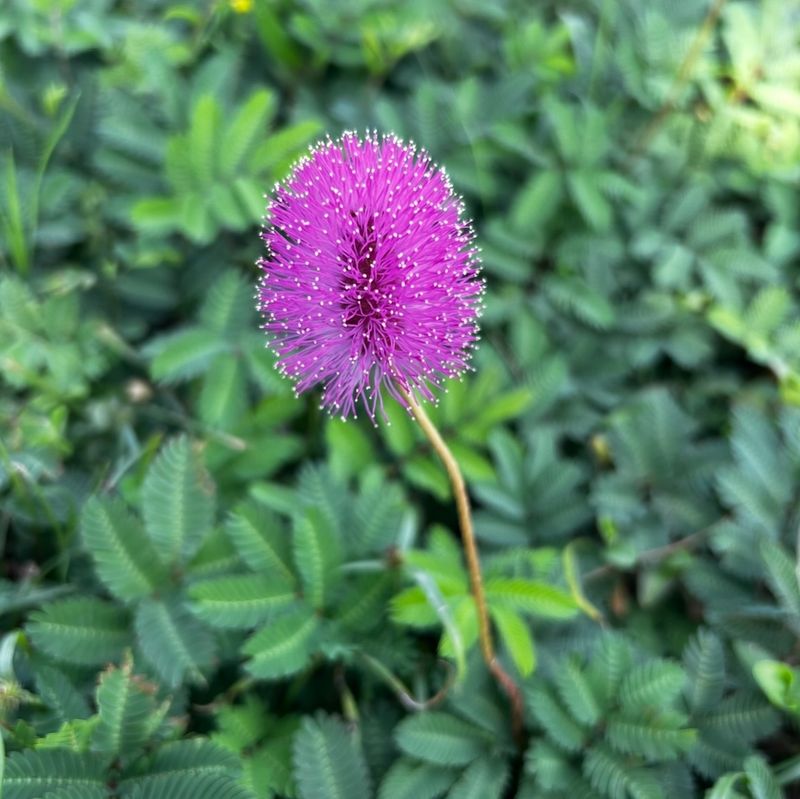
Pink powderpuff blooms are the first thing most people notice, but the real magic is happening at soil level. Sunshine mimosa creeps low across the ground, sending out runners that help cover bare sand before runoff gets a chance to cut channels through it.
For sunny Florida slopes, especially in Central and South Florida, this native is one of the friendliest replacements for mulch or thirsty turf. It handles heat, poor sandy soil, and once established, it needs far less fuss than many ornamental ground covers.
The delicate leaves fold when touched, which makes it a fun plant for kids to notice along a path.
Give it full sun and avoid burying the stems under thick mulch. Space young plants so they can knit together, then water regularly during establishment.
After that, rainfall often does much of the work, though slopes that bake in afternoon sun may need help during long dry spells.
Sunshine mimosa also feeds native bees and other small pollinators, so it does more than hold soil. It turns a problem area into a living mat with flowers, movement, and a softer look than rock or exposed sand.
2. Frogfruit
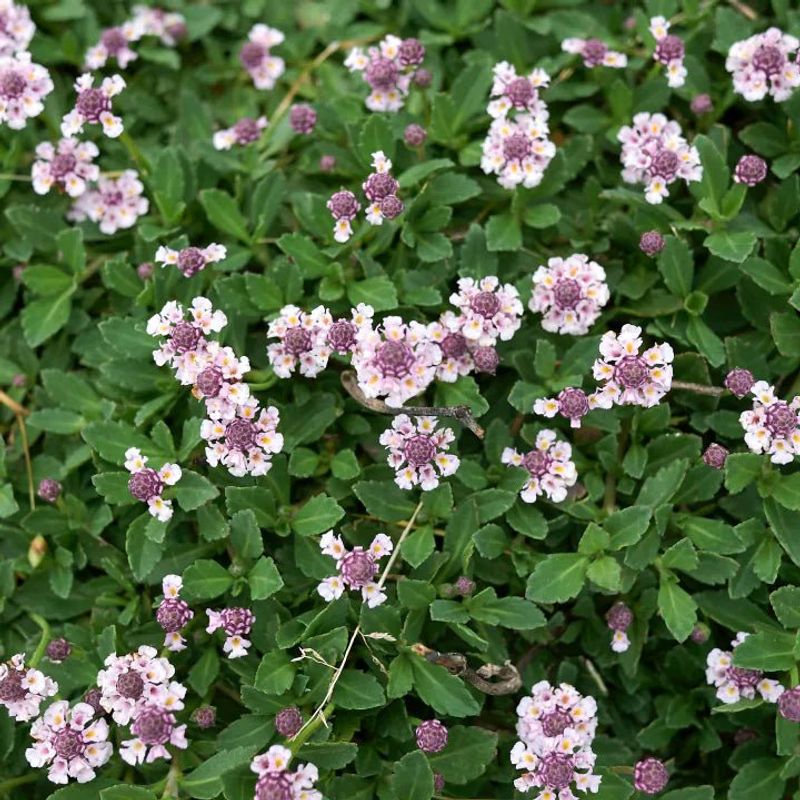
Butterflies seem to find frogfruit before gardeners do. Low, tough, and quick to spread, it is a smart choice for a slope where stormwater passes through but does not stay ponded for days.
Frogfruit grows like a living net, rooting at nodes as it trails along the soil. That habit helps it grip sandy ground in a way loose mulch never can.
It is especially useful along swales, driveway edges, and gentle banks where rainwater sheets across the surface during Florida downpours.
Its flowers are small, but they work hard. Frogfruit is a larval host for several butterfly species and attracts tiny pollinators that bring life to a plain slope.
The plant can tolerate mowing high, light foot traffic, and a range of moisture levels once it has settled in.
For best coverage, plant plugs or small pots closer together on steeper sections. Full sun encourages tighter growth and more blooms, while part shade can work if the soil is not constantly soggy.
Keep weeds down during the first few months, because frogfruit wins by spreading, not by towering over competition.
Compared with showier ground covers, frogfruit feels practical and unpretentious. That is exactly why many Florida gardeners like it for storm-prone spots that need roots, not decoration alone.
3. Railroad Vine
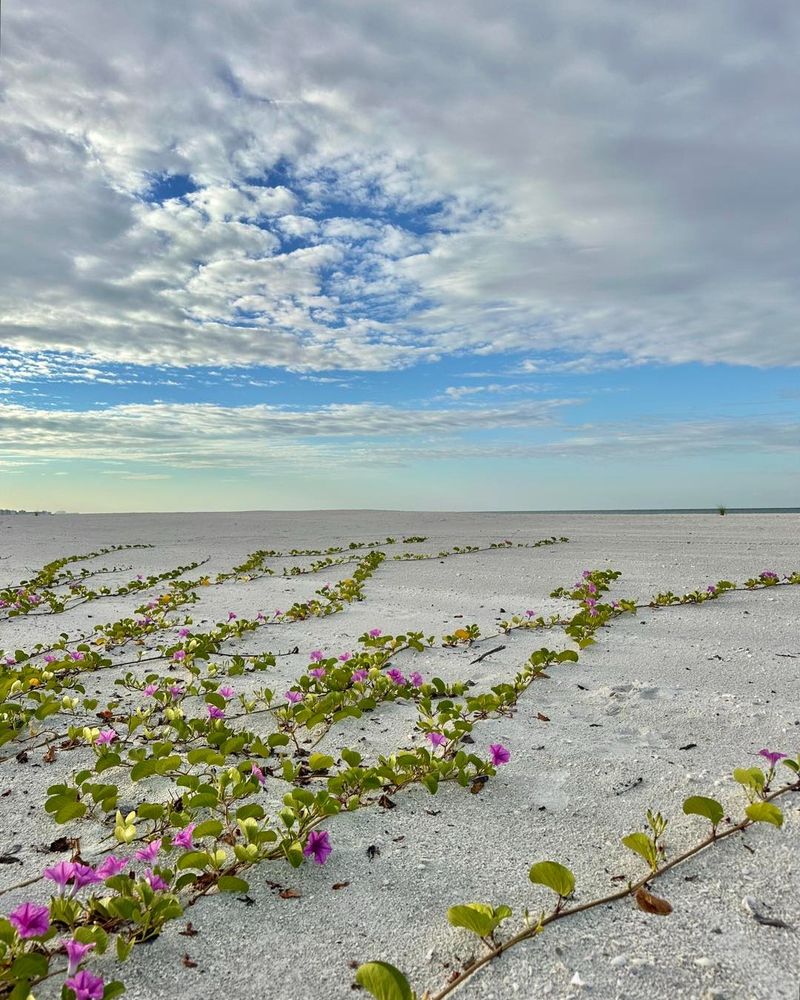
Near the coast, few ground covers look as tough as railroad vine. Its thick runners race across sand, and its purple morning glory flowers make a storm-battered bank look cheerful instead of stripped bare.
Railroad vine is a classic Florida beach and dune plant, built for salt spray, bright sun, wind, and shifting sand. That makes it a strong candidate for coastal properties where ordinary landscape plants struggle.
The long stems help stabilize loose sandy areas, especially where foot traffic is controlled and the plant has room to spread.
Inland gardeners should be more selective. Railroad vine wants excellent drainage and plenty of sun, and it can look out of place in small, formal beds.
On a wide, hot slope with lean sand, however, it can be a standout choice if your site matches its coastal habits.
Plant it where it can ramble without smothering delicate neighbors. Avoid placing it in wet depressions or heavily irrigated areas, since constantly damp soil is not its style.
A fun bit of history sits right in the name: railroad vine earned it because its runners can stretch long distances, almost like tracks over sand.
For Florida coastal slope repair, especially after mulch has washed away more than once, railroad vine offers a rugged, beach-smart answer.
4. Beach Sunflower
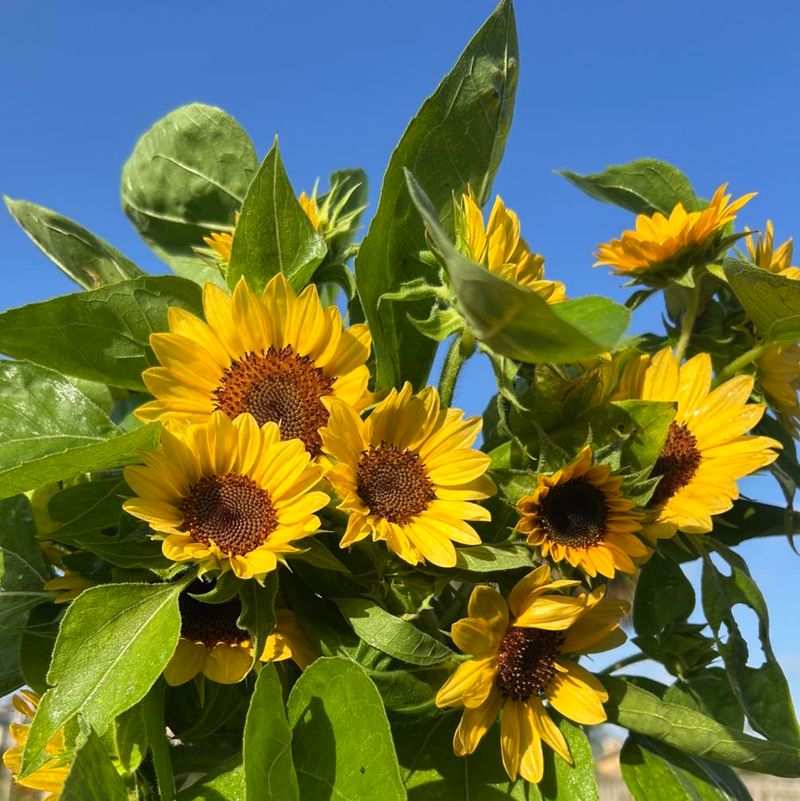
A slope that looks tired after every rain can suddenly feel sunny with beach sunflower. The golden blooms sit above spreading foliage, giving gardeners erosion help without sacrificing color.
Beach sunflower is native to Florida and performs well in sandy, well-drained soils, particularly in sunny areas. It spreads outward to form a dense cover that can reduce splash erosion and slow surface runoff.
Unlike mulch, the plant keeps growing back into open spaces after storms, which is a major advantage on sloped ground.
Pollinators appreciate the flowers, and birds may visit for seeds. In many Florida yards, it becomes a lively edge for driveways, slopes, and open beds where turf is thin or irrigation is limited.
It can handle heat and salt better than many bedding plants, making it useful near the coast as well as in hot inland gardens.
Good drainage matters. If your slope sits wet after a storm, choose a different plant or improve the planting area first.
Trim it back as needed to keep the patch compact and encourage fresh growth.
Beach sunflower brings a slightly wild, coastal look, so it works best in naturalistic landscapes rather than stiff formal designs. For homeowners who want slope control plus a bright pollinator show, it earns its space quickly.
5. Dune Sunflower
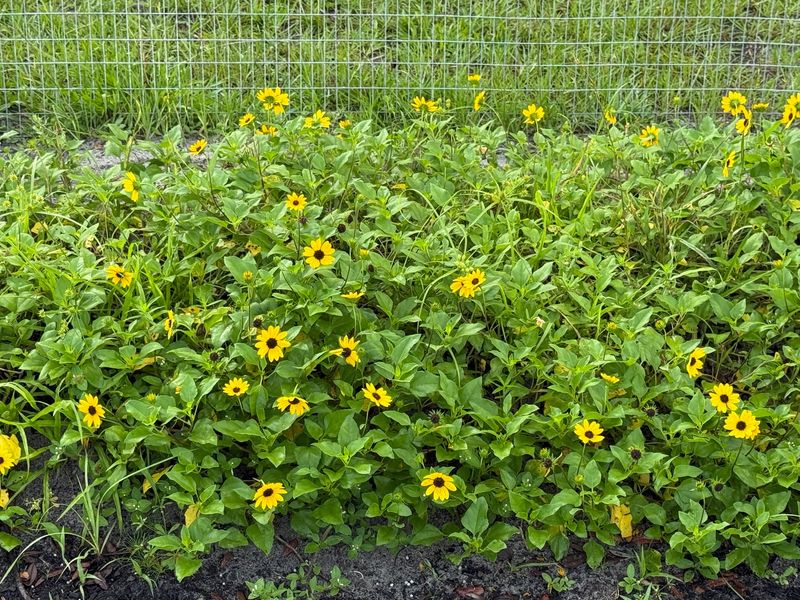
Dry, bright, and sandy is not a punishment for dune sunflower. It is practically an invitation.
Dune sunflower, often discussed alongside beach sunflower, is valued in Florida for its ability to handle lean soils and strong sun. Its spreading habit helps protect exposed sand from raindrop impact, which is one of the first steps in erosion.
Once the foliage fills in, stormwater tends to move more slowly across the surface.
The plant has a relaxed, meadow-like personality. Yellow flowers attract bees and butterflies, while the low growth covers ground without feeling heavy.
It is a good fit for slopes near mailboxes, sunny side yards, septic-friendly low-input areas, and sandy berms where mulch repeatedly migrates downhill.
Maintenance is simple but not zero. Cut back rangy stems when the planting starts to look thin, and remove weeds early while new plants are still filling in.
Avoid overwatering and heavy fertilizing, since too much pampering can lead to floppy growth rather than a tight, useful cover.
Dune sunflower stands apart from some ground covers because it gives a fast visual payoff. Instead of waiting years for a slope to look finished, you get flowers, coverage, and wildlife activity in a relatively short time when the site is right.
6. Creeping Sage
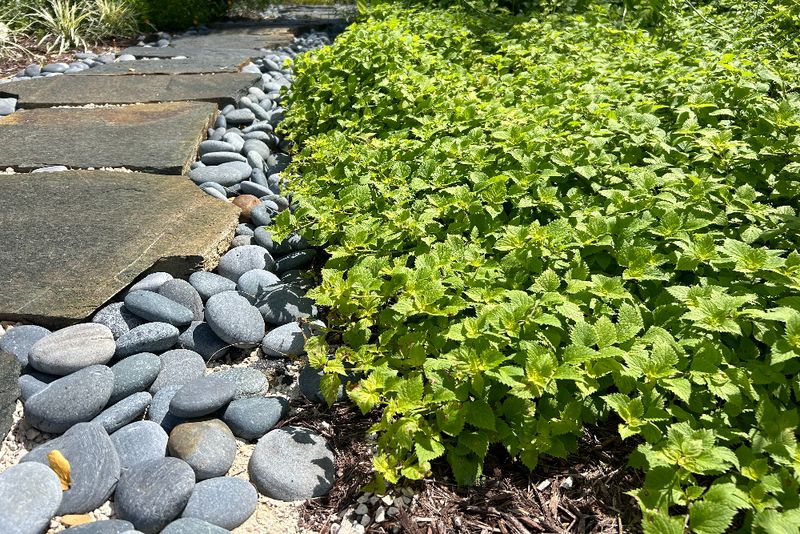
Not every slope is blasted by sun, and that is where creeping sage becomes useful. Under open oaks or along the shaded side of a house, it can cover sandy soil without demanding the spotlight.
Creeping sage is a Florida native salvia with small blue flowers and a low, spreading habit. It is not as bold as beach sunflower or as playful as sunshine mimosa, but it fills a different role.
In part shade, it can help soften bare ground and reduce erosion where mulch slides away during heavy rain.
Because shaded slopes often have tree roots, planting needs a gentle touch. Use small plugs or starter plants instead of digging large holes around established trees.
Water regularly at first, then let the plant adapt to the natural moisture pattern of the site.
The flowers are modest, yet they still support small pollinators. Creeping sage also offers a quieter look that blends well with native shrubs, coontie, beautyberry, and leaf litter.
That matters in Florida yards where every inch does not need to look like a flower bed.
Choose creeping sage for the tricky middle ground: not wet, not full sun, not formal, and not suited to turf. It is a practical native for gardeners who want living coverage beneath light shade without fighting the slope every storm season.
7. Twinflower
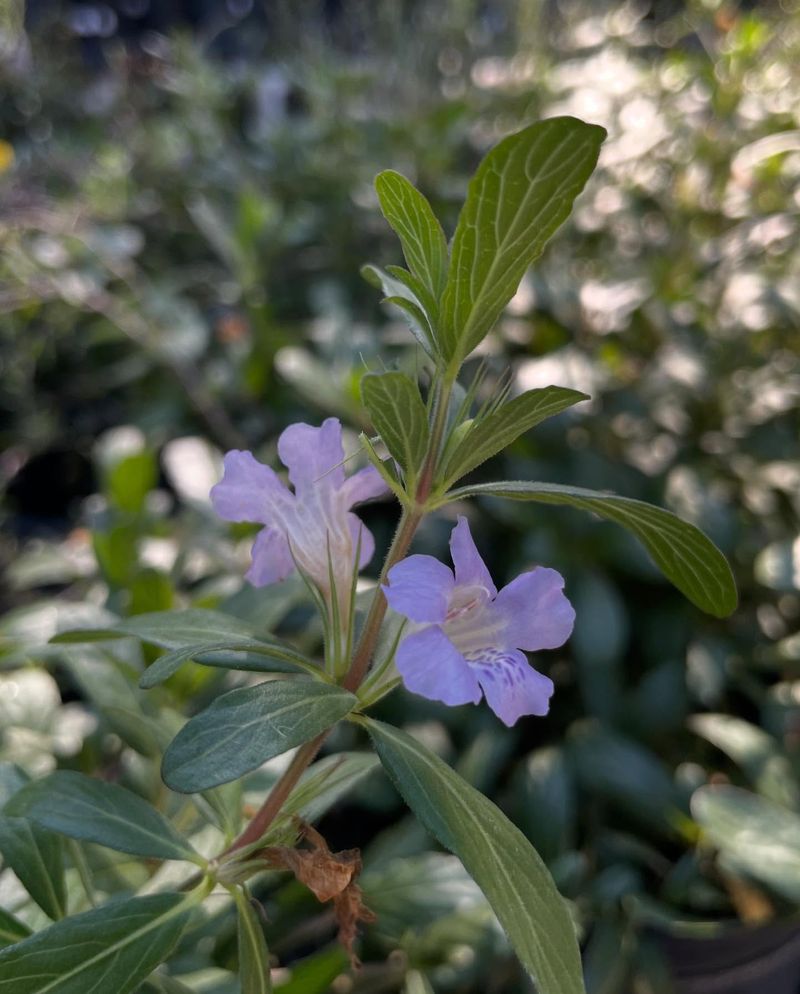
Small purple blooms tucked close to the ground give twinflower a quiet charm. It will not shout from across the yard, but it can make a bare sandy slope look intentional and alive.
Twinflower is a Florida native ground cover that works well in naturalistic landscapes, especially in well-drained sandy soil. Its growth stays low, and over time it can form patches that help shield soil from pounding rain.
That protective cover is valuable when mulch keeps washing into the driveway, swale, or neighbor’s yard.
One reason twinflower deserves attention is its balance of neatness and wildlife value. It tends to look more restrained than some fast ramblers, yet the flowers still draw pollinators.
In the right site, it can tuck between stepping stones, edge a slope, or fill open spots beneath taller native plants.
Give it sun to part shade and avoid soggy soil. Like many native ground covers, it needs patience during establishment, so weed control and steady watering early on are worth the effort.
After the plants knit together, maintenance usually drops.
Twinflower is a good pick for gardeners who want a slope solution that feels more garden-like than beachy. It brings texture, soft color, and root coverage without taking over the entire landscape in one season.