
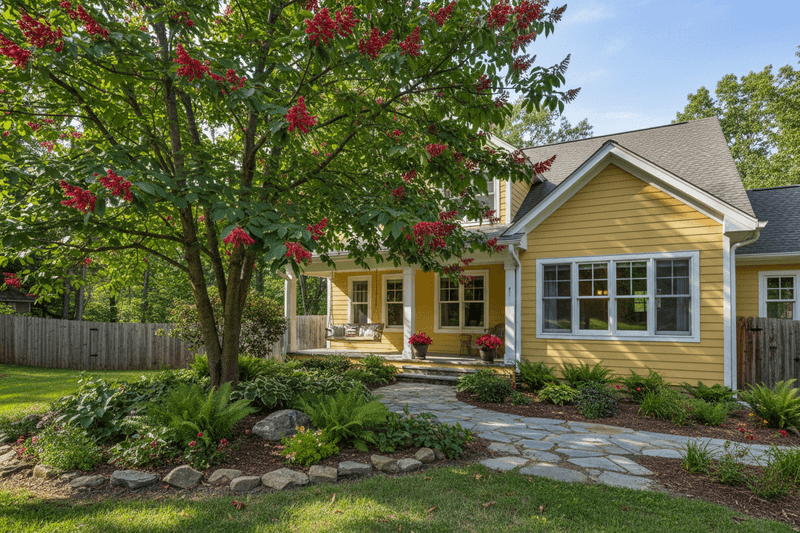
A shady Florida bed can still have warm color when the weather cools. The trick is matching each native plant to your region, your light, and its real bloom season.
Some choices below flower through mild South Florida winters, while others start in late winter or carry the show into spring farther north. Think bright, filtered light rather than deep shade, because none of these plants promises heavy winter bloom in a dark corner.
1. Firebush
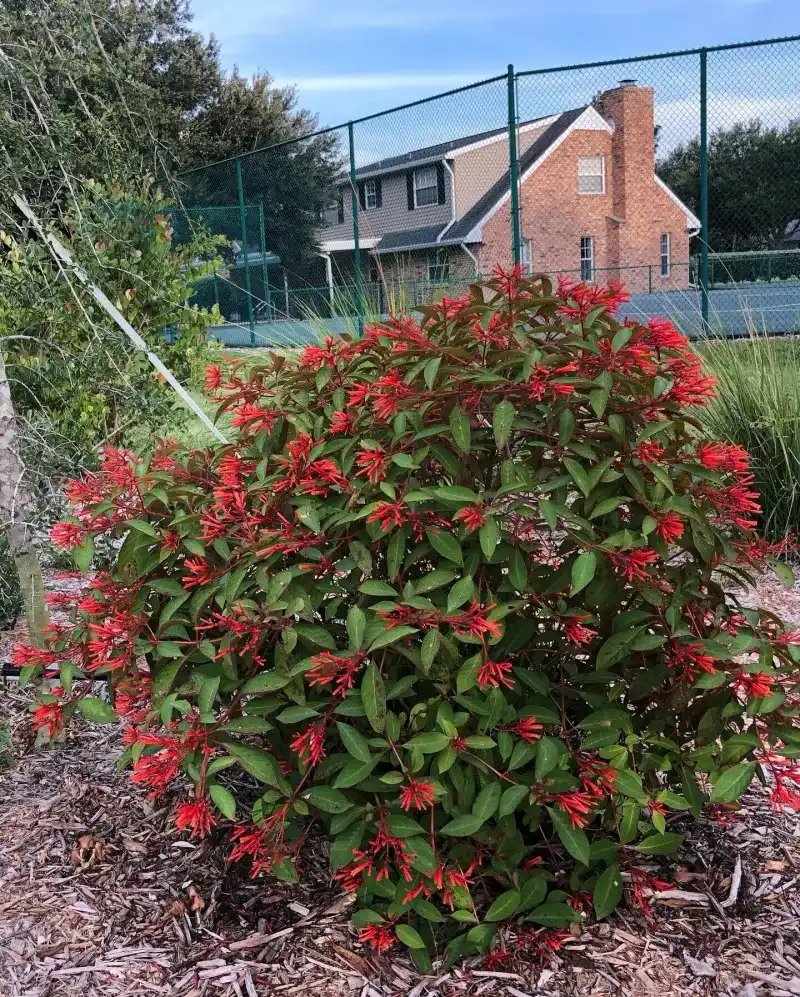
Orange-red flower clusters can keep a South Florida bed looking lively long after summer ends. Native firebush, Hamelia patens var. patens, is one of the strongest choices here for actual winter flowers, provided the weather stays warm.
Give it the bright edge of a shady bed, with morning sun or several hours of filtered light. It tolerates partial shade, but a shrub tucked beneath a thick canopy will usually produce fewer flowers and a looser shape.
Plan for a large shrub, often 8 to 12 feet tall in frost-free gardens, rather than squeezing it beside a narrow walkway. Water regularly while roots establish, then adjust irrigation to rainfall and soil moisture instead of keeping the ground constantly wet.
Cold changes the picture: frost can damage the top growth, and winter flowering is not dependable in Central or North Florida. Buy from a nursery that identifies the native variety, since nonnative forms and hybrids are also sold as firebush, and save major pruning until cold weather has passed.
2. Scarlet Sage
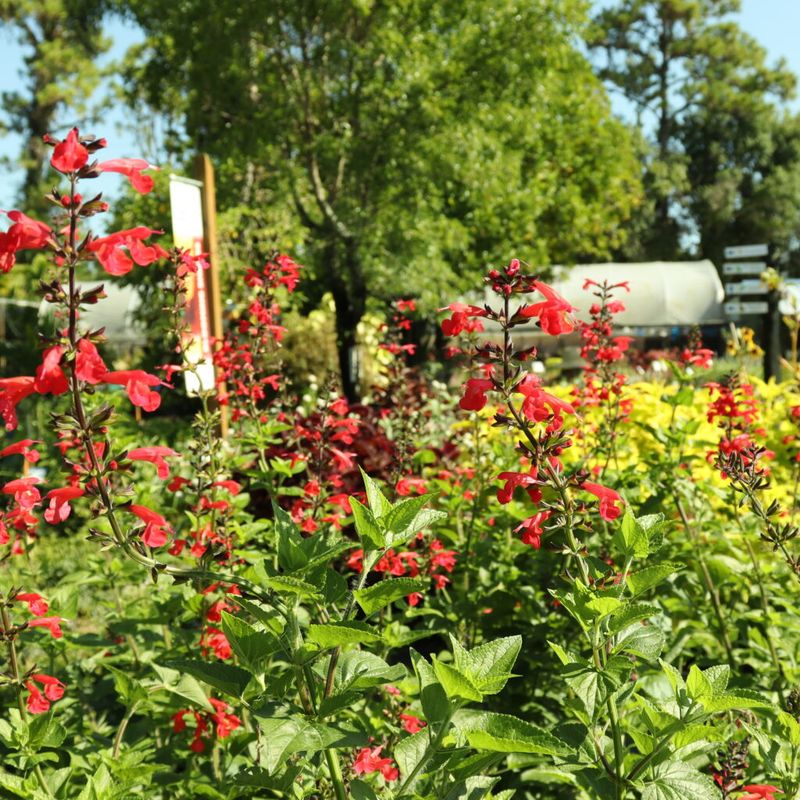
For a small splash of red without a shrub-sized commitment, scarlet sage earns its space quickly. Salvia coccinea carries bright tubular flowers on airy stems, making it useful beside a porch, along a path, or between larger native plants.
Choose the red-flowered form if warm color is your goal, because garden selections also come in pink and white. Plants commonly reach about 1 to 3 feet tall, with a light, informal look that suits a relaxed border.
Morning sun and afternoon shade offer a practical balance in many Florida yards. Sandy soil is fine when drainage is good, but young plants still need watering while they settle in.
Flowers may continue through winter in frost-free parts of Florida; freezes can interrupt the display farther north. Let a few flower stalks set seed if you want replacement plants, then remove unwanted seedlings rather than allowing them to crowd the bed.
Its particular advantage is flexibility: you can tuck small plants into bright gaps without redesigning the entire planting. Hummingbirds also visit the flowers when they are present.
3. Coral Honeysuckle
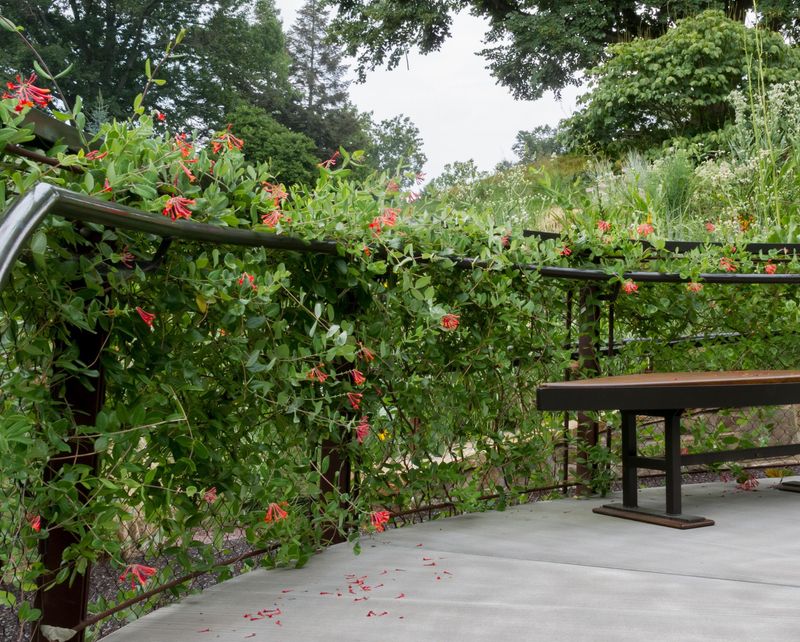
A narrow trellis can turn unused space above a bed into a red-flowered backdrop. Coral honeysuckle, Lonicera sempervirens, climbs rather than forming a bulky shrub, making it a useful option where ground space is limited.
The tubular flowers are red outside with yellow to orange tones inside, and hummingbirds seek their nectar. Unlike invasive Japanese honeysuckle, this Florida native belongs in a wildlife-minded planting.
Place the support where the upper growth receives good light, even if the roots sit in a partly shaded bed. Partial shade is workable, but dense shade reduces flowering; attach young stems loosely until they begin climbing on their own.
Bloom is usually strongest in spring, with scattered flowers possible at other times in mild areas. Treat winter flowers as a regional bonus, not a statewide guarantee, especially where freezes are common.
Allow room for a vine that can reach roughly 10 to 20 feet with support. Prune selectively after the main flowering period, and avoid repeatedly shearing away the growth you want to bloom.
4. Crossvine
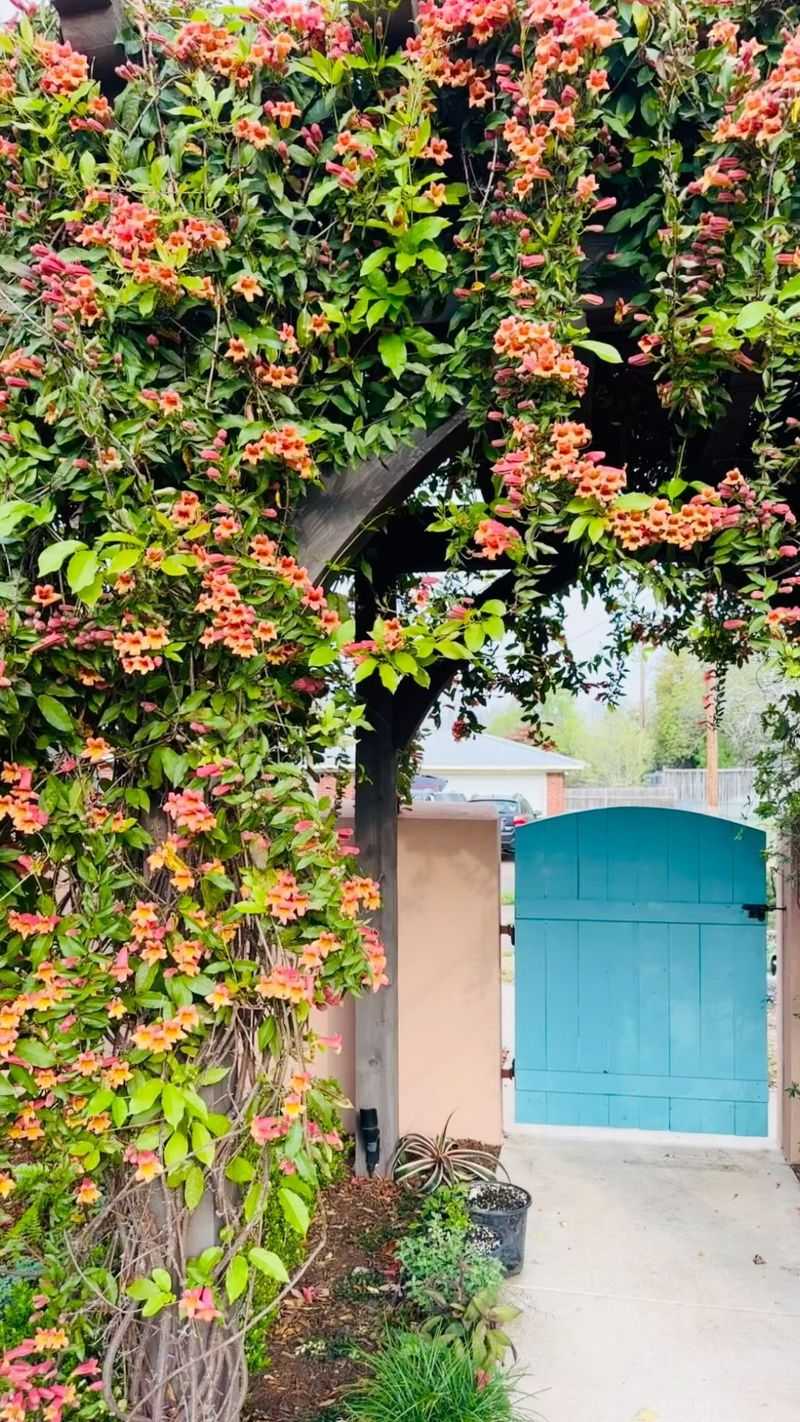
When the bed needs a bold background rather than another small flower, look upward. Crossvine, Bignonia capreolata, produces orange-red trumpets with yellow throats and can cover a substantial arbor or sturdy fence.
Its place on this list comes with a calendar warning: the main show is generally spring, sometimes beginning in late winter in warmer locations. It is a plant to install during winter for the approaching display, not a dependable source of January flowers across Florida.
Crossvine accepts partial shade, though stronger light usually brings more blooms. Let it climb toward sunshine from the edge of a shaded planting, rather than expecting a flower-covered vine beneath dense evergreen branches.
Provide a permanent structure and space for vigorous growth that can reach 30 feet or more. Keep it away from gutters, rooflines, and small ornamental trees that could become tangled in its stems.
Once established in a suitable site, it generally needs less attention than thirsty seasonal bedding plants. Prune after flowering when necessary, and check periodically for shoots spreading beyond the area you intended it to cover.
5. Red Buckeye
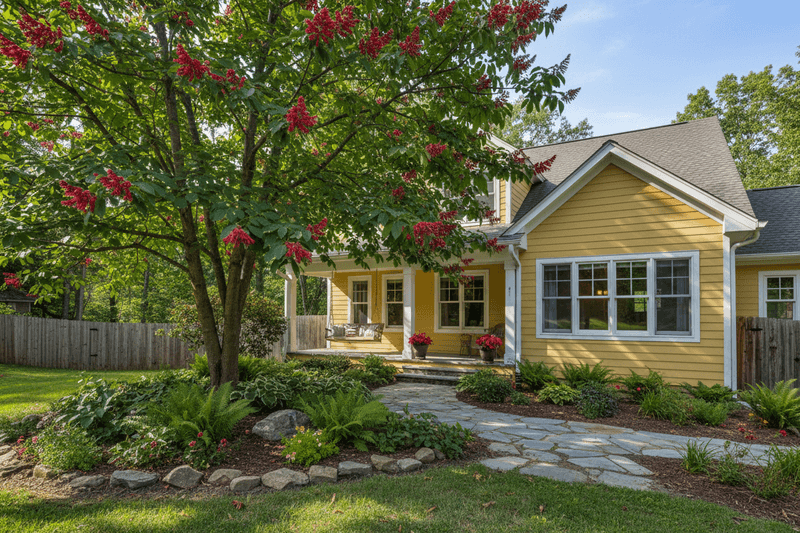
Before many larger trees fully leaf out, upright red flower clusters can give a woodland bed a welcome focal point. Red buckeye, Aesculus pavia, suits North Florida gardeners who want a native understory shrub or small tree rather than a tropical-looking border plant.
Be clear about timing: this is normally a late-winter-to-spring performer, depending on location and weather, not a reliable midwinter bloomer. Its bare winter branches are part of its natural cycle.
Choose partial shade and moist, well-drained soil, preferably where fallen leaves can remain as a light mulch. A dry, sandy bed tangled with thirsty tree roots is a harder assignment and may require careful watering during establishment and drought.
Many garden plants reach about 10 to 20 feet tall, so leave room above and around them. The flowers offer nectar for hummingbirds moving through Florida in spring.
Expect foliage to look tired or drop early during stressful summer conditions; that does not automatically mean the plant is dying. All parts are poisonous if eaten, especially the seeds, so choose another location where children or pets are likely to chew or collect them.
6. Wild Columbine
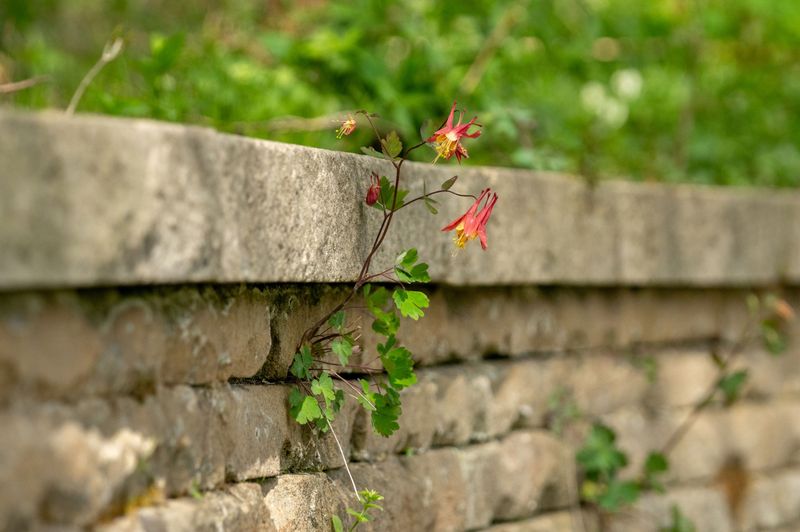
Little red-and-yellow lanterns give wild columbine a look no other plant here can copy. Aquilegia canadensis has nodding, spurred flowers that reward a close look beside a path or at the front of a woodland planting.
However, its Florida connection is very local: it is native to a limited part of the Panhandle, not a sensible statewide recommendation. Gardeners in Central and South Florida should choose another entry rather than trying to force this cool-site plant into a warm winter bed.
Flowering is primarily a spring event, sometimes starting toward the end of winter in favorable conditions. Use winter as planting and establishment time, with realistic expectations about when the red color will arrive.
Offer partial shade and moist but well-drained soil with some organic matter. A cool site with suitable soil is more useful than extra fertilizer, and hot, dry sand is a poor match.
Plants are often short-lived, so allowing some seed to ripen can help maintain a small patch. Buy nursery-propagated plants, never collect wild specimens, and place them where their delicate flowers will not disappear behind taller foliage.
7. Florida Flame Azalea
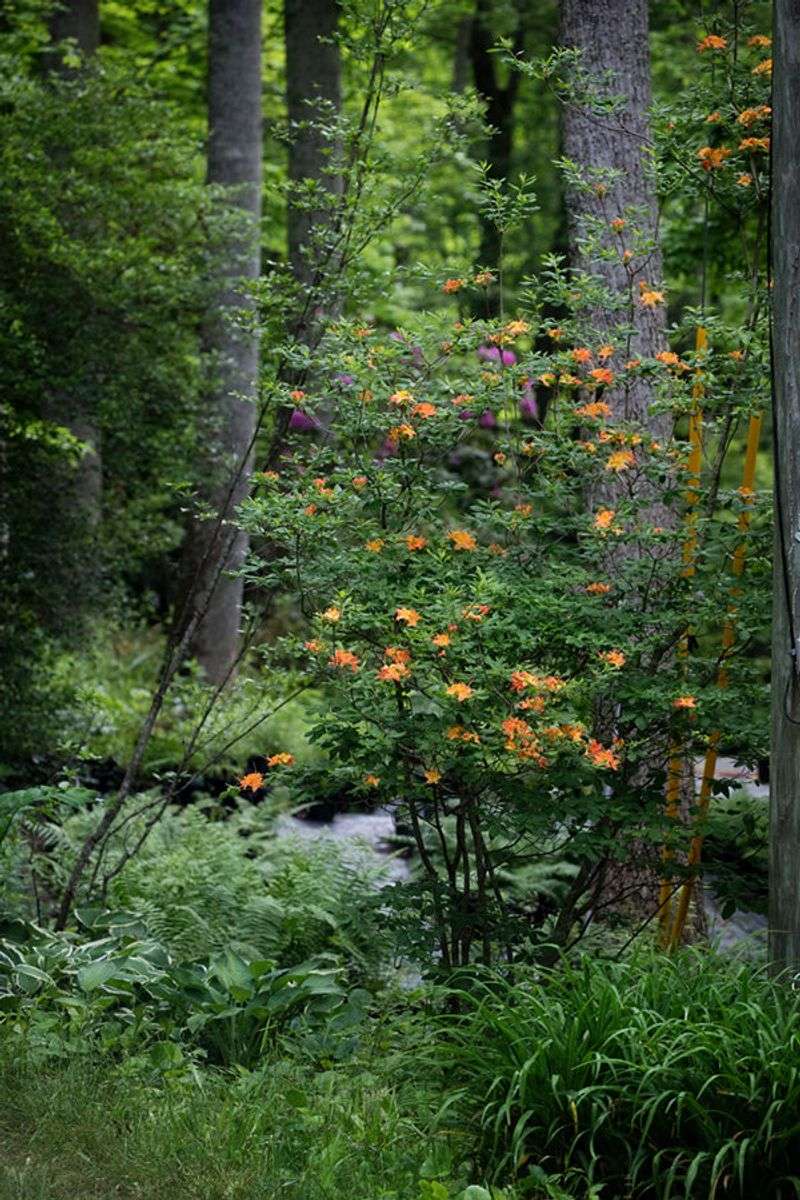
For orange color beneath an open tree canopy, Florida flame azalea offers the most woodland-style finish to this list. Rhododendron austrinum is a deciduous native shrub with fragrant flowers ranging from yellow to gold and orange.
Select a plant while it is flowering if orange matters to your design, since seedlings can vary in color. Its main season is late winter into spring, often March and April in North Florida, rather than continuous winter bloom.
This is chiefly a North Florida and Panhandle choice, not a low-effort shrub for South Florida. Give it filtered light or morning sun, acidic soil, and steady moisture without waterlogging.
Unlike a tough shrub for dry coastal sand, it benefits from a leaf-rich root zone and protection from harsh afternoon exposure. Keep mulch away from the stems and avoid digging around its shallow roots once established.
Allow roughly 6 to 10 feet of height, sometimes more, and prune only when needed after flowering. For the best result, match this shrub to a naturally suitable bed instead of trying to change an unsuitable site with repeated fertilizer and watering.