
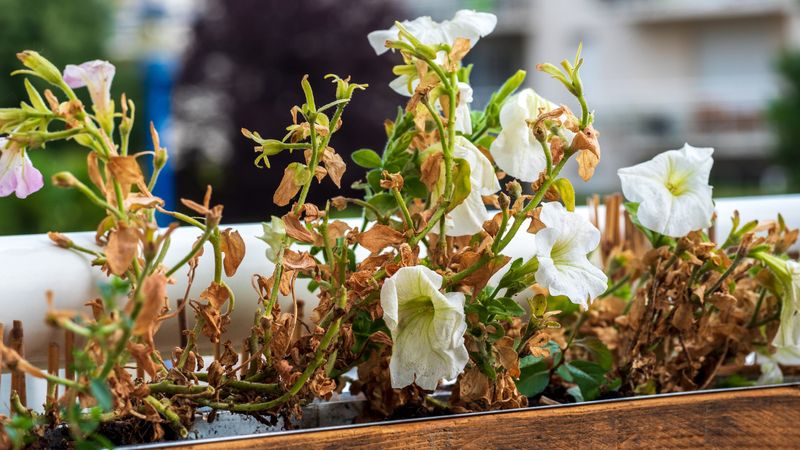
Petunias look tough with all those cheerful blooms, but summer heat can turn them from show-stoppers into sad, straggly messes fast. The good news is that your plants almost always give you warning signals before they crash. Catching these early clues means you can step in and rescue them while there’s still time. Here are eight signs to watch for so your petunias stay full and blooming all season long.
Wilting That Lingers Long After You Water
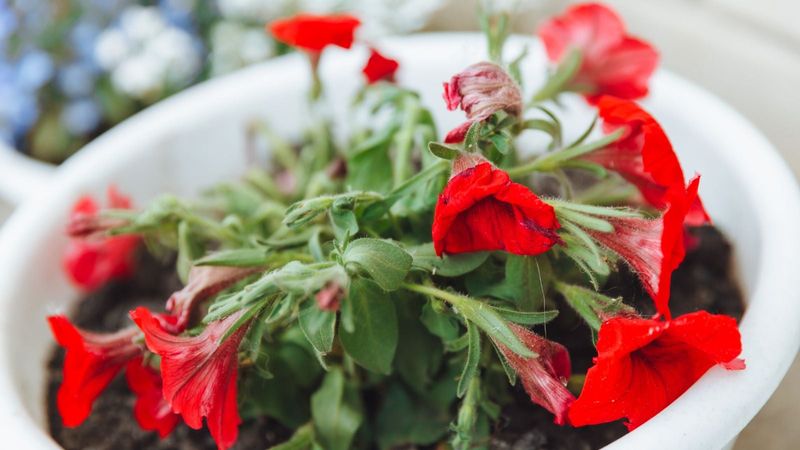
A little afternoon droop is normal on a scorching day, but pay attention when your petunias are still flopped over the next morning. Healthy plants perk back up overnight once temperatures drop, so lingering wilt is a red flag that something deeper is off.
Sometimes the soil is bone dry and the roots simply cannot keep up with the heat. Other times the opposite is true, and soggy roots have started to rot, which stops water from moving up the stems no matter how much you pour on.
Poke your finger about two inches into the soil before you reach for the hose. If it feels dry, give a slow, deep drink at the base rather than a quick splash on the leaves.
If it feels wet and mushy, hold off and let things dry out a bit. Moving containers into afternoon shade during a heat wave can also ease the strain. A daily morning check often catches this problem before a droopy plant becomes a dead one.
Blooms Fizzle Out and Refuse to Come Back
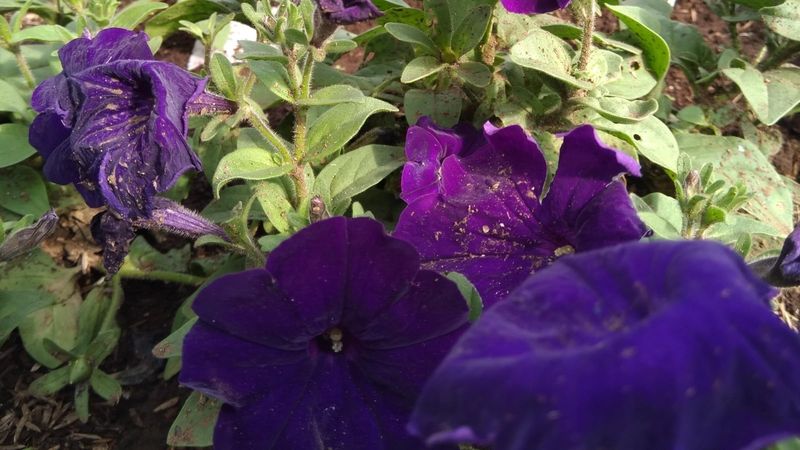
Nothing stings quite like watching a plant that was covered in flowers go suddenly bare. When petunias stop blooming in the heat of July, they are usually telling you they are stressed and cutting their losses.
High temperatures push petunias to focus energy on survival instead of showing off. Add in spent flowers that never got removed, and the plant switches into seed-making mode, which shuts down new buds even faster.
Pinching or snipping off faded blooms, a trick called deadheading, often coaxes fresh flowers to form within a week or two. A light haircut on leggy stems can help too, encouraging bushier, bloom-covered growth.
Feeding with a diluted bloom-boosting fertilizer every couple of weeks may help refuel a plant that has run out of steam. Just avoid dumping on heavy fertilizer during a brutal heat wave, since that can burn already-stressed roots. With steady grooming and gentle feeding, most petunias bounce back and reward you with a second flush of color.
Yellowing Leaves Creeping Up From the Bottom
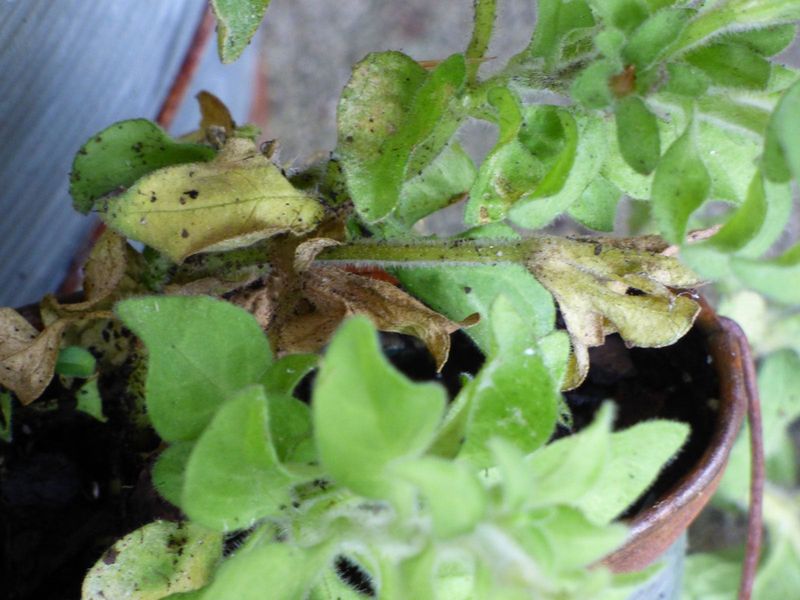
Spot a few lower leaves turning pale yellow and you might have an early nutrient problem on your hands. Petunias are hungry plants, and summer growth burns through food quickly, especially in containers where nutrients wash out with every watering.
Yellowing that starts at the base and moves upward often points to a nitrogen shortage. If the yellow shows up between the veins while the veins stay green, iron or magnesium may be running low instead.
Overwatering can also drown roots and mimic these same yellow warning signs, so check your soil moisture before assuming the plant is simply hungry.
A balanced liquid fertilizer, applied at half strength every one to two weeks, can restore healthy green color over time. Flushing containers with plain water now and then helps clear out salt buildup that blocks nutrient uptake.
Trim off the worst yellow leaves so the plant can redirect energy to new growth. Catching this shift early usually keeps a minor color change from spreading across the whole plant.
Stems Stretching Long and Bare in the Middle
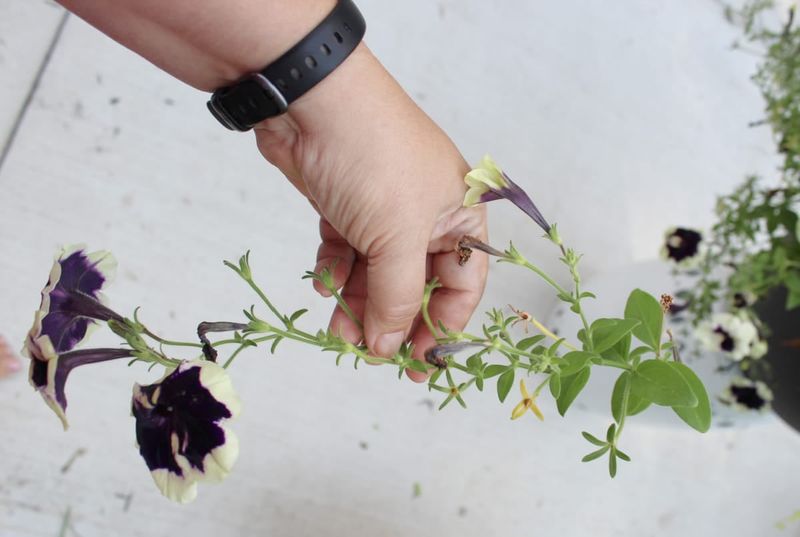
Ever notice your petunias turning into a tangle of leggy vines with flowers only at the tips? That stretched-out, hollow-in-the-center look is a classic sign of a plant reaching hard for something it is not getting enough of.
Heat combined with too little light often triggers this leggy growth. The plant sprints upward and outward, leaving long stretches of bare stem where lush leaves and blooms used to be.
Grab a pair of clean scissors and cut those long stems back by about a third. It feels drastic, but this kind of pruning wakes up dormant buds along the stem and fills the plant back in.
Doing it in stages, trimming a portion every week or so, keeps you from losing all the color at once. Follow each trim with a gentle drink and a light feeding to fuel the fresh growth.
Within a few weeks, most petunias respond with denser, more compact foliage. Regular pinching throughout the season can prevent legginess from taking over in the first place.
Sticky Leaves and Tiny Hitchhiking Bugs
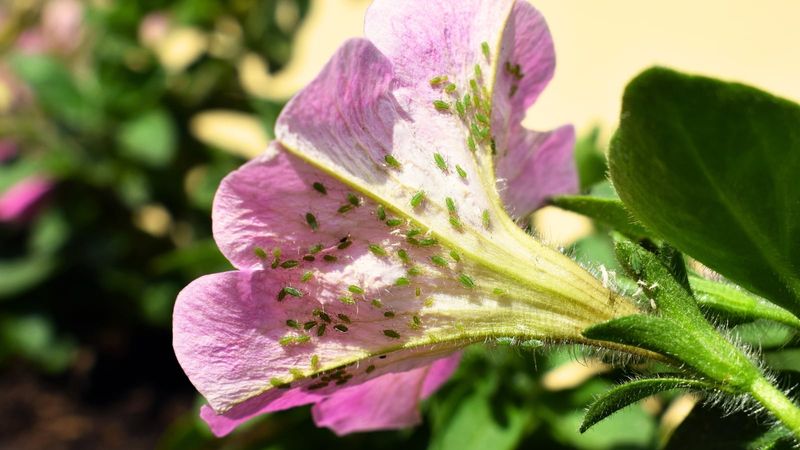
Run your fingers under a petunia leaf and feel something sticky? That residue, called honeydew, is a telltale calling card left behind by sap-sucking pests that love stressed summer plants.
Aphids, whiteflies, and spider mites all thrive in hot, dry weather and can move onto weakened petunias fast. You might spot clusters of tiny green or black specks on new growth, fine webbing between stems, or clouds of little white flies when you brush the plant.
A strong blast of water from the hose knocks many of these pests loose before they multiply. For heavier infestations, insecticidal soap or a diluted neem oil spray can help reduce their numbers when applied in the cooler evening hours.
Check both sides of the leaves every few days, since bugs love to hide underneath where you cannot easily see them. Removing badly infested stems also slows the spread.
Keeping plants healthy and properly watered makes them far less inviting, so good care doubles as your best pest defense.
Crispy Brown Edges and Scorched Petals
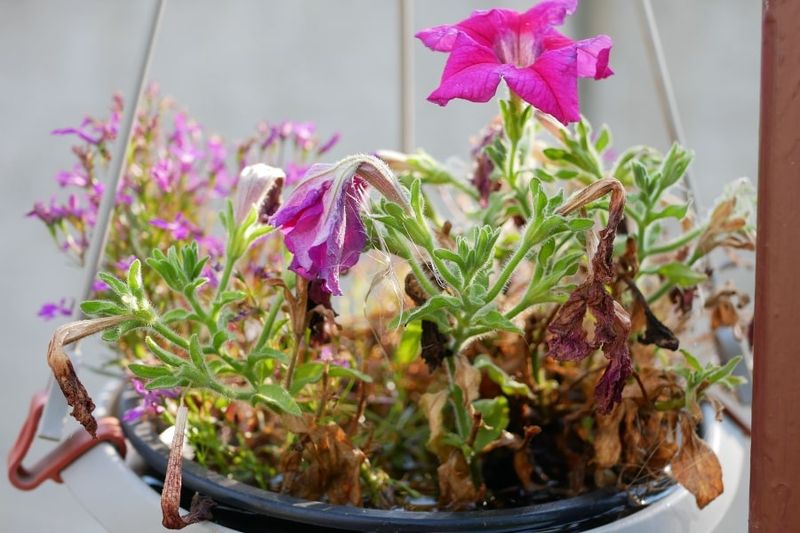
Brown, papery leaf edges and flowers that look bleached or singed are your petunias waving a distress flag straight at the sun. Intense afternoon rays reflecting off patios, walls, or pavement can literally cook delicate tissue.
Container plants suffer the most because their roots heat up quickly, and dark pots soak in even more warmth. Once the soil dries out under that kind of blaze, scorching spreads fast across leaves and blooms alike.
Shifting pots into a spot with morning sun and afternoon shade can spare them the worst of the heat. A light shade cloth draped during peak sun hours may also protect plants stuck in exposed beds.
Mulching around in-ground petunias keeps roots cooler and holds moisture longer between waterings. Try to water early in the day so plants go into the hottest hours fully hydrated.
Snip away the crispiest leaves and spent petals to tidy things up and let the plant focus on recovery. With a little shade and steady moisture, fresh growth usually returns.
Soil That Dries Out Almost Instantly
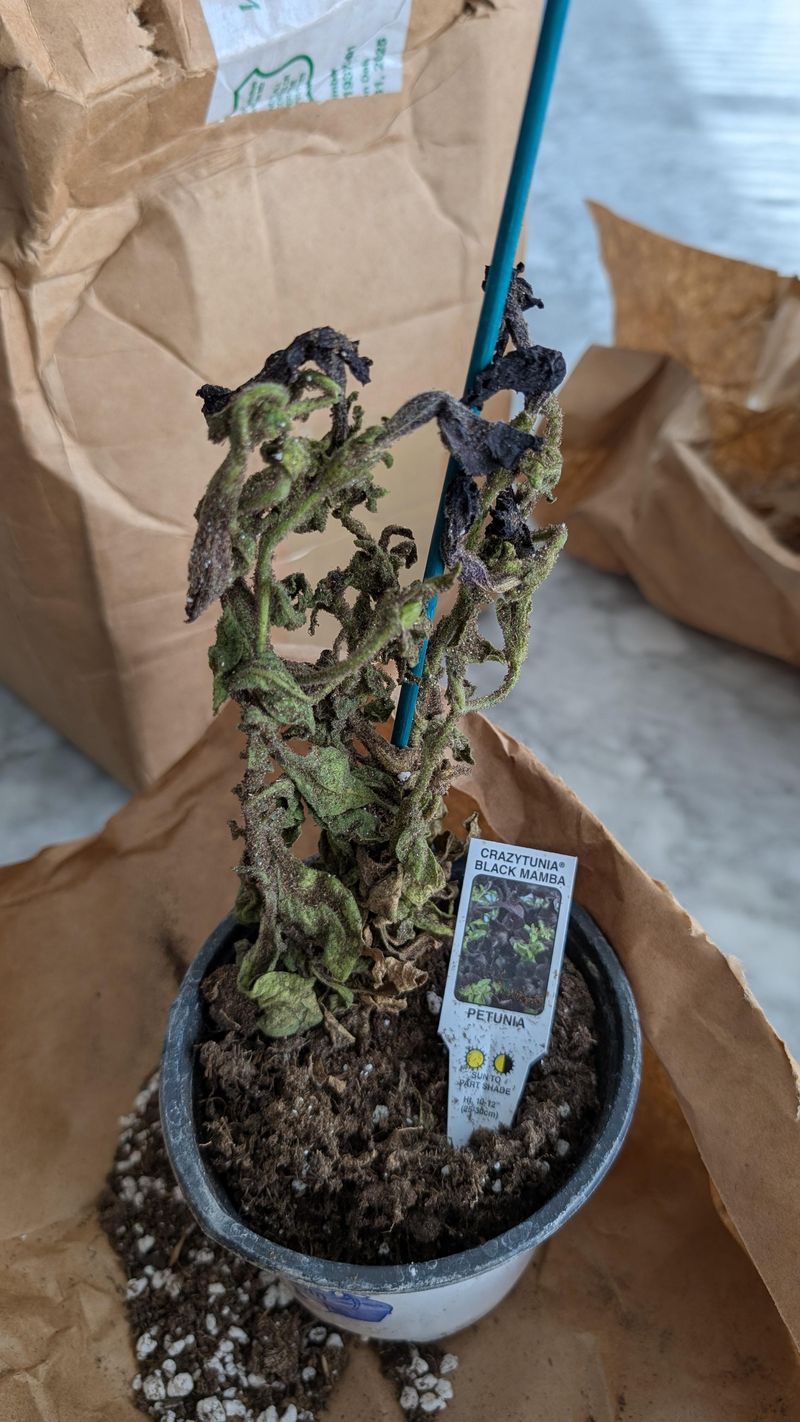
Filling the watering can twice a day and still finding dry dirt by evening? When soil refuses to hold moisture, your petunias are fighting an uphill battle that heat only makes worse.
Potting mix that has dried out completely can turn hard and water-repellent, letting water run straight down the sides and out the bottom without ever soaking the roots. Root-bound plants crammed in tight containers dry out fast too, because there is barely any soil left to store water.
Rehydrate stubborn dry mix by setting the whole pot in a tray of water for twenty to thirty minutes so it drinks from the bottom up. Mixing in some compost or a water-retaining product can help the soil hold on to moisture going forward.
Bumping a crowded plant up into a slightly larger pot gives roots room and more soil to work with. A layer of mulch on top slows evaporation during the hottest stretches.
Grouping containers together also creates a cooler, more humid pocket that eases the constant thirst.