
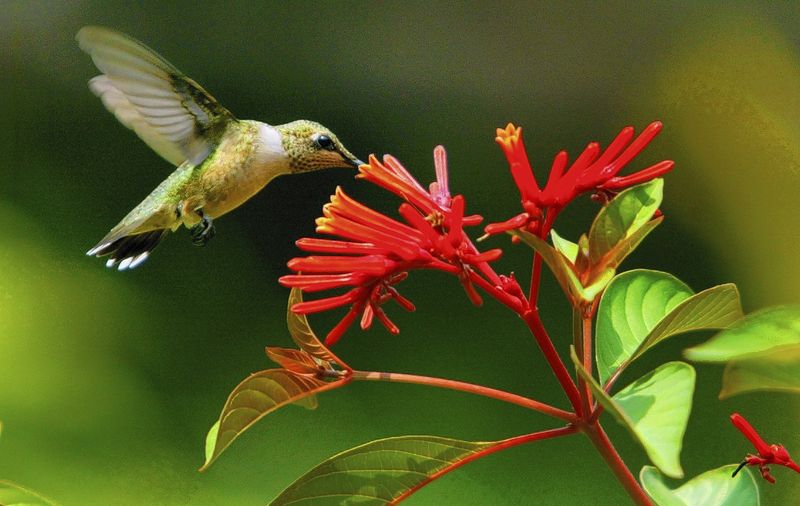
If you want your yard to feel alive with color, motion, and tiny wingbeats, the right plants make all the difference. In Florida, hummingbirds stay active through the hottest months when nectar-rich blooms keep coming. I love how a few smart plant choices can turn an ordinary garden bed into a reliable feeding stop. These nine picks stand out for long bloom seasons, Florida-friendly growth, and serious hummingbird appeal.
1. Firebush

Firebush is one of those plants that seems made for a Florida hummingbird garden. Its orange-red tubular blooms appear for months, and once summer heat settles in, this shrub really starts showing off. If you want fast color and reliable nectar, this is often the first plant I would suggest.
It thrives in full sun to part shade and handles Florida humidity like a champ. After it establishes, firebush is fairly drought tolerant, though it looks best with regular water during long dry stretches. Give it room, trim lightly to shape it, and you will usually see hummingbirds checking it again and again all season.
2. Coral Honeysuckle

Coral honeysuckle brings a softer, more romantic look to the yard while still delivering exactly what hummingbirds want. The vine produces clusters of trumpet-shaped red, coral, and yellow flowers that are easy for birds to spot from a distance. When it starts blooming steadily, your fence or trellis can become the busiest spot in the garden.
I like this plant because it feels native, graceful, and surprisingly easy to manage. It prefers sun for the best flowering, but it can handle a little afternoon shade in hotter parts of Florida. Train it onto an arbor or mailbox post, water it while young, and prune after big flushes to keep fresh growth and more blooms coming.
3. Scarlet Sage

Scarlet sage, also called tropical sage, is a simple plant that punches far above its weight in a hummingbird garden. The red flower spikes stand out beautifully against green foliage, and the blooms keep coming when you deadhead or lightly shear spent stems. If you enjoy a looser, natural look, this plant fits in without feeling fussy.
It grows well in Florida’s heat and often reseeds, which means your garden can look fuller every year. Full sun usually gives the best flower display, though some afternoon shade can help in tougher inland spots. I would tuck scarlet sage near paths or patios, because the hummingbirds often feed at eye level and give you a front row show.
4. Pentas

Pentas are one of the easiest ways to add nonstop summer nectar to a Florida yard. Their rounded flower clusters come in bright shades, but the red and pink varieties seem especially attractive to hummingbirds. If you need something cheerful, dependable, and easy to find at garden centers, pentas are hard to beat.
These plants love warmth, sunshine, and consistent moisture, especially when grown in containers or sandy soil. A little fertilizer and regular deadheading will keep them blooming far longer than you might expect. I like mixing pentas into beds near windows or porches, because they stay neat enough for formal spaces while still drawing hummingbirds close enough for you to enjoy every visit.
5. Firecracker Plant

Firecracker plant has a fountain-like shape that adds movement even before the hummingbirds arrive. Its long, narrow red flowers dangle in sprays, creating a perfect feeding station for birds that hover and dart between stems. If your garden needs a plant with a little drama, this one absolutely delivers.
In Florida, it handles heat well and looks especially nice spilling from raised beds, hanging baskets, or retaining walls. It prefers sun to light shade and benefits from trimming when growth gets leggy or tired. I love using firecracker plant near seating areas, because hummingbirds often work the flowers quickly, then zip off and return, giving the whole yard an energetic, lively rhythm through summer.
6. Blue Porterweed

Blue porterweed may not have the classic red flowers people expect for hummingbirds, but do not let that fool you. Its long bloom spikes produce nectar over an extended season, and hummingbirds visit it regularly alongside butterflies and bees. If you want a yard that feels constantly busy, porterweed helps create that effect fast.
This plant does best in full sun with decent drainage, though it tolerates typical Florida conditions very well. It can grow quickly, so a little trimming keeps it fuller and encourages fresh flowering stems instead of a rangy shape. I like pairing porterweed with red bloomers nearby, giving hummingbirds several nectar sources and making the garden feel layered, colorful, and active.
7. Shrimp Plant

Shrimp plant adds a tropical, slightly quirky look that makes a shady Florida corner feel more interesting. The colorful bracts and tucked-in white flowers provide nectar, and hummingbirds often investigate them when brighter sun-loving plants are not an option. If your yard has filtered light, this is a smart way to keep the buffet going.
It performs best in rich soil with regular moisture and protection from the harshest afternoon sun. Pinching stems helps it stay bushier, and occasional feeding encourages stronger growth and more colorful bracts. I like shrimp plant near entryways or under taller shrubs, where its unusual texture stands out and hummingbirds can slip in quietly for quick drinks during the steamy summer months.
8. Tropical Hibiscus

Tropical hibiscus is usually grown for the big, flashy flowers, but hummingbirds appreciate it too, especially when blooms are plentiful. The bright reds, oranges, and pinks catch attention quickly and give your garden that classic Florida resort feel. If you want something bold that also helps wildlife, hibiscus earns its space.
It likes full sun, warm temperatures, and regular water, and it responds well to feeding during the growing season. Because Florida soils can vary, adding mulch helps roots stay cooler and moisture levels more even through summer. I would place hibiscus where you can enjoy the flowers up close, since hummingbirds often pause nearby before dipping in, creating a colorful little moment you will not want to miss.
9. Peregrina Jatropha

Peregrina jatropha is a fantastic hummingbird shrub if you want something that flowers generously in Florida heat. The clusters of red blooms sit above glossy green leaves, making them easy for hummingbirds to spot as they patrol the yard. It has a tidy tropical look that feels polished without demanding constant work.
This shrub prefers full sun for the heaviest bloom cycle, though light shade can still work in hotter locations. Once established, it is fairly tough, but regular watering and occasional pruning keep it lush and blooming well through summer. I like using jatropha as a focal point near patios or windows, because its bright flower clusters seem to pull hummingbirds in repeatedly throughout the day.