
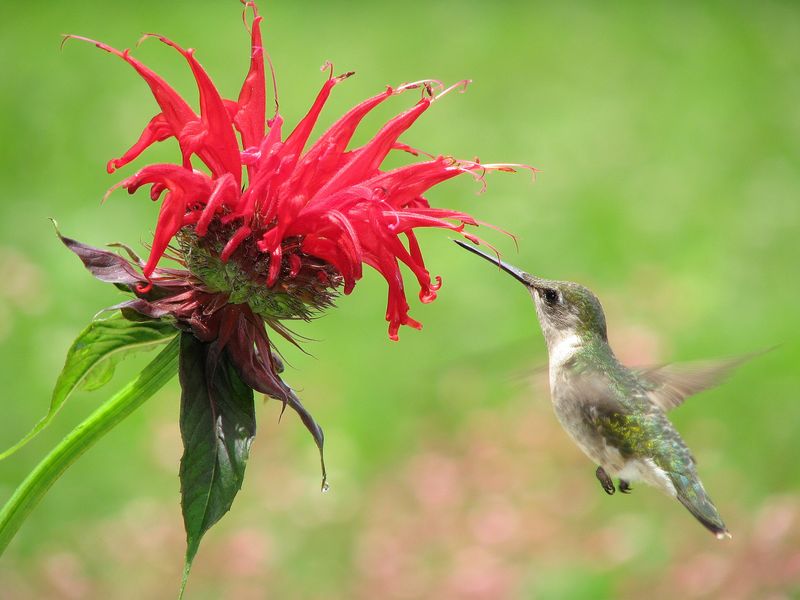
If hummingbirds seem to ignore your yard, the problem is often the plant choice, not the feeder. Native flowers give these tiny birds the nectar, bloom timing, and flower shapes they recognize fast. A few smart swaps can turn a quiet bed into a daily fly-in route. Here are the native plants that pull the most attention, plus the easy care tricks that keep them blooming longer.
1. Bee Balm

Bee balm is one of the fastest ways to get hummingbirds to notice your yard because the shaggy blooms are loaded with nectar and stand above nearby foliage. I like it for busy gardeners because it fills space quickly and flowers hard in summer when birds need dependable fuel. Red varieties usually draw the most visits.
Plant it in full sun to light shade with compost-rich soil that stays evenly moist, especially the first season. Deadhead spent blooms to keep fresh flowers coming, and divide crowded clumps every few years to reduce mildew. Give it airflow, avoid overhead watering late in the day, and you will get a longer, cleaner show.
2. Cardinal Flower

Cardinal flower stops people in their tracks, and hummingbirds react the same way to its electric red spikes. The tubular flowers are perfectly shaped for their bills, making this one of the most reliable late summer nectar sources you can plant. If your garden has a damp spot, this is a huge advantage.
Grow it in rich soil that never dries completely, especially during heat waves, because drought is the quickest way to lose bloom power. Morning sun with afternoon shade works well in hot climates, while cooler regions can give it more sun. Mulch around the roots, remove faded spikes after flowering, and let a few plants reseed if you want a natural drift.
3. Coral Honeysuckle

Coral honeysuckle gives you vertical color and hummingbird traffic without the invasive headaches of Japanese honeysuckle. The long coral-red tubes bloom over a long season, and birds quickly learn to check the vine for fresh nectar. It is one of those plants that makes a fence or arbor work harder.
Plant it in full sun for the heaviest flowering, though light shade is acceptable in hotter areas. Give young vines a trellis, arbor, or mailbox post, then water deeply until roots settle in well. Prune lightly after the main bloom flush to shape it, skip heavy fertilizer that pushes leafy growth, and watch for aphids on tender tips in spring.
4. Eastern Red Columbine

Eastern red columbine is one of the best early season hummingbird plants, which matters because returning birds often arrive before summer flowers wake up. Its red and yellow nodding blooms look delicate, but this plant is tougher than many gardeners expect. It shines in lightly shaded beds where other nectar plants may struggle.
Set it in well-drained soil with morning sun or bright dappled shade, and avoid soggy clay that causes crown problems. It often self-sows politely, so leave a few seedlings where they land if you want a natural colony. Cut back tired foliage after blooming, watch for leaf miner tunnels, and keep mulch thin around the crown to prevent rot.
5. Penstemon

Penstemon is a smart choice if you want hummingbird flowers that handle lean soil and summer heat without constant pampering. The tubular blossoms rise on upright stems that birds can spot from across the yard, and many native species bloom generously in late spring to early summer. It is especially useful in dry, sunny borders.
Good drainage matters more than rich soil, so skip heavy compost if your ground already holds moisture. Plant in full sun, water regularly the first year, then back off so roots grow deeper and stems stay sturdy. Deadhead lightly to extend bloom, avoid winter-wet conditions, and leave some seedheads standing if you want birds and bonus reseeding.
6. Fire Pink

Fire pink is a plant many gardeners have never tried, which is exactly why it can make your hummingbird border feel special. The brilliant scarlet flowers glow in spring and early summer, offering nectar when birds are actively scouting fresh food sources. Its compact habit also fits smaller yards better than sprawling perennials.
Give it sharp drainage and avoid burying the crown, since wet winter soil is a common reason this plant disappears. It does well in full sun where summers are mild, or with afternoon shade in warmer regions. Water during establishment, deadhead for a tidier look, and pair it with columbine or penstemon to bridge the season with more nectar.
7. Indian Pink

Indian pink is one of those underused native plants that hummingbirds seem to find almost immediately. The red tubes tipped in yellow look dramatic up close, and the flower shape is made for nectar feeding. If you garden in partial shade and struggle to find bright color, this plant solves two problems at once.
It prefers rich, well-drained soil with steady moisture, so mix in leaf compost before planting and mulch to keep roots cool. Morning sun or high shade usually gives the best balance of flowering and leaf quality. Be patient during establishment, protect young plants from slugs, and avoid rough dividing because mature clumps dislike being disturbed.
8. Jewelweed

Jewelweed is a surprisingly effective hummingbird plant for gardeners with wet ground, rain gardens, or streamside edges. The dangling orange flowers are rich in nectar, and birds often visit repeatedly once blooming starts. It also brings a looser, wild look that softens formal beds and helps a yard feel more alive.
Because it self-seeds easily, place it where you can welcome a casual colony instead of a perfectly tidy row. Keep soil consistently moist, especially in sunny spots, and do not be alarmed if stems look juicy and tender because that is normal. Thin extra seedlings in spring, pull unwanted volunteers young, and pair it with cardinal flower for a strong late-season nectar zone.
9. Scarlet Sage

Scarlet sage brings the classic hummingbird color signal in a plant that thrives in heat and often keeps blooming when fussier flowers fade. The upright red spikes are easy for birds to spot, and the aromatic foliage can help discourage browsing by deer. That combination makes it especially useful in low-maintenance yards.
Plant it in full sun and well-drained soil, then avoid overwatering once it is established because soggy ground shortens its life. Shear spent flower spikes lightly to trigger another round of blooms instead of letting the plant stall. In colder areas, think of it as a short-lived perennial or reseeding plant, and leave a few seedheads if you want returns next year.
10. Foxglove Beardtongue

Foxglove beardtongue is not always the first plant people think of for hummingbirds, but it earns a place by blooming generously and handling average garden conditions well. The tubular white flowers attract both birds and helpful pollinators, so your yard gets more activity overall. It is a great bridge plant between spring and midsummer bloomers.
Give it full sun and decent drainage, especially in winter, because overly wet soil is the main issue. Lean soil is fine, and too much fertilizer often makes stems floppy instead of floriferous. Cut back spent spikes if you want a neater look, leave some seed for natural reseeding, and combine it with red flowers nearby to create a stronger hummingbird target.
11. Anise Hyssop

Anise hyssop is a hummingbird favorite that also smells wonderful when you brush past it, which makes it one of the most rewarding plants near patios or paths. The lavender flower spikes bloom for weeks and keep drawing birds, bees, and butterflies through the hottest part of summer. It is a strong performer without looking stiff or overmanaged.
Plant it in full sun with well-drained soil, and resist the urge to overfeed because rich soil can reduce its sturdy habit. Deadhead the first flush if you want a tidier rebloom, or leave flowers standing for a softer meadow effect. It self-sows lightly, so thin seedlings where needed, and avoid heavy mulch that traps too much moisture around the crown.
12. Red Buckeye

Red buckeye is a great choice if you want to feed hummingbirds from above instead of relying only on flower beds. This native shrub or small tree produces bold red bloom clusters in spring, right when returning birds need energy and many gardens still look half asleep. It adds structure, shade, and nectar in one move.
Plant it in well-drained soil with sun to part shade, and give it room because it can spread wider than people expect. Summer leaf drop can happen early, especially in dry weather, but that is normal and not usually a crisis. Water during long droughts, prune only to shape after flowering, and site it where seasonal thinning will not bother you.