
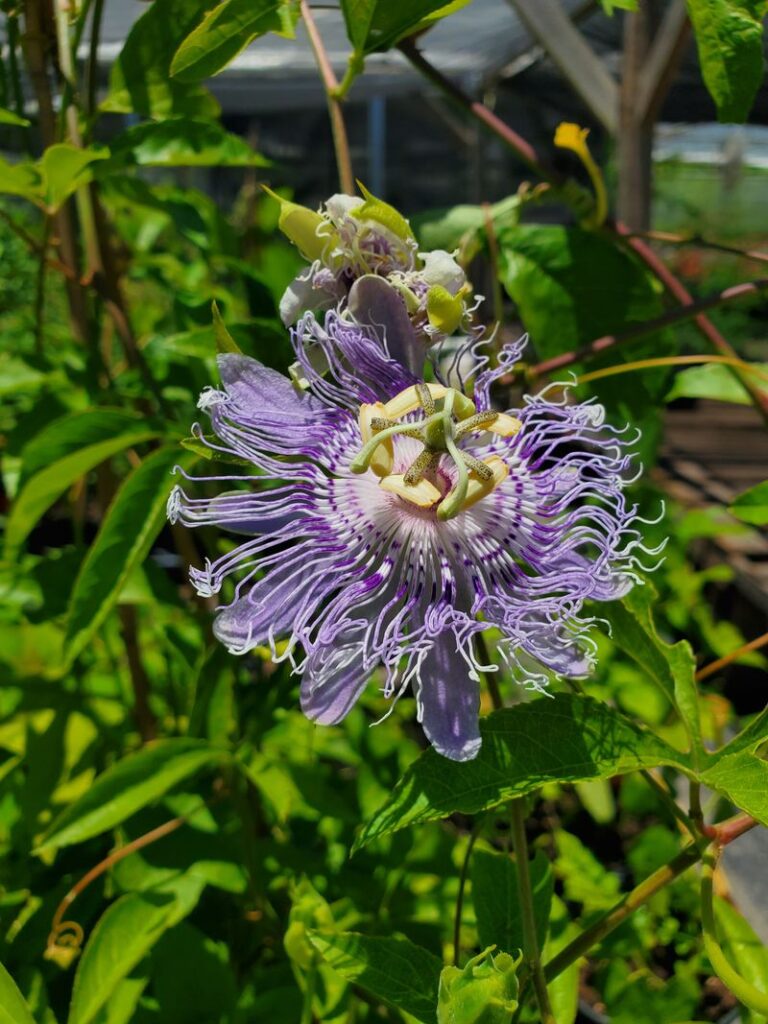
If you want your fence to look like something out of a fairy tale, passionflower vine might be your new best friend. These wild-looking purple and white blooms grow fast, love the Texas heat, and turn a plain wooden fence into a living work of art. On top of that, they bring butterflies and hummingbirds right to your backyard. Here are seven simple ways to grow passionflower vine so gorgeous that your neighbors will slow down just to stare.
1. Pick the Right Passionflower for Texas Heat

Not every passionflower can handle a scorching Texas summer, so choosing wisely saves you a lot of heartache. The native Passiflora incarnata, also called maypop, is a rock star here because it grew up in this climate long before we planted it on fences.
Maypop bounces back year after year, even after a frosty winter knocks it down to the ground. Its lavender-purple flowers look almost alien, with frilly rings that seem hand-painted. Gardeners love that it shrugs off drought once its roots settle in.
If you crave brighter colors, try Passiflora ‘Incense’, a hybrid that blooms deep violet and smells sweet enough to stop you mid-step. For warmer parts of the state near the coast, tropical types like Passiflora caerulea stay green longer since hard freezes are rare there.
Fun fact: the maypop got its funny name from the loud popping sound its egg-shaped fruit makes when you step on it. Kids in the country have been stomping them for generations.
Before buying, check whether your variety is a perennial or annual in your zone. North Texas gardeners should lean toward cold-hardy natives, while South Texas folks have more tropical choices.
Buy from a local nursery when you can, because those plants are already used to your area’s soil and weather. Starting with the correct type means less fuss and far more of those jaw-dropping blooms crawling across your fence.
2. Give the Vine a Sunny Spot Along the Fence

Passionflower vines are total sun lovers, and where you plant them makes all the difference between shy little blooms and a fence bursting with color. Aim for a spot that soaks up at least six hours of direct sunlight each day.
A south- or west-facing fence usually works best in Texas because it catches strong afternoon rays. More sun means more flowers, and more flowers mean more neighbors doing double takes as they walk by.
That said, the blazing summer sun can sometimes be too much of a good thing. In the hottest parts of the state, a little dappled shade during the peak afternoon hours keeps leaves from scorching and turning crispy brown.
Watch how sunlight moves across your yard for a day or two before planting. Morning sun with a touch of afternoon relief is the sweet spot for many gardeners battling triple-digit temperatures.
Air flow matters too. Fences that let a breeze pass through help dry the leaves after rain, which cuts down on mildew and fungus problems.
Avoid tucking the vine into a cramped corner where hot air gets trapped and bakes the roots. Give it breathing room and an open stretch of fence to climb.
Once you find that bright, breezy location, your passionflower will reward you by racing up the boards and unfurling blooms almost faster than you can keep up with them.
3. Prep the Soil So Roots Dig In Deep

Healthy soil is the secret handshake between you and a fence full of blooms. Passionflower isn’t super picky, but it truly thrives when its roots have loose, well-draining ground to spread through.
Texas soil ranges from sticky black clay to sandy, chalky messes, so a little prep goes a long way. Mix a few inches of compost into the planting hole to loosen heavy clay and feed the young vine at the same time.
Good drainage keeps the roots from sitting in water, which passionflowers absolutely hate. If your yard puddles after rain, build up a slightly raised mound near the fence so extra water can drain away.
Check your soil’s pH if you’re curious; passionflower is happiest in slightly acidic to neutral ground, around 6.0 to 7.0. A cheap test kit from any garden store tells you where you stand in minutes.
Spread a couple inches of mulch around the base after planting, but keep it from touching the stem directly. Mulch locks in moisture, keeps weeds down, and shields the roots from that harsh Texas heat.
Don’t drown the vine while it settles in, either. Water deeply but let the top inch of soil dry out between drinks so the roots grow strong instead of lazy.
Get the ground right from day one, and your vine will climb like it has somewhere important to be.
4. Train the Tendrils to Climb Like Champs

Passionflower vines are natural climbers, gripping surfaces with curly little tendrils that coil around anything they touch. Still, a gentle guiding hand at the start helps them cover your fence evenly instead of piling up in one clumpy corner.
String some garden twine, netting, or thin wire across the fence to give those tendrils something easy to grab. Wooden slat fences work great, but chain-link is honestly perfect since the vine weaves right through the gaps.
When new shoots appear, tuck them loosely in the direction you want them to grow. Don’t tie them too tight, because the stems thicken over time and you don’t want the twine biting into them.
Spreading the branches out sideways instead of straight up tricks the plant into producing more flowering side shoots. That means a wider, fuller wall of blooms rather than a single tall stringy vine.
Check on it every week or so during the growing season, since these vines grow shockingly fast. A stray tendril can wander onto a neighbor’s gate or a nearby bush before you know it.
Snip or redirect anything heading the wrong way early, while the stems are still soft and bendable. A little steering now prevents a tangled jungle later.
With just a few minutes of training here and there, your passionflower turns a boring fence into a leafy green tapestry sprinkled with those unforgettable star-shaped flowers.
5. Water and Feed for Nonstop Flowers

Give a passionflower the right amount of water and food, and it pays you back with wave after wave of blooms all summer long. The trick is steady care without going overboard, since too much of anything can backfire.
Young vines need regular watering while their roots dig in, usually a deep soak two or three times a week. Once established, they handle Texas dry spells surprisingly well and only need extra water during long droughts.
Stick your finger in the soil to check. If the top couple inches feel dry, it’s time to water; if it’s still damp, wait another day. Deep, slow watering beats a quick daily sprinkle every time.
Feeding is where a lot of folks accidentally sabotage their blooms. Too much nitrogen fertilizer grows tons of leaves but almost no flowers, which is the opposite of what you want.
Reach for a fertilizer that’s higher in phosphorus, the middle number on the bag, to encourage buds. A light feeding every four to six weeks during spring and summer keeps things blooming without overdoing it.
Morning watering is smartest because leaves dry before nightfall, dodging fungus trouble. Skip watering the flowers directly and aim for the base instead.
Balance is everything here. Feed and water with a gentle, consistent rhythm, and your fence will stay draped in those show-stopping purple stars from late spring clear into fall.
6. Prune Smart to Keep It Looking Sharp

Left completely alone, a passionflower vine can turn into a wild, tangled monster that swallows your whole fence. A little pruning keeps it tidy, healthy, and blooming like crazy instead of just sprawling everywhere.
Late winter or early spring is the best time for a big cleanup, right before new growth kicks off. Cut back dead, damaged, or crossing stems so the plant can pour its energy into fresh, flower-covered shoots.
Don’t be shy with the shears. Passionflowers are tough and bounce back fast, so trimming a third of the vine won’t hurt it one bit. In fact, cutting stems back encourages branching, which means even more blooms.
During the growing season, snip any runaway tendrils reaching toward your gutters, windows, or the neighbor’s yard. Quick touch-ups keep everything looking intentional rather than out of control.
Always use clean, sharp pruners to avoid crushing the stems or spreading disease. Wiping the blades with rubbing alcohol between plants is a smart habit worth building.
Toss the trimmings in the compost, but skip anything that looks diseased or bug-infested. Those go in the trash so problems don’t spread back to your healthy vine.
Regular little trims beat one giant scary cutback session. Keep up with it a few times a season, and your passionflower stays lush, full, and absolutely dripping with the kind of blooms that make people stop and gawk.
7. Invite Butterflies and Beat the Bugs

Here’s a happy surprise: your passionflower fence doubles as a butterfly buffet. Gulf fritillary butterflies especially adore this plant and lay their eggs right on the leaves, so you’ll spot bright orange wings fluttering all season.
The caterpillars munch the foliage, and yes, they’ll chew some holes. But don’t panic and reach for spray, because those hungry little crawlers are exactly what turn into the gorgeous butterflies everyone loves.
A healthy vine grows fast enough to outpace the nibbling, so the plant almost always survives just fine. Think of the chewed leaves as the price of admission to your very own butterfly show.
Real trouble comes from pests like aphids, spider mites, and scale, which cluster on stems and suck the life out of new growth. Blast them off with a strong spray of water or dab them with insecticidal soap.
Skip harsh chemical pesticides whenever possible, since they wipe out the good bugs and butterfly caterpillars along with the bad ones. A gentle approach keeps your fence buzzing with life.
Ladybugs and lacewings are natural allies that gobble up aphids for free. Planting a few flowers nearby invites these helpers to hang around your yard.
Between the wild purple blooms, the fluttering visitors, and the sweet fruit that sometimes follows, your passionflower fence becomes a tiny ecosystem. Neighbors won’t just admire the flowers; they’ll be jealous of the whole living, buzzing scene.