
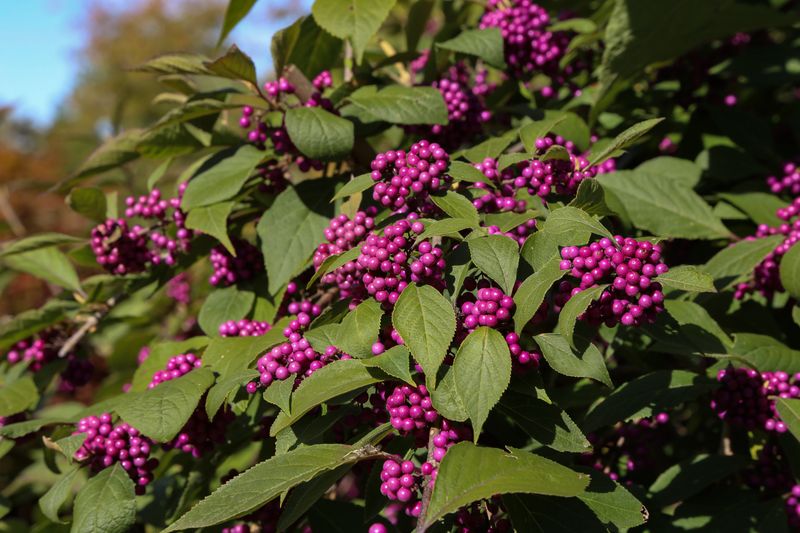
If you love gardening in Texas but hate finding ticks crawling around your yard, there is a plant that might become your new best friend. American Beautyberry is a tough Texas native that quietly keeps ticks away while adding gorgeous purple berries to your garden beds. Scientists even discovered that its leaves contain natural chemicals that bugs cannot stand. Let’s look at why this overlooked shrub deserves a spot in your yard.
1. Meet the Beautyberry Bush

Long before store shelves were stocked with bug spray, folks in the South were crushing beautyberry leaves and rubbing them on their skin. This shrub, known scientifically as Callicarpa americana, grows wild across Texas fields and forests.
It reaches about five feet tall and spreads out with arching branches. Gardeners love how easygoing it is, thriving in spots where fussier plants would give up completely.
2. The Secret Weapon Against Ticks

Researchers with the USDA made a fascinating discovery while studying old farmer remedies. Beautyberry leaves contain compounds called callicarpenal and intermedeol, and these substances actually confuse and repel ticks.
When you plant a few of these shrubs around your garden beds, they create an invisible barrier that pests would rather avoid. Ticks tend to steer clear, meaning fewer worries during your afternoon weeding sessions and more peaceful time outdoors.
3. Show-Stopping Purple Berries

Come late summer, this plant puts on a jaw-dropping display that stops neighbors in their tracks. Clusters of shiny, metallic-purple berries wrap tightly around the stems like beaded bracelets.
The color is so bold it almost looks fake, but it is completely natural. These berries hang around well into fall, giving your garden a splash of vibrant purple long after other flowers have faded and browned away for the season.
4. Tough as Texas Weather

Anyone who has gardened through a Texas summer knows how brutal the heat can be. Beautyberry laughs at those scorching afternoons and shrugs off dry spells like they are nothing.
It handles clay soil, sandy soil, sun, and partial shade without complaining. Once its roots settle in, you barely need to water it. For busy gardeners who forget the hose, this plant is a forgiving and reliable choice year after year.
5. A Buffet for Birds and Wildlife

While ticks flee, songbirds throw a party. Mockingbirds, cardinals, and finches flock to those purple berries once cooler weather arrives, snacking happily through the winter months.
Deer nibble the leaves, and small mammals enjoy the fruit too. Planting beautyberry turns your yard into a lively hangout for local critters. If you enjoy watching wildlife from your window, this shrub practically guarantees a front-row nature show every single day.
6. Easy Planting and Simple Care

Getting started could not be much simpler. Dig a hole in spring or fall, drop in your beautyberry, and give it a good drink of water to help it settle.
Space plants about four feet apart so branches have room to arch. A yearly trim in late winter keeps it tidy and encourages fresh growth. Skip the fertilizer, since this native prefers plain soil and rewards you with less fuss overall.
7. Turn Leaves Into Homemade Bug Spray

Here is a fun weekend project that turns your garden into a natural pharmacy. Crush a handful of fresh beautyberry leaves and rub them gently on your arms or ankles before heading outside.
Some people simmer the leaves in water to make a simple spray. Old-timers swore by this trick long before commercial repellents existed, and now science backs them up. It is a cheap, chemical-free way to keep pests at bay.