
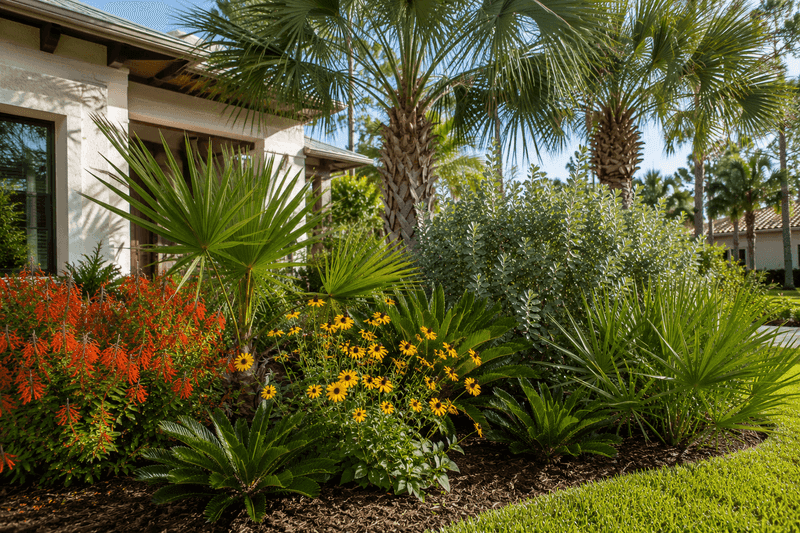
Keeping a perfect lawn in Florida can feel like a part-time job. Between the irrigation bills, the weekend mowing, and the fertilizer runs, a lot of that grass is giving back very little. The good news is that you do not have to rip out every blade to make a real difference. Replacing the patches that perform poorly with plants chosen for your specific conditions can cut inputs and give you something more useful in return.
Find the turf that earns its place
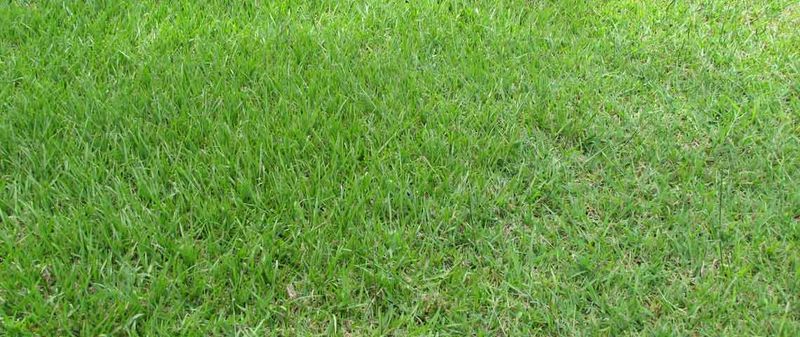
Not every Florida lawn is the same, and that matters before you pull a single plug of grass. St. Augustinegrass generally demands more water, fertilizer, and pest management than most homeowners expect, while bahiagrass can be relatively drought tolerant with lower nitrogen needs and fewer disease problems. Lumping every grass type into one “water-hungry” category misses the point and can lead to replacing turf that was actually doing a reasonable job.
The strongest conversion case targets turf that is genuinely underperforming: the strip along a fence that gets mowed twice a month but never walked on, the shaded patch under a live oak where grass thins out no matter how much you water, the awkward corner that requires three passes with the mower and still looks rough. UF/IFAS guidance on turfgrass alternatives specifically recommends keeping grass where it supports recreation, erosion control, or nutrient uptake, and redirecting attention to unused or poorly suited areas instead.
Walk your property and sort each grass area into one of two buckets. The first bucket holds turf that earns its keep: the play area where kids kick a ball, the slope that would wash in a heavy rain without ground cover, the front strip that absorbs runoff from the driveway. The second bucket holds areas that cost time and water without returning anything clear: the thin strip between the sidewalk and the street, the perpetually soggy low spot, the side yard that sees no foot traffic.
That second bucket is your starting list. Florida-Friendly Landscaping recognition guidance recommends beginning with problem areas where grass is genuinely difficult to grow, then expanding planted or mulched beds over time rather than committing to a full-yard overhaul at once. Strategic conversion creates room for food, habitat, easier maintenance, or better stormwater management without sacrificing the parts of your lawn that actually serve a purpose.
Give every replacement area a job
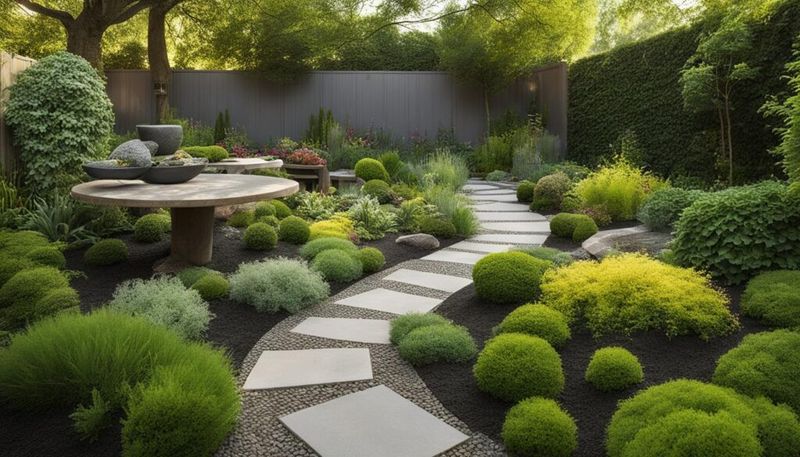
Before buying a single plant, spend thirty minutes with a notepad walking each conversion candidate. Record how many hours of direct sun the area gets in summer, whether water pools there after rain or drains within an hour, and whether the soil is the loose sandy fill common across much of Florida or something denser and more compacted. Note whether the site faces salt wind off a bay or inlet, how close it is to existing irrigation heads, and whether anyone is likely to walk across it regularly.
Those observations define what can actually succeed there. UF/IFAS right-plant, right-place guidance makes the point plainly: a plant that thrives in sandy full sun can fail completely in deep shade, compacted fill soil, a wet swale, or a coastal yard with salt spray. A “drought-tolerant” label describes an established plant under suitable conditions, not a guarantee that any plant marketed that way will succeed on your specific site.
Matching the job to the space is the next step. A narrow side yard that sees no foot traffic but gets afternoon sun could support a low groundcover or a row of productive blueberry shrubs. A shaded bed under a large tree needs a shade-tolerant groundcover, not a sun-loving ornamental that will struggle and require constant replacement. A low spot that collects runoff needs plants evaluated for wet and dry cycles, not drought-tolerant selections that will rot in standing water.
Florida is also not one climate. UF/IFAS regional pattern books document how planting recommendations shift between the Panhandle, the central ridge, and South Florida. A plant performing well in Tampa may be marginal in Pensacola or Miami. Defining what each space should return, whether that is visual coverage, food, pollinator habitat, or easier maintenance, before choosing plants keeps the site assessment honest and saves money on replacements.
Redesign irrigation before changing the landscape
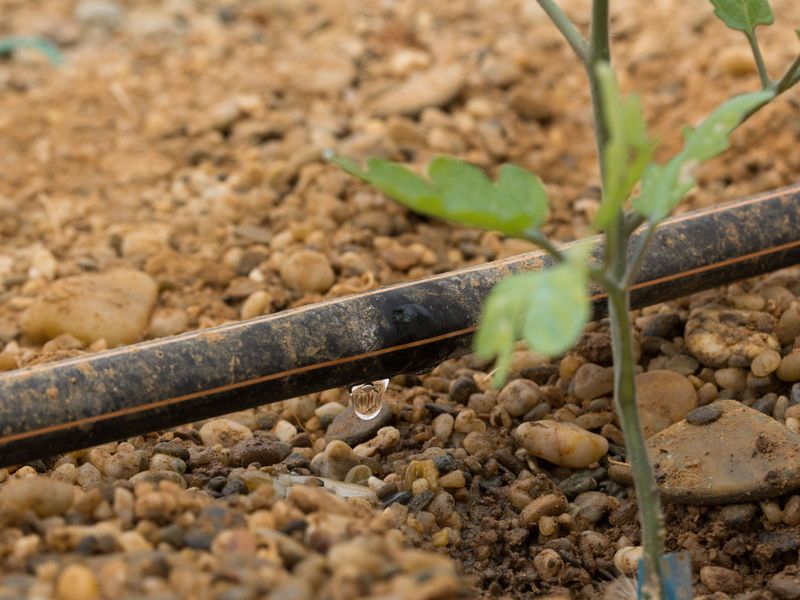
Swapping plants without adjusting the irrigation system is one of the most common ways a conversion fails to save water. Most residential systems are designed around turf, with rotor or spray heads set to cover large areas of grass. When you replace turf with a planted bed, those same heads often overwater the new plants, miss parts of the bed entirely, or spray onto mulch and hardscape where the water does nothing useful.
UF/IFAS landscape irrigation guidance recommends separating turf zones from shrub, tree, and groundcover zones so each area can be scheduled independently. Microirrigation, including drip emitters or low-volume bubblers placed at the root zone, is generally more appropriate for planted beds than overhead turf sprinklers. Correcting overspray and poor coverage before planting prevents the common outcome where a homeowner converts a bed and then waters it on the turf schedule anyway, defeating the purpose.
The water savings that come from conversion are real but depend on what you plant, how the irrigation is designed, how much rainfall the season brings, and how your soil holds moisture. A UF/IFAS analysis of Florida-Friendly landscaping water savings estimated that converting turf to a landscaped bed with microirrigation could reduce irrigation by approximately 15,569 to 31,767 gallons per 1,000 square feet per year. Those are estimates based on modeled conditions, not a guaranteed household reduction.
Sandy Florida soils hold very little water, so newly planted beds need careful establishment watering even when the mature plants are expected to need little supplemental irrigation. Plan to water new plantings more frequently for the first season, then scale back as roots develop. St. Johns River Water Management District planting guidance also recommends applying mulch two to three inches deep across planted beds to conserve moisture and suppress weeds. Keep mulch pulled back from trunks and stems to prevent rot, and replace it as it breaks down rather than piling on additional layers.
Choose groundcovers for conditions and traffic
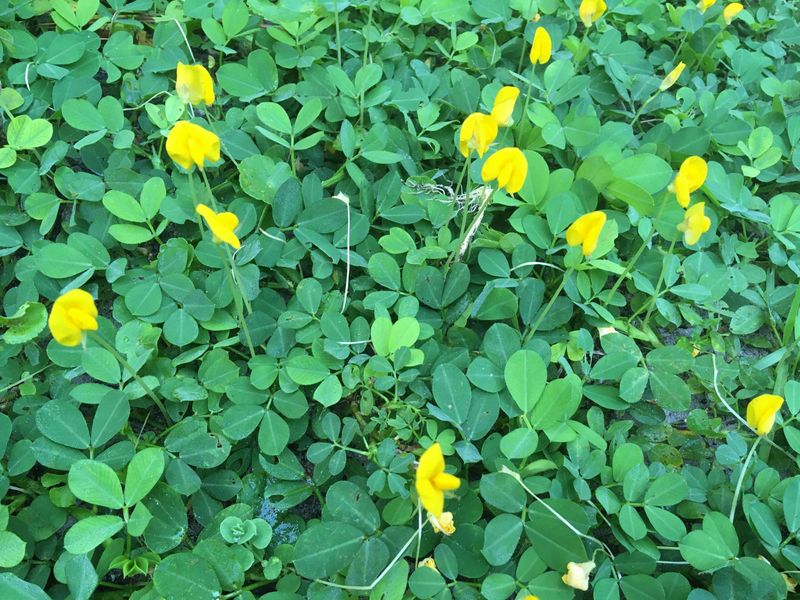
Groundcover selection works best when organized by site condition rather than by a ranked list of favorites. Sunny, well-drained areas in central and south Florida are where perennial peanut tends to perform well. It can be mowed, fixes nitrogen, and tolerates both drought and brief flooding, but it is not a native plant, may go dormant or freeze back in north Florida winters, and does not hold up well under heavy foot traffic. Treat it as a visual lawn substitute in low-traffic zones, not a replacement for a play area.
Sunshine mimosa and frogfruit are native options for sunny sites. Sunshine mimosa spreads across open ground and produces small pink flowers, while frogfruit handles some foot traffic better than most groundcovers and supports pollinators with its small blooms. Beach sunflower and railroad vine suit sunny, sandy, coastal conditions where salt spray and wind exposure rule out many other plants. UF/IFAS Hillsborough County groundcover guidance qualifies each of these by traffic tolerance, dormancy risk, trimming requirements, and regional performance rather than presenting them as interchangeable.
Deep shade calls for different plants entirely. Basketgrass is a native option for low-light conditions and can be mowed, though it may go dormant in winter. Asiatic jasmine covers shaded ground reliably but is nonnative, requires periodic trimming to stay tidy, and is not intended for walking. UF/IFAS plant lists for Florida landscapes also note that twinflower works as a low-growing native groundcover in certain settings but is not a conventional walk-on surface.
Wet areas and retention swales require their own category of plant. Placing drought-tolerant groundcovers in a site that floods seasonally will result in plant loss, not water savings. UF/IFAS stormwater pond planting guidance emphasizes selecting species evaluated specifically for water depth fluctuations, wet and dry cycles, and site position rather than choosing plants based on drought tolerance alone. Matching the groundcover to the actual hydrology of the site is what makes the planting last.
Turn selected beds into productive foodscapes
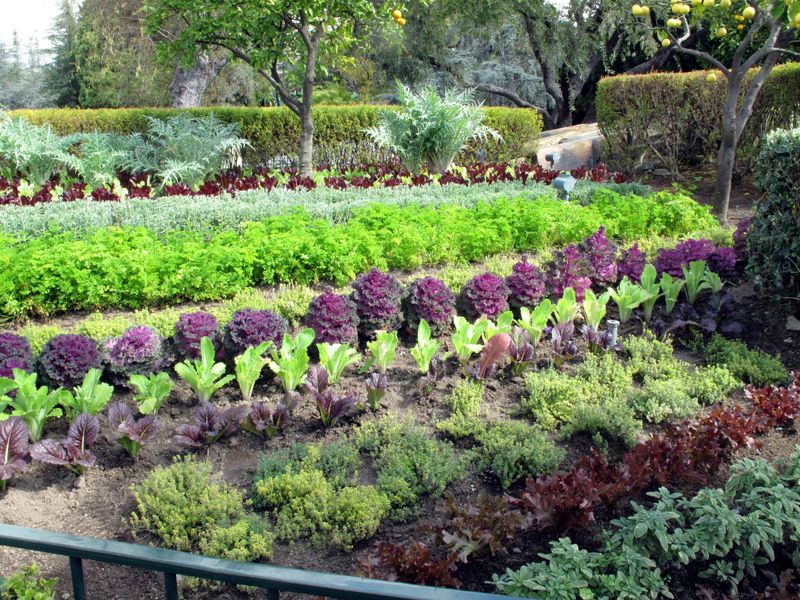
Replacing ornamental turf with food-producing plants can make a converted bed return something tangible: fresh herbs, blueberries, strawberries, edible flowers, or fruit from a well-placed tree. UF/IFAS edible landscaping guidance describes how food plants can be integrated into a home landscape without a dedicated vegetable garden, using blueberry shrubs as hedges, lemongrass as a border, and herbs tucked into ornamental beds.
The honest trade-off is that edible plants often ask more of you than established ornamentals. Fruiting plants may need irrigation during establishment, flowering, fruit set, and harvest even if they tolerate drier periods at other times. UF/IFAS blueberry growing guidance notes that southern highbush blueberries on very sandy soils may need frequent irrigation during dry periods, especially while fruit is developing. Skipping water at the wrong time means smaller yields or crop loss, not a lower-maintenance bed.
Fruit trees require careful placement. UF/IFAS tropical and subtropical fruit guidance identifies sun exposure, root space, drainage, and disease management as non-negotiable factors. Citrus faces serious disease pressure across parts of Florida, and some fruit trees perform poorly in wet or flood-prone locations. Planting a fruit tree wherever the lawn used to be, without checking drainage and sun first, is a reliable way to lose the tree and the investment.
UF/IFAS landscape design with edibles recommends starting with a small test area rather than converting a large section of lawn to food production all at once. A single blueberry pair, a patch of herbs, or a row of strawberries lets you learn whether the crop and the maintenance level fit your household before you scale up. Edible landscaping can be genuinely rewarding, but the payoff comes from choosing the right plant for the site and committing to the ongoing care it needs.
Phase the work and measure what improves
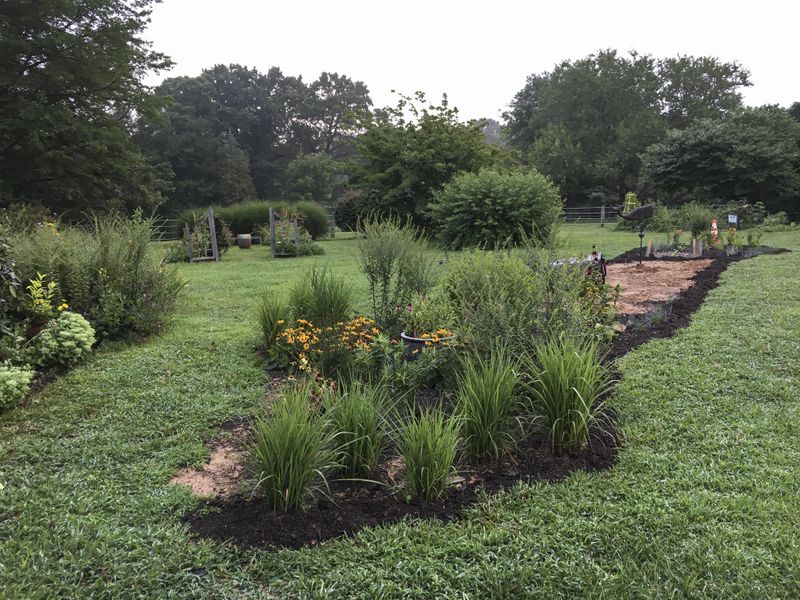
Replacing turf all at once is rarely the right approach, especially if budget, time, or confidence is limited. Starting with a single problem area, such as the shaded patch where grass never fills in or the narrow strip that gets mowed without purpose, keeps the scale manageable and lets you learn from the first planting before committing to more.
Florida-Friendly Landscaping recognition standards support a phased approach: begin with areas where grass is most difficult to grow, remove turf in manageable sections, correct the irrigation layout for that zone, improve the planting environment where the soil needs it, mulch, and then observe how the plants perform through at least one summer heat period and one wet season before expanding. Florida summers stress new plantings hard, and what looks fine in March can collapse in July if the site conditions were not fully assessed.
Measuring what actually changes after each phase keeps the project honest. Track your irrigation runtime for the converted zone separately from the remaining turf zones. Note whether weeding, edging, or trimming time has gone up or down. UF/IFAS groundcover guidance is clear that groundcovers are not maintenance-free: edging, trimming, occasional mowing, and pest monitoring remain ongoing tasks even after a planting establishes.
For foodscapes, add harvesting and seasonal plant replacement to the task list. UF/IFAS foodscaping guidance recommends confirming that the plant mix works on the site before scaling, which is the same principle applied to any phased landscape change. Gradual replacement limits the financial risk of investing in plants that turn out to be wrong for the site’s sand, drainage, salt exposure, or traffic patterns, and it gives you real data on what the conversion is actually delivering before you go further.
Reject replacements that create new problems
A few assumptions cause more failed conversions than almost anything else. The first is that native plants automatically need less water. UF/IFAS native plant guidance states directly that native status alone does not determine irrigation or fertilizer requirements. A native plant growing in residential fill soil, which is common across Florida subdivisions, may not experience the same conditions as in its natural habitat and may need supplemental water and nutrients to establish and persist.
The second bad assumption is that any groundcover can substitute for a walkable lawn. Most alternatives, including Asiatic jasmine, twinflower, and even sunshine mimosa, are visual substitutes rather than surfaces designed for regular foot traffic. UF/IFAS groundcover selection guidance qualifies traffic tolerance for each candidate. Using a non-traffic groundcover in a path or play area means replanting it repeatedly as it gets worn out.
Placing drought-tolerant plants in chronically wet areas creates the same result: plant loss. UF/IFAS stormwater planting guidance is specific about matching plants to actual hydrology, not just selecting whatever is labeled drought tolerant or native and expecting it to adapt. Fruit trees face their own set of placement risks: without adequate sun, drainage, root room, and a realistic disease management plan, they rarely perform well, and citrus in particular faces serious disease pressure across parts of Florida.
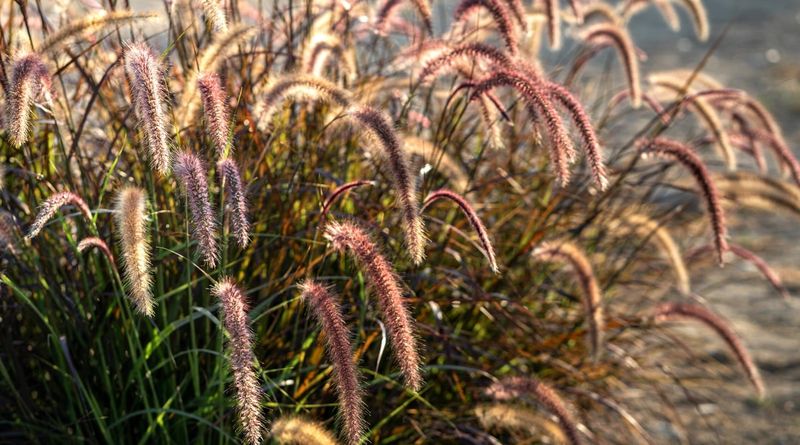
Ornamental grasses can look appealing as turf replacements, but some commonly sold varieties have invasive classifications in Florida. UF/IFAS guidance on fountain grass and considerations for selecting ornamental plants both advise checking invasive-plant assessments before purchasing. Pest management also does not disappear with a converted bed. UF/IFAS guidance on natural pest-control products cautions that even natural pesticides can injure plants, particularly in hot and sunny conditions, and must be applied strictly according to label directions.
Finally, before removing any turf, check HOA and local landscape rules, since some communities have standards that govern what can replace a lawn.
Start with one underperforming patch
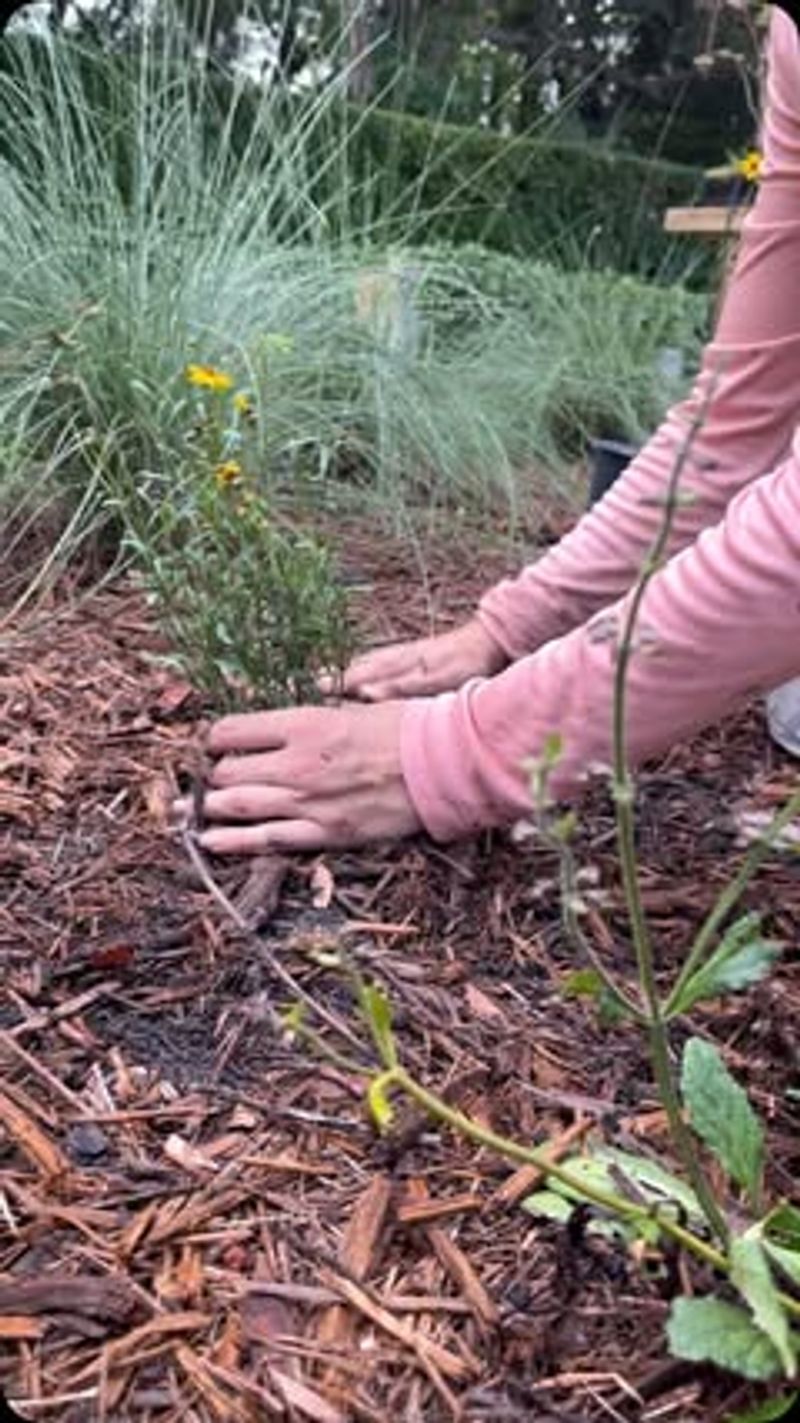
The decision rule is straightforward: keep grass where people or the landscape genuinely need it, and convert the rest deliberately. Pick one patch that consistently underperforms, costs irrigation water without a clear return, or creates more maintenance than it justifies. Define what that space should do once the grass is gone, whether that is visual coverage, food, pollinator habitat, or simply lower inputs. Then assess the actual conditions, sun, drainage, soil, traffic, and salt exposure, before selecting anything to plant there.
UF/IFAS turfgrass alternatives guidance and right-plant, right-place principles both point to the same conclusion: the payoff from conversion comes from matching the plant to the place, adjusting the irrigation to fit the new planting, and maintaining realistic expectations about establishment care. A native label or a drought-tolerant tag is not a substitute for that match.
Test the design on one patch, observe it through a full summer, and let the results guide whether and how to expand. The yards that save the most water and maintenance over time are the ones built one well-chosen decision at a time.