
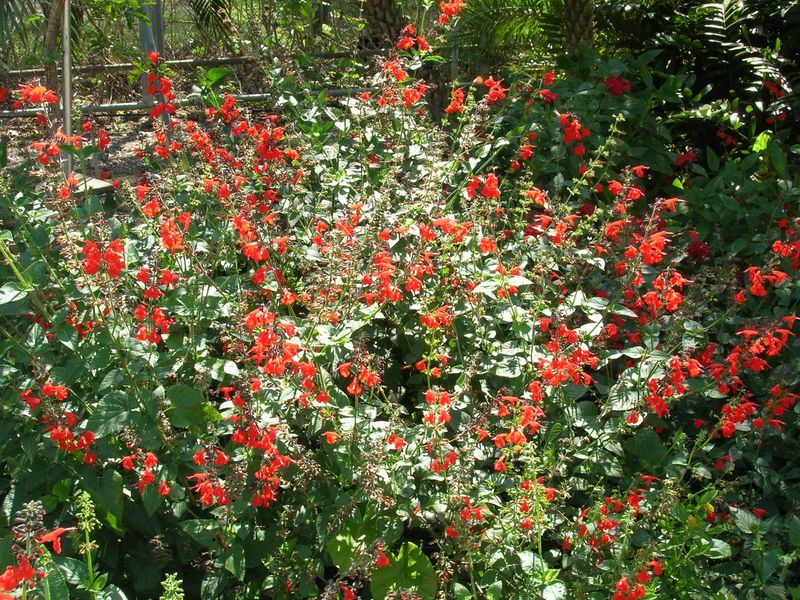
Florida summers are brutal on most flowers, but one native plant not only survives the heat – it blooms through it and draws hummingbirds, butterflies, and bees to your yard. That plant is scarlet sage, known botanically as Salvia coccinea, and it is native to Florida and the southeastern United States. Gardeners who add it to a sunny bed give local pollinators a dependable nectar source from spring through fall. Plant it right, pair it with other flowers, and your yard has a real shot at becoming the kind of stop hummingbirds come back to.
The sage to look for is Salvia coccinea
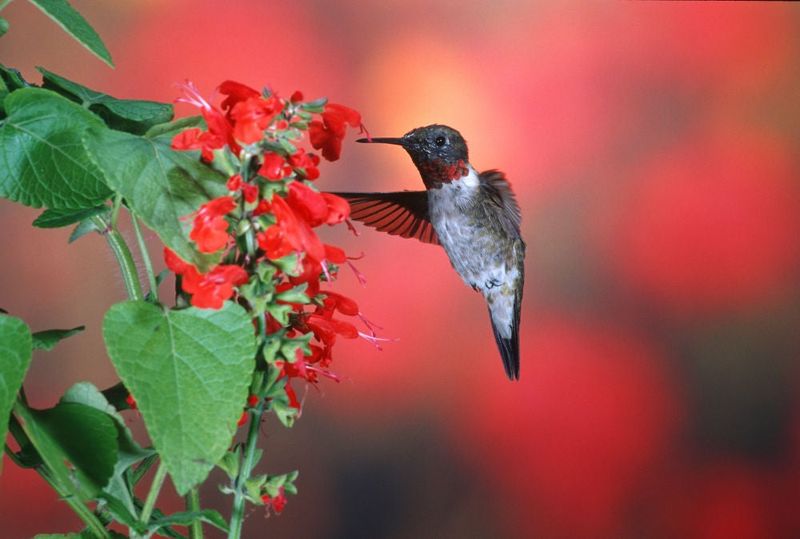
Walk into any Florida garden center and you will find shelves lined with plants labeled “sage” or “salvia.” Not all of them are Florida natives, and the name alone is not enough to go on. The plant Florida gardeners want for hummingbird and pollinator value is Salvia coccinea, identified by UF/IFAS as native to Florida and the southeastern United States, and sold under several common names: scarlet sage, tropical sage, scarlet salvia, and blood sage.
Knowing those names matters at the register. Two other plants regularly cause mix-ups. Culinary sage, Salvia officinalis, is the familiar kitchen herb with gray-green leaves and a woody stem – it is not a Florida native and performs poorly in Florida’s heat and humidity. California’s “hummingbird sage” is Salvia spathacea, a West Coast species that Audubon lists separately from the Florida plants discussed here.
Picking up the wrong one means missing out on the heat tolerance and native-pollinator relationships that make S. coccinea worth growing.
Scarlet sage typically reaches about 2 to 4 feet tall, though some plants grow taller depending on soil, light, and growing conditions. It has an upright, shrubby habit with lance-shaped leaves and tall flower spikes packed with the tubular red blooms that give the plant its common names. The Florida Native Plant Society lists hummingbirds, butterflies, bumblebees, and other pollinators among the wildlife it supports. When you shop, look for the scientific name on the tag – Salvia coccinea – to be certain you are buying the right plant.
Why hummingbirds may make the stop
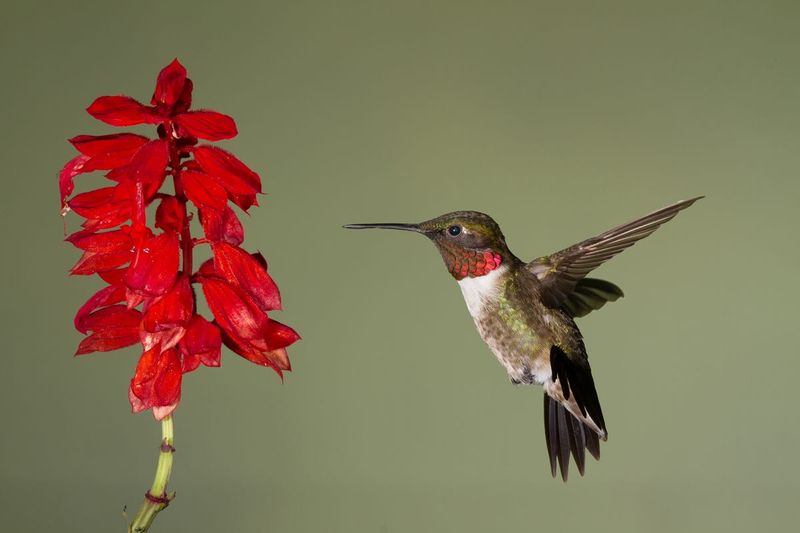
Red tubular flowers are a useful signal for hummingbirds, but they are not the whole story. The shape of a scarlet sage bloom – long, narrow, and curved – fits a hummingbird’s bill far better than a wide, flat flower built for bees to land on. That structural match means the bird can reach nectar that many other visitors cannot, making the transaction worthwhile for both parties. Butterflies and long-tongued bees can still access the blooms, which is why the Florida Native Plant Society notes that S. coccinea supports a broad range of pollinators, not just hummingbirds.
Color plays a role, but hummingbirds are not locked into an exclusive preference for red. UF/IFAS guidance on hummingbirds in Florida explains that these birds learn which colors and flowers provide good nectar rewards, rather than being born with a hard-wired preference for any single color. A red flower catches a bird’s eye on the first visit, but what keeps it coming back is a reliable nectar payoff. Scarlet sage provides that payoff consistently enough to earn repeat visits when hummingbirds are present in the area.
Local conditions shape how much activity you actually see. A yard with no hummingbirds nearby, heavy pesticide use, or very few other nectar plants will not suddenly fill with birds just because one scarlet sage goes in the ground. Visits depend on whether ruby-throated hummingbirds or other species are moving through or nesting in your area, how much competing nectar is available, and how welcoming the rest of the garden is. Scarlet sage is a dependable nectar source – one strong piece of a larger puzzle, not a guaranteed spectacle on its own.
Give it Florida’s brightest, best-drained spot
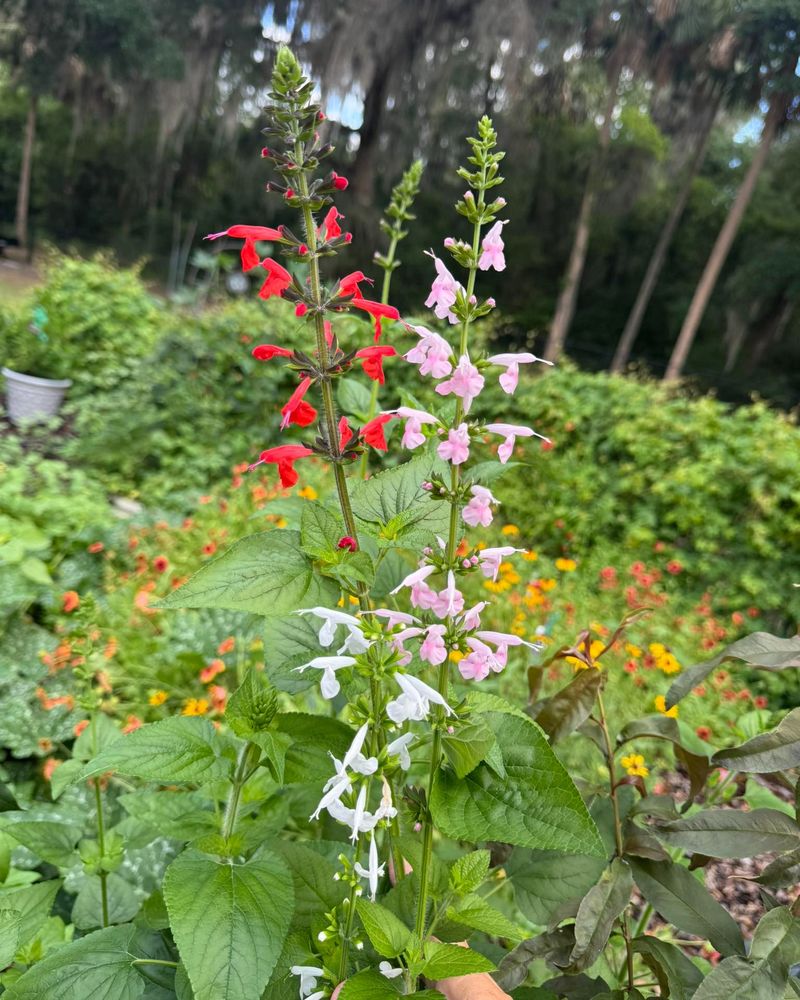
Site selection is where many Florida gardeners lose the battle before the plant even goes in the ground. Scarlet sage blooms most heavily in full sun – at least six hours of direct sunlight per day. The plant tolerates partial shade, but UF/IFAS notes that flowering is reduced in shadier spots, which means fewer flowers and fewer pollinator visits. A south- or west-facing bed that catches the afternoon sun is a good candidate; a spot tucked under a tree canopy is not.
Drainage is just as important as light. Scarlet sage tolerates Florida’s sandy soil, loam, and even clay, but it performs best where water moves through rather than pools. Sandy ground is often a fine match, provided it does not drain so fast that the root zone dries out completely between rains. Spots that stay wet after heavy summer downpours are a poor choice – sitting water stresses the roots and can lead to decline.
If your yard tends to puddle, raise the bed slightly or amend the soil to improve drainage before planting.
Heat tolerance is one of the plant’s genuine strengths. UF/IFAS describes scarlet sage as performing especially well during Florida’s hottest summer months, when many other flowering plants slow down or stop blooming altogether. That quality makes it a practical anchor for a summer pollinator bed. A few important limits apply: the plant handles heat and drought once established, but it is not marketed as flood-proof, hurricane-proof, or tolerant of saltwater or brackish-water inundation.
Choosing a well-drained, open, sunny spot from the start keeps those vulnerabilities from becoming problems.
Plant it with room to establish
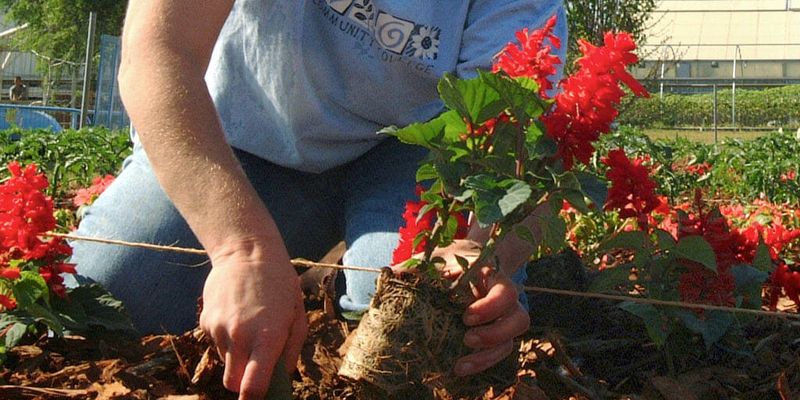
Spacing transplants correctly from the start saves a lot of corrective work later. UF/IFAS recommends placing scarlet sage transplants 24 to 36 inches apart, which gives each plant enough room to fill out to its natural 2- to 4-foot spread without crowding neighbors. Tight spacing might look more dramatic at planting time, but it restricts airflow, increases competition for soil moisture, and can make the planting harder to manage as plants mature and begin to self-seed.
Drought tolerance is a real advantage of scarlet sage, but it applies to established plants – not fresh transplants. Roots need time to spread into surrounding soil before the plant can draw on moisture reserves during dry stretches. UF/IFAS Gardening Solutions advises watering newly planted specimens as needed during the establishment period, especially through Florida’s dry spells and intense summer heat. A good rule of thumb is to check soil moisture at the root zone every few days for the first month or two, watering when the top inch or two feels dry.
Once roots are established, the plant becomes far more self-sufficient. At that point, regular irrigation is usually unnecessary except during extended dry periods. For gardeners placing scarlet sage in a pollinator bed or border, consider its eventual footprint when mapping out companion plants. Leave enough space not just for the current size of the transplant but for its full grown habit and the seedlings that will likely appear around it in future seasons.
Giving it room upfront means less thinning and repositioning down the road.
A patch can offer more nectar than one plant
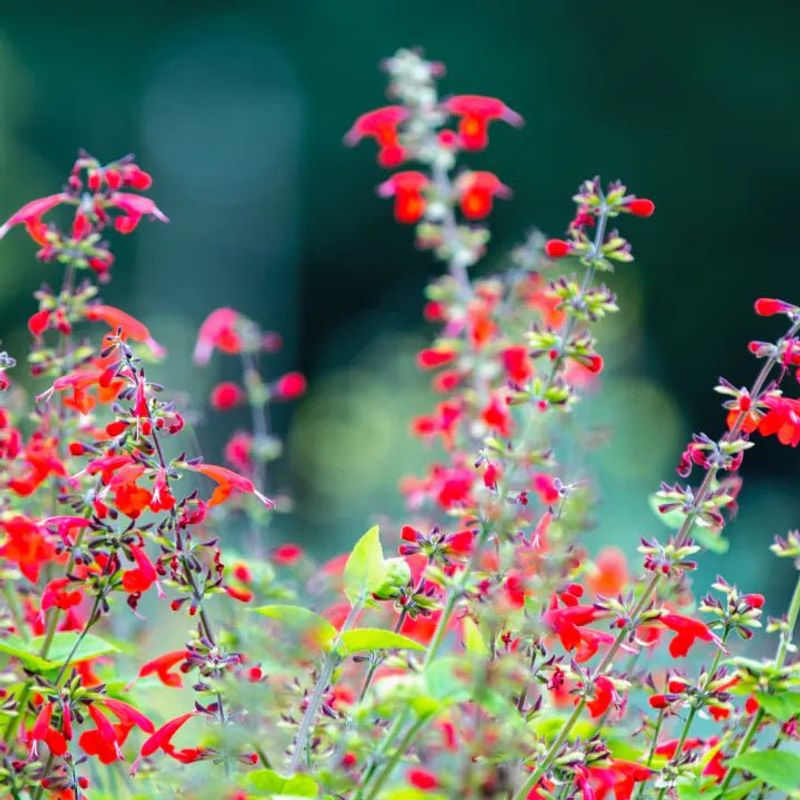
A single scarlet sage plant produces nectar and will attract pollinators when conditions are right. A grouping of several plants, though, creates a more visible and more abundant nectar resource – one that foraging hummingbirds and butterflies are more likely to notice and return to. That is not a guarantee of constant wildlife activity; local hummingbird populations, migration timing, and the rest of the garden all play roles. The point is simply that more flowers mean more available nectar, and more available nectar raises the odds of attracting and holding visitors.
UF/IFAS guidance on hummingbirds in Florida recommends planting multiple nectar plants in several groupings, with bloom periods that cover roughly March through September to support nesting birds across the season. Scarlet sage fits well into that framework because it blooms from spring through fall, often performing strongest in summer when other plants are flagging. Pairing it with early-spring bloomers and late-fall flowers fills the gaps that scarlet sage cannot cover on its own.
Scarlet sage can anchor a hummingbird planting, but it cannot supply complete habitat by itself. Audubon’s guidance on creating a hummingbird-friendly yard emphasizes that birds need more than nectar – they require insects for protein, shelter, perching spots, and a steady succession of flowers across the season. Think of a patch of scarlet sage as a strong anchor in a larger planting rather than a standalone solution. Combine it with other Florida-native nectar plants, and the yard becomes genuinely more useful to hummingbirds and the full range of pollinators that share the space.
Keep the planting tidy without overmanaging it
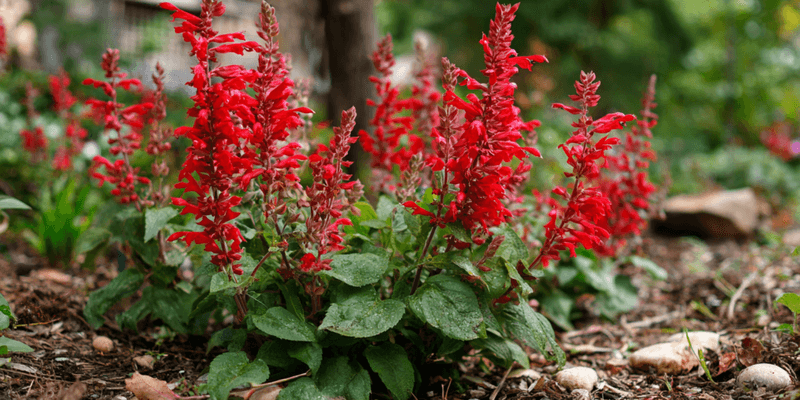
Scarlet sage generally asks for less upkeep than most flowering plants in a Florida summer bed. Serious pest and disease problems are uncommon – UF/IFAS reports that no significant pests or diseases are normally seen on S. coccinea. That track record supports calling it low-maintenance, though it does not mean the plant is entirely hands-off. A few targeted tasks through the season keep it looking sharp and producing flowers.
Light pruning during the flowering season helps maintain a tidy appearance and can encourage new bloom spikes on plants that start to look leggy. At the end of the year, after flowering tapers and foliage declines, cutting the plant back is a reasonable practice – though UF/IFAS notes it is not required for survival. Heavy rain can snap flower spikes, and UF/IFAS Gardening Solutions notes that new spikes typically follow once damaged stems are removed. After a freeze, cut back any damaged stems and wait – the plant often rebounds from the base.
Self-seeding is where the plant’s personality becomes a management question. Scarlet sage reproduces readily, and the Florida Native Plant Society describes it as potentially fairly aggressive in how it spreads into nearby areas. For gardeners who want a naturalistic, expanding planting, that self-seeding is a free bonus. For those who prefer a defined bed, the answer is to pull unwanted seedlings when they are small and easy to remove, or to collect seed selectively before it drops.
Catching seedlings early is much easier than managing a dense colony after the fact.
Set boundaries for storms, habitat, and pesticides
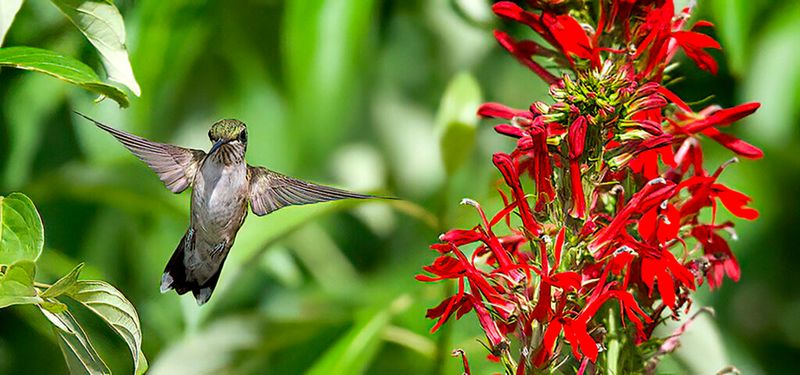
Scarlet sage is a strong nectar plant, but calling it a complete hummingbird habitat overstates what any single plant can do. Hummingbirds need more than flowers. Audubon’s hummingbird yard guidance points out that birds also depend on insects for protein, sheltering vegetation, open perching spots, and a reliable succession of blooms across months, not just weeks. Scarlet sage can be a meaningful part of that system, but gardeners who rely on it alone will likely see fewer visits than those who build a broader habitat around it.
Weather limits also deserve honest acknowledgment. The Florida Native Plant Society notes that S. coccinea does not tolerate saltwater or brackish-water inundation, so yards in coastal areas prone to storm surge should not rely on it as a flood-resilient plant. Damaged stems after heavy rain or freeze can be pruned back and the plant often regrows, but there is no basis for marketing it as hurricane-proof or storm-proof. Choosing a well-protected, well-drained site is the better strategy than expecting the plant to recover from serious flooding.
Pesticide habits matter as much as plant selection when the goal is a pollinator-friendly yard. Routine spraying around a nectar plant defeats its purpose. UF/IFAS guidance on natural pest management products warns that all pesticides, including oils, soaps, and products marketed as natural, carry risks for pollinators and can injure heat-stressed plants. Household dish soap is not a safe substitute for labeled insecticidal soap.
If a pest problem does arise near the planting, integrated pest management – starting with the least-toxic option and always following product labels – is the right approach. Keeping chemicals away from blooming plants protects the visitors the garden is designed to attract.
Make scarlet sage the anchor, not the whole habitat
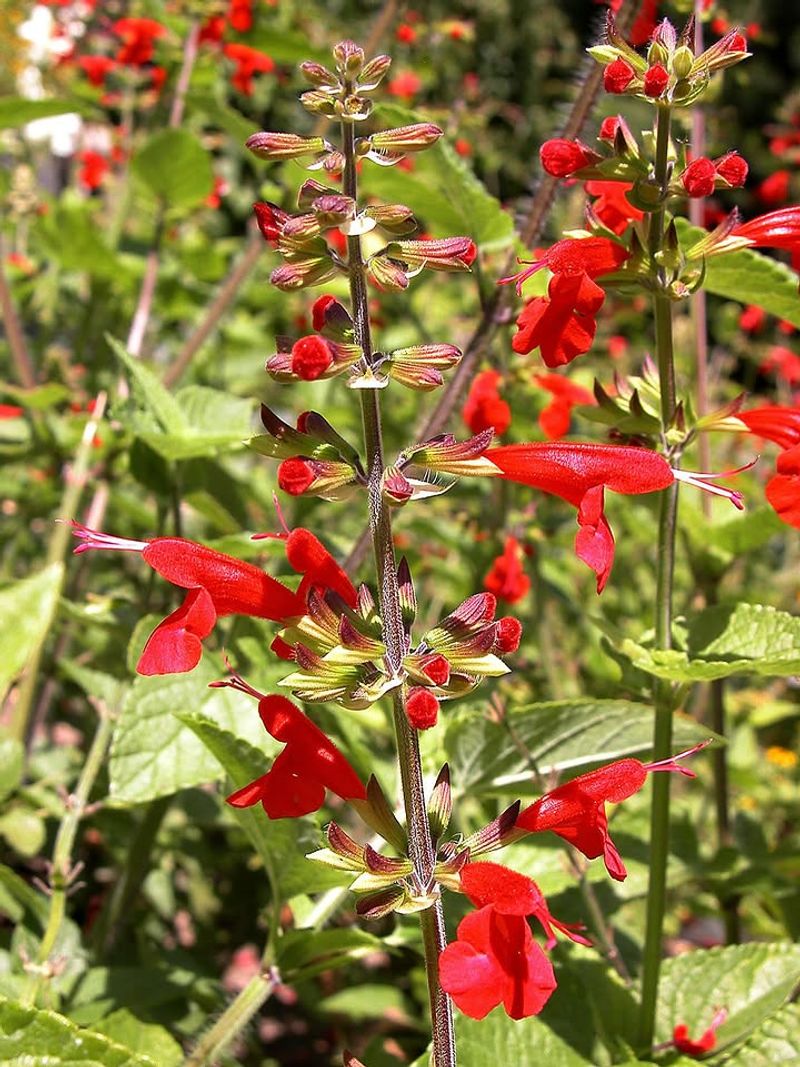
Scarlet sage, Salvia coccinea, earns its place in a Florida pollinator garden through reliable performance: full-sun blooming from spring through fall, heat tolerance that holds up through summer, and red tubular flowers that provide a dependable nectar source for hummingbirds, butterflies, and bees. UF/IFAS confirms it as a Florida native suited to the state’s sandy soils and warm growing zones. Plant it in a sunny, well-drained spot, water it through the first season while roots settle, and give transplants 24 to 36 inches of space to grow and self-seed on their own schedule.
The drive-through image in the headline captures something real – a yard with scarlet sage can become a spot hummingbirds visit regularly, especially when the planting is part of a broader habitat. UF/IFAS recommends multiple nectar plants, grouped plantings, and overlapping bloom periods to keep hummingbirds engaged across the season. Add companion native flowers, limit pesticide use, and leave perching spots nearby, and Audubon’s framework for a hummingbird-friendly yard starts to take shape around scarlet sage as its anchor.
No single plant transforms a yard by itself, but the right plant in the right spot changes what is possible. Scarlet sage is one of the most practical starting points Florida gardeners have for summer pollinator value – a native that thrives when others struggle and keeps the nectar flowing when it matters most.