
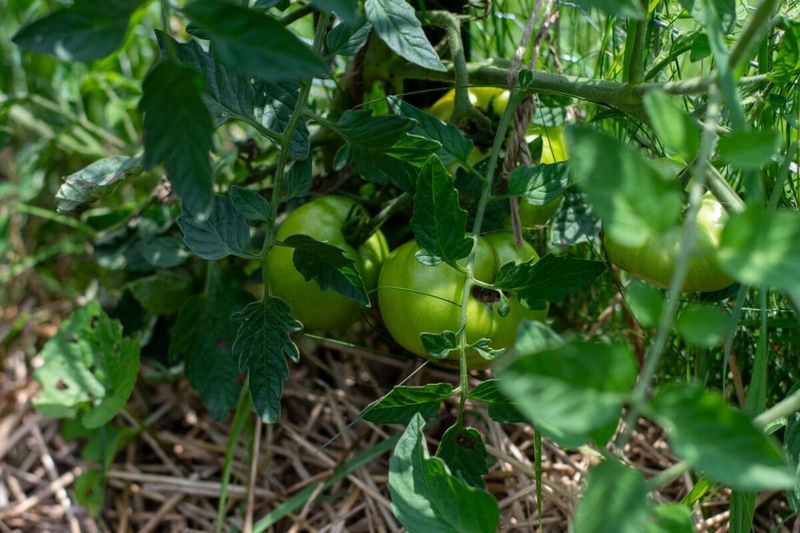
Tomato plants can look perfectly healthy in July and still stop producing flowers, drop the ones they have, or hold onto green fruit that refuses to turn red. That frustrating pause is real, and heat is usually behind it, but the fix is not hiding in your kitchen cabinet. The idea that one cheap ingredient can restart a heat-stalled tomato plant is a popular gardening myth worth correcting before you waste time and possibly harm your plants.
Why summer heat can pause tomatoes
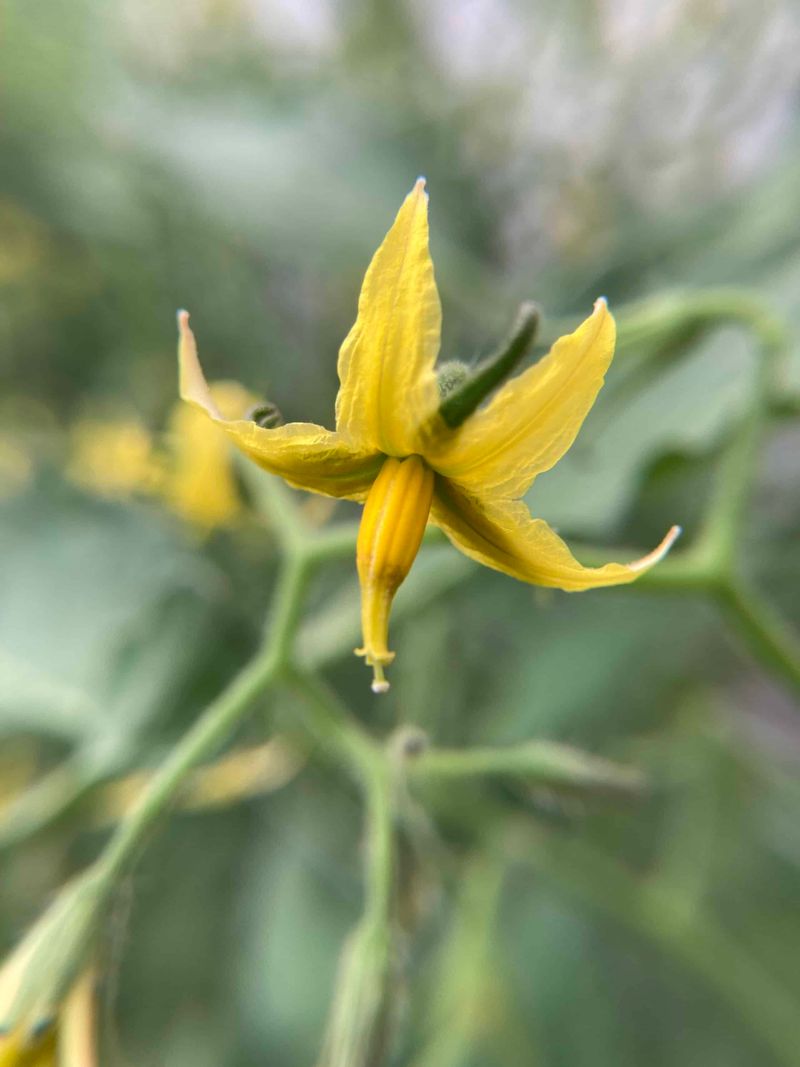
Tomatoes are warm-season plants, but they have limits. When daytime temperatures stay above roughly 85 to 90 degrees Fahrenheit and nighttime temperatures stay above about 70 degrees, the plant’s reproductive system takes a hit. University of Minnesota Extension guidance identifies those sustained conditions as capable of stressing tomatoes and interfering with pollination, which is why flower drop and a halt in new fruit are so common during July heat waves.
The specific problem is pollen. Published research on tomato heat stress shows that high temperatures can reduce pollen viability, pollen germination, and overall pollen performance, making it harder for flowers to set fruit even when the plant looks green and vigorous. The foliage stays full because leaves are not the problem; the disruption is happening inside the flowers.
Ripening also slows down. Green tomatoes that are already on the vine may stay green because the pigments responsible for red color do not develop normally above about 85 degrees Fahrenheit. Pennsylvania State University Extension notes this as a distinct heat effect, separate from poor fruit set. These thresholds are not universal guarantees, though.
Cultivar, humidity, wind, heat duration, soil moisture, container size, and nighttime temperatures all affect how a specific plant responds, so the numbers guide diagnosis rather than settle it.
Match the symptom to the likely problem
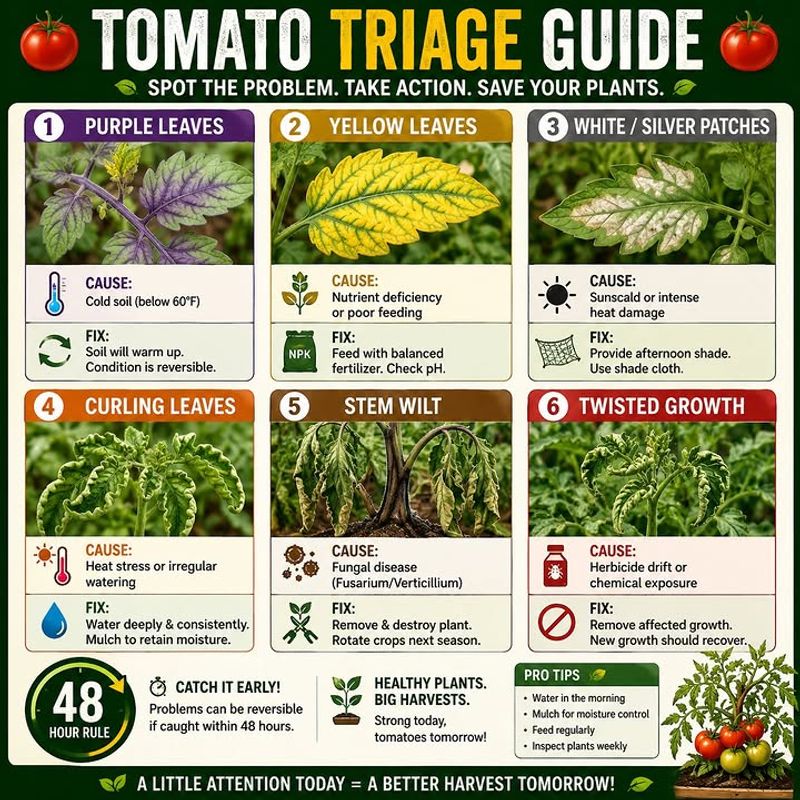
Not every tomato problem in July is caused by heat alone, and treating the wrong cause wastes time. A lack of new fruit, for example, most often reflects heat-related blossom drop or reduced pollen performance. Mature green tomatoes that refuse to color up are usually delayed by excessive heat blocking pigment production, not by a nutrient gap or disease.
Temporary wilting during the hottest part of the afternoon is common and often recovers by evening. Physiological leaf roll, where lower leaves curl upward, is generally a non-damaging response to heat and water stress rather than a sign of disease. Minnesota Extension’s tomato disorder guide distinguishes this kind of leaf curl from the more serious symptoms that warrant closer investigation.
Yellow leaves, dark or water-soaked spots, dieback on stems or branch tips, severe stunting, or a whole-plant decline that does not recover overnight are different matters entirely. Those patterns can point to fungal or bacterial disease, root damage, herbicide injury, nutrient imbalance, or pest pressure. Penn State’s tomato disease and disorder resource covers many of these and can help narrow down what you are actually seeing. Research on tomato reproductive heat responses also confirms that cultivar matters: some cherry and heat-tolerant varieties continue setting fruit under conditions that shut down more sensitive types, so variety selection can change the picture considerably.
Stabilize moisture at the root zone
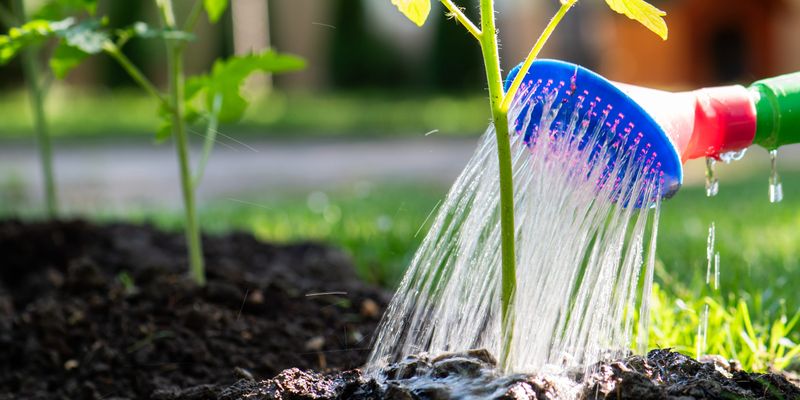
Consistent soil moisture is the most direct, practical thing you can do for a tomato plant under heat stress. That means watering thoroughly at the root zone rather than sprinkling the surface lightly, and avoiding the cycle of letting soil dry out completely before drenching it. Minnesota Extension’s vegetable irrigation guidance recommends deep, even watering that reaches the root zone and maintains steady moisture rather than dramatic wet-dry swings.
Hot weather generally means more frequent watering, but the right schedule depends on your soil type, plant size, container dimensions, wind exposure, and recent rainfall. A container on a sunny patio may need water every day during a heat wave, while an in-ground plant in clay soil might hold moisture longer. Check the soil a few inches down rather than following a fixed volume or interval blindly. Minnesota Extension’s hot-weather gardening advice specifically recommends checking soil moisture as the guide for watering decisions during extreme heat.
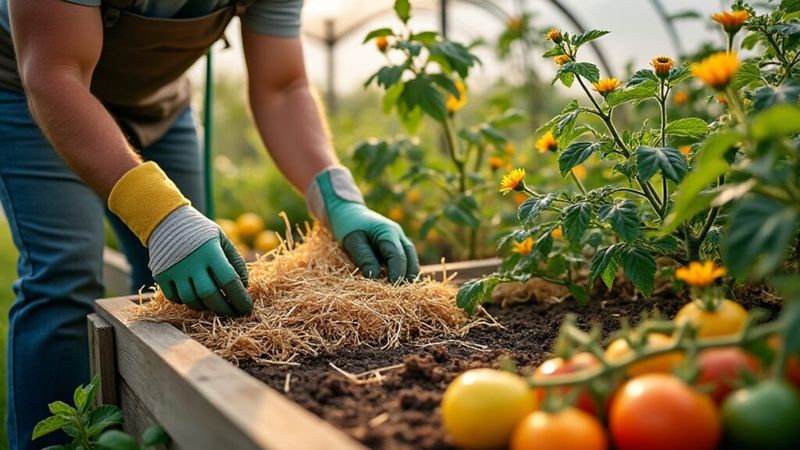
Mulch does two useful things at once: it slows evaporation from the soil surface and helps moderate soil temperature during heat spikes. UC Agriculture and Natural Resources guidance on tomato culture supports using organic mulch around tomatoes, but notes that it should be kept slightly away from the stem. Mulch piled against the base of the plant can trap moisture there and increase the risk of stem rot and soilborne disease. A few inches of clearance around the stem keeps the benefit without the risk.
Reduce heat load without forcing growth
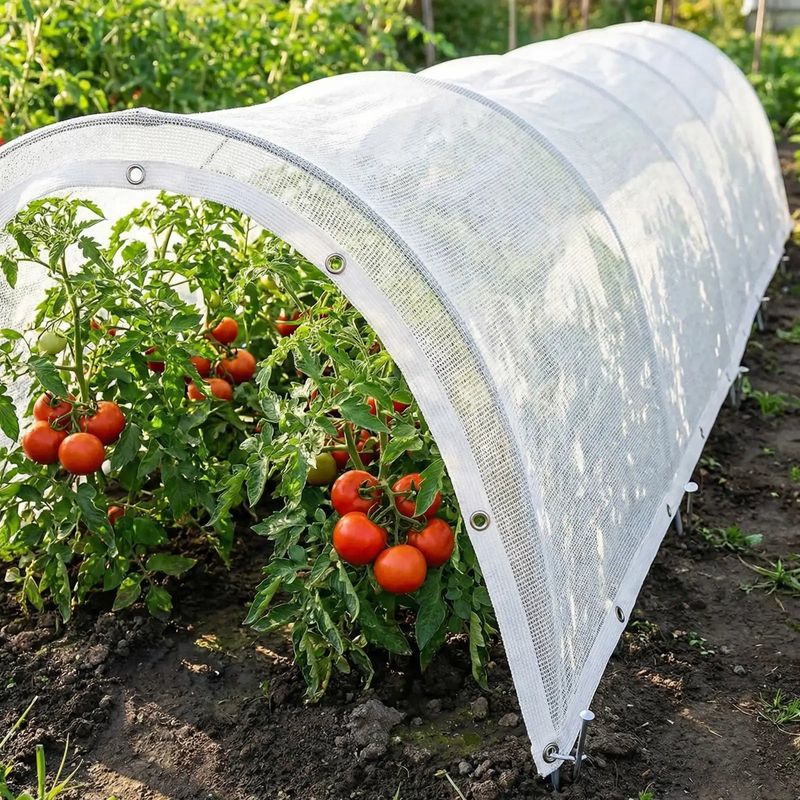
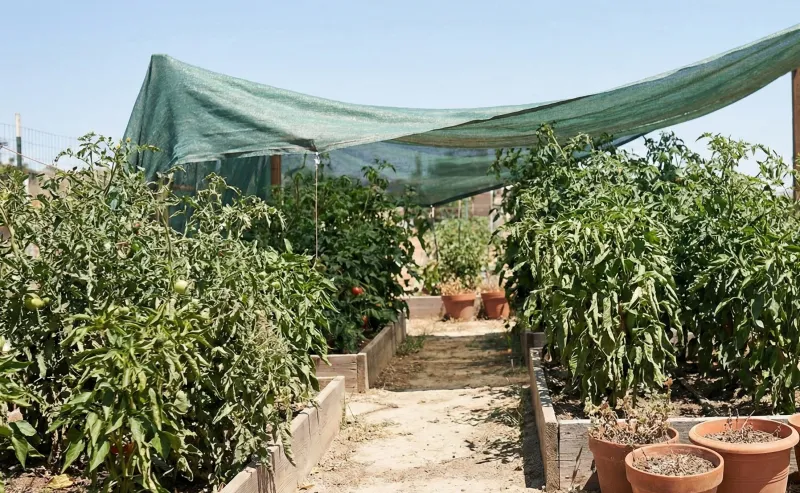
When heat is severe, a bit of temporary shade can take real pressure off tomato plants. Shade cloth draped over plants during the hottest afternoon hours can reduce heat load without cutting out all the light the plant needs. Penn State Extension lists shade cloth alongside adequate watering and heat-tolerant cultivar selection as practical heat-stress strategies. The key word is temporary: shade used too heavily or left in place too long can reduce airflow and light enough to create new problems, including poor pollination from reduced bee activity.
Pruning is worth postponing. Minnesota Extension specifically recommends waiting until extreme heat passes before doing any significant pruning, because removing foliage adds stress on top of existing heat pressure and can expose fruit to sunscald. If a branch is dead or diseased, that is a different situation, but routine suckering and shaping should wait for cooler days.
Reaching for fertilizer when tomatoes stall is a common impulse, but heavy nitrogen is not the right response. Excess nitrogen pushes the plant toward lush foliage growth at the expense of flowering and fruiting, and fertilizer salts in dry soil can worsen stress rather than relieve it. Minnesota Extension’s tomato growing guide ties fertilizer decisions to crop needs and soil conditions rather than to visible stalling. The goal during a heat wave is to help the plant endure, not to force it into growth it cannot sustain.
Why baking soda, Epsom salt, and aspirin fall short
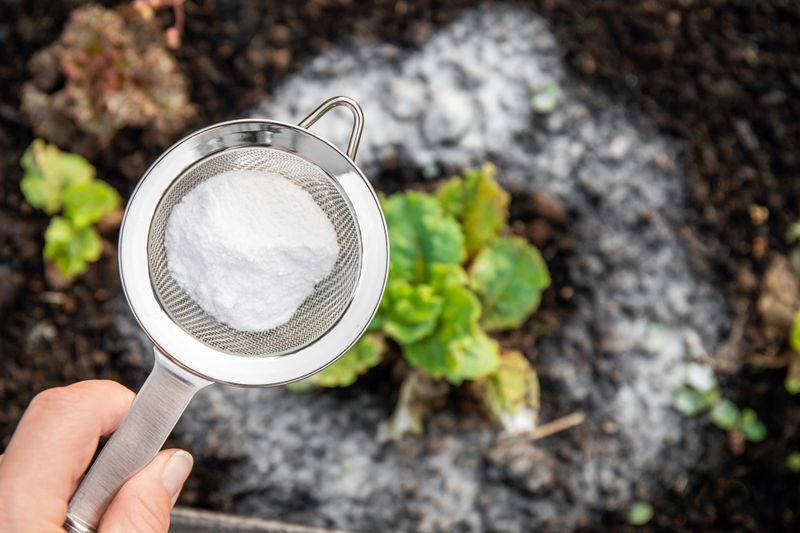
Baking soda is probably the most common “secret ingredient” recommended for tomatoes online, and it does not hold up. Extension guidance reviewed by Ask Extension does not support baking soda as a treatment for heat-stalled tomatoes. What it actually does is raise soil pH and add sodium to the soil, which can interfere with the slightly acidic conditions tomatoes prefer, generally around pH 6.0 to 6.8. UC IPM’s tomato field preparation guidelines describe proper soil pH management as something based on a soil test, not on sprinkling a pantry ingredient around the base of a plant.
The claim that baking soda sweetens tomatoes is also a myth. UC Agriculture and Natural Resources specifically lists this as a gardening myth, noting that tomatoes cannot simply absorb added baking soda in a way that predictably changes fruit flavor. Epsom salt follows a similar pattern. It supplies magnesium and sulfur, but University of Nebraska Extension and University of Illinois Extension both caution that it is only appropriate when a magnesium deficiency has been confirmed, not as a general growth booster.
Excess magnesium can interfere with calcium uptake, and excess salts of any kind can harm plants that are already under stress.
Aspirin and salicylic acid have attracted genuine scientific interest, and some controlled studies have examined their effects on plant stress responses. But those studies involve specific compounds, measured concentrations, particular cultivars, and laboratory or greenhouse conditions, often targeting salt stress rather than heat. Recent research on salicylic acid in tomatoes and earlier work published in Acta Horticulturae reflect that narrow, condition-specific scope. Dissolving a household aspirin tablet and applying it to outdoor tomatoes during a July heat wave is not what those studies tested.
One more caution: any homemade spray applied to edible crops raises questions about crop safety, harvest intervals, and leaf burn. The EPA makes clear that pesticide labels are legally enforceable, and a product being edible or common in the kitchen does not make it safe as a foliar spray, especially during heat, bright sun, or drought stress.
Let cooler nights reveal the real outcome
Once temperatures drop back into a more comfortable range, tomatoes often resume their normal cycle on their own. Flower production can pick back up, new fruit can begin setting, and green tomatoes already on the vine can finally start developing color. Minnesota Extension notes that the pause in flowering and fruit set during hot weather is a temporary heat response, and that plants can return to normal production when conditions moderate without needing a chemical boost.
After several cooler nights, watch for renewed flower clusters, new small fruit forming at branch tips, color change beginning on mature green tomatoes, and recovery from any temporary wilting that appeared during peak heat. Maintaining consistent soil moisture through this transition period supports the recovery process, since roots under drought stress take longer to bounce back even when air temperatures improve.
If the plant is still declining after cooler weather returns, the cause is probably not heat alone. Persistent yellowing, new spots, expanding dieback, or continued flower drop after nighttime temperatures fall below 70 degrees warrants a closer look at disease, pests, root problems, or other disorders. Penn State’s tomato disease and disorder resource and Minnesota Extension’s tomato disorder guide are both practical starting points for narrowing down what you are dealing with when heat alone does not explain the symptoms.
Give the plant support, not a miracle cure
A straightforward decision path helps more than any single ingredient. First, identify what you are actually seeing: heat-affected flowers or fruit set, green tomatoes that will not color up, or a plant showing broader symptoms that heat alone does not explain. Then stabilize root-zone moisture, add mulch if you have not already, and consider temporary shade during the worst afternoon heat. Skip major pruning and hold off on heavy fertilizer until the heat breaks.
Minnesota Extension and Penn State Extension both point to supportive care as the practical response to heat stress, not kitchen amendments. Baking soda, Epsom salt, and household aspirin are not established treatments for heat-stalled tomatoes, and applying them without a confirmed soil deficiency or specific need can create new problems rather than solve existing ones.
Reassess as nights cool and watch for the plant’s own recovery signals. Consistent moisture and patience give tomatoes the best realistic chance of resuming normal growth. The most useful thing in your garden toolkit right now is a good mulch layer and a soil moisture check, not a trip to the pantry.