
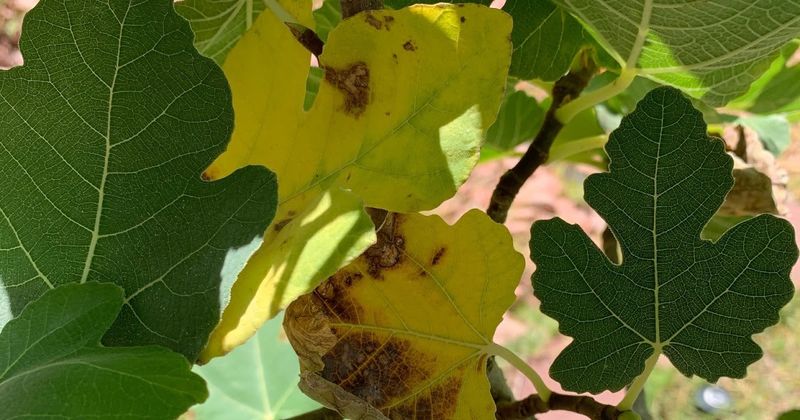
Few things unsettle a gardener faster than watching a fig tree shed its leaves while they turn a sickly yellow. Before you reach for the watering can or start pulling leaves off, it helps to know that yellowing and leaf drop can mean several different things depending on the plant, the season, and what you find when you look closely. A watering problem is one reasonable place to start your investigation, but it is rarely the only explanation. This guide walks you through the key checks so you can respond to what your fig is actually experiencing rather than guessing.
Start with the species and season
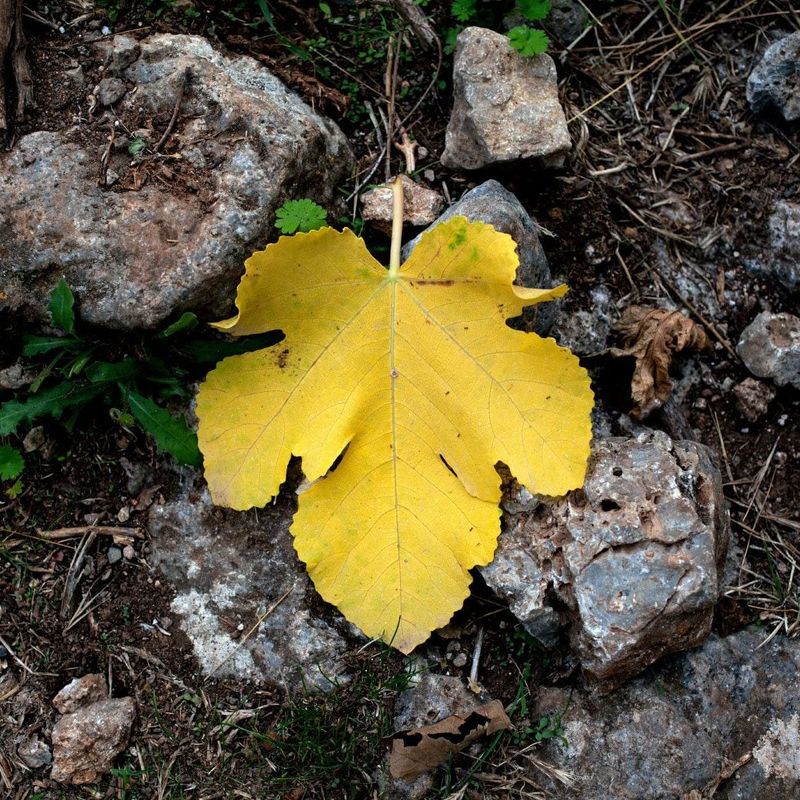
Knowing which plant you have changes everything about how you read yellowing leaves. A common fig, Ficus carica, is a deciduous tree that naturally sheds its leaves every fall and winter. Iowa State University Extension notes that this seasonal leaf drop is a normal part of the common fig’s growth cycle, not a sign that something has gone wrong. If your outdoor fig is going bare as temperatures cool, the tree may simply be entering dormancy.
An indoor ornamental Ficus, such as Ficus benjamina or Ficus lyrata, behaves differently. These plants are not deciduous in the same way, so yellowing and leaf drop more often point to a cultural problem. University of Washington’s horticultural library identifies low light, cold drafts, relocation stress, humidity changes, overwatering, and underwatering as common triggers for indoor Ficus leaf loss.
The season also matters for outdoor trees. A common fig dropping leaves in October is doing exactly what it should. The same tree losing leaves rapidly in July, or showing yellowing with spots or stippling, warrants a closer look. Once you have confirmed the species and season, your next step is to check the moisture in the root zone or potting medium before changing anything else.
University of Arizona Cooperative Extension confirms that common figs are deciduous and will lose their leaves during their dormant period, which is a helpful reminder that a bare winter fig is not a dying fig.
Let the root zone—not the calendar—guide watering
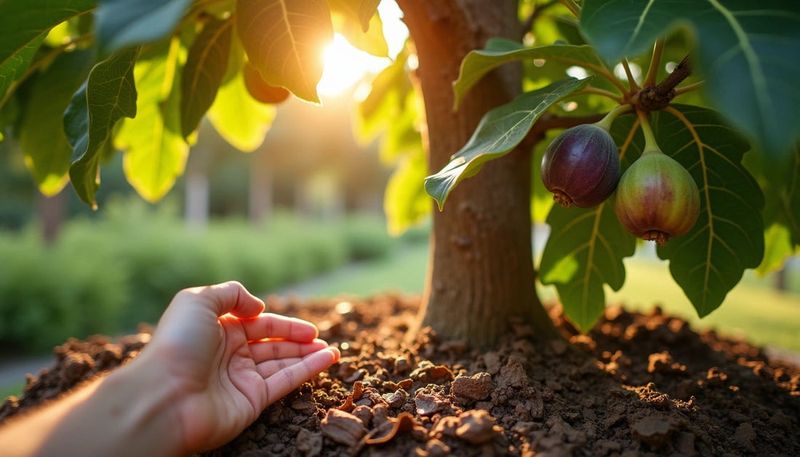
A watering calendar can feel reassuring, but it is one of the less reliable guides for a fig tree. Soil type, container size, tree age, recent rainfall, temperature, and wind all change how quickly moisture moves through the root zone. Rather than counting days between waterings, get in the habit of checking the soil or potting medium directly.
For an in-ground fig, press your fingers several inches into the soil near the root zone and feel whether it is moist, barely damp, or bone dry. For a container or indoor Ficus, Virginia Tech’s container plant guidance recommends using a finger or similar method suited to the pot size rather than applying a fixed depth rule that may not fit a small container. The surface alone can mislead you, drying out quickly while the center of the root ball stays wet, or vice versa.
Also check for drainage problems before assuming the plant needs more water. Look at saucers, low spots in the planting area, irrigation timer settings, and whether recent rain has already saturated the soil. UC IPM’s fig cultural guidance emphasizes maintaining even soil moisture while avoiding waterlogged conditions, because drought stress and prolonged saturation can both cause yellowing and leaf drop.
A watering swing means unstable moisture, not simply applying too much or too little on a single occasion. Roots that cycle repeatedly between parched and flooded conditions are under chronic stress, and UF/IFAS fig guidance links this kind of inconsistency to poor growth and reduced fruiting over time.
Correct genuinely dry soil with a thorough soak
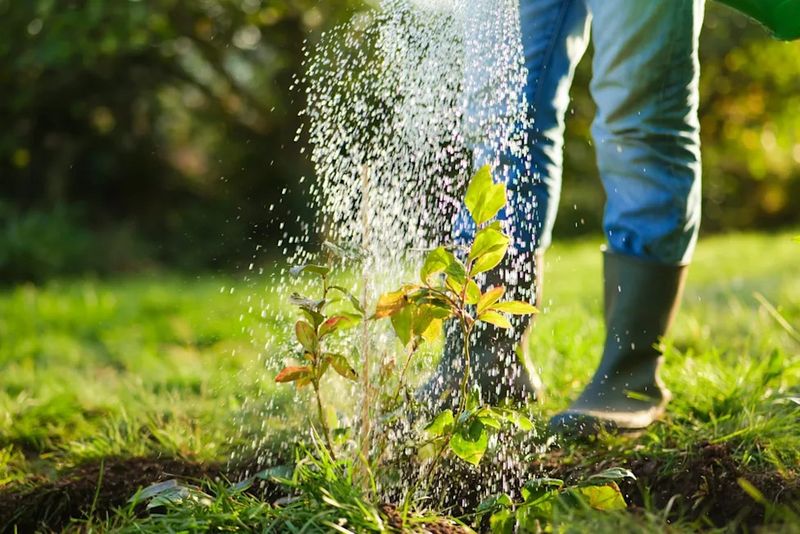
When the soil or potting medium is genuinely dry well below the surface, a single light sprinkle rarely helps. The goal is to rehydrate the root zone thoroughly so moisture reaches the depth where the roots are actively growing. Applying a little water every day to a dry root ball can keep the surface looking damp while the interior stays parched.
For an in-ground fig, direct water around the root area or drip line rather than repeatedly soaking the trunk or crown. UC IPM suggests that young fig trees may need roughly 3 to 5 gallons per week as a general reference, while making clear that soil type and weather shift that number considerably. Established in-ground figs are more drought tolerant than young or container-grown trees, but drought tolerance does not mean the tree performs well under prolonged water stress.
For containers and indoor Ficus, moisten the entire potting medium evenly, accounting for the container’s size, drainage, and the condition of the root ball. A root ball that has dried out completely may initially shed water around the edges rather than absorbing it, so water slowly and check that moisture is actually reaching the center. UC Master Gardeners of San Luis Obispo County note that young trees need consistent attention during establishment.
One more thing worth knowing: UC Agriculture and Natural Resources research and University of Georgia drought guidance both explain that leaf drop can follow a delayed drought response, meaning a tree may continue shedding leaves shortly after rewatering even when irrigation is now correct. That drop does not prove that watering caused the damage.
Treat wet soil as a different problem
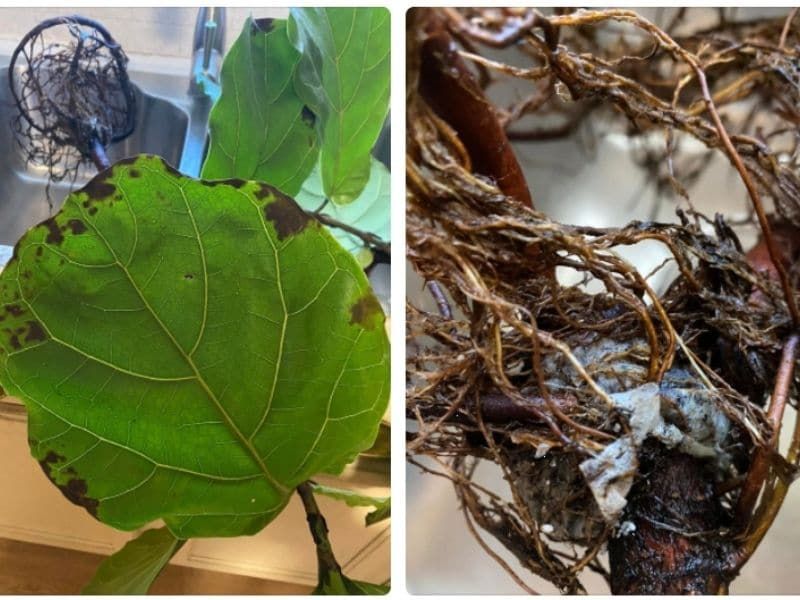
Wet soil and yellow leaves together send a different message than dry soil and yellow leaves, and responding to them the same way can make things worse. When the soil or potting medium is already saturated, the first move is to stop watering, not add more. Check whether a saucer is holding standing water, whether a low spot in the landscape is pooling after rain, or whether an irrigation timer is running more often than conditions require.
Prolonged saturation pushes oxygen out of the root zone, and roots that cannot breathe begin to break down. UC IPM’s Phytophthora root and crown rot guidance explains that this water mold thrives in poorly drained, wet soils and can cause wilting, yellowing, and dieback even when the soil appears moist. A plant wilting despite wet soil is a particularly important signal that root damage may already be present.
Other clues pointing toward root problems rather than simple drought include soft or mushy foliage, a foul smell near the soil line, and roots that appear brown or soft rather than firm and white. University of Wisconsin Extension’s root rot guidance notes that once root rot is established, additional water cannot reliably reverse it, and the plant may need assessment of whether viable roots remain.
For an in-ground fig, UC IPM’s quick tips on Phytophthora advise correcting drainage problems at the source rather than simply pausing irrigation temporarily. Repeatedly wetting the trunk or crown of an in-ground tree also increases disease risk, so keep water directed away from the base. A declining plant in persistently wet soil deserves careful assessment, not another drink.
Use leaf patterns to investigate disease, pests, and nutrition
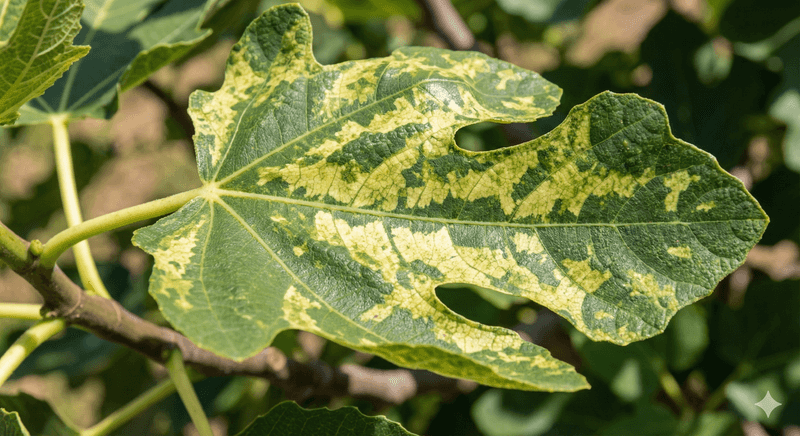
Once you have ruled out a straightforward moisture problem, the pattern of yellowing on the leaves becomes your most useful diagnostic clue. Different causes leave different marks, and learning to read them can save you from chasing the wrong fix for weeks.
Rust-colored lesions, yellow halos, or a dusty orange-brown powder on leaf undersides are characteristic warning signs of fig rust, a fungal disease. UF/IFAS Extension and University of Georgia Extension both identify rust as a common cause of early, premature defoliation in figs. Severe or repeated rust infections can weaken the tree and reduce growth or yield, so calling it harmless understates the risk even though it rarely kills an otherwise healthy tree outright.
Yellow stippling across the leaf surface, bronzing, or fine webbing on stems and leaf undersides suggest spider mites rather than a watering swing. UC IPM’s spider mite guidance describes these tiny pests as most active in hot, dry conditions, which can make their damage look similar to drought stress at first glance. Sticky honeydew on leaves or nearby surfaces, sooty mold, or visible clusters of scale or aphids on stems point toward insect pest pressure instead.
Broad yellowing of older leaves across the canopy, without spots or lesions, can be consistent with nitrogen deficiency, while interveinal yellowing on newer leaves may suggest a micronutrient or pH issue. UC Marin Master Gardeners caution that yellow leaves alone do not justify fertilizing; soil testing is the more reliable first step. A mosaic pattern, leaf distortion, and reduced overall vigor can be associated with fig mosaic virus, as noted in UC IPM’s fig pest management guidelines.
These patterns suggest possibilities rather than confirm a diagnosis. Resist the urge to strip off every yellow leaf or apply a product before you know what you are dealing with. Indiscriminate pruning removes photosynthetic area without fixing the underlying cause, and any spray option requires checking the current product label for the specific pest, crop registration, your state’s regulations, pollinator precautions, and any harvest interval. The Texas Plant Disease Handbook’s fig section and other regional extension resources are practical next references once you have identified a pattern.
Build a steadier moisture routine for each growing setup
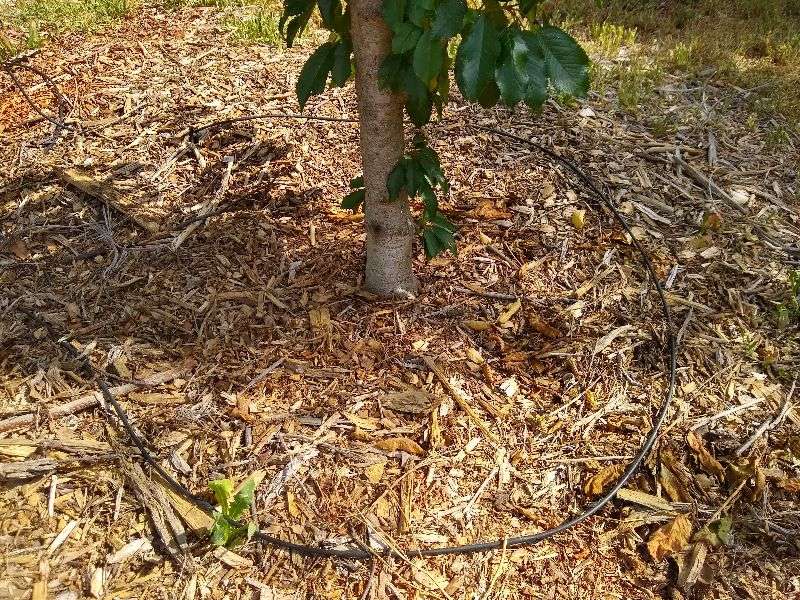
After correcting an immediate moisture problem, the goal shifts to preventing the next one. A steadier routine does not mean watering on a fixed schedule; it means using the plant’s actual conditions to guide each decision. Rain, heat waves, wind, soil texture, container size, drainage quality, and tree age all affect how quickly the root zone dries out or stays wet.
For in-ground common figs, UC IPM recommends directing water around the drip line rather than repeatedly saturating the trunk area, and applying a mulch layer to moderate soil temperature and reduce evaporation. Keep mulch several inches away from the trunk to avoid creating conditions that favor crown disease. A mulch layer does not replace moisture checks; it simply slows the rate at which the soil dries between waterings.
For containers and indoor Ficus, the entire potting medium should receive appropriate moisture each time you water, not just the top layer. Virginia Tech’s container watering guidance stresses that drainage must remain clear; a pot sitting in a saucer full of water is effectively waterlogged at the root level even if the top of the medium looks fine. Empty saucers after watering and check that drainage holes are not blocked.
University of Wisconsin Extension notes that consistent moisture management, rather than reactive watering after visible stress, gives plants the best chance of maintaining healthy roots. The aim for both outdoor and indoor figs is to avoid the cycle of drying out completely and then flooding, since roots under that kind of repeated stress become more vulnerable to disease and less able to support healthy foliage.
Monitor practical signs of recovery without expecting instant repair
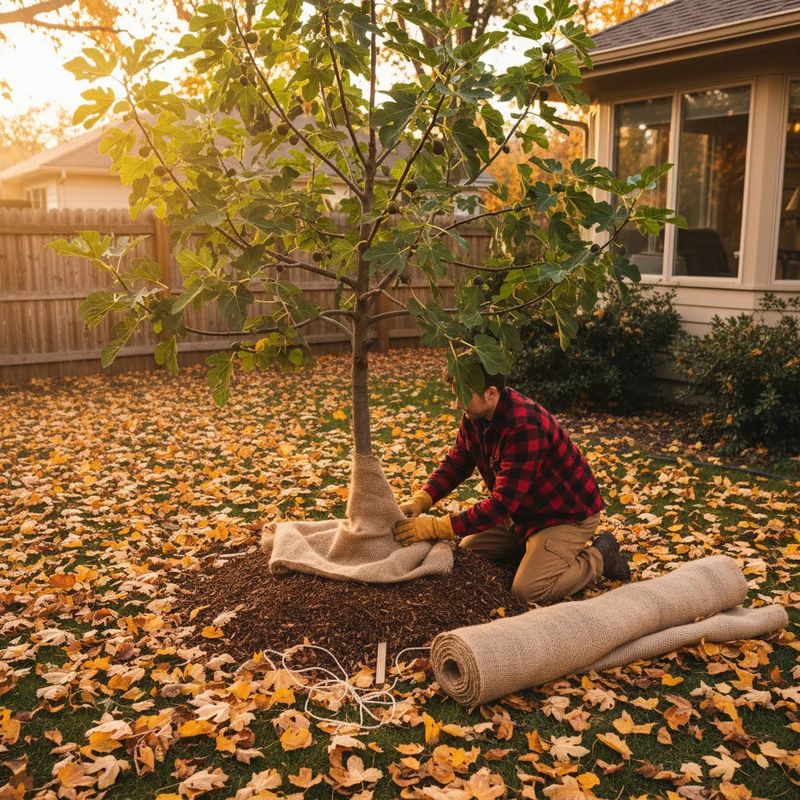
Correcting a moisture problem is a meaningful step, but the tree’s response takes time. Already yellow or severely damaged leaves are unlikely to turn green again, and some will continue to drop for days or even weeks after conditions improve. That ongoing drop can feel alarming, but it often reflects a delayed stress response rather than a sign that the correction is not working.
As UC Agriculture and Natural Resources and University of Georgia drought guidance both indicate, leaf drop can follow drought stress even after irrigation resumes, because the damage was done before the water arrived. The more meaningful things to watch for are stable soil moisture, swelling buds, and new growth emerging from healthy stems. These are useful practical indicators, not definitive proof that the original problem is fully resolved.
Keep inspecting the plant as it moves through recovery. If decline continues after moisture is stable, or if new yellowing appears with spots, webbing, or other patterns, return to the leaf-pattern checks from the previous section. UC Marin Master Gardeners frame plant diagnosis as an ongoing process of observation rather than a single test with a pass-or-fail result. Root damage from Phytophthora or similar pathogens may not be visible above ground until well after the infection is established, so continued monitoring matters even when the immediate crisis appears to have passed.
Make the next decision from evidence, not the yellow color alone
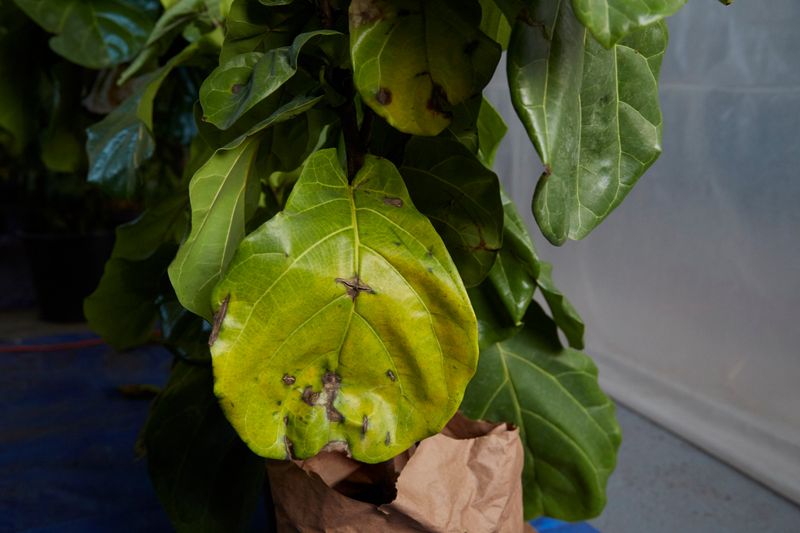
Yellow leaves on a fig are a prompt to investigate, not a prescription for a specific fix. Start by confirming the species and checking the season, because a common fig going bare in fall is behaving normally. Then check moisture below the surface using a method appropriate to the root zone or container, inspect drainage, and read the leaf pattern before changing anything about your care routine.
Consistent moisture is a sensible correction only when the roots are actually dry. Wet soil or signs of disease require a different response entirely, and adding water to an already saturated or diseased root zone can accelerate decline rather than reverse it. UC IPM and North Carolina Cooperative Extension both reinforce that leaf drop alone does not mean the tree is dying. Iowa State University Extension reminds gardeners that common figs naturally defoliate in winter and can regrow when viable roots and stems remain.
A fig that drops leaves is asking you to look more carefully, and looking carefully is always the right place to start.