
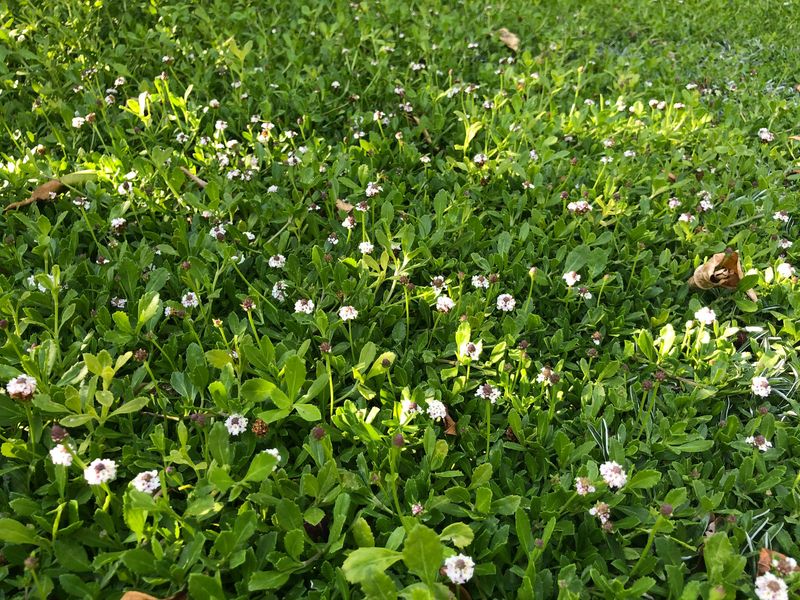
A low-growing native plant called frogfruit is quietly showing up in Florida front yards as an alternative to conventional grass in low-traffic areas. Some homeowners are drawn to its smaller water and maintenance demands compared to turf, while others appreciate that it feeds butterflies and pollinators right outside the front door. Florida law does offer real protection for certain landscaping choices, but understanding exactly what that protection covers and where HOA authority still applies can make the difference between a smooth approval and a costly dispute.
Frogfruit Offers a Low-Traffic Alternative to Conventional Turf
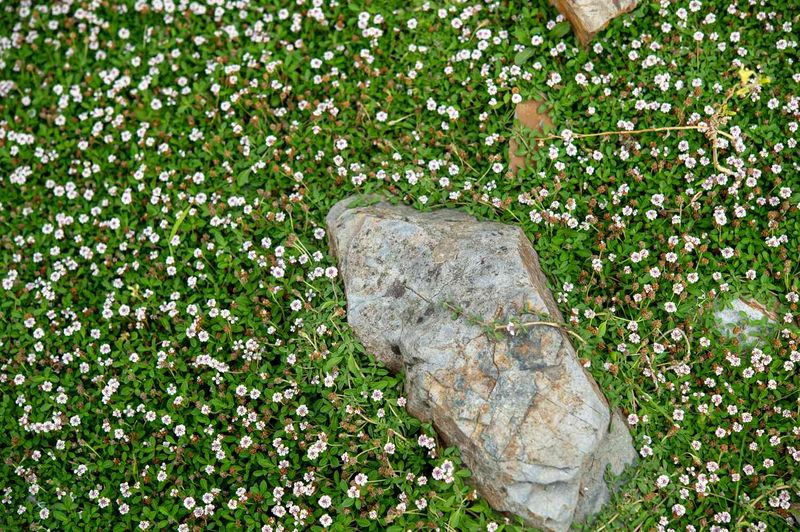
Frogfruit, known botanically as Phyla nodiflora and also called turkey tangle fogfruit or matchweed, is a native Florida perennial that spreads low along the ground, rooting at stem nodes as it goes. The result is a dense, mat-forming cover that hugs the soil rather than growing upright like conventional turf grasses. UF/IFAS extension documentation on frogfruit identifies it as a native groundcover suited to full sun through partial shade and adaptable to sandy, clay, and loam soils across Florida.
Where frogfruit genuinely earns attention is in areas of the yard that get little or no foot traffic. The Florida Native Plant Society’s profile of Phyla nodiflora recommends it specifically as a turf substitute in low-traffic areas, and that limitation matters. UF/IFAS is direct on the point: frogfruit cannot withstand heavy foot traffic. Any area where people regularly walk, children play, or pets run needs a path, stepping stones, hardscape, or a more traffic-tolerant surface alongside or instead of frogfruit.
Beyond its growth habit, frogfruit carries real ecological value. The Florida-Friendly Landscaping butterfly plant database lists it as a larval host for the common buckeye, phaon crescent, and white peacock butterflies, and as a nectar source for a range of pollinators. That combination of low growth, soil adaptability, and wildlife support makes it a plant some Florida homeowners use or consider for selected front-lawn areas, particularly where a conventional grass lawn would demand more water and upkeep than the site warrants. It is not a universal lawn replacement, and calling it a trend overstates its current use, but for the right site it offers a genuinely different option worth evaluating carefully.
Florida Law Protects a Landscaping Approach, Not Frogfruit Alone
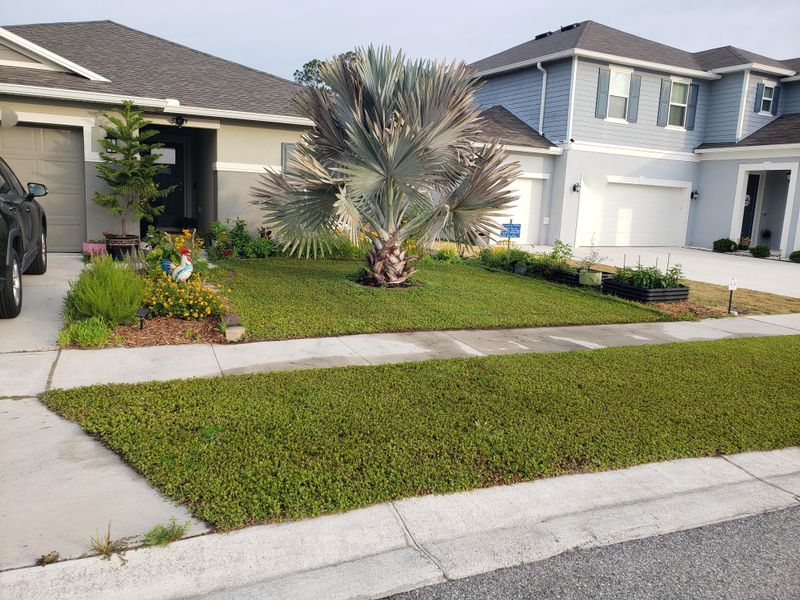
The legal claim that HOAs cannot touch frogfruit gets repeated often, but the actual statute is more precise and more limited than that shorthand suggests. Florida Statutes section 720.3075(4)(b) says that HOA governing documents may not prohibit, or be enforced to prohibit, Florida-friendly landscaping as defined elsewhere in state law. The protection attaches to a defined category of landscaping practice, not to any individual plant species by name.
That definition lives in Florida Statutes section 373.185, which describes Florida-friendly landscaping as a performance-based approach covering water conservation, environmental protection, local adaptability, appropriate plant selection, efficient irrigation, sound fertilization and pest management, runoff reduction, and ongoing maintenance. A plant qualifies as part of a Florida-friendly landscape because of how it fits those principles in context, not simply because it carries a native label.
That distinction matters practically. Southwest Florida Water Management District guidance on Florida-Friendly Landscaping notes that a Florida-friendly landscape may include well-chosen nonnative plants alongside natives. Being native to Florida is a strong indicator of local adaptability, but it does not automatically satisfy every element of the statutory definition. A homeowner’s strongest position is not that frogfruit is native and therefore protected, but rather that a properly designed installation using frogfruit meets the full set of Florida-friendly performance standards.
A poorly sited, unmaintained, or incomplete planting that happens to use a native species does not earn automatic statutory protection. Building the case around the whole design, including water use, maintenance plan, appropriate placement, and ecological function, puts the homeowner on far firmer legal ground than citing plant origin alone.
HOAs May Still Review Reasonable Landscaping Details
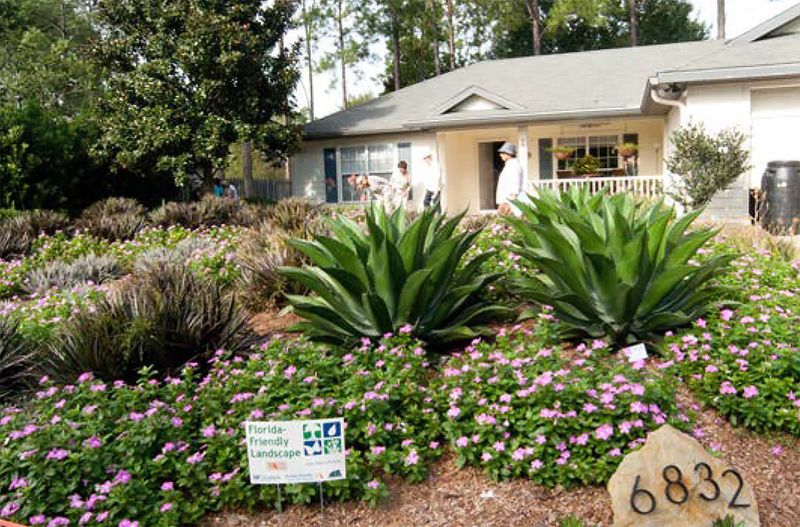
Statutory protection for Florida-friendly landscaping does not dissolve an HOA’s authority to review how a yard looks or how a planting is maintained. UF/IFAS guidance on architectural review and Florida-friendly landscaping states clearly that the law does not invalidate architectural control committees or reasonable landscaping restrictions. The statute removes a prohibition on the category; it does not strip the association of all review power.
Florida’s architectural-control statute, section 720.3035, permits an association to review exterior improvements when that authority is stated in the declaration or can be reasonably inferred from authorized guidelines. Critically, whatever standards the HOA applies must be exercised reasonably and equitably, meaning the association cannot enforce a rule against one homeowner that it routinely ignores for others.
In practice, an HOA may legitimately address a range of details even when a homeowner proposes a Florida-friendly planting. Appearance standards, required edging or defined bed borders, setback distances from sidewalks or property lines, maintenance expectations, visibility concerns near driveways or intersections, drainage-related questions, and lists of prohibited or invasive plants are all areas where an association’s governing documents may give it standing to require adjustments. Seminole County’s Florida-friendly landscaping guidance for homeowners reinforces that HOA requirements and Florida-friendly principles are not automatically in conflict, and that a thoughtful proposal addressing both is more likely to succeed than one that treats statutory protection as a complete shield. Whether any specific HOA requirement is valid depends on the association’s governing documents and how the requirement is applied, which is why reading those documents carefully before submitting a proposal is the necessary first step.
Match the Planting to the Site and Foot Traffic
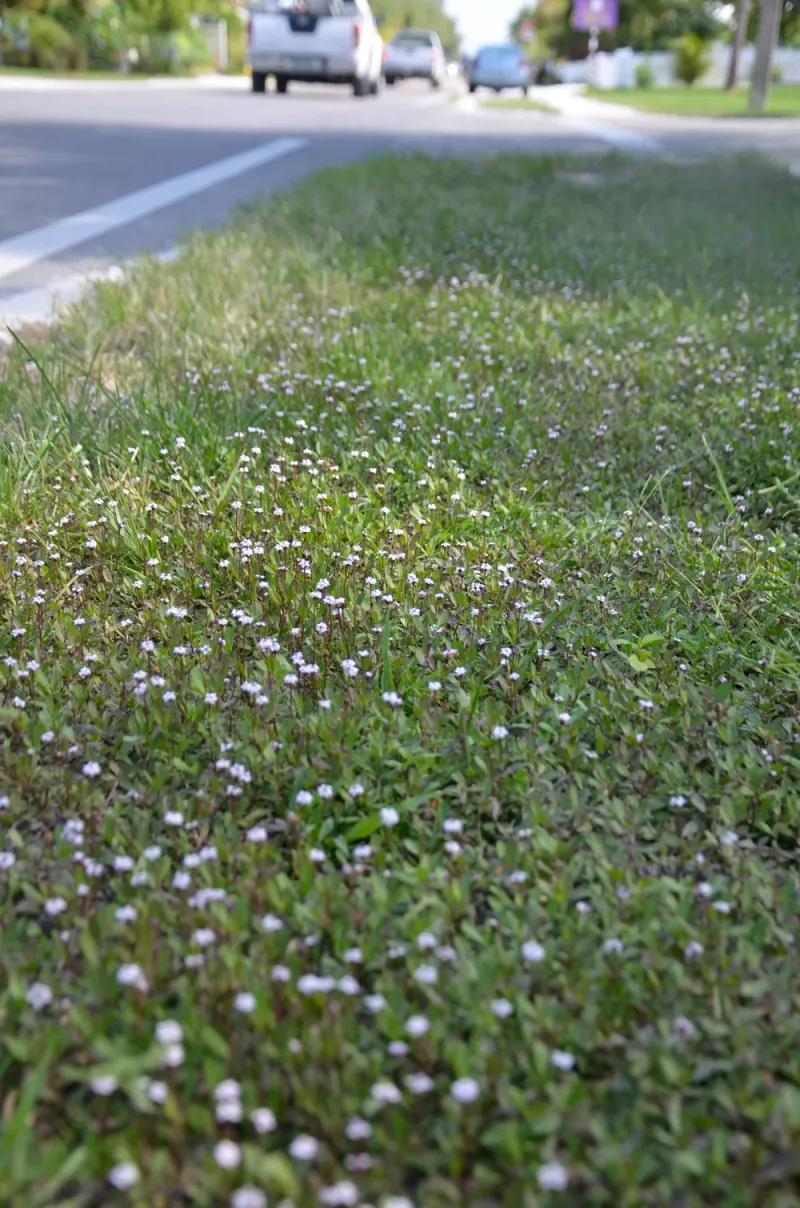
Choosing to plant frogfruit is really a two-part decision: first, whether the plant suits the site, and second, whether the site suits the plant. The Florida Native Plant Society’s plant profile lists frogfruit as growing in sand, clay, and loam soils and tolerating full sun to partial shade, which covers a wide range of Florida front-yard conditions. However, that adaptability does not mean every front yard qualifies.
Foot traffic is the clearest limiting factor. Areas where family members, guests, or delivery workers regularly walk need a defined path, stepping stones, or a hardscape surface running through or alongside the frogfruit planting. Placing those features before planting, rather than after, avoids the compaction damage and bare patches that result from people cutting across an unprotected groundcover mat. UF/IFAS Hillsborough County guidance on groundcover alternatives reinforces that frogfruit is best suited to low-traffic situations.
Salt exposure is a site factor coastal homeowners need to evaluate honestly. The Florida-Friendly Landscaping plant database rates frogfruit’s saltwater inundation tolerance as poor, which is a meaningful limitation for yards near tidal areas or those subject to storm surge. Temporary freshwater flooding is a different situation: frogfruit can tolerate brief inundation of that kind, but persistent saturation is worth evaluating site-by-site before committing to the planting. For inland yards with well-drained to moderately moist sandy soil, a sunny or lightly shaded front bed away from high-traffic routes, and no direct saltwater exposure, frogfruit’s site requirements align well.
Coastal homeowners or those with chronically wet low spots should assess drainage and salt risk specifically rather than assuming the plant will adapt.
Establish Frogfruit With Preparation, Spacing, and Water
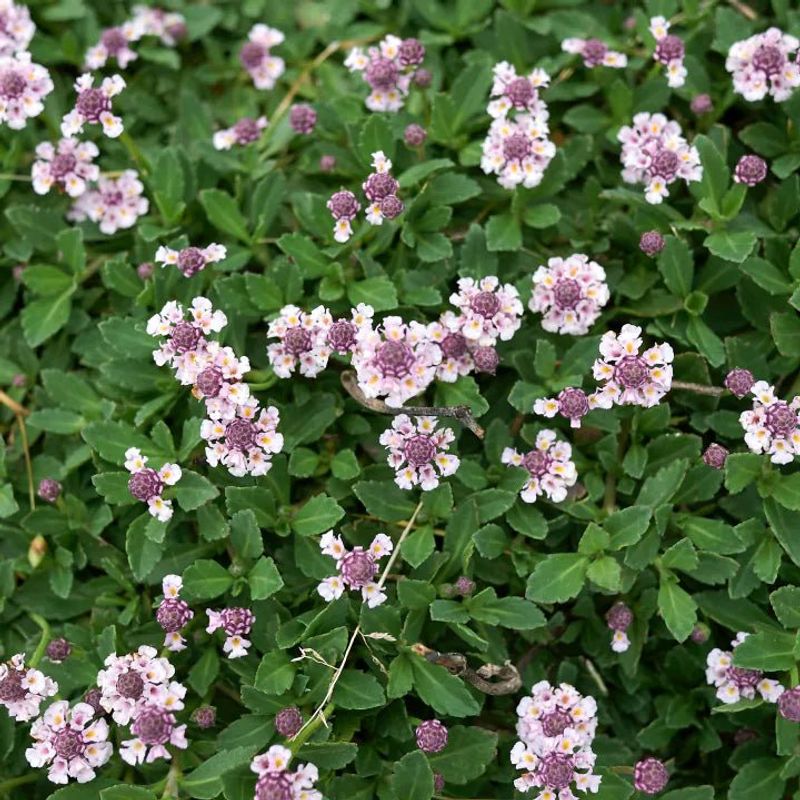
Removing existing turf and scattering a few plants into unprepared soil is not an establishment plan. Successful frogfruit groundcover starts with clearing the area of competing vegetation, whether that means solarizing the soil under clear plastic during Florida’s hot months, smothering with cardboard and mulch, or careful herbicide application followed by a waiting period. UF/IFAS Walton County’s groundcover alternatives guide emphasizes that removing competing vegetation is a foundational step before any groundcover installation.
Soil preparation and testing come next. UF/IFAS guidance on planting a Florida lawn recommends testing soil before planting to understand pH and nutrient levels. Florida’s sandy soils often drain quickly, which affects both plant survival and the irrigation schedule needed during establishment. Containerized plants or rooted divisions are both workable starting points; UF/IFAS groundcover planting guidance recommends placing containerized material on a grid, commonly no more than 12 inches apart, to achieve even coverage.
Closer spacing, around 6 to 8 inches, speeds coverage where a homeowner wants the mat to fill in quickly before weeds take hold.
Temporary irrigation during establishment is not optional. The UF/IFAS frogfruit archive guide notes that the plant needs consistent moisture while roots develop, even though it becomes more drought-tolerant once established. Documenting this establishment plan, including plant source, spacing, soil preparation steps, and the irrigation schedule, gives a homeowner concrete, specific material to include in an HOA submission. That documentation shows the planting is managed and intentional, which is a more persuasive position than presenting the project as a simple turf removal.
It does not guarantee approval, but it demonstrates the kind of care that Florida-friendly landscaping standards expect.
Plan for Ongoing Frogfruit Maintenance
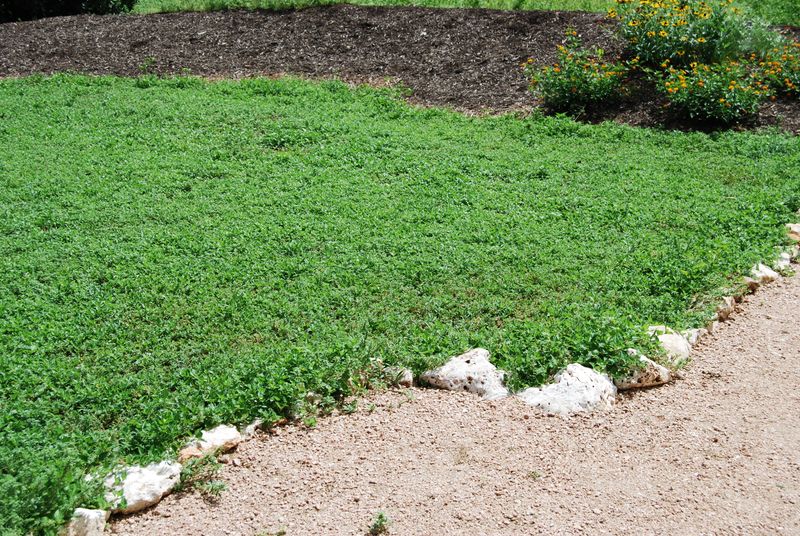
Frogfruit is not a plant-it-and-forget-it solution, and setting that expectation early prevents disappointment. UF/IFAS groundcover guidance notes that frogfruit will not tolerate long dry periods without stress, which means supplemental irrigation during extended drought is a realistic ongoing task in most parts of Florida, not just during establishment. The Florida-Friendly Landscaping plant database rates its drought tolerance as medium, a useful reminder that “lower water needs than turf” and “drought-proof” are not the same thing.
Weed management is the other consistent task. During and after establishment, unwanted plants will try to move into the mat, and frogfruit’s low growth habit means weeds can outcompete it if left unchecked. Hand-pulling or spot treatment is generally the right approach, since broad herbicide applications can damage the groundcover itself. Monitoring for unwanted spread matters too: the UF/IFAS frogfruit archive and the Florida-Friendly Landscaping database both note that frogfruit can spread aggressively and may become weedy in some conditions, so keeping defined edges maintained is part of responsible management.
Mowing or trimming is optional but useful when a tidier appearance is the goal. The UF/IFAS Florida-Friendly plant guide lists a mowing height of 4 to 6 inches for frogfruit, and UF/IFAS Hillsborough County’s groundcover guide notes that occasional mowing can improve the planting’s appearance. Frequency depends on the desired look and the time of year. Frogfruit may go partially dormant during extended drought or cooler winter months, so expecting year-round uniform green coverage in every Florida region is not realistic.
A maintenance plan that accounts for seasonal variation will serve the homeowner better, and documenting that plan adds credibility to any HOA proposal.
Submit a Documented Plan Before Removing the Lawn
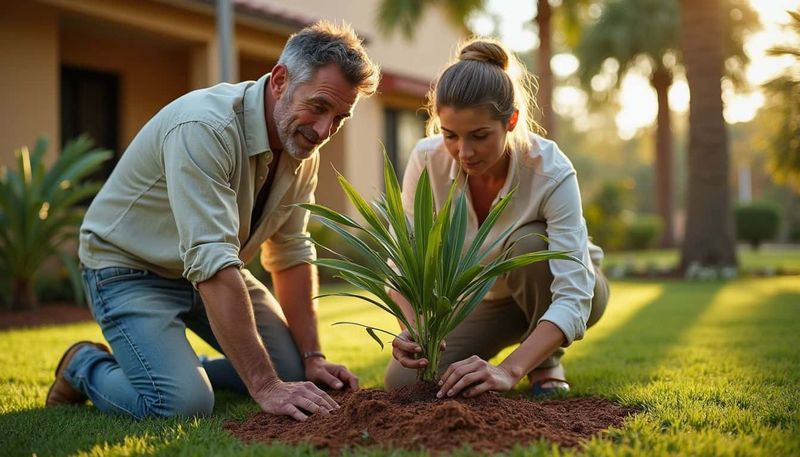
The single most protective step a Florida homeowner can take before replacing front-lawn turf with frogfruit is to submit a written proposal to the HOA before any plants go in the ground. Planting first and arguing later is a risky approach that can result in fines, removal demands, or legal costs even when the homeowner’s underlying position is sound. Reviewing the association’s declaration, landscape rules, approved or prohibited plant lists, setback requirements, and any architectural-review submission procedures is the necessary starting point. Those documents define the HOA’s actual authority and the process the homeowner must follow.
A well-prepared proposal names the plant by its full botanical name, Phyla nodiflora, alongside its common names. It maps the specific area to be planted, shows where paths, stepping stones, or defined edges will be located, states the plant’s expected mature height and its low-traffic limitation, and describes the irrigation and maintenance schedule. UF/IFAS architectural review guidance for Florida-friendly landscaping offers a useful framework for what reviewers typically evaluate, including appearance, maintenance, drainage, and compatibility with neighboring properties.
The proposal should also cite the relevant statutes. Section 720.3075(4)(b) and the Florida-friendly landscaping definition in section 373.185 are the two anchors. Referencing them in the proposal signals that the homeowner understands the legal framework without framing the submission as a confrontation. After submitting, request a written decision from the association and keep copies of all correspondence and documents.
If the HOA rejects a clearly documented Florida-friendly design or begins enforcement without a valid basis, Florida’s architectural-control statute at section 720.3035 and county-level Florida-friendly landscaping guidance can support a conversation with a Florida HOA attorney. A proposal does not guarantee approval, but submitting one before planting is the approach most likely to produce a workable outcome.
Frogfruit Can Support a Stronger Florida-Friendly Proposal
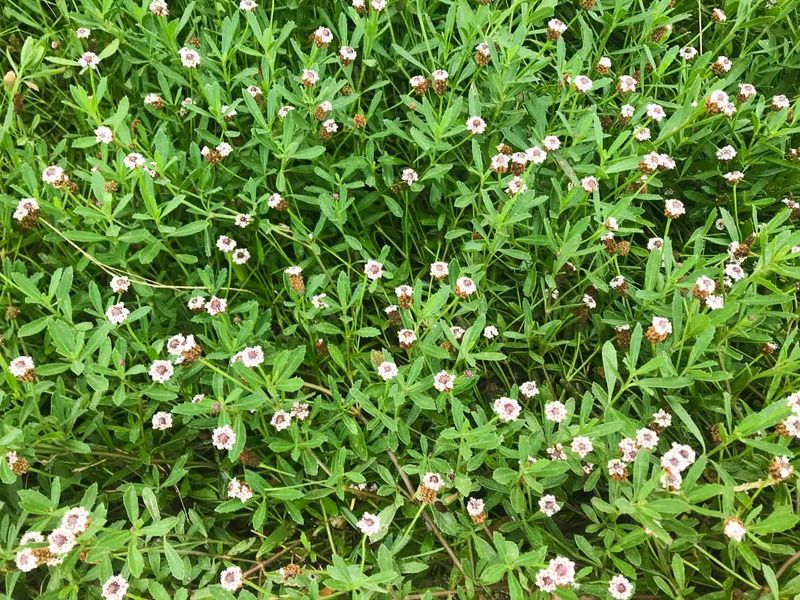
Frogfruit, properly identified as Phyla nodiflora, can serve as a Florida-native, pollinator-supporting groundcover for an appropriately designed low-traffic front-yard area. Its value in a proposal comes not from the fact that it is native, but from how well a complete installation addresses the full set of Florida-friendly landscaping principles under section 373.185, including water conservation, appropriate plant selection, maintenance, and environmental benefit.
The plant carries no automatic immunity from HOA review. UF/IFAS architectural review guidance and section 720.3075(4)(b) together make clear that the statute limits HOA overreach against qualifying Florida-friendly designs, not against all HOA involvement. Site-specific factors, including heavy foot traffic, saltwater exposure near the coast, persistent soil saturation, and the association’s authorized design requirements, can all affect whether a specific proposal succeeds. A homeowner who documents the design thoroughly, follows the submission process, and frames the project around Florida-friendly performance rather than native status alone stands on the strongest available ground.
As the Florida Native Plant Society notes, frogfruit thrives in the right conditions, and a proposal built around those conditions is a more honest, and more durable, argument than one built on a categorical legal claim.